
Hong Kong Bookshop Raids Reveal Deepening Pressures on Independent Publishing
Hong Kong police raided two independent bookshops and arrested five people suspected of selling seditious books under the territory's national security framework. The Have A Nice Stay shop in Mong Kok faces closure as enforcement reshapes the publishing sector and fuels self-censorship.
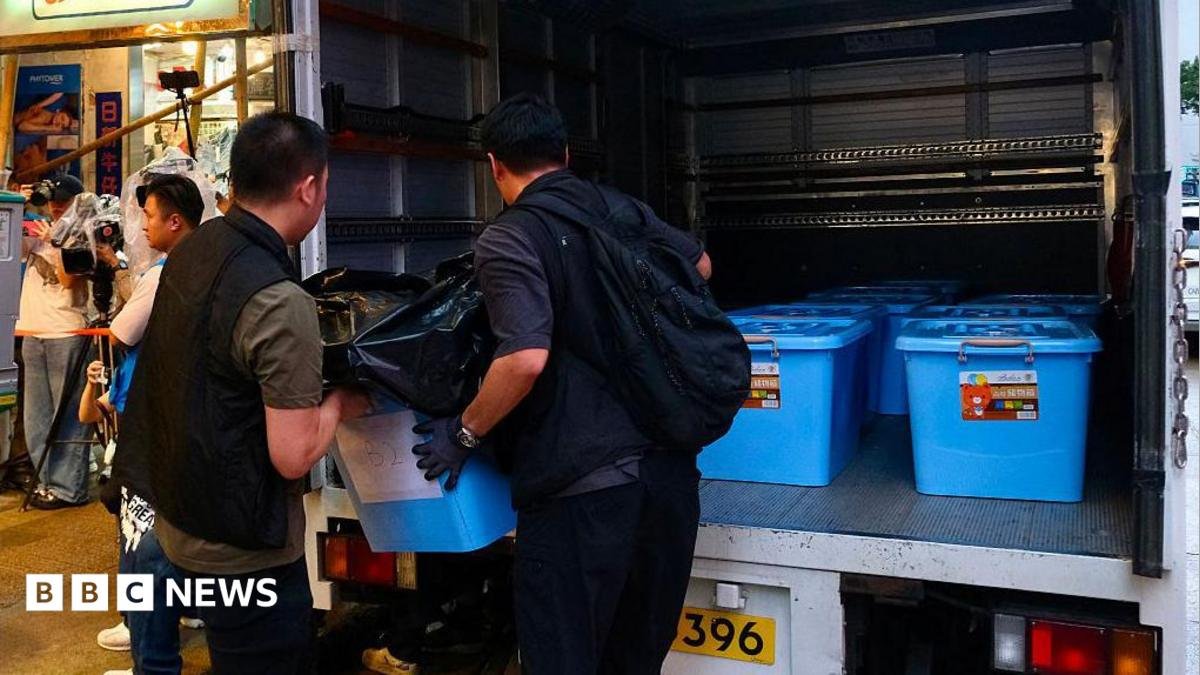
Recent police raids on independent bookshops in Hong Kong have resulted in five arrests and renewed scrutiny of publications deemed to carry seditious intent under the territory's national security framework, according to BBC News. The operations underscore a sustained pattern of enforcement that is reshaping the local publishing sector and prompting self-censorship among retailers. These actions highlight Beijing's broader effort to align cultural and commercial activities with central security priorities while maintaining the formal structure of local administration.
The Raids
Police operations targeted two independent bookshops in Hong Kong, resulting in the arrest of five individuals suspected of selling and displaying publications considered seditious, BBC News reported. The detainees include two men aged 37 and 57 along with three women aged between 30 and 59. Authorities stated that the materials incited hatred against the territory's government, judiciary and law enforcement agencies. Officers seized books from both locations during the actions.
Those arrested face allegations of violating national security legislation through actions carrying seditious intent. Conviction on these charges carries a potential maximum sentence of seven years in prison. The individuals remain in custody while investigations continue.
Have A Nice Stay: A Bookshop Under Pressure
One of the raided premises was the Have A Nice Stay bookshop located in the densely packed Mong Kok district. Founded in 2022 by a group of former journalists, the store specialised in literature addressing democracy, authoritarianism and media literacy. Officers were observed by AFP reporters leading a handcuffed woman from the premises into a waiting van.
The raid occurred one day after the shop announced its planned closure in August. The decision was attributed to financial difficulties and what the operators described as an elusive red line regarding acceptable content, according to the BBC report. The announcement highlighted growing uncertainty over permissible material in the current environment.
Hong Kong's National Security Framework
The national security architecture in Hong Kong rests on two interlocking layers of legislation. The 2020 National Security Law, enacted at the national level, established core offences including secession, subversion, terrorism and collusion with foreign forces. This measure introduced mechanisms for central government oversight while embedding specialised enforcement bodies within the territory. Subsequent local legislation under Article 23, formalised through the Safeguarding National Security Ordinance, expanded coverage to address residual gaps such as sedition and external interference.
The arrests stem from enforcement of national security legislation that addresses offences involving seditious intent. Officials described the seized publications as inciting hatred toward core institutions of the territory. Sedition provisions within the Article 23 framework carry maximum penalties of seven years imprisonment, aligning with the charges referenced in recent bookshop operations. These clauses focus on intent and effect rather than explicit calls to violence, allowing authorities to examine the display and distribution of publications as evidence of prohibited activity.
The 2020 National Security Law supplies the overarching structure, while the later ordinance supplies granular definitions and procedural tools that local police and prosecutors can apply directly. Investigations focus on whether the distribution and display of the books constituted prohibited activities under the legislation. The five suspects are being held pending further examination of the evidence collected during the raids. This layered approach enables consistent enforcement across different categories of expression without requiring repeated central intervention.
A Pattern of Enforcement
The sequence of bookshop raids since the introduction of the national security framework reveals a sustained pattern of enforcement targeting independent retailers. The latest operations form part of a series of actions against bookshops in 2026. In June, two workers were arrested at the Hunter store. Earlier, in March, four individuals were detained from Book Punch, according to BBC News. These incidents together illustrate repeated scrutiny of outlets stocking particular titles.
Local media reports indicated that the nearby Greenfield Book Store was also targeted in the most recent wave of raids. The cumulative effect points to sustained attention on independent retailers dealing in literature from Hong Kong and Taiwan. Each case involved the seizure of publications and the arrest of staff on suspicion of handling materials with seditious intent. The repetition across multiple outlets indicates that authorities are applying the same legal standards to a widening circle of premises rather than treating incidents as isolated events.
This cumulative trend signals a contraction of the space available for civil society organisations that rely on open access to printed materials. Independent bookshops that once specialised in literature, history and political analysis now face routine examination of their inventories. The pattern encourages self-censorship as operators weigh the costs of continued trading against the risk of prolonged detention and business closure.
The 'Red Line' Problem
Operators have cited an elusive red line over what content may trigger official action. The Have A Nice Stay announcement explicitly referenced this uncertainty as a factor in its closure decision. Such ambiguity has prompted booksellers and writers to engage in self-censorship to avoid potential investigations or closures.
Amnesty International characterised the raids as reflecting the chilling reality of the city, where individuals risk criminalisation based on materials present on their bookshelves. The organisation noted that uncertainty over these red lines leaves stakeholders guessing which titles could lead to arrest or business shutdown.
The Book Fair and Hong Kong's Cultural Economy
Neither the Have A Nice Stay bookshop nor the Greenfield Book Store is participating in this year's Hong Kong Book Fair, which opened on Wednesday. Their absence underscores the difficulties facing smaller retailers amid the prevailing publishing climate.
The Greenfield Book Store's Facebook page describes its stock as covering literature, history, philosophy, art, sociology and self-improvement, with titles sourced from Hong Kong and Taiwan. Exclusion from major events such as the book fair limits visibility and commercial opportunities for these outlets.
International Reaction and Hong Kong's Global Role
Enforcement actions against independent bookshops have drawn statements from international organisations concerned with freedom of expression. Amnesty International issued a statement linking the raids to broader restrictions on expression. The organisation emphasised how fear and self-censorship have become widespread among those involved in bookselling and writing.
These developments carry implications for Hong Kong's position as an international hub. Repeated actions against independent bookshops may influence external perceptions of the territory's openness to diverse viewpoints and its attractiveness to global publishing interests. Foreign governments and business associations monitor these developments as indicators of whether the territory continues to maintain the legal predictability expected of an international financial centre.
Hong Kong's status as a global hub depends in part on perceptions of its openness to information flows and legal protections for commercial activity. Repeated interventions in the publishing sector can affect investor calculations regarding the reliability of contracts and the scope for intellectual exchange. The global role of Hong Kong is further tested by the absence of affected retailers from major trade events such as the annual book fair.
Strategic Implications
The pattern of raids illustrates Beijing's approach to consolidating governance under the one country, two systems framework by extending national security standards into commercial and cultural spheres. The sequence of raids demonstrates consistent application of national security provisions to printed materials. Each operation reinforces boundaries around acceptable content while prompting adaptive responses from retailers, including planned closures and reduced participation in public events.
Over time, these measures shape the local cultural landscape by narrowing the range of available literature. This model prioritises alignment with central priorities while retaining the formal structure of local administration. For regional observers the enforcement actions demonstrate how printed materials are now treated as elements of the broader security calculus, narrowing the range of permissible discourse without altering the territory's constitutional status.
Across ASEAN capitals the developments are watched for clues about how similar frameworks might affect cross-border publishing and educational exchanges. Neighbouring states that maintain economic ties with Hong Kong assess whether the tightening environment will disrupt supply chains for books and related media or prompt relocation of cultural enterprises. The strategic calculus for Beijing includes balancing domestic stability objectives against the risk of reduced soft-power influence in the wider Asia-Pacific region.
By Prof. Marcus Chen, Staff Writer
This article was produced with AI-assisted research and editorial support. Reporting is based on sources cited in the article.
What's Your Reaction?
 Like
0
Like
0
 Dislike
0
Dislike
0
 Love
0
Love
0
 Funny
0
Funny
0
 Wow
0
Wow
0
 Sad
0
Sad
0
 Angry
0
Angry
0

World Politics Analyst at Global1.News. Based in Beijing, covering US-China relations, global trade, and geopolitical strategy. Brings deep analytical perspective to the power dynamics shaping international affairs.














Comments (0)