
Thai Activists Review UN Human Rights Recommendations to Thailand
Thai activists gathered in Bangkok on 10 November 2026 to reflect on the United Nations’ Universal Periodic Review (UPR) of the country’s human‑rights record.
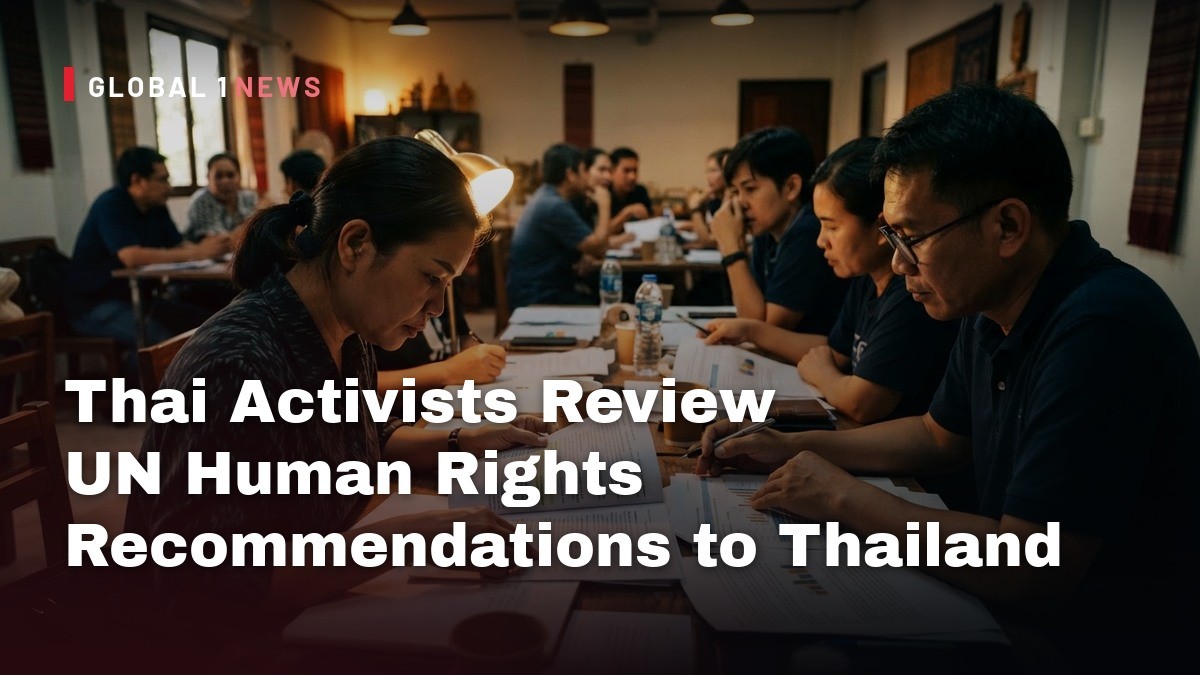
Thai activists gathered in Bangkok on 10 November 2026 to reflect on the United Nations’ Universal Periodic Review (UPR) of the country’s human‑rights record. The symposium, hosted by the Manushya Foundation, Amnesty Thailand and a network of civil‑society groups, turned the UPR’s 297 recommendations—presented by 107 member states—into a vivid discussion of how Thailand’s laws and policies intersect with the everyday lives of ordinary Thais, from the rice fields of Isaan to the mangrove villages of the Deep South. The conversations highlighted not only the gaps between Thailand’s legal framework and international norms, but also the cultural and Buddhist values that many activists invoke to call for change.
Lese‑Majeste Law and Freedom of Expression
One of the most heated topics was the royal defamation law, commonly known as lese‑majeste. Nattaporn Artharn of the Isaan Democracy Movement expressed deep disappointment, noting that several UN members—including Finland, Germany, Mexico, New Zealand, Norway and Ireland—view the law as a breach of freedom of expression. She warned that the law’s continuation could block Thailand’s aspiration to join the OECD, a point that resonates with Isaan’s long tradition of open dialogue and communal decision‑making rooted in Buddhist principles of truth‑telling.
Amnesty Thailand’s Thanaporn Keedatisanit echoed the government’s stance that the law complies with international standards, but she also highlighted the lack of serious discussion during the UPR. For many activists, the law’s secrecy clashes with the Buddhist ethic of right speech, prompting calls for a transparent judicial process that respects both national security and the right to speak truthfully.
Refugee Policy and Humanitarian Concerns
Thailand’s refusal to recognize formal refugee status drew sharp criticism. Tayakorn Thippayapokin of Asylum Access pointed out that Bangkok currently shelters about 5,500 foreign asylum seekers, who are barred from working and thus face economic hardship. Countries such as New Zealand, Belgium and Canada urged Thailand to grant refugee status and to uphold the principle of non‑refoulement, a cornerstone of international humanitarian law.
Thippayapokin suggested that the government’s hesitation may stem from a fear of opening the “floodgates” to more asylum seekers. Yet, within Thai Buddhist culture, the concept of compassion (karuṇā) toward those in distress is a powerful moral argument for more humane treatment of refugees, a perspective that many civil‑society groups are keen to amplify.
Indigenous Peoples’ Rights and Land Security
Indigenous communities, particularly those living in forested regions, remain vulnerable. Katima Leejah of the Indigenous Women’s Network highlighted that the government has granted only temporary land ownership for 20 years, leaving the future of these lands uncertain. Ecuador called on Thailand to formally recognize Indigenous status, while Norway urged guarantees for land rights.
Many Indigenous individuals lack Thai citizenship, limiting access to welfare and basic services. This situation clashes with the Buddhist principle of interdependence, which emphasizes the well‑being of all community members. Activists argue that legal recognition would not only protect cultural heritage but also align Thailand with its own teachings on caring for the vulnerable.
The Deep South: Ethnic and Religious Discrimination
The Deep South’s Thai‑Malay Muslim communities were another focal point. Asmah Tanyongdaoh of the Patani Group noted that Costa Rica urged an end to discriminatory treatment, though no country specifically called for the repeal of emergency decree laws. Austria suggested that Thailand should not grant amnesty to officials accused of abuses in the region.
These discussions underscore a tension between security measures and the Buddhist ideal of non‑violence. While the government frames emergency decrees as necessary for stability, activists stress that lasting peace in the Deep South requires genuine dialogue and respect for religious and cultural diversity.
Environmental Protection and the Eastern Economic Corridor
Environmental concerns rose to the fore, especially regarding the Eastern Economic Corridor (EEC). South Korea urged Thailand to safeguard communities from factory pollution, and the Marshall Islands called for a Clean Air Act. Nattaporn Artharn warned that the UPR did not even address the environmental impact of foreign investment and free‑trade agreements.
Village leader Nittaya Muangklang of Sab Wai warned that carbon‑credit schemes could force rural villagers off their land for reforestation projects, a risk that threatens livelihoods rooted in traditional agriculture. The Buddhist teaching of right livelihood (sammā ājīva) resonates here, urging policies that protect both the environment and the means of living for local communities.
Reproductive Rights and Gender Equality
Abortion rights remain a contentious issue. Chonthita Kraisrikul of the Tam Tang Foundation described how public hospitals do not advertise abortion services, and women often face verbal abuse from healthcare workers. Iceland called on Thailand to end the requirement for a male partner’s consent and to stop stigmatizing patients.
These concerns intersect with Buddhist compassion for suffering and the principle of non‑harm. Activists argue that denying safe, dignified reproductive care adds unnecessary suffering, contradicting the moral duty to alleviate pain and uphold the dignity of all individuals.
LGBTIQ+ Rights and Legal Gender Recognition
While Thailand’s same‑sex marriage law was praised internationally, activists highlighted ongoing gaps. Suthitep Santham of the Young Pride Foundation explained that legal gender recognition remains absent, causing confusion for job applicants and distress for intersex individuals. Seven countries—including Mexico, Greece, South Africa, Iceland and Belgium—urged Thailand to strengthen protections against online harassment targeting LGBTIQ+ people.
The call to end the binary gender system reflects a broader cultural shift toward inclusivity, echoing the Buddhist view that all beings deserve respect and the freedom to express their true selves. As Thailand navigates these reforms, the dialogue between tradition and modern human‑rights standards continues to shape the nation’s path forward.
This article was produced with AI-assisted research and editorial support. Reporting is based on the source material cited below. Sources: Khaosod English; khaosodenglish.com; Global1.News (11 November 2026).
By Ann Srisawat, Staff Writer
What's Your Reaction?
 Like
0
 Dislike
0
 Love
0
 Funny
0
 Wow
0
 Sad
0
 Angry
0

Southeast Asia Correspondent at Global1.News. Based in Bangkok, covering Thai and Southeast Asian politics, economy, technology, and culture. Deep regional perspective on one of the world's most dynamic regions.















Comments (0)