
Jordan Takes the House, Thune Survives the Senate as Republicans Reckon
Senate Republicans reelected John Thune by acclamation after a move to delay the vote failed 31-15, while House Republicans chose Jim Jordan over Steve Scalise 106-73 to lead them into the minority.

Republicans walked into the Old Senate Chamber on Tuesday morning to decide who should own a defeat. They came out with almost the same leadership team they had the day before, and one new face in the House whose entire political brand is refusing to play defence. The Senate kept John Thune. The House picked Jim Jordan. Both calls were made behind closed doors, in secret ballots, by the people who know precisely how badly last week went.
Jordan Takes the House, Thune Survives the Senate as Republicans Reckon
Washington, D.C. — Senate Republicans reelected John Thune of South Dakota as their leader on Tuesday, backing him by acclamation after a day of closed-door argument about the losses that cost the party its majority. In the House, Republicans elected Jim Jordan of Ohio as minority leader, defeating Steve Scalise of Louisiana 106 to 73 on a secret ballot, according to tallies reported from inside the room. Speaker Mike Johnson did not seek reelection to his leadership post. Both chambers flip to Democratic control in January.
The Reckoning Arrives in the Old Senate Chamber
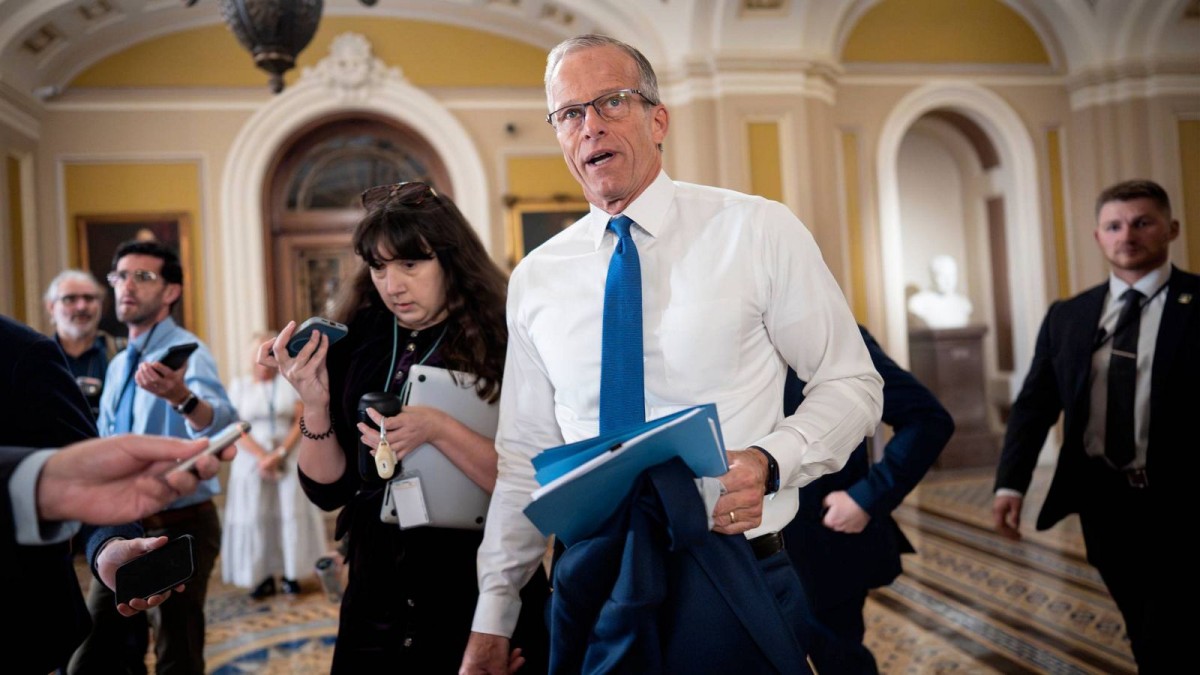
The Senate conference met three separate times on Tuesday, huddling for nearly two hours in the morning in the historic room off the chamber floor before breaking and reconvening in the afternoon. Thune was unopposed and had always been expected to prevail; he is well liked inside the conference and nobody in the room claimed to have recruited a rival. The fight was never about the name on the ballot. It was about whether the party should hold a leadership election at all, seven days after watching at least seven Senate seats fall to the Democrats. A motion to delay the election failed 31 to 15, according to people familiar with the private tally. Wisconsin Sen. Ron Johnson, who had pushed the delay, walked out as the voting began.
A Rebellion With No Candidate
Johnson led the effort to postpone, collecting signatures from colleagues to force a conference meeting before the scheduled vote. CBS News named John Kennedy of Louisiana, Ted Budd of North Carolina, Rick Scott of Florida and Mike Lee of Utah among those who signed on; Fox News added Jim Banks of Indiana and Dave McCormick of Pennsylvania to the group. The push collapsed for a simple reason. Johnson conceded there was no clear alternative to Thune waiting in the wings. He told reporters that Senate Republicans "just can't continue on business as usual" after a "stunning defeat" at the polls. Asked whether new leadership was needed, he said: "I mean, that kind of defeat demands change." Scott, the Senate Steering Committee chairman who had run for leader twice before, declined to put his own name forward this time.
What the Room Wanted to Hear
What the dissidents wanted was a plan. Scott stood in the private session and urged his colleagues to adopt one before they elected a new leadership team, citing his years running businesses. "I want to hear a plan," he said. "I've been up here eight years, I've never heard a plan in a year." He put a clock on it: "We have 55 days until the Democrats take over." West Virginia Sen. Jim Justice said the argument had force but no target. There was a "legitimate argument that, good gracious, if we lost as badly as we lost, why would we continue on with the same leadership?" he said, before adding that the current team "didn't cause this problem to happen" and does a good job. Missouri Sen. Josh Hawley aimed at the party's record instead of its leader. "When you cut Medicaid, but you fund data centers, when you cut rural hospital funding, but you fund Planned Parenthood, when you let the cost of healthcare for working people go through the roof, but you can't do anything for them on other issues of affordability, from fertilizer to gas," he said. "Yeah, you know what? The public doesn't like that very much."
Thune's Answer: Affordability, and a Tough Night
Thune addressed the result head-on in his first floor speech since the election. "There is no doubt about it, Tuesday night was a tough election night," he said, calling the outcome an opportunity to reflect on what the party needs to do better and a clear message that the next Congress must double down on the work of affordability. He has run the chamber since early 2025, after two decades in the Senate and a stint as Mitch McConnell's deputy. His record is real and contested in equal measure. Senate Republicans passed the president's tax, border security and defence agenda and confirmed his nominees at speed, while his tenure also absorbed two record-breaking government shutdowns and a White House that frequently moved out of step with Congress. He refused to blow up the filibuster for the SAVE America Act, a decision that enraged parts of the base. Trump's verdict, delivered Monday, was warm: Thune is "a very fine man," and the election was "up to the Senate."
The House Chooses a Fighter
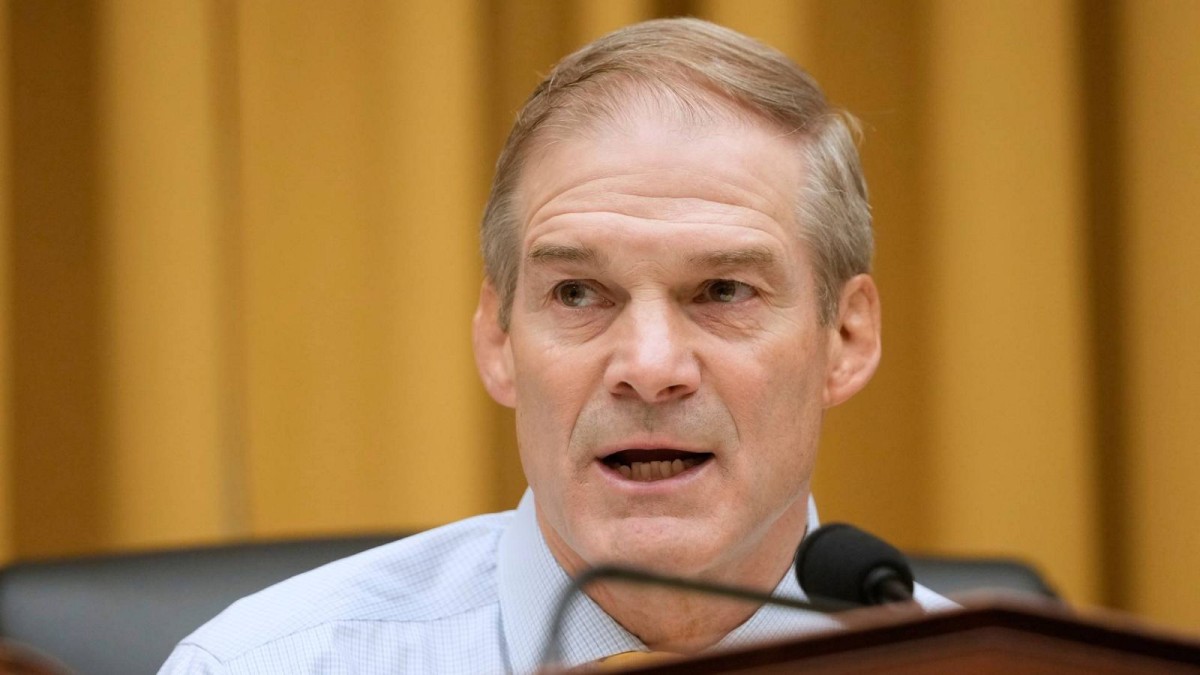
Across the Capitol, House Republicans went the other way. Jordan, the Judiciary Committee chairman, beat Scalise on a secret ballot after a morning candidate forum in which both men pitched themselves as the best person to unify a wounded conference and fielded questions about leaks to journalists. The electorate was incumbent Republicans plus GOP members-elect projected to win their races last week, meaning the new leader was chosen partly by people who have not yet been sworn in. Fox News reported loud, sustained applause from the hallway when the result was announced, and The Hill reported that Tom Emmer of Minnesota beat August Pfluger of Texas for minority whip. Jordan's pitch was not subtle. "Our job cannot be merely to spotlight how radical this new Democratic Party is — offense, not defense, wins elections," he said.
What Jordan Inherits
He inherits a historically small House Republican conference, a president entering his final two years, and a 2028 climb back to the majority that looks steep from here. He also inherits the job of defending an administration that Democrats are already queueing up to investigate. Jordan, 62, is a co-founder and first chairman of the House Freedom Caucus and one of the president's most vocal defenders on Capitol Hill. Ohio colleague Warren Davidson said the choice came down to seasoning versus freshness. "I personally like Steve, but he's been in leadership since before I was in Congress," Davidson said. Wisconsin Rep. Scott Fitzgerald, a Jordan ally, argued that his ability to communicate is "really kind of unrivaled by anybody else in the House right now."
Scalise's Long Road to Second Place
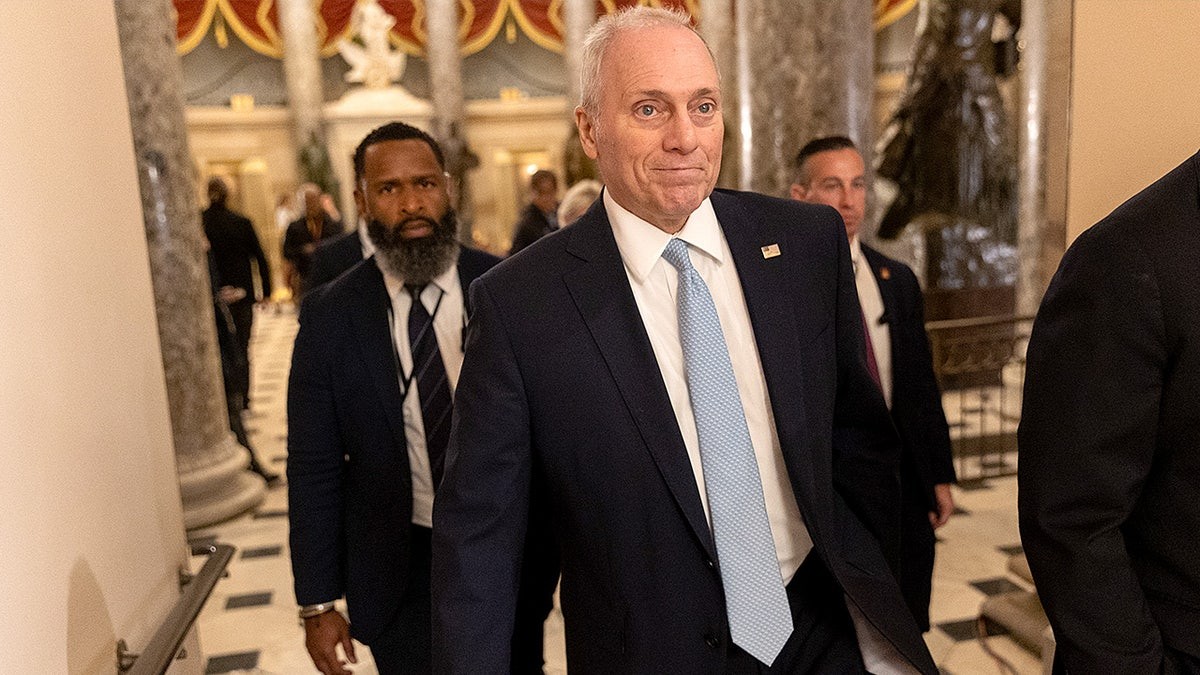
For Scalise, it is a familiar and bitter result. The Louisiana Republican, 61, has held senior leadership jobs since 2014, serving as party whip and then majority leader, and he was critically wounded in 2017 when a gunman opened fire on a Republican baseball practice ahead of the annual charity game against Democrats. In 2023 he was treated for multiple myeloma, a blood cancer. He and Jordan have been here before: both ran to replace Kevin McCarthy as Speaker three years ago, neither could assemble the votes, and the gavel went to Johnson instead. Now Johnson is stepping aside rather than seeking another leadership post, and Scalise, who spent Tuesday as the establishment candidate, is the one making the concession.
The Map That Forced This
The anger in both rooms has a source, and it is arithmetic. Republicans lost at least seven Senate seats, including battlegrounds in Ohio and North Carolina and strongholds in South Carolina, Kansas and Texas. Two contests remain unresolved in Alaska and Mississippi and could add to the damage; Fox News reported that Mary Peltola was widening a narrow lead over Republican Sen. Dan Sullivan as counting continued in Alaska. The party entered the cycle with a map that offered Democrats few pickup opportunities and watched it expand as cost-of-living pressure and the war in Iran dominated the closing weeks. That is the scoreboard the rebels were reading when they asked why the same team should get another two years.
The Other Side Has Its Own Argument
Democrats won at the polls and are now having a smaller, sharper version of the same argument. Chuck Schumer says he will be reelected Senate majority leader next month, but four incoming Democrats — Annie Andrews of South Carolina, Adam Hamilton of Kansas, Abdul El-Sayed of Michigan and Troy Jackson of Maine — have said they will not back him, and the progressive group Indivisible has publicly called for a replacement. Georgia Sen. Raphael Warnock repeatedly declined on Monday to endorse Schumer, telling "The Breakfast Club" that "we need fresh vision, fresh ideas." Hakeem Jeffries faces progressive demands of his own ahead of the House Democratic leadership vote. Spectrum News reported the incoming House Democratic caucus has settled on three priorities: lowering costs, protecting health care and rooting out corruption.
Fifty-Five Days
There is a lame-duck session to survive first, and it is crowded. The Senate voted 73 to 25 on Tuesday to take up sweeping energy legislation, its first major action since the election. A government funding deadline is waiting, and Scott's list of demands before the leadership vote — judicial confirmations, funding without a giant omnibus, a stock trading ban, permitting reform, the defense authorization bill, another run at the SAVE America Act and a balanced budget through reconciliation — is effectively a to-do list for those fifty-five days. The Senate slate around Thune barely moved: Axios reported Bernie Moreno of Ohio will chair the party's campaign arm, replacing Tim Scott, with John Barrasso, Tom Cotton, Shelley Moore Capito and James Lankford holding their posts.
By Jessica Ali, Staff Writer
This article was produced with AI-assisted research and editorial support. Sources: Associated Press via Spectrum News, CBS News, Axios, The Hill and Fox News. Cover: Global 1 News editorial image. Photographs: J. Scott Applewhite/AP via Spectrum News; Mark Schiefelbein/AP via Spectrum News; Fox News.
What's Your Reaction?
 Like
0
 Dislike
0
 Love
0
 Funny
0
 Wow
0
 Sad
0
 Angry
0

Editor-in-Chief at Global1.News. Atlanta-based journalist who cuts through the BS and tells it like it is. Lead anchor, host, and the voice you hear when the spin stops and the truth starts.















Comments (0)