
Why Did Mongolia’s President Visit Finland?
From October 22 to 24, 2026, Mongolia’s President Khurelsukh Ukhnaa travelled to Helsinki on a state visit that marked the first Mongolian head‑of‑state trip to Finland in sixteen years.
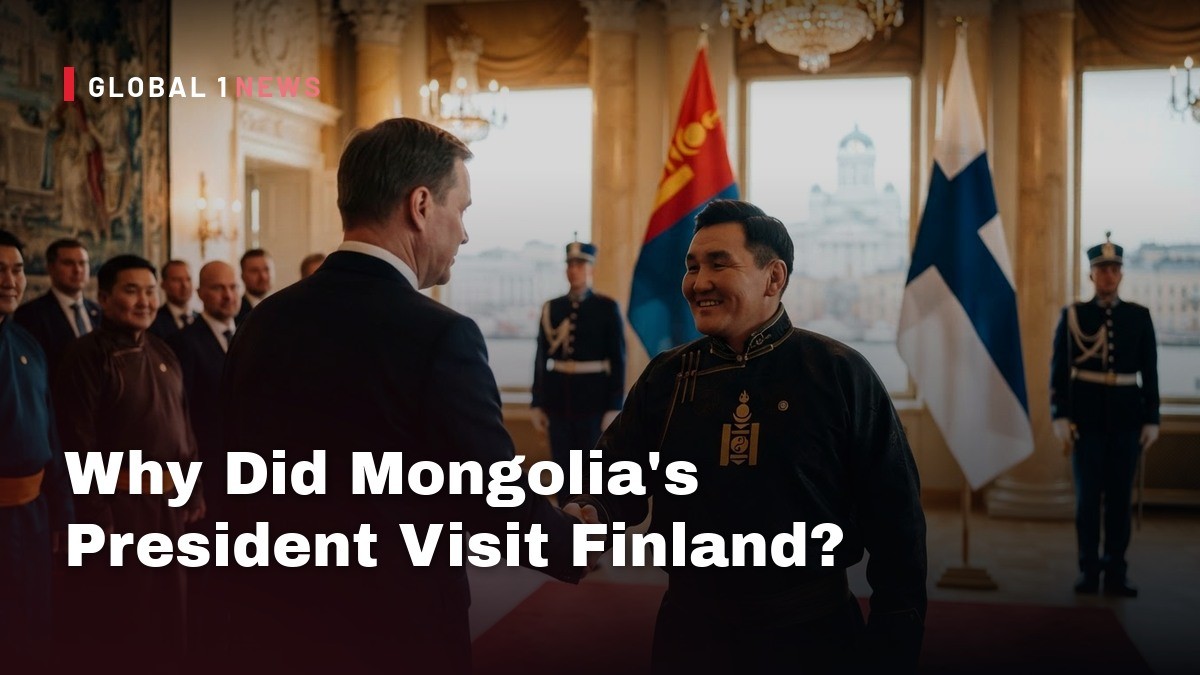
From October 22 to 24, 2026, Mongolia’s President Khurelsukh Ukhnaa travelled to Helsinki on a state visit that marked the first Mongolian head‑of‑state trip to Finland in sixteen years. The timing of the visit – just two years before the 65th anniversary of diplomatic relations – underscores a deliberate effort by both capitals to deepen ties at a time when small states are increasingly looking to diversify partnerships amid shifting geopolitical currents. The agenda, the sign‑on documents, and the broader strategic context reveal how Mongolia’s “third‑neighbor” policy is evolving to incorporate the Nordic model of governance, innovation and multilateral engagement.
Historical Foundations and Recent Diplomatic Momentum
Finland and Mongolia first established formal diplomatic relations in 1963, following Finland’s support for Mongolia’s United Nations admission two years earlier. Since then, both nations have consistently aligned in multilateral fora such as the United Nations, the Organization for Security and Cooperation in Europe, the World Trade Organization and the International Monetary Fund. Their voting patterns on issues ranging from governance to climate change have shown a strong parallel, reflecting shared values of democracy, rule‑based order and human‑rights advocacy.
The recent appointment of non‑resident ambassadors further cemented this trajectory. In December 2024, Finland named Mikko Kinnunen as its non‑resident ambassador to Mongolia, operating from the Finnish embassy in Beijing, while Mongolia’s own non‑resident ambassador to Finland, Munkh‑Ulzii Tserendorj, presented credentials in January 2025. These moves, coupled with a bilateral meeting between Finnish Foreign Minister Elina Valtonen and Mongolian Foreign Minister Battsetseg Batmunkh in 2025, laid the groundwork for President Khurelsukh’s 2026 visit, signalling a year‑long preparation for a deeper partnership.
Leadership Dialogues and Symbolic Exchanges
During the summit, Finnish President Alexander Stubb welcomed the Mongolian delegation, emphasizing commonalities: “We both value democracy and stability… we are small countries bordering larger neighbours and committed supporters of the multilateral system.” The remarks framed the visit not merely as a diplomatic courtesy but as a convergence of two small‑state perspectives on global governance. The one‑on‑one meeting between President Khurelsukh and President Stubb produced ten bilateral agreements covering education, culture, digital learning, regional cooperation between Khuvsgul and Lapland, sustainable construction and clean energy.
Symbolic gestures reinforced the historical bond. President Khurelsukh toured the National Museum of Finland, viewing rare Mongolian relics and research from early 20th‑century Finnish scholars. The delegation also paid respects at the monument of General Carl Gustaf Emil Mannerheim, a figure central to Finnish independence, underscoring a shared narrative of resilience against larger neighbours.
Economic Relations: Modest Trade, Ambitious Outlook
Trade between the two countries remains modest. In 2025, total bilateral trade was just over $47 million, overwhelmingly dominated by Finnish exports of mining machinery and construction equipment. Mongolian exports to Finland amounted to roughly $78,000, reflecting a narrow product range. President Khurelsukh’s stated objective to boost trade aligns with Finland’s desire to expand cooperation in mining, clean energy, education and digitalisation.
Both sides identified sectors with comparative advantage. Mongolia seeks to increase exports of organic wool and cashmere, leveraging climatic similarities with Finland. Meanwhile, Finnish officials highlighted expertise in advanced forestry technologies, wood processing, winter tourism and water‑resource management – areas where Mongolia faces chronic challenges. The Finland‑Mongolia Business Forum, organised by the respective chambers of commerce, brought together about 70 business representatives, providing a platform for concrete project discussions.
Education and Cultural Cooperation as Pillars of Partnership
Education emerged as a flagship area of collaboration. Senior diplomat Enkhmandakh Baldan, Mongolia’s first resident ambassador to the Nordic region, noted that Mongolia can learn from the “equal education system” of Finland, which shapes Finnish society’s social cohesion. The bilateral agreements include provisions for digital education and museum cooperation, the latter formalised through a new museum partnership that builds on historic research by Finnish linguist Gustaf John Ramstedt and archaeologist Sakari Palsi, who documented Mongolian inscriptions and oral traditions in the early 1900s.
Beyond formal agreements, cultural exchanges such as joint exhibitions and museum projects are intended to deepen mutual understanding. By showcasing Mongolian relics in Helsinki and promoting Finnish cultural heritage in Ulaanbaatar, both nations aim to create a people‑to‑people link that supports broader diplomatic objectives.
Governance Lessons: Anti‑Corruption and Institutional Transparency
Finland’s reputation for clean governance, reflected in its consistent top‑three ranking on Transparency International’s Corruption Perception Index, offers a model for Mongolia. Finnish anti‑corruption mechanisms, sometimes linked to the cultural norm known as the Law of Jante, illustrate how societal values can underpin institutional integrity. Mongolian officials have expressed interest in studying these practices to strengthen domestic governance, an effort that aligns with their broader ambition to present themselves as reliable partners in the international system.
The emphasis on good governance is not merely symbolic; it serves as a credibility enhancer in negotiations for technology transfer, investment and multilateral cooperation. By aligning with Finland’s standards, Mongolia hopes to attract higher‑value foreign investment and to position itself as a stable conduit for Nordic firms seeking entry into the broader Asian market.
Strategic Implications for the “Third‑Neighbour” Policy
Mongolia’s “third‑neighbour” strategy, which seeks to balance relations with its two great powers by cultivating ties with other regions, has increasingly turned northward. The 2026 state visit illustrates how the Nordic bloc fits into this calculus: shared values, complementary economic structures and a mutual desire to diversify diplomatic and trade networks. By deepening ties with Finland, Mongolia gains a gateway to the broader Nordic region, including Denmark, Iceland, Norway and Sweden, each offering distinct expertise in areas such as renewable energy, digital governance and sustainable forestry.
In the context of a rapidly changing geopolitical environment, small states like Mongolia and Finland are leveraging their diplomatic agility to build coalitions that can amplify their voices in multilateral settings. The Helsinki visit, therefore, is not an isolated event but part of a broader pattern of small‑state cooperation that seeks to offset the pressures exerted by larger neighbours and to secure a more resilient position in the international order.
Future Prospects and Challenges
While the agreements signed in Helsinki lay a solid foundation, implementation will require sustained political will and practical mechanisms. The modest scale of current trade suggests that significant growth will depend on successful technology transfer, especially in mining equipment and clean‑energy solutions, as well as on establishing reliable logistics channels for Mongolian wool and cashmere exports.
Water‑resource management, a critical domestic issue for Mongolia, offers a concrete avenue for Finnish expertise to make an impact. However, as Finnish officials have noted, the impetus must come from Ulaanbaatar. Likewise, the ambition to emulate Finland’s anti‑corruption framework will demand systemic reforms within Mongolia’s institutions.
In sum, President Khurelsukh’s 2026 visit to Finland represents a strategic inflection point. By aligning with a nation that exemplifies transparent governance, technological innovation and a commitment to multilateralism, Mongolia is positioning itself to navigate the uncertainties of the coming decade. The success of this partnership will hinge on translating diplomatic goodwill into tangible projects that benefit both societies, reinforcing the notion that, for small states, collaborative resilience is the most viable path forward.
This article was produced with AI-assisted research and editorial support. Reporting is based on the source material cited below. Sources: The Diplomat; thediplomat.com; Global1.News (10 November 2026).
By Kenji Tanaka, Staff Writer
What's Your Reaction?
 Like
0
 Dislike
0
 Love
0
 Funny
0
 Wow
0
 Sad
0
 Angry
0

Japan Correspondent at Global1.News. Tokyo-based voice covering Japanese politics, technology, economy, and culture. Tracks the intersection of tradition and innovation in one of the world's most dynamic societies.










Comments (0)