
Trump declares Iran war “effectively over” after Qatar mediation talks
In a televised briefing that has already sparked debate across the Atlantic, US President Donald Trump told reporters that the war with Iran is “militarily effectively over” following a meeting at the White House with Qatar’s Prime Minister Sheikh Mohammed bin Abdulrahman Al Thani.
In a televised briefing that has already sparked debate across the Atlantic, US President Donald Trump told reporters that the war with Iran is “militarily effectively over” following a meeting at the White House with Qatar’s Prime Minister Sheikh Mohammed bin Abdulrahman Al Thani. The president’s upbeat assessment came as the two leaders discussed a two‑day proposal that Tehran has offered, a document that, according to the Qatar prime minister, outlines steps for both sides to de‑escalate the conflict. While Trump stressed that the United States remains ready to act if circumstances change, his remarks signal a shift in tone from the more confrontational language that has characterised Washington’s approach since the hostilities began.
Qatar’s role as mediator gains renewed attention
Sheikh Mohammed bin Abdulrahman Al Thani arrived in Washington for a private meeting with President Trump, according to the Al Jazeera English report. During the discussion, the Qatari prime minister presented a proposal that had been delivered from Tehran. The document, described as a “two‑day proposal,” contains a series of reciprocal steps that would, if accepted, lead to a cessation of hostilities. Qatar’s involvement in the talks reflects its long‑standing strategy of positioning itself as a neutral broker in regional disputes, a role it has cultivated through its diplomatic outreach in both Gulf and broader African contexts.
The proposal includes, among other items, the lifting of the US naval blockade that has been imposed on Iranian waters, the release of some frozen Iranian funds, the allowance of nuclear inspections, and the reopening of the Strait of Hormuz. Each of these points touches on a core grievance that has driven the conflict, and together they outline a roadmap that could, in theory, restore a measure of stability to a region whose economies are heavily dependent on oil transit through the Hormuz corridor.
For African nations that rely on oil imports and on the safe passage of maritime trade, the prospect of a de‑escalation carries significant implications. Nations such as Nigeria, Angola and Ghana watch closely any development that could affect global oil prices or shipping routes. Qatar’s mediation, therefore, is not merely a Gulf affair; it reverberates across the continent, where the cost of imported fuel can influence everything from transport costs to food prices.
Trump’s assessment and the US posture
President Trump’s declaration that the war is “effectively over” was framed as an optimistic view of the progress made in the talks. He told reporters that “efforts to end the conflict are gaining momentum and that renewed military action may not be necessary.” Yet, he added a note of caution, emphasizing that US forces remain “ready to act if circumstances change.” This dual message mirrors a broader US strategy of maintaining a credible deterrent while seeking diplomatic pathways to resolution.
The president’s remarks also underscore a political calculus at home. By signalling a de‑escalation, Trump aims to portray his administration as capable of steering the United States away from another protracted conflict, a narrative that resonates with a public weary of overseas engagements. At the same time, the statement serves to reassure allies and partners that the United States will not abandon its security commitments in the Gulf, a region where American naval presence has been a cornerstone of stability for decades.
In the same briefing, US Secretary of State Marco Rubio described Iran’s conditions as “unacceptable,” a stance that aligns with Washington’s long‑standing demand that Tehran must first accept certain baseline terms before any agreement can be finalized. This divergence between the president’s hopeful tone and the secretary of state’s more skeptical assessment highlights an internal tension within the US administration about how far to concede in the negotiation process.
Iran’s demands and the security official’s stance
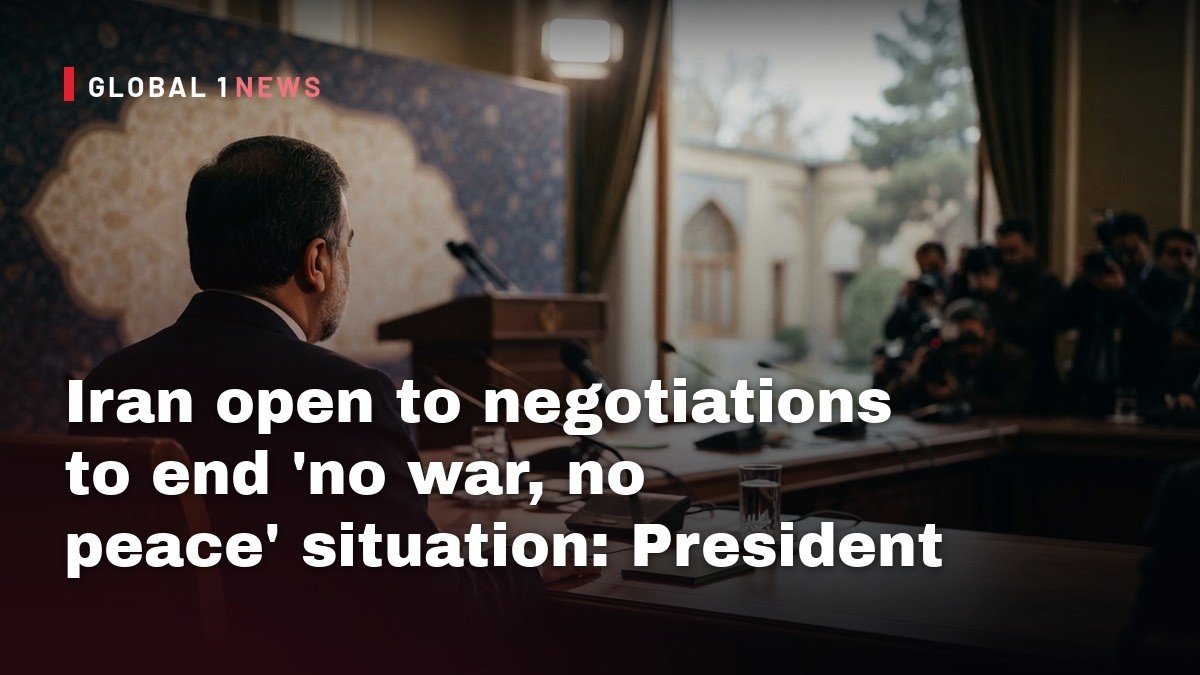
Iran’s position, as articulated by security official Mohsen Rezaei, remains firm: Washington must accept Tehran’s conditions before any agreement can be reached. The Iranian official reiterated that the proposal from Tehran includes key demands such as the lifting of the US naval blockade, the release of frozen assets, and the allowance of nuclear inspections under terms acceptable to Tehran.
Rezaei’s reiteration underscores Tehran’s insistence on sovereignty and the removal of what it perceives as coercive measures imposed by the United States. The insistence on lifting the blockade is particularly salient, as the naval restriction has been a central lever of US pressure on Iran’s economy, especially its oil exports. By linking the blockade to any broader settlement, Iran signals that any lasting peace must address its core economic grievances.
For African economies that import Iranian oil or rely on the stability of the Strait of Hormuz for their own shipping lanes, Iran’s demands carry weight. A prolonged blockade has already contributed to volatility in global oil markets, affecting fuel prices across the continent. A resolution that includes the reopening of the strait could ease shipping costs and stabilize energy markets, benefitting both consumers and businesses in Nigeria, South Africa and beyond.
The strategic importance of the Strait of Hormuz
The Strait of Hormuz remains one of the world’s most critical chokepoints for oil transportation. Any disruption to traffic through the narrow waterway can have immediate repercussions on global oil supply and, by extension, on African economies that depend on imported petroleum. The proposal’s call to reopen the strait is therefore a central element for all parties involved.
In the context of the current talks, the reopening of the strait is presented as a confidence‑building measure that could pave the way for further concessions. If Iran agrees to lift the blockade and the United States reciprocates by easing sanctions or releasing frozen funds, the resulting de‑escalation could restore a degree of normalcy to maritime trade. Such a development would likely be welcomed by African shipping companies that navigate the Gulf of Guinea and the broader Atlantic corridor.
Moreover, the strait’s significance extends beyond oil. It is a conduit for a range of commodities, including liquefied natural gas and bulk cargoes that feed African markets. A stable passage through Hormuz would thus support not only energy security but also broader trade flows that underpin the continent’s economic growth ambitions.
Regional reactions and the African perspective
While the Al Jazeera report focuses on the US‑Iran‑Qatar dynamics, the reverberations of the talks are being felt across Africa. Leaders in Lagos, Abuja and Accra have historically expressed concern over any escalation that could threaten oil supplies or maritime safety. The prospect of a diplomatic breakthrough, however tentative, offers a hopeful narrative for policymakers seeking to shield their economies from external shocks.
In Nigeria, for instance, the oil sector remains a pillar of national revenue. Any disruption in the Gulf that leads to higher crude prices can strain the national budget and increase inflationary pressures on everyday Nigerians. The possibility that the US blockade could be lifted, as outlined in the Qatari proposal, is therefore a development that Nigerian officials are monitoring closely.
Similarly, East African ports such as Mombasa and Dar es Salaam, which handle a significant share of regional imports, are sensitive to shipping costs. A stable Hormuz corridor could lower freight rates, translating into cheaper goods for consumers across the continent. As such, African diplomatic missions in Washington and Doha are likely to follow the negotiations closely, ready to engage if an opportunity arises to influence the outcome in favour of broader African interests.
Outlook: what next steps could mean for peace and trade
Despite President Trump’s optimistic phrasing, no formal agreement has been announced. The next phase will hinge on whether Tehran accepts the US‑led conditions that Secretary Rubio deems unacceptable, and whether the United States is willing to make concessions on sanctions and the naval blockade. The two‑day proposal presented by Qatar serves as a framework, but the details remain subject to intense negotiation.
If both sides manage to bridge their core demands, the immediate impact would be a reduction in military posturing and a reopening of the Strait of Hormuz. Such a shift would likely ease oil price volatility, benefitting African economies that import large volumes of fuel. Moreover, a diplomatic resolution could free up US and allied military resources for other strategic priorities, potentially allowing a re‑allocation of defence spending toward development assistance programmes that many African nations rely on.
Conversely, should talks stall or collapse, the risk of renewed hostilities remains. The United States has reiterated its readiness to act if circumstances change, a statement that keeps the door open for future military engagement. For African states, the stakes are clear: a renewed conflict would threaten shipping lanes, drive up energy costs and further destabilise a region already grappling with economic challenges.
In the coming weeks, observers across the continent will be watching the diplomatic choreography unfold from Washington to Doha to Tehran. The outcome, whatever it may be, will shape not only the geopolitical landscape of the Gulf but also the economic fortunes of African nations that depend on the flow of oil and trade through these strategic waters. As Al Jazeera’s Kimberly Halket reported from Washington, the world remains poised on the brink of a potential turning point, and Africa, ever watchful of the tides of global power, stands ready to respond to the next wave.
By Sarah Okafor, Staff Writer
This article was produced with AI-assisted research and editorial support. Reporting is based on the source material cited below. Sources: Al Jazeera English video report (09 November 2026); Al Jazeera English; Global1.News
What's Your Reaction?
 Like
0
 Dislike
0
 Love
0
 Funny
0
 Wow
0
 Sad
0
 Angry
0

Africa Correspondent at Global1.News. Based in Lagos, covering politics, business, technology, and culture across the continent. Focused on telling African stories beyond the headlines — the innovation, entrepreneurs, and communities shaping the region's future.










Comments (0)