
U.S. Army Officer Arrested in England on Suspicion of Spying for Russia
A 41-year-old senior U.S. Army soldier based at NATO's Allied Rapid Reaction Corps headquarters in Gloucestershire was arrested in England on suspicion of spying for Russia, held under the National Security Act 2023. He has not been charged or named.
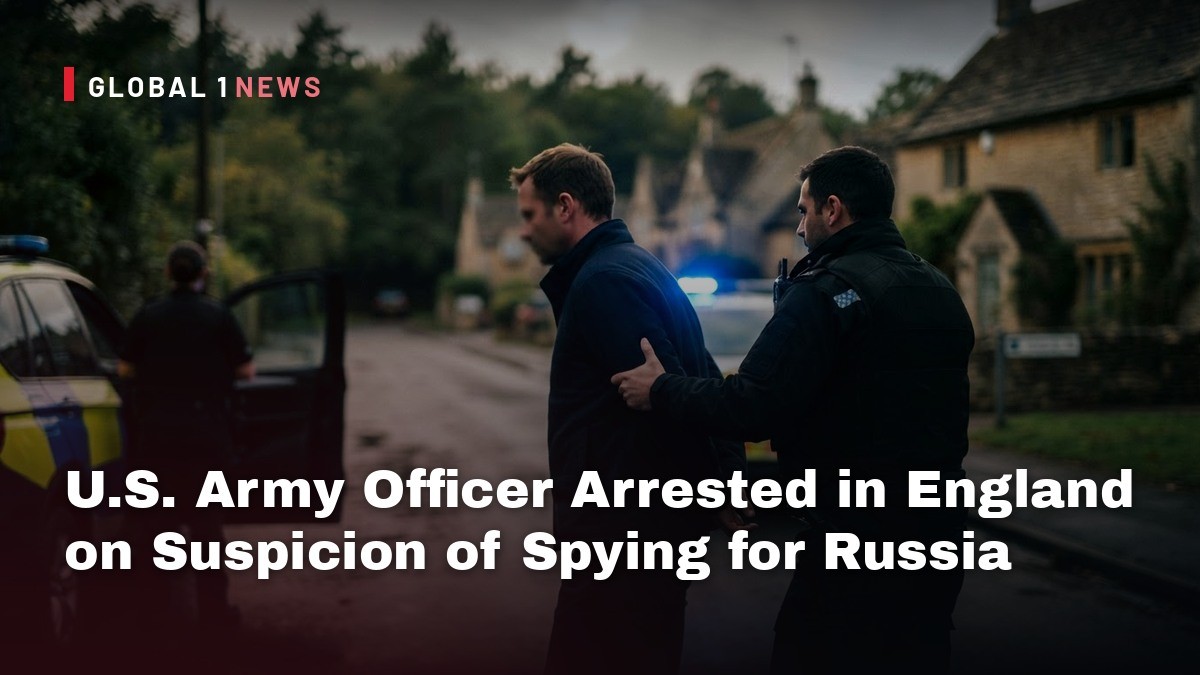
British counter-terrorism police arrested a 41-year-old senior U.S. Army soldier near Gloucester on Tuesday on suspicion of spying for Russia, in an operation run alongside the FBI and the U.S. military. He remained in custody at a London police station, and officers were searching two locations in Gloucestershire. Nobody has been charged. Nobody has been named. And the country at the centre of the allegation, police said in plain terms, is Russia.
U.S. Army Officer Arrested in England on Suspicion of Spying for Russia
London, England — November 10, 2026 — The Metropolitan Police announced the arrest in a short statement on Tuesday. The man, a senior soldier, was detained under the National Security Act 2023 on suspicion of offences under section 1 and section 3 — obtaining or disclosing protected information, and assisting a foreign intelligence service. He is an officer, according to a U.S. official quoted by the Associated Press, though police did not give a rank.
A 41-Year-Old Officer, Taken Near Gloucester
The Met's statement was spare: a 41-year-old man, arrested near Gloucester on Tuesday 10 November, on suspicion of offences under section 1 and section 3 of the National Security Act 2023, the country concerned being Russia. Officers are carrying out searches at two locations in Gloucestershire, and the man remains in custody at a London police station. Counter Terrorism Policing led the operation, working closely with U.S. authorities, the U.S. military and the FBI. The AP reported that Gloucestershire sits about 90 miles, or 140 kilometres, west of London; CBS News put it at about 100 miles. Both describe the same county. Deputy Assistant Commissioner Vicki Evans, senior national coordinator for Counter Terrorism Policing, called the arrest "significant" and said: "The allegations are serious and our investigation is very much ongoing." Police also said the arrest is not linked to any other ongoing counter-terrorism investigation.
What Sections 1 and 3 Actually Say
The National Security Act 2023 replaced the espionage statutes that had governed this area for more than a century. Section 1 covers obtaining, copying, recording, retaining, disclosing or providing access to "protected information" where the conduct is for a purpose the person knows, or ought reasonably to know, is prejudicial to the safety or interests of the United Kingdom, and where the foreign power condition is met. Conviction on indictment carries a maximum of life imprisonment or a fine. Section 3 covers assisting a foreign intelligence service: conduct intended to materially assist such a service in UK-related activities, or conduct likely to do so where the person knows or ought reasonably to know it. Its maximum is 14 years or a fine. The Act has been in force since December 2023. Section 3 applies to conduct outside the United Kingdom only where the person is a UK person or acts for the Crown, which is one reason the location of this arrest matters.
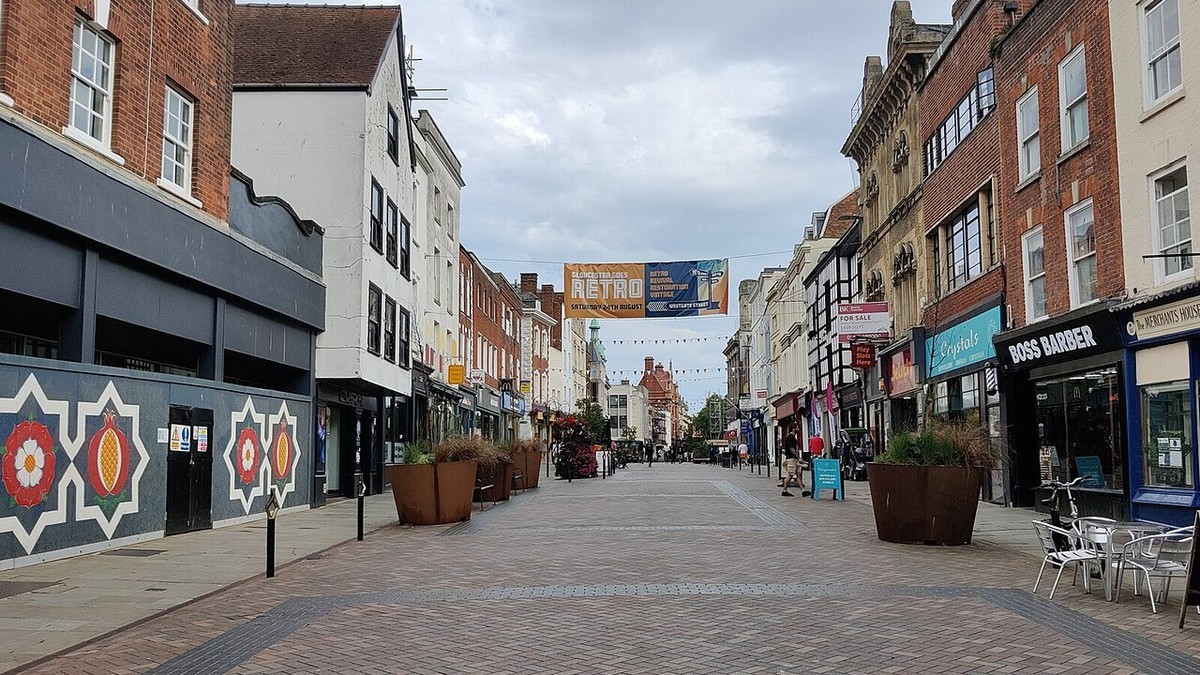
The Base at the Centre of It
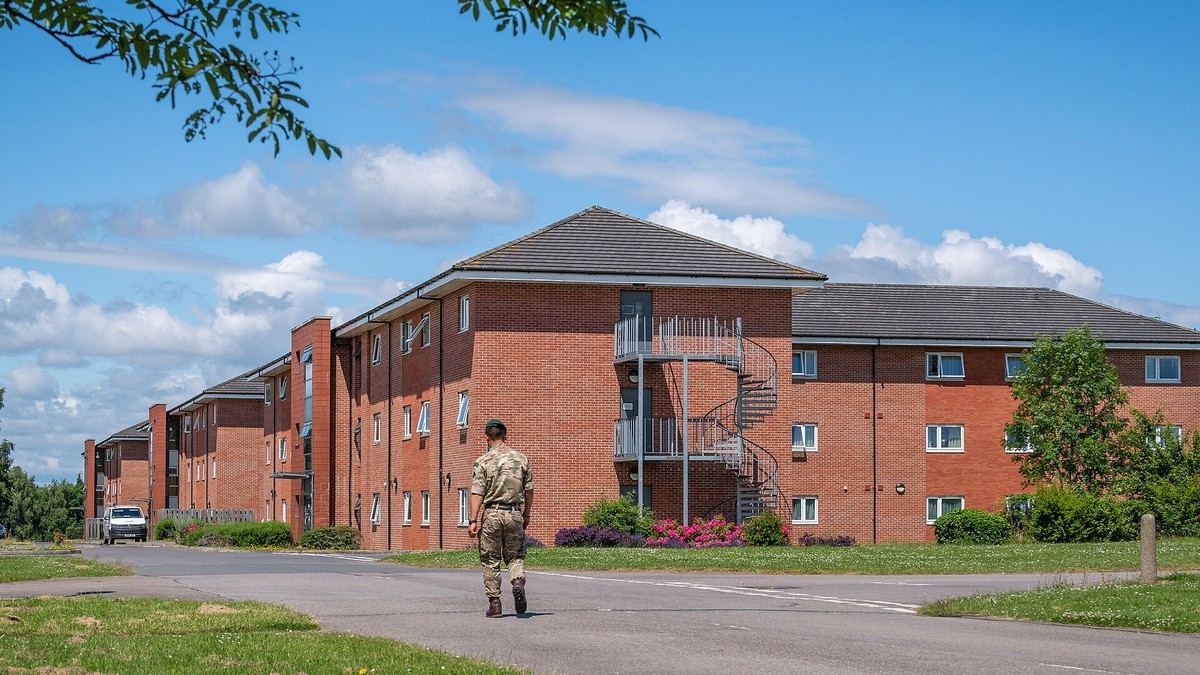
The BBC reported that the soldier was based at Imjin Barracks in Innsworth, Gloucestershire, and said it understood that to be the case. The AP attributed the same detail to a U.S. official, a senior NATO official and a British government official, all speaking anonymously. Imjin Barracks is the headquarters of NATO's Allied Rapid Reaction Corps, a three-star formation that relocated from Germany in 2010 and describes itself as one of only two NATO strategic reserve corps. Its own site counts more than 400 permanent staff from more than 20 nations, with the United Kingdom as framework nation supplying 60 per cent of the staff. A U.S. Army welcome guide for incoming personnel lists 21 contributing states. It is commanded by a British lieutenant general, with an Italian major general as deputy. The corps is a land formation built to deploy as a corps headquarters, a land component command or a joint task force headquarters.
Four Statements, and the Gaps Between Them
A senior NATO military official confirmed the assignment directly: "We can confirm that the American service member arrested by British police was assigned to NATO's Allied Rapid Reaction Corps (ARRC)." FBI Director Kash Patel called it an "important arrest" involving allegations of espionage that are of "the utmost concern to the United States and our allies", adding: "This FBI has no tolerance for anyone who breaks their oath to the United States and whose actions endanger our national security and that of our partners." Brigadier General Sean Stinchon, commanding general of U.S. Army Counterintelligence Command, said: "The alleged conduct of a senior soldier, entrusted with sensitive information, is a sobering reminder that insider threats are real and persistent." Read those four statements together and the shape of the silence becomes clear. None names the man, his rank, his unit, his security clearance, what information is alleged to have moved, when the alleged conduct occurred, or whether the United States will pursue its own case.
The Spy Chief's Warning Four Weeks Earlier
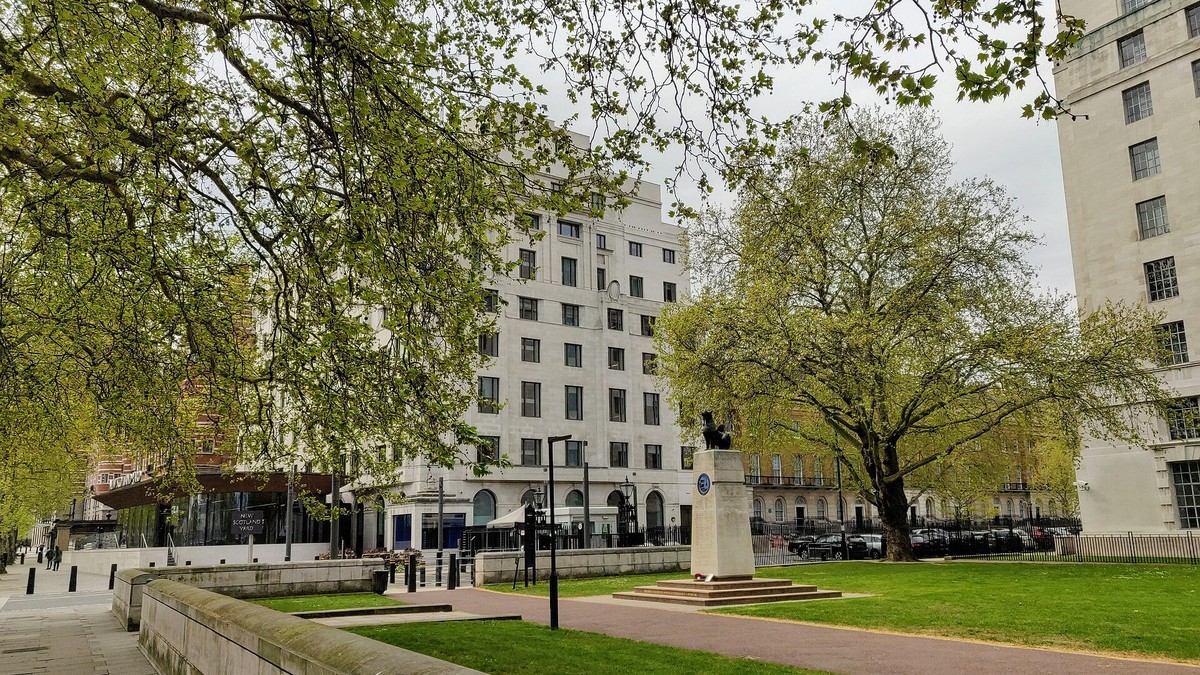
On 13 October, MI5 Director General Sir Ken McCallum delivered his annual threat update at Thames House, and the timing is hard to ignore. According to CBS News, he described Russia as "aggressor number one" when it comes to threats against the United Kingdom and accused Moscow of "escalating their attempts at hybrid warfare". The published text of the speech is more expansive still, arguing that the country has entered a new era of national security in which harm is aimed less at what government owns than at people, businesses and communities, and noting that MI5's terrorism and state-threat missions are now roughly equal in scale. That is the institutional weather this arrest landed in. The National Security Act 2023, which police used here, has been in force only since December 2023, and it was written for precisely this category of case: a trusted insider inside a sensitive multinational headquarters, allegedly working for a foreign intelligence service rather than an ideology.
Not the Iran Case — Police Drew That Line Themselves
Counter-terrorism policing said the arrest was not related to "any other ongoing Counter Terrorism Policing investigations", and the force was specific about why that mattered. Attention had been fixed on RAF Fairford, also in Gloucestershire, where the U.S. Air Force withdrew bombers after a security incident and where five British men and one UK-Iranian national were arrested in late September. On Tuesday, the same day as the Gloucester arrest, the U.S. Justice Department announced charges against three people it accuses of being Iran-backed operatives in a plot against that base; one is in custody in New York and two are not in custody, according to CBS News. The Metropolitan Police statement puts the Russia-linked arrest outside all of it. That distinction is worth holding onto: two alleged foreign plots touched the same English county inside seven weeks, and police say they are separate.
The Same Day, in Abu Dhabi
The arrest also landed on the opening day of the first U.S.-mediated trilateral talks between Russia, Ukraine and the United States in about nine months, held in Abu Dhabi. President Volodymyr Zelenskyy called the discussions "constructive and quite substantive", according to CBS News, while Russian Foreign Minister Sergey Lavrov rejected European demands for an immediate ceasefire. Nobody involved expected a breakthrough. That juxtaposition is the story of the day rather than a coincidence to be explained: Washington and Moscow are negotiating in one room while British police hold an American officer accused of working for Moscow in another. Diplomacy and counter-intelligence ran on parallel tracks on Tuesday, and neither track appears to have been paused for the other. No official has suggested any link between the talks and the arrest, and none should be inferred from timing alone.
Why an Ally's Soldier on British Soil Matters
American service members stationed in Britain are not new; the U.S. contingent is one of the largest among the ARRC's contributing nations. What is new is the allegation. A foreign ally's officer, working inside a NATO headquarters on British soil, accused of assisting a foreign intelligence service, is a different category of problem from a domestic civil servant leaking documents. It also raises questions of jurisdiction that no one has answered publicly. The National Security Act 2023 can reach conduct by non-British nationals committed in the United Kingdom, and sections 1 and 3 both apply to conduct within the UK regardless of the suspect's nationality. What remains unstated is whether British prosecutors will charge, whether the United States will seek to take the case back under military law, and whether the two governments have an agreement about which of those happens first.
The Questions Nobody Has Answered
The honest position is that almost every substantive question is open. There is no charging decision, no court appearance, no name and no confirmed rank. There is no account of what information is alleged to have been passed, to whom, over what period, or whether anything actually left the base. There is no indication of how the alleged activity came to light, whether through U.S. counter-intelligence, British monitoring, a tip, or some combination. Police have not said whether they believe money was involved. The only U.S. Army statement so far is General Stinchon's. NATO has confirmed an assignment and nothing more. This is not a gap in the reporting; it is the state of the case. A 14-day detention clock exists precisely because the evidence-gathering is at the beginning, not the end.
What Happens Inside the Fourteen Days
Under the National Security Act, police can hold a suspect without charge for up to 14 days, a power that distinguishes state-threat cases from ordinary criminal investigations in England and Wales. That window now runs. Within it, investigators will need either to charge the man or to release him, and any charging decision would fall to the Crown Prosecution Service on evidence gathered by Counter Terrorism Policing with FBI and U.S. military support. Searches at two Gloucestershire locations continue. The ARRC itself will carry on training and preparing to deploy, and NATO will keep saying as little as it can. For readers, the marker to watch is not another statement — it is a court date, a name, and a charge sheet. Until one of those appears, what exists is an arrest, two statutory sections that carry life and 14 years respectively, and two governments declining to explain.
By Jessica Ali, Staff Writer
This article was produced with AI-assisted research and editorial support. Sources: Metropolitan Police and Counter Terrorism Policing statements; Associated Press; BBC News; CBS News; NBC News; CNN; Express.co.uk; NATO Allied Rapid Reaction Corps; U.S. Army Counterintelligence Command; FBI; legislation.gov.uk (National Security Act 2023, sections 1 and 3); MI5 annual threat update, 13 October 2026. Photographs: Sgt Paul Shaw/Ministry of Defence (OGL v1.0); Shadowssettle (CC BY-SA 4.0); Mat Fascione via Geograph (CC BY-SA 2.0). Cover: Global 1 News editorial image.
What's Your Reaction?
 Like
0
 Dislike
0
 Love
0
 Funny
0
 Wow
0
 Sad
0
 Angry
0

Editor-in-Chief at Global1.News. Atlanta-based journalist who cuts through the BS and tells it like it is. Lead anchor, host, and the voice you hear when the spin stops and the truth starts.














Comments (0)