
Iran Celebrates US Midterm Loss as Israel Grapples With Political Uncertainty
The discussion, which combined on‑the‑ground footage from Tehran with commentary on Israeli domestic politics, highlighted how shifts in Washington’s political landscape could reverberate across the Middle East, especially for Israel’s security calculus.
In a JNS TV broadcast aired on 9 November 2026, the channel’s panel “The Quad” linked three seemingly disparate developments: a wave of street celebrations in Iran following the United States’ recent midterm elections, the disappearance of 420 kilograms of enriched uranium, and a deepening political crisis in Israel as parties scramble to form a governing coalition. The discussion, which combined on‑the‑ground footage from Tehran with commentary on Israeli domestic politics, highlighted how shifts in Washington’s political landscape could reverberate across the Middle East, especially for Israel’s security calculus.
Iranian Streets Turn Festive After US Midterm Results
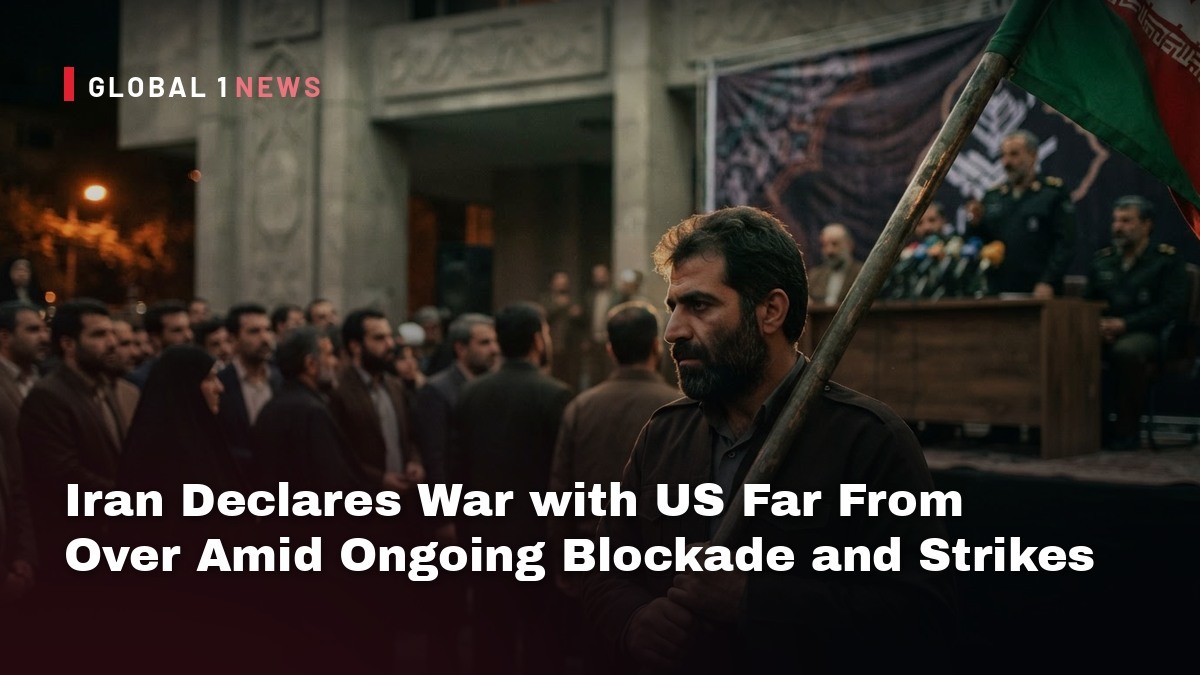
According to the video report, pro‑IRGC demonstrators took to the streets of Tehran and other major cities to celebrate what they described as President Donald Trump’s “crushing” defeat in the recent midterm elections. The footage showed crowds waving Iranian flags, chanting slogans that praised the Islamic Republic’s resilience and mocked the United States for its perceived political weakness. The panel noted that the celebrations were organized by groups aligned with the Islamic Revolutionary Guard Corps, underscoring the regime’s confidence that a fractured US Congress would limit Washington’s ability to pressure Tehran.
The report emphasized that the celebrations were not merely symbolic. Participants carried banners proclaiming “Victory for Iran” and shouted that the United States’ internal divisions would give Tehran “exactly the opportunity it needs” to advance its regional agenda. While the video did not provide exact attendance figures, the visual evidence suggested a sizable turnout, especially in central squares such as Tehran’s Azadi Square.
Panelists connected the Iranian jubilation to broader strategic calculations. With the United States facing a divided Congress, the possibility of reduced funding for sanctions enforcement and a slowdown in diplomatic pressure was seen by Tehran as a window to consolidate its influence in Iraq, Syria and Lebanon. The JNS TV analysts warned that such optimism in Iran could translate into more assertive posturing, especially if the missing uranium issue—discussed later—remains unresolved.
Missing Enriched Uranium Raises Global Alarm
The broadcast highlighted a separate but equally alarming development: 420 kilograms of enriched uranium remain unaccounted for. The video did not specify the location of the loss, but the panel stressed that the quantity is significant enough to raise concerns within the International Atomic Energy Agency and among Western intelligence services. The missing material, according to the report, could potentially be diverted for illicit weapons programs if not recovered promptly.
Panelists linked the uranium disappearance to the broader context of Iran’s nuclear ambitions. They argued that Tehran could view the loss as an opportunity to claim that the United States and its allies are failing to secure nuclear materials, thereby casting doubt on the effectiveness of existing non‑proliferation mechanisms. The narrative advanced by the Iranian demonstrators, as shown in the footage, suggested that the United States’ political turmoil was weakening its ability to monitor and safeguard sensitive nuclear assets.
While the video did not provide official statements from the Israeli Ministry of Defense or the IDF, the panel inferred that Israel would be closely monitoring the situation. Given Israel’s long‑standing policy of maintaining qualitative military superiority in the region, any lapse in the global nuclear security regime is likely to be viewed as a direct threat to Israeli security. The panel therefore warned that Israel could consider pre‑emptive diplomatic or covert measures to address the missing uranium, especially if evidence points to Iranian involvement.
Israel’s Own Political Crisis Complicates Security Decisions
Parallel to the developments in Tehran, Israel is confronting a “political crisis” as rival parties race to form a governing coalition. The JNS TV segment noted that the fragmented election results have left the Knesset without a clear majority, prompting negotiations among parties that span the political spectrum—from right‑wing nationalist blocs to centrist and left‑leaning factions.
The report highlighted a specific concern: the potential influence of Arab parties on Israel’s national security decisions. While Arab parties have historically been excluded from security ministries, the current balance of power could give them leverage in coalition talks, prompting Israeli leaders to weigh the political cost of granting them policy influence against the need for a stable government.
Panelists emphasized that Israel’s security establishment, including the IDF and the Ministry of Foreign Affairs, is closely watching the coalition talks. Any perceived concession to Arab parties could be interpreted by regional adversaries, particularly Iran, as a sign of Israeli weakness or indecision. The analysts warned that Tehran’s celebratory mood in Tehran could be amplified if Israel appears politically divided, potentially emboldening Tehran to test Israel’s red lines in the coming months.
Rising Anti‑Israel Sentiment in the United States
The JNS TV discussion turned to the United States, where the panel identified a growing “anti‑Israel” current within American politics. The video description referenced a “deepening political and cultural divide over the Jewish state,” citing remarks from prominent conservative commentator Matt Walsh and satirist Jon Stewart as examples of the polarized discourse.
Matt Walsh’s comments, as mentioned in the broadcast, framed Israel as a “political liability” for the Republican Party, suggesting that continued support for Israel could alienate certain voter bases. In contrast, Jon Stewart’s satirical take highlighted the absurdity of anti‑Israel rhetoric, but also underscored how such narratives are gaining traction in mainstream media. The panel noted that these divergent voices reflect a broader debate within the Republican Party about whether to maintain the traditional “unconditional” support for Israel that has characterized US‑Israeli relations for decades.
The report also mentioned that former US President Donald Trump, despite his defeat in the midterms, remains a vocal advocate for Israel. However, the panel speculated that Trump’s influence over the Republican agenda may be waning as internal party divisions deepen. This uncertainty could lead to a shift in US policy, including potential discussions about ending or reducing military aid to Israel—a prospect that would have profound implications for Israel’s defense budgeting and strategic planning.
American Voices Supporting Israel Amidst Divisions
Amid the contentious debate, the JNS TV segment highlighted several public figures who voiced strong support for Israel. Dr. Phil, the television psychologist, was quoted as endorsing Israel’s right to self‑defence, while British politician Susan Hall expressed solidarity with the Jewish community in the United Kingdom. Their statements, according to the video, aimed to counterbalance the anti‑Israel narratives gaining ground in parts of the American political spectrum.
The broadcast also showcased a “remarkable show of solidarity in Philadelphia,” where Jewish communities and their allies turned an attempted boycott of Jewish‑owned businesses into a large‑scale demonstration of unity. Footage from the event showed crowds gathering at a central location, holding signs that read “Stand with Israel” and “No to Boycott.” The panel interpreted this as evidence that, despite political polarization, a significant segment of the American public remains committed to supporting Israel.
These expressions of support were presented as a counterweight to the growing anti‑Israel sentiment, suggesting that the debate in the United States is far from settled. The panel argued that the outcome of this cultural clash will influence US foreign policy decisions, especially regarding aid, diplomatic backing, and the broader strategic partnership with Israel.
Implications for Israel’s Strategic Outlook
Bringing together the threads of Iranian celebration, missing uranium, Israeli coalition negotiations, and US political fragmentation, the JNS TV panel concluded that Israel faces a “confluence of external and internal pressures.” Externally, Tehran’s confidence, buoyed by perceived US weakness, could translate into more aggressive regional actions, such as supporting proxy groups or escalating rhetoric against Israel. Internally, Israel’s political stalemate may limit the government’s ability to respond swiftly to emerging threats.
The panel warned that Israeli decision‑makers, including the Prime Minister’s Office, the IDF’s General Staff, and the Foreign Ministry, must prepare for a scenario where both regional adversaries and traditional allies are in flux. This could involve accelerating diplomatic outreach to moderate Arab states, reinforcing intelligence cooperation with the United States while contingency plans are revised, and ensuring that the security establishment retains operational autonomy regardless of coalition composition.
In summary, the JNS TV report painted a picture of a region in transition: Iran emboldened by US political discord, a missing cache of enriched uranium that threatens global non‑proliferation norms, an Israeli political arena that may reshape security policymaking, and a United States where the debate over support for Israel is intensifying. How these dynamics evolve in the coming months will determine whether Tehran’s celebratory mood translates into concrete actions that challenge Israel’s security, and whether Israel’s internal political negotiations can produce a stable government capable of meeting those challenges head‑on.
By Hannah Berg, Staff Writer
This article was produced with AI-assisted research and editorial support. Reporting is based on the source material cited below. Sources: JNS TV video report (09 November 2026); JNS TV; Global1.News
What's Your Reaction?
 Like
0
 Dislike
0
 Love
0
 Funny
0
 Wow
0
 Sad
0
 Angry
0

Israel Correspondent at Global1.News. Based in Tel Aviv, covering Israeli politics, security, technology, and society. Provides balanced, deeply-sourced reporting on one of the most closely-watched regions in the world.











Comments (0)