
Kazakhstan Offers Tajikistan Cooperation, Not a Substitute for Russia
In November 2026, President Emomali Rahmon’s three‑day state visit to Astana culminated in a framework agreement on petroleum product supplies and a comprehensive roadmap to expand bilateral trade through 2030.
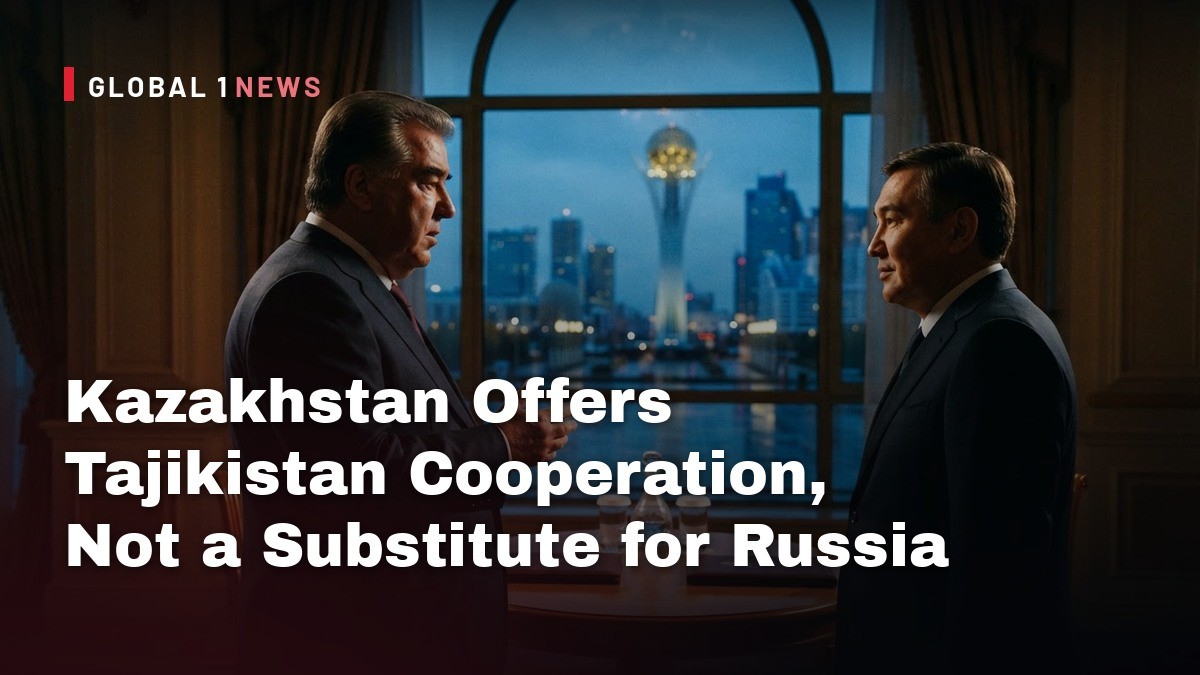
In November 2026, President Emomali Rahmon’s three‑day state visit to Astana culminated in a framework agreement on petroleum product supplies and a comprehensive roadmap to expand bilateral trade through 2030. The diplomatic choreography builds upon the Treaty on Allied Relations signed in Dushanbe in August 2024 and ratified by President Kassym‑Jomart Tokayev in May 2026, underscoring Kazakhstan’s strategic intent to deepen economic interdependence with its southern neighbor while navigating the constraints imposed by regional energy volatility.
Framework Agreement on Fuel Supplies and Its Practical Limits
The centerpiece of the Astana talks was a framework agreement intended to address Tajikistan’s most acute vulnerability: the shortage of petroleum products after Ukrainian strikes on Russian refineries and Moscow’s export restrictions disrupted the regional fuel market. Although the agreement formally exempts deliveries from Russian bans, the actual volume of Kazakh fuel shipped to Dushanbe fell dramatically. Kazakhstan’s exports to Tajikistan dropped from 27,100 tons to 9,100 tons in the first nine months of 2026, representing roughly one percent of Tajikistan’s total petroleum‑product imports by volume. This contraction reflects Kazakhstan’s own need to protect its domestic market, limiting the practical impact of the diplomatic pledge.
Customs data reported by Reuters shows that Russian deliveries to Tajikistan fell 10.8 percent in the same period, reducing Russia’s share of Tajik petroleum imports from 88.4 percent to 77.2 percent. While Turkmenistan, Uzbekistan and Iran stepped in to cover part of the shortfall, total import volume still rose 2.2 percent, indicating that the regional supply chain remained under pressure despite diversification efforts. The absence of specific volume, product, or delivery‑date details in the publicly released fuel framework underscores the tentative nature of Kazakhstan’s role as a substitute for Russian fuel supplies.
Trade Expansion Targets and Current Imbalances
President Tokayev announced that bilateral trade is “confidently approaching” $2 billion, a target that exceeds the $1.13 billion recorded for January–September 2026. Rahmon cited a near‑26 percent year‑on‑year growth in trade, yet the figures reveal a pronounced asymmetry. Tajikistan imports up to one million tons of Kazakh grain annually, alongside Kazakh flour, liquefied natural gas and aluminum oxide. Conversely, more than 80 percent of Tajik fruit and vegetable exports were destined for Kazakhstan as of 2024, and in January–May 2025 Tajik exports to Kazakhstan amounted to only $31.3 million against $450.1 million in imports.
The trade imbalance is further highlighted by Kazakhstan’s contribution of 12.5 percent to Tajikistan’s total imports in the January–September 2026 window, placing it behind China and Russia. Nevertheless, the business forum accompanying Rahmon’s arrival announced 11 commercial agreements valued at $135.3 million, suggesting that the momentum of the visit may translate into incremental diversification of Tajikistan’s export basket, even as the overall trade structure remains skewed toward Kazakh commodities.
Energy Cooperation Beyond Fuel: Electricity and Hydropower
Electricity cooperation emerged as a secondary pillar of the Astana agenda. Since 2023, Kazakhstan has pursued the purchase of power from Tajikistan’s Rogun hydropower plant to alleviate deficit hours in its grid, with transmission routed through Uzbekistan. A draft approved by the Kazakh government in April 2025 envisaged a 20‑year arrangement contingent on transit capacity, though the final text of the agreement was not disclosed. The Rogun project, initiated in 1976, has struggled to achieve full operational capacity; after five decades only two units are running at low output. Export contracts with Kazakhstan and Uzbekistan are now central to financing the dam’s completion, indicating that Kazakhstan’s interest in Tajik electricity is both strategic and financial.
While winter shortages in Tajikistan have historically constrained export potential, the ongoing negotiations suggest that Kazakhstan is positioning itself as a long‑term off‑taker of Tajik hydropower, thereby linking the two economies through shared infrastructure and creating a mutual dependency that may offset the limited role Kazakhstan can play in fuel supply.
Broader Diversification Strategy: China, Russia, and Migration Flows
Rahmon’s outreach to Astana aligns with a broader Tajik policy of diversifying economic partners. In the January–September 2026 period, China accounted for 28 percent of Tajik imports and 30.5 percent of its exports, according to the Tajik Statistics Agency. Rahmon also signed a permanent friendship treaty with Beijing in May 2026, reinforcing Dushanbe’s pivot toward Beijing as a principal trade partner.
Simultaneously, labor migration patterns are shifting. Eurasianet reported a roughly 15 percent decline in work‑purpose entries by Central Asian citizens into Russia during the first half of 2026, while Kazakhstan is emerging as an alternative destination for Tajik migrants. This demographic shift may deepen economic linkages between the two states, particularly in sectors such as construction and services where migrant labor is a key input.
Security Cooperation and International Diplomacy
The Astana visit also encompassed security and diplomatic dimensions. Kazakhstan pledged to train personnel for the border troops of Tajikistan’s State Committee for National Security, reflecting a deepening of defense collaboration. Moreover, Astana committed to supporting Tajikistan’s first‑ever bid for a non‑permanent seat on the United Nations Security Council for the 2028–2029 term, a contest in which Tajikistan will contend with India. This diplomatic backing underscores Kazakhstan’s willingness to leverage multilateral platforms to bolster Tajikistan’s international standing.
Such security and diplomatic assistance complements the economic agenda, signalling a holistic approach to bilateral relations that integrates trade, energy, migration, and geopolitical support.
Implications for Regional Energy Security
The contraction of Kazakh fuel deliveries, juxtaposed with the continued dominance of Russian petroleum supplies, highlights the fragility of Central Asian energy security in the wake of external shocks. While Kazakhstan’s policy of restricting exports safeguards its domestic market, it also limits the capacity of the Astana‑Dushanbe partnership to serve as a reliable alternative to Russian fuel. The fuel framework’s lack of quantitative specifics suggests that both sides recognize these constraints and are framing the agreement as a symbolic commitment rather than a binding supply guarantee.
Nevertheless, the parallel pursuit of electricity imports from Rogun offers a longer‑term diversification pathway. If Kazakhstan secures a stable supply of cheap hydropower, it could reduce its own reliance on fossil‑fuel imports, thereby freeing additional capacity to support Tajikistan’s grid during peak demand periods. This interdependence could foster a more resilient regional energy architecture, provided that the Rogun project reaches its intended operational scale.
Future Trajectories: From Symbolic Frameworks to Concrete Outcomes
Looking ahead, the success of the 2030 trade roadmap will hinge on the ability of both ministries—Kazakhstan’s Ministry of Foreign Affairs and Tajikistan’s Ministry of Economic Development—to translate the 14 intergovernmental documents into measurable outcomes. The roadmap’s inclusion of sectors such as artificial intelligence, e‑commerce, health care and pension data sharing signals an ambition to broaden cooperation beyond traditional commodities.
However, the immediate impact of the fuel framework remains modest, constrained by Kazakhstan’s export restrictions and the absence of detailed delivery schedules. As the year progresses, analysts at think tanks such as the Asan Institute and the Korea Development Institute of Policy (KDI) will likely monitor whether the pledged training for Tajik border troops and the support for the UN Security Council bid translate into tangible capacity‑building gains. The evolution of these initiatives will determine whether the Astana‑Dushanbe partnership evolves from a series of symbolic accords into a substantive engine of regional integration.
This article was produced with AI-assisted research and editorial support. Reporting is based on the source material cited below. Sources: The Diplomat; thediplomat.com; Global1.News (10 November 2026).
By Prof. David Park, Staff Writer
What's Your Reaction?
 Like
0
 Dislike
0
 Love
0
 Funny
0
 Wow
0
 Sad
0
 Angry
0

East Asia/Technology Correspondent at Global1.News. Seoul-based voice covering Korean politics, technology, business, and culture. Analyzes how technology and geopolitics intersect across East Asia.










Comments (0)