
Marandi on the Iran Paradox: Why Washington Cannot Bomb Its Way to a Ceasefire
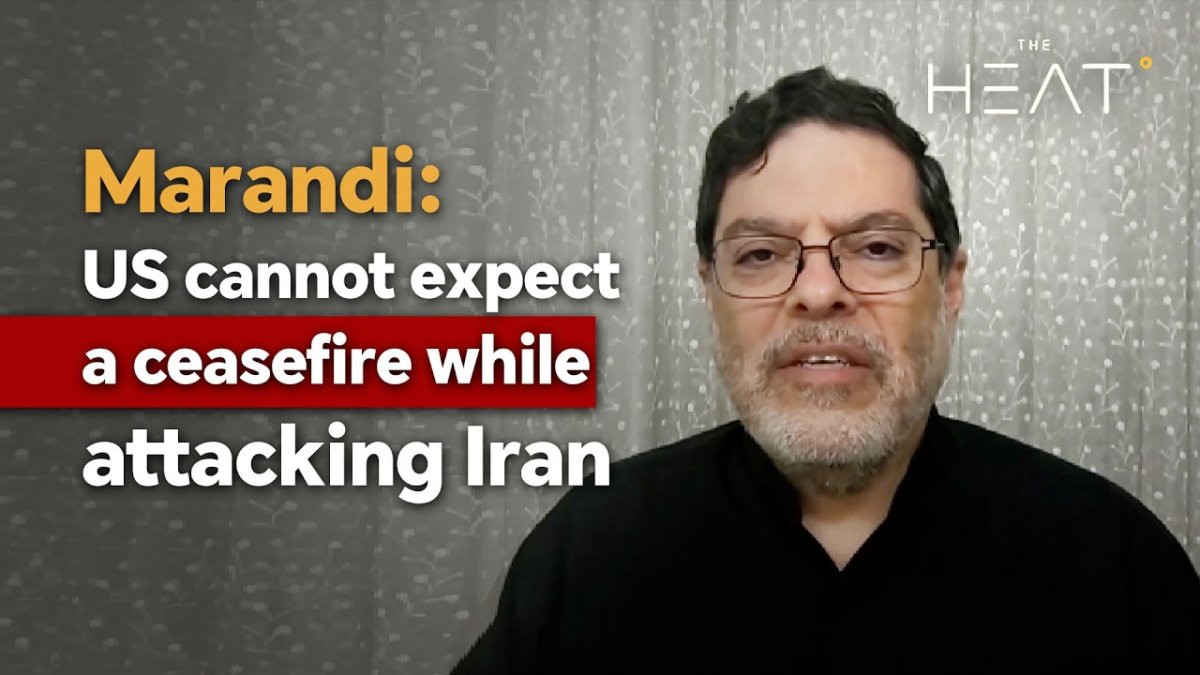
In a recent CGTN report on the program "The Heat," Professor Mohammad Marandi of the University of Tehran outlined why sustained U.S. military pressure undermines any prospect of a ceasefire with Iran. His analysis, delivered amid ongoing exchanges of strikes, highlights a core strategic paradox: escalation may aim to force negotiations, yet it simultaneously hardens positions and closes diplomatic space.
US-Iran Tensions: Coercive Diplomacy's Strategic Limits
Beijing, China — The interview comes as the conflict enters its fifth month with no clear end in sight. Regional powers are seeking ways to contain the fallout while global energy markets react to the instability. This situation underscores the challenges in balancing military actions with diplomatic efforts in the Middle East.
The Central Claim in the CGTN Interview
Professor Marandi stated that Washington cannot realistically pursue a ceasefire while conducting attacks on Iranian targets. He framed sustained military action as incompatible with the diplomatic track that Tehran might otherwise explore. This position reflects Tehran's consistent stance that negotiations require a prior reduction in hostilities rather than occurring under active bombardment. The interview underscores how Iranian officials view U.S. strikes as evidence that Washington seeks capitulation rather than mutual accommodation.Timeline and Scope of the Current Conflict
The conflict opened with U.S.-Israeli airstrikes on February 28, 2026. By late July, tit-for-tat operations had expanded across multiple theaters. Iranian missile and drone strikes have targeted U.S. positions in Jordan, Kuwait's Ahmad al-Jaber Air Base, and Egypt's Damietta facility. U.S. CENTCOM has responded with heavy-wave strikes on Islamic Revolutionary Guard Corps targets. Preparations for further strikes on Iranian energy infrastructure have been reported, while the fighting has drawn in Iraq, Egypt, and Yemen. Turkey and Saudi Arabia have initiated separate talks aimed at containment, indicating regional concern over spillover.The current confrontation builds upon a longer pattern of US-Iran friction that includes the 2019-2020 tanker seizures and the Soleimani strike, as well as the 2015 JCPOA framework and its subsequent collapse. Iran's missile and drone program has evolved considerably during this period, shifting from retaliatory demonstrations toward sustained operational reach across multiple theaters. The escalation ladder now in view follows a familiar logic in which limited strikes are intended to signal resolve and extract concessions, yet each round raises the threshold for de-escalation. Regional states drawn into the exchanges, including Iraq, Egypt, and Yemen, illustrate how the ladder extends beyond the original bilateral contest. Turkey and Saudi Arabia's containment talks reflect awareness that further rungs could lock participants into prolonged attrition rather than negotiated pauses.
Negotiations Under Active Hostilities
On July 31, 2026, President Donald Trump disclosed at a Camp David Cabinet meeting that high-level negotiations with Tehran were underway. At the same time, he accused Iran of violations and confirmed fresh Iranian strikes on U.S. positions. Trump publicly committed to four additional weeks of military operations and stated that Iran would face continued pressure. These statements illustrate the dual-track approach of pursuing talks while maintaining escalation, a combination Marandi argues cannot produce durable de-escalation. The simultaneity of diplomacy and strikes creates uncertainty about Washington's ultimate objectives.Coercive diplomacy conducted under active fire has repeatedly produced brittle outcomes in the region, as each side's leverage at the table remains constrained by battlefield momentum. The United States retains superior air and naval assets, yet Iran possesses asymmetric tools that raise costs for sustained operations. Intermediaries such as Oman, Qatar, and Switzerland have historically maintained discreet channels that allow indirect communication when direct talks are politically costly. President Trump's July 31 disclosure at Camp David therefore carries domestic political weight, signaling to allies and adversaries alike that Washington seeks to combine pressure with dialogue. This simultaneity risks narrowing the space for credible commitments, since any Iranian concession could be portrayed domestically as submission rather than strategic adjustment.
Energy Market and Regional Economic Pressures
Brent crude has risen to approximately $90 per barrel as the conflict has widened. Prolonged disruption in the Gulf raises risks to global supply routes, particularly through the Strait of Hormuz. Regional states face direct economic consequences from expanded operations, while global importers confront higher costs. These market effects add external pressure on all parties to find an off-ramp, yet the military dynamics described by Marandi continue to complicate that search.The Strait of Hormuz remains a critical chokepoint through which a substantial share of global oil flows must pass, amplifying the effects of any prolonged disruption. Rising insurance premiums and rerouting costs have already begun to reshape shipping patterns, placing particular strain on Asian importers that include China, India, Japan, and South Korea. Gulf producers face difficult choices between maintaining output to stabilize revenues and hedging against further infrastructure exposure. These market dynamics generate external pressure for restraint, yet they also create incentives for actors to exploit supply uncertainty for political advantage. Prolonged volatility therefore tests the resilience of both regional economies and the broader trading networks that depend on predictable energy transit.
China's Strategic Calculus and Energy Security
Beijing has issued calls for restraint and de-escalation, consistent with its interest in stable Gulf energy flows. China maintains a 25-year cooperation agreement with Iran and relies on imports from the region to support its economy. A drawn-out conflict threatens both energy security and Belt and Road shipping lanes that transit the Strait of Hormuz. Chinese diplomacy therefore emphasizes multilateral de-escalation mechanisms rather than unilateral military solutions, reflecting a preference for preserving existing trade frameworks over supporting coercive campaigns.China's 25-year cooperation agreement with Iran positions Beijing to prioritize stable energy inflows while navigating US sanctions pressure on its refiners. Reliance on Iranian crude forms one element of a diversified import strategy, yet a wider war would force difficult adjustments in procurement and shipping security. Beijing has consistently advocated dialogue over unilateral coercion, aligning with its broader preference for preserving existing trade frameworks. A drawn-out conflict would test this hedging posture by requiring simultaneous management of relations with Washington and Tehran. Multilateral de-escalation mechanisms therefore serve Chinese interests by reducing the likelihood that energy security and Belt and Road connectivity become collateral damage in great-power maneuvering.
Second-Order Effects Across Regions
The conflict's expansion into Iraq, Egypt, and Yemen creates openings for other actors to recalibrate alignments. ASEAN and EU states, while not directly involved, face indirect consequences through energy prices and supply-chain stability. Global South countries observe how great-power coercion interacts with regional diplomacy, potentially influencing future hedging strategies. Turkey and Saudi Arabia's containment talks suggest an emerging effort to insulate core interests from further spillover, yet these initiatives remain vulnerable to continued U.S.-Iran exchanges.Assessing the Limits of Coercive Diplomacy
The strategic question raised by Marandi's analysis is whether escalation can reliably bring an adversary to the table on favorable terms. Historical patterns in the region indicate that sustained attacks often strengthen domestic resolve and narrow the window for compromise. If negotiations proceed only under active fire, the resulting agreements may prove fragile once pressure eases. For Washington, the challenge lies in calibrating force to open rather than foreclose diplomatic pathways. For Tehran, the imperative is to demonstrate that military resilience can eventually shift the cost-benefit calculation in favor of talks. By Prof. Marcus Chen, Staff WriterThis article was produced with AI-assisted research and editorial support. Reporting is based on sources cited in the article.
What's Your Reaction?
 Like
0
Like
0
 Dislike
0
Dislike
0
 Love
0
Love
0
 Funny
0
Funny
0
 Wow
0
Wow
0
 Sad
0
Sad
0
 Angry
0
Angry
0

World Politics Analyst at Global1.News. Based in Beijing, covering US-China relations, global trade, and geopolitical strategy. Brings deep analytical perspective to the power dynamics shaping international affairs.









Comments (0)