
Ukraine’s fiber-optic drones get squeezed by AI data center demand
When you’ve spent a decade running bare‑metal servers and watching hyperscalers hoard everything from silicon to fiber, the story of Ukraine’s fiber‑optic drones feels like a mirror held up to the hosting world.
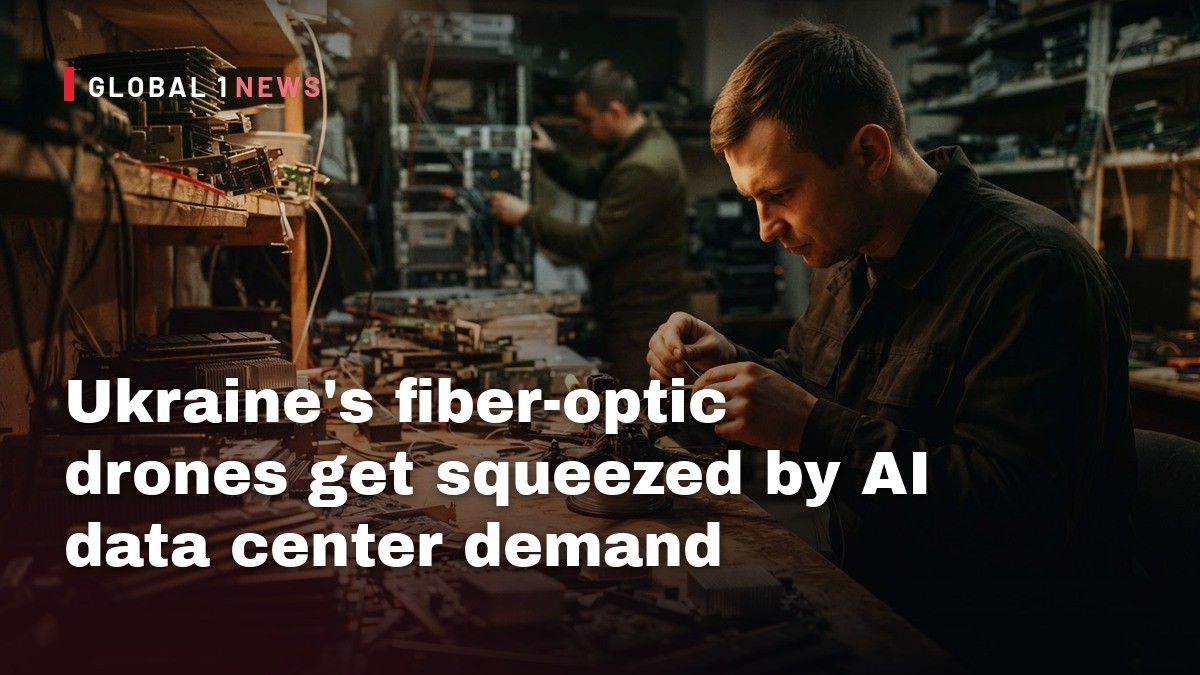
When you’ve spent a decade running bare‑metal servers and watching hyperscalers hoard everything from silicon to fiber, the story of Ukraine’s fiber‑optic drones feels like a mirror held up to the hosting world. The same thin strands of glass that keep AI data centers humming are now being dragged across fields, tied to quad‑copter frames, and used to out‑maneuver jamming rigs. The fallout is simple: a commodity that was once a cost‑center for telecoms has become a battlefield consumable, and the price spikes are hitting anyone who depends on Chinese‑sourced fiber – whether you’re a war‑zone startup or a mid‑size ISP.
The battlefield’s hidden supply chain
Since the Russian invasion began in February 2022, Ukraine has been forced into a relentless cycle of drone innovation. Early on, the focus was on cheap, off‑the‑shelf FPV quadcopters, but the Russian military’s 2024 deployment of unjammable fiber‑optic drones forced a pivot. Those drones, tethered by miles of glass fiber, can shrug off the RF jamming that cripples conventional drones. The result is a new class of weapon that relies on a supply chain originally built for telecom and, more recently, AI data centers.
Both sides are now churning out an estimated 50,000 fiber‑optic drones per month. That translates into a massive, ongoing consumption of optical fiber that has effectively become a one‑time battlefield consumable. The numbers are stark: Russia imported 328,000 miles of fiber from China in August 2025, while Ukraine managed a mere 72 miles in the same period. The disparity is rooted in China’s economic and security ties with Russia, which give Moscow a far larger import pipeline.
AI data centers are the real price‑gougers
The surge in demand isn’t coming just from the front lines. Global AI expansion has driven data‑center builders to snap up bend‑insensitive fiber in record quantities. TrendForce projects a worldwide shortfall of 111 million miles in 2026. When you combine that with Russia’s 2025 purchase of more than 37 million miles – over 10 percent of all fiber produced that year – you can see why the market is under pressure.
For Ukrainian manufacturers like BlueBird Tech, the impact is immediate. Oleksiy, the R&D lead, notes that fiber‑optic prices have ballooned six to ten times between 2025 and 2026, with the sharpest spike around March. Even though the market has steadied somewhat since then, the baseline cost remains dramatically higher than pre‑AI‑boom levels.
Cost versus capability: the trade‑off
Fiber‑optic drones deliver a tactical edge: they emit no RF signatures, making them invisible to standard detectors and immune to electronic‑warfare jamming. However, the technology isn’t a silver bullet. Pilots trained on RF‑controlled FPV rigs must relearn handling characteristics, and the drones themselves are more expensive to produce. Oleksiy emphasizes that while the advantage is clear in high‑EW environments, the overall share of fiber‑optic drones remains smaller than conventional RF drones.
This mirrors the hosting world’s own cost‑benefit calculus. You can buy a hyperscaler‑grade, low‑latency fiber link for a fraction of the price of a dedicated, bend‑insensitive line, but you lose control and exposure to vendor lock‑in. The same principle applies on the battlefield: the extra expense buys resilience, but only where you truly need it.
In‑house spooling: a partial fix
BlueBird Tech’s response to the supply crunch is to bring spooling in‑house. Instead of purchasing pre‑spooled drone reels, they buy bulk fiber and cut their own smaller spools. This move doesn’t eliminate dependence on Chinese fiber, but it gives manufacturers tighter control over inventory, reduces lead times, and potentially improves quality by avoiding the variability of finished‑spool suppliers.
For independent hosting providers, the lesson is clear: vertical integration can mitigate external shocks. By owning more of the supply chain – whether that’s spooling fiber, assembling servers, or even fabricating ASICs – you reduce exposure to price spikes driven by unrelated sectors like AI.
The risk of a single‑source supply
The reliance on Chinese fiber is a strategic vulnerability. Both Russia and Ukraine source the raw glass from China, and the global shortage means any disruption – be it geopolitical, logistical, or pandemic‑related – reverberates across the battlefield and the data‑center market alike. The Washington Post data shows Ukraine’s import volume is a drop in the bucket compared to Russia’s, highlighting how a smaller player can be squeezed out of a market dominated by a well‑connected adversary.
Hosting firms that depend on a single vendor for critical components face the same exposure. When a hyperscaler decides to hoard a particular chip or storage medium, the downstream effects are felt across the ecosystem. Diversifying suppliers, or better yet, developing in‑house capability, is the only realistic hedge.
Strategic takeaways for independent providers
First, treat fiber as a strategic commodity, not a commodity. Track global demand drivers – AI, telecom upgrades, and now warfare – and factor them into capacity planning. Second, consider in‑house processing of bulk materials to gain flexibility, as BlueBird Tech is doing with spooling. Third, build relationships with multiple source countries or regional manufacturers to avoid being hostage to a single geopolitical bloc.
Finally, keep an eye on price trends. The six‑to‑ten‑fold increase reported by Oleksiy is a red flag that any sudden surge in demand can translate into exponential cost growth. Hosting operators should embed price‑escalation clauses in contracts and maintain a buffer stock of critical components where feasible.
Actionable steps for founders
1. **Audit your supply chain** – Identify any single‑source dependencies for fiber, silicon, or storage. Map out alternative sources and the lead times required to switch.
2. **Invest in in‑house capabilities** – Whether it’s spooling fiber, assembling servers, or even basic PCB fabrication, owning a piece of the process can insulate you from market shocks.
3. **Monitor macro trends** – AI data‑center builds, military procurement, and telecom roll‑outs all compete for the same raw fiber. Set up alerts for major procurement announcements that could affect pricing.
4. **Negotiate flexible contracts** – Include clauses that allow for price adjustments or volume flexibility in response to global shortages.
5. **Diversify geographically** – If you’re sourcing from China, explore options in Europe, Southeast Asia, or even domestic manufacturers to reduce geopolitical risk.
In short, the story of Ukraine’s fiber‑optic drones is a cautionary tale for anyone who thinks they can sit on the sidelines while the world’s biggest buyers drive up prices. The battlefield is just another market, and the same supply‑chain dynamics that make AI data centers expensive also make war‑zone drones pricey. Independent providers that learn to navigate this new reality will stay afloat; those that don’t will watch their margins bleed out as the glass fibers get stretched thinner and thinner.
— Allan Ali, Founder
This article was produced with AI-assisted research and editorial support. Reporting is based on the source material cited below. Sources: Ars Technica; arstechnica.com; Global1.News (10 November 2026).
By Allan Ali, Global1.News
What's Your Reaction?
 Like
0
 Dislike
0
 Love
0
 Funny
0
 Wow
0
 Sad
0
 Angry
0

Publisher of Global1.News. Automation architect, systems builder, and the guy making sure the truth gets published.














Comments (0)