
Gaza's New Administration Faces a $400 Million Test of Reconstruction Credibility
The future National Committee for the Administration of Gaza will review up to $400 million in financial commitments as part of the Comprehensive Peace Plan roadmap, the Board of Peace announced Friday. The three-year financial transition, paired with Hamas disarmament and phased Israeli withdraw...
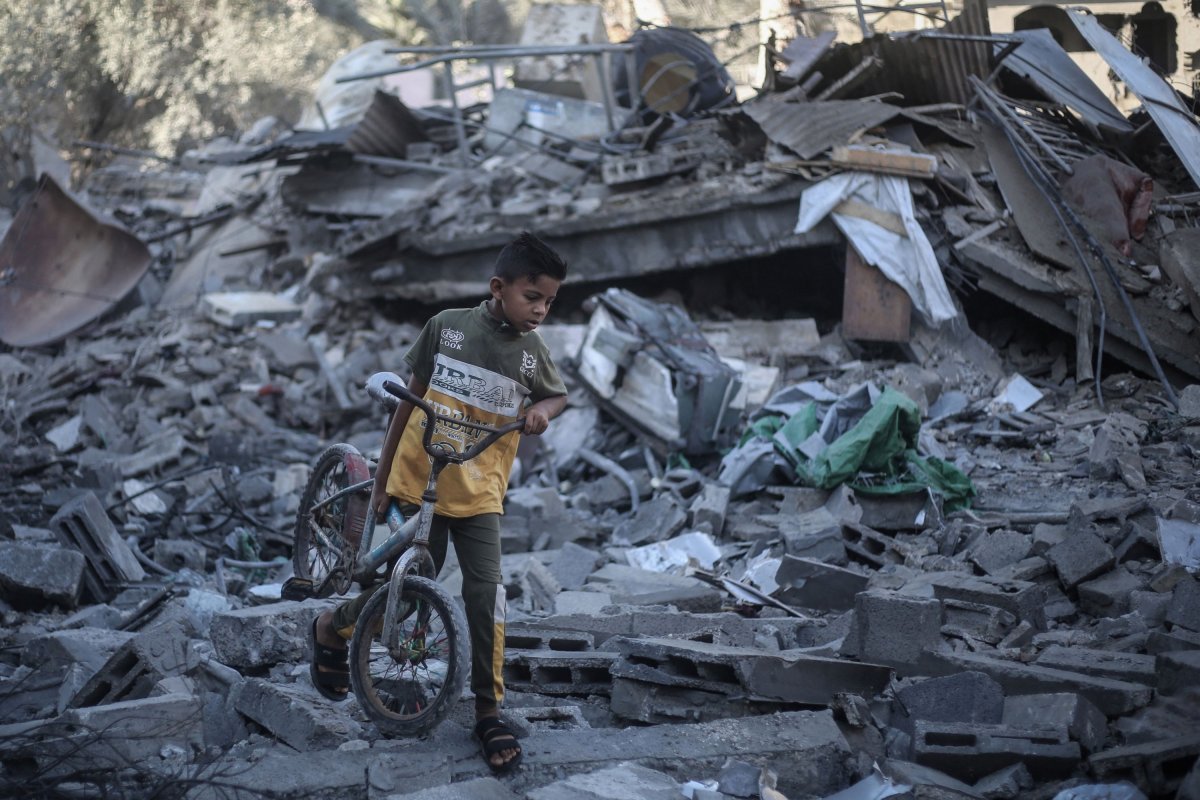
The roadmap for Gaza's post-war transition now runs through a ledger. As the future National Committee for the Administration of Gaza (NCAG) prepares to take responsibility for the Strip under the implementation plan for the Comprehensive Peace Plan, it must first confront the financial architecture left behind by more than a year of war: legitimate commitments of up to $400 million owed to suppliers, contractors and other parties, according to the Board of Peace (BoP) announcement Friday.
Gaza's New Administration Faces a $400 Million Test of Reconstruction Credibility
Beirut – July 31, 2026 — The announcement lands at a moment of maximum expectation and maximum fragility. Washington has declared a "historic breakthrough" on the complete disarmament of Hamas and other armed groups, with Israeli forces set to withdraw from Gaza in phases. Egypt, Qatar and Türkiye have been credited as essential brokers. And now the administrative machinery of the transition is being assembled piece by piece — beginning with the question of who pays whom, and how.
The $400 Million Question
The roadmap published by the Board of Peace stipulates that the NCAG will assess legitimate commitments to suppliers, contractors and other parties amounting to no more than $400 million and take steps to address them. The measures are to be implemented gradually over a three-year period, in line with priorities set by the committee itself. That is a deliberately sequenced approach: it signals to the private sector that Gaza's future administration intends to honor debts, while acknowledging that a collapsed economy cannot absorb a sudden flood of payments without new distortions.
The figure itself is a window into the scale of the catastrophe. Before the war, Gaza's economy was already suffocating under blockade; today, the Strip's commercial class has been shattered, with warehouses destroyed, supply chains severed and payment systems interrupted. The $400 million ceiling speaks to the financial claims that have been formally registered — suppliers of construction materials, contractors with unfinished projects, service providers owed for months of work. Unresolved financial rights, liabilities and claims that fall outside the ceiling are to be addressed later through a broader Palestinian national process in accordance with Palestinian law, the roadmap says.
Beyond the Ledger: Rebuilding Institutional Trust
For the NCAG, the financial review is not merely a bookkeeping exercise. It is the first tangible signal of how the new administration intends to govern. The roadmap commits the committee, once it assumes responsibility, to ensure the continuity of civilian institutions and public services, to treat civil servants in accordance with Palestinian law, to conduct a comprehensive audit of Gaza's financial and administrative affairs with international support, and to protect, recover and administer public assets and resources.
That language matters. One of the deepest wounds of the conflict has been the collapse of public trust — in institutions, in payment systems, in the promise that reconstruction funds will actually reach the people who need them. An audit conducted with international support is designed to answer a question every donor will ask: where does the money go? For the Gulf states, European donors and international financial institutions that will be asked to fund reconstruction, the credibility of the NCAG's financial management is the precondition for every subsequent commitment.
Disarmament, Withdrawal and the Security Transition
The financial roadmap is one pillar of a broader architecture announced Friday. President Trump said an agreement had been reached for the complete disarmament of Hamas and other armed groups in Gaza, with Israeli forces withdrawing in phases as the process advances. The plan envisions an International Stabilization Force working alongside a new Palestinian police force to assume responsibility for security in Gaza.
Every element of that sentence carries risk. Disarmament of Hamas — an organization whose identity is inseparable from its military wing — is the most consequential demand in the entire arrangement, and the most likely point of failure. Phased Israeli withdrawal creates a window in which security vacuums can emerge. The International Stabilization Force, whose composition and mandate remain to be defined, will operate in one of the most densely populated and heavily armed environments on earth. A U.S. official briefing reporters on background said Washington was confident Israel would adhere to the 20-point plan it agreed to initially, adding that progress could be visible "in the next month or two" as details are refined. A second official acknowledged that Israel and Hamas do not trust each other — but insisted both sides would stick to their commitments.
Egypt, Qatar and Türkiye: The Brokerage Triangle
The credit given to Egypt, Qatar and Türkiye is not diplomatic courtesy. Each brings something different to the table. Egypt, as Gaza's immediate neighbor and the traditional gatekeeper of its southern border, is indispensable to any security arrangement on the Philadelphi corridor and to the movement of goods and people. Qatar has spent years as the principal funder of Gaza's civilian administration, with a financial infrastructure and relationships that no other actor can replicate overnight. Türkiye, with its political weight in the Sunni Arab world, its ties to Palestinian factions and its reconstruction capacity, provides diplomatic cover and practical leverage that Washington cannot generate on its own.
A U.S. official described Türkiye, Qatar and Egypt as "essential partners" in keeping the ceasefire together and advancing the deal, praising the approach for having "a real strategic framework" and a "disciplined and intense implementation." For Ankara, Doha and Cairo, the calculation is strategic as well as humanitarian: each has invested heavily in its role as a regional mediator, and a successful Gaza transition would consolidate their influence; a collapse would be a costly reputational setback.
Historical Context: The Weight of Failed Promises
This is not the first time Gaza has been promised reconstruction, and it is not the first time a peace framework has promised to transform the Strip. The 1993 Oslo accords envisioned a Palestinian Authority that would govern Gaza as the first step toward statehood. The 2005 Israeli disengagement ended in Hamas's takeover two years later. The 2014 ceasefire talks produced a reconstruction mechanism that delivered far less than pledged, and successive rounds of conflict since have each ended with new promises and new destruction.
The pattern is the cautionary backdrop for every claim made today. What is different this time, according to Washington, is the strategic framework and the intensity of implementation — a process in which the NCAG's financial review, the disarmament agreement and the security transition are designed to move in parallel rather than sequentially. Whether that difference is real will be tested in the first months, when the gap between announced intentions and on-the-ground realities is always widest.
Strategic Calculus: What Each Side Wants
The incentives are unusually aligned on paper, which is precisely why the skeptics are watching. For Washington, a successful Gaza transition would be a signature foreign policy achievement — proof that a comprehensive regional approach, anchored in the Abraham Accords architecture, can deliver where incremental diplomacy failed. For Israel, the arrangement offers the withdrawal it has long sought to frame as conditional and orderly, while securing the disarmament of Hamas — the objective that triggered the war. For Hamas, the agreement represents survival through transformation: relinquishing its military role in exchange for a continued political and social presence in Palestinian life. For the Palestinian Authority and the broader national process, the NCAG arrangement is a gamble that institution-building in Gaza can eventually be reunified with the West Bank under a single governance framework.
Each side, in other words, believes it is getting something essential. That is the definition of a workable bargain — and also the definition of a fragile one, because each side is also betting that the others will blink first.
Regional Implications: Stability, Money and Order
The stakes extend far beyond Gaza's borders. A functioning transition would remove one of the most destabilizing files in the region, easing pressure on Egypt's security establishment, reducing the recruitment narrative of armed factions, and opening the door for Gulf investment in a reconstruction that could reach tens of billions of dollars. It would also consolidate the emerging regional order in which Türkiye, Qatar and Egypt operate as indispensable intermediaries — and in which Washington, for all its disengagement instincts, remains the indispensable convenor.
A collapse, by contrast, would not return the region to the status quo ante; it would return it to something worse. The financial commitments now being catalogued would become a new grievance, the disarmament failure would be weaponized by both Israeli hawks and Hamas hardliners, and the credibility of every mediator — American, Qatari, Turkish, Egyptian — would be diminished for the next crisis. That is why the $400 million review, for all its technicality, is being watched so closely. In the Middle East, money is never just money. It is leverage, it is credibility, and it is the first test of whether this peace can be built on something more durable than a headline.
By Malik Hassan, Staff Writer
This article was produced with AI-assisted research and editorial support. Reporting is based on sources cited in the article.
What's Your Reaction?
 Like
0
Like
0
 Dislike
0
Dislike
0
 Love
0
Love
0
 Funny
0
Funny
0
 Wow
0
Wow
0
 Sad
0
Sad
0
 Angry
0
Angry
0
Middle East Correspondent at Global1.News. Based in Beirut, covering politics, conflict, energy, and society across the Middle East. Brings context and depth to a region often reduced to headlines.












Comments (0)