
Graham's Funeral Becomes a War Summit in Washington
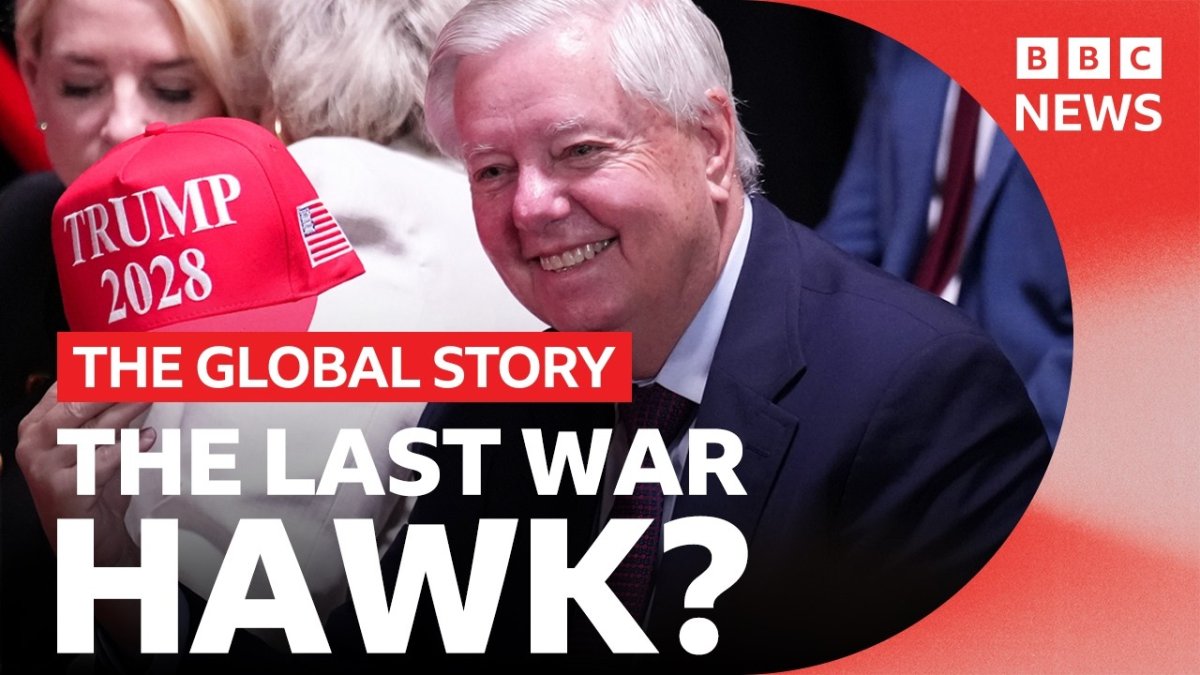
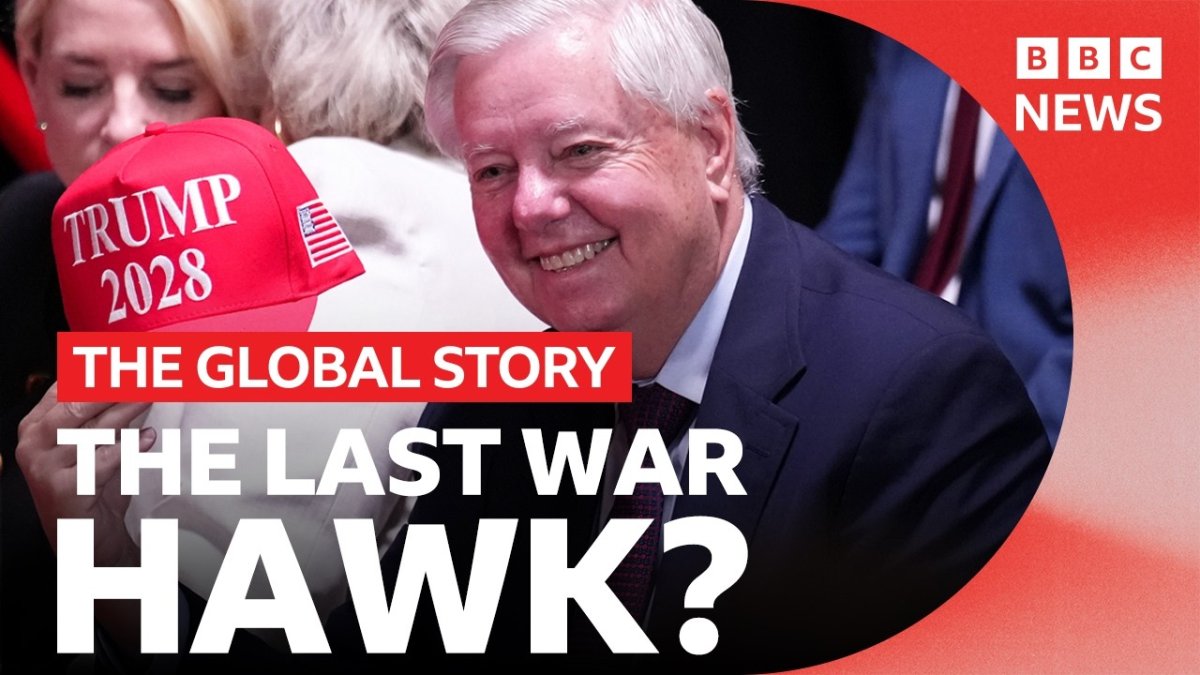
In a recent BBC News report, The Global Story examined how the late Senator Lindsey Graham shaped the wars now defining Donald Trump's presidency. The episode arrived as Graham's funeral drew Ukraine's Volodymyr Zelensky and Israel's Benjamin Netanyahu to Washington, where both leaders used the occasion to press their cases to the American president.
In a recent BBC News report, The Global Story examined how the late Senator Lindsey Graham shaped the wars now defining Donald Trump's presidency. The episode arrived as Graham's funeral drew Ukraine's Volodymyr Zelensky and Israel's Benjamin Netanyahu to Washington, where both leaders used the occasion to press their cases to the American president. Their presence turned a memorial into a summit, underscoring how the South Carolina Republican's death has reshaped the politics of two conflicts.
Graham's Funeral Becomes a War Summit in Washington
Washington, DC – 31 July 2026 — The funeral of Senator Lindsey Graham at Washington National Cathedral this week drew the leaders of Ukraine and Israel, who held separate Oval Office meetings with President Trump the same day. White House Press Secretary Karoline Leavitt said both meetings were "positive and productive." Graham, a fixture of Republican foreign policy for two decades, died on 11 July at the age of 71.
A Funeral That Became a War Summit
Zelensky and Netanyahu both attended the funeral service on Tuesday, seated among Trump's cabinet secretaries and senior lawmakers. Vice President JD Vance, Treasury Secretary Scott Bessent, Secretary of State Marco Rubio, Defense Secretary Pete Hegseth and other senior officials took prominent seats in the cathedral nave. In his roughly 15-minute eulogy, Trump called Graham a "legend," an "American original" and, in an unscripted aside, "a tough cookie." The president also repeated his line that Graham "never saw a war that he didn't like," framing it as loyalty to American allies.
Before the service, both foreign leaders met Trump in the Oval Office. Zelensky said he discussed a licence for Ukraine to produce Patriot interceptor missiles at home to strengthen its defences against Russia, as well as restarting peace talks. Netanyahu described his conversation as one of the best he had ever had with Trump, saying they shared the goal of ensuring Iran never obtains nuclear weapons. The White House press secretary posted on X that both meetings were "positive and productive."
In his eulogy, Fox News host Sean Hannity called Graham a "force of nature" and "a true original," telling Netanyahu directly that the senator "loved the people of Israel." Hannity recalled that Graham travelled to Kyiv days before his death and "marvelled at your strength against one of the world's most brutal regimes," a clear reference to Ukraine's fight against Russia. The preliminary finding issued by the DC medical examiner listed an aortic dissection caused by cardiovascular disease as the cause of death. After the choir sang Amazing Grace, pall bearers carried the casket out to Aaron Copland's Fanfare for the Common Man, and the body was taken to South Carolina for further services and burial.
The Hawk Who Shaped Trump's Wars
Graham was the most visible champion of military action in Trump's Washington. The Guardian described him in March as Trump's biggest Iran war booster, quoting former Republican congressman Joe Walsh calling him "the most pro-war Republican out there" and "a war-hungry dude" with the president's ear. Graham told Politico that he had pressed Trump on Iran before he took office, arguing that collapsing the regime in Tehran would give the president his own "Berlin Wall moment." The senator said the pair discussed Iran fewer than 48 hours before the war began.
Last month, Graham told CBS that the United States would "obliterate" Iran if it did not submit to American control of the Strait of Hormuz, where the Islamic Republic's forces have since blockaded shipping. He urged Israel to be cautious about target selection after its strikes on Iranian fuel depots, and advocated seizing Kharg Island, Iran's main oil export hub, telling Fox News: "We did Iwo Jima, we can do this." His stance drew sharp criticism from within his own party, including from Republican congresswoman Nancy Mace, who wrote on X that Graham should be removed from the Situation Room.
Graham's hostility to Iran long predated Trump. He opposed the Obama-era nuclear deal with Tehran and, in 2015, urged pre-emptive action against the Islamic Republic's nuclear programme. His hawkish identity centred equally on containing Russia and supporting Israel, the two causes that defined his final years in office. BBC analysis by Anthony Zurcher described him as a political survivor whose career tracked the transformation of the Republican Party in the Trump era — from the maverick who warned against Trump to the insider who became his most reliable congressional champion.
From 'Jackass' to Golf Partner: A Political Transformation
Graham's alliance with Trump was forged from one of the most bitter feuds in modern American politics. During the 2016 campaign, Graham called Trump a "jackass" and a "race-baiting, xenophobic, religious bigot," warning that if the party nominated him it "will get destroyed... and we will deserve it." Trump retaliated by reading out Graham's phone number at a rally, and the senator responded by destroying a collection of phones in a stunt video. Graham voted for independent Evan McMullin rather than either major candidate.
After Trump's victory, Graham performed one of the most striking political reversals in modern American politics, becoming a close ally and regular golf partner of the president, defending him on cable news and helping secure Brett Kavanaugh's Supreme Court confirmation in 2018. The friendship ruptured briefly after the 6 January 2021 attack on the Capitol, when Graham declared "Count me out. Enough is enough." But he voted to acquit Trump in the February 2021 impeachment trial and backed him again in 2024.
In a 2023 BBC interview, Graham offered a revealing explanation for the alliance: "There is a dark side to Donald Trump... and he was a very good president. But I am sticking with him because I saw what he did." Reed Galen, John McCain's former deputy campaign manager, said Graham needed a north star in politics; after McCain's death in 2018, Galen argued, Graham hitched his wagon to Trump. It was a transformation that defined his final decade in American politics.
Ukraine and Israel Lose a Voice in Washington
BBC North America editor Sarah Smith wrote that Graham's death has robbed both Ukraine and Israel of one of their strongest advocates in Washington. Graham visited Kyiv days before he died, meeting Zelensky on 10 July, and had introduced Senate legislation in April to impose harsher sanctions on Russia and extend sanctions on Iran. All senators were invited to meet Zelensky this week as the chamber prepared to vote on that bill, which has bipartisan support and more than 60 cosponsors.
Zelensky's eulogy praised Graham as "a true defender of freedom," while Netanyahu called the senator one of Israel's greatest friends, saying Graham understood that the security of Israel and America are inseparable. Sarah Smith wrote that his death "has robbed both Ukraine and Israel of one their strongest advocates in Washington." The Oval Office meetings came at critical moments: Ukraine is grinding through its defence against Russia's invasion, and Israel is fighting a widening war with Iran. Both leaders appeared satisfied that, for now, they retain American support.
The positive tone carried particular weight in Netanyahu's case, since Trump had appeared frustrated in recent dealings with the Israeli prime minister over the conduct of the war. A conversation described as one of the best Netanyahu ever had with Trump suggests the alliance remains firm — but it also highlights how both leaders now compete for the president's attention without Graham to argue on their behalf. Ukraine's foreign minister, Andrii Sybiha, attended the funeral, a sign of how seriously Kyiv took the occasion.
Republicans Split Over the Wars Graham Championed
Graham's wars exposed fractures inside the Republican coalition he helped build. While nine in ten MAGA-aligned Republicans told NBC News pollsters they support the war with Iran, the party's younger voters are far more sceptical of Israel: Pew polling this year found 57% of Republicans aged 18 to 49 hold an unfavourable view of the country. Joe Kent, head of the National Counterterrorism Center, resigned over his belief that Israel and its lobby helped push Trump to launch military strikes.
Graham also retained friendships across the aisle, a rarity in today's Washington. Condolences arrived from Democrats including Adam Schiff and Elizabeth Warren, and Trump noted in his eulogy: "He was able to deal with Democrats. If I had a problem with a Democrat, he could work it out." Former congressman Adam Kinzinger, who broke with Graham over Trump, said he chose to remember the man he knew before their paths diverged: "Before Trump, we were friends... I choose to remember the man I knew before our paths diverged."
This dual identity made Graham an unusual bridge figure in a polarized capital — a hawk who could press for war in the Situation Room and still broker a compromise with a Democratic senator an hour later. John Bolton, the former national security adviser, called him "an important voice" on Iran, adding "I think it's a good thing." Graham's death removes not only an interventionist voice but one of the few remaining practitioners of personal politics in a city governed by partisan machinery.
Analysis — The Geopolitical Void
Graham's absence leaves a distinctive gap in Washington's war debates. As a senator with two decades of seniority, military experience as a retired Air Force Reserve colonel, and direct access to the president, he served as a powerful amplifier for the hawkish wing of the Republican Party, pushing Trump toward confrontation with Iran while urging continued support for Ukraine. Analysts suggest his death removes one of the few figures who could press the case for interventionist foreign policy directly in the Oval Office, at a moment when the president's own instincts pull toward retrenchment. The vacuum is acute because Graham combined ideological conviction with legislative skill.
The succession adds uncertainty. Governor Henry McMaster appointed Graham's sister, Darline Graham Nordone, to serve the remainder of his term, and a new primary will choose a Republican candidate for November's midterm elections, where control of the Senate is at stake. Graham had won his party's nomination unopposed and was expected to win re-election in the reliably conservative state; the seat is now effectively open. Whoever succeeds him will be a junior senator without his influence, seniority and access — a real shift in the balance of power in Washington's foreign policy establishment.
For Moscow, the calculus is straightforward. Graham was a consistent advocate of arming Ukraine and isolating Russia, and his absence could, in theory, ease pressure on the Kremlin. The sanctions legislation he introduced in April, with more than 60 cosponsors, is before the chamber this week, but without its author to drive it through the Senate, its momentum is less certain. Analysts caution that Trump's personal instincts now dominate US foreign policy, and the wars Graham championed continue without him. The funeral diplomacy this week showed that the political world still revolves around Trump — and that Ukraine and Israel are competing for his attention in a landscape Graham once helped shape.
By Irina Volkov, Staff Writer
This article was produced with AI-assisted research and editorial support. Reporting is based on sources cited in the article.
What's Your Reaction?
 Like
0
Like
0
 Dislike
0
Dislike
0
 Love
0
Love
0
 Funny
0
Funny
0
 Wow
0
Wow
0
 Sad
0
Sad
0
 Angry
0
Angry
0

Russia/Eastern Europe Correspondent at Global1.News. Covering Russian politics, energy, security, and the shifting dynamics of the post-Soviet space. Provides clear-eyed analysis on one of the world's most opaque regions.













Comments (0)