From Cancún to Mahahual, sargassum influx puts nearly 50% of Riviera Maya beaches on red alert

May 30, 2026 - 00:21
0
From Cancún to Mahahual, sargassum influx puts nearly 50% of Riviera Maya beaches on red alert
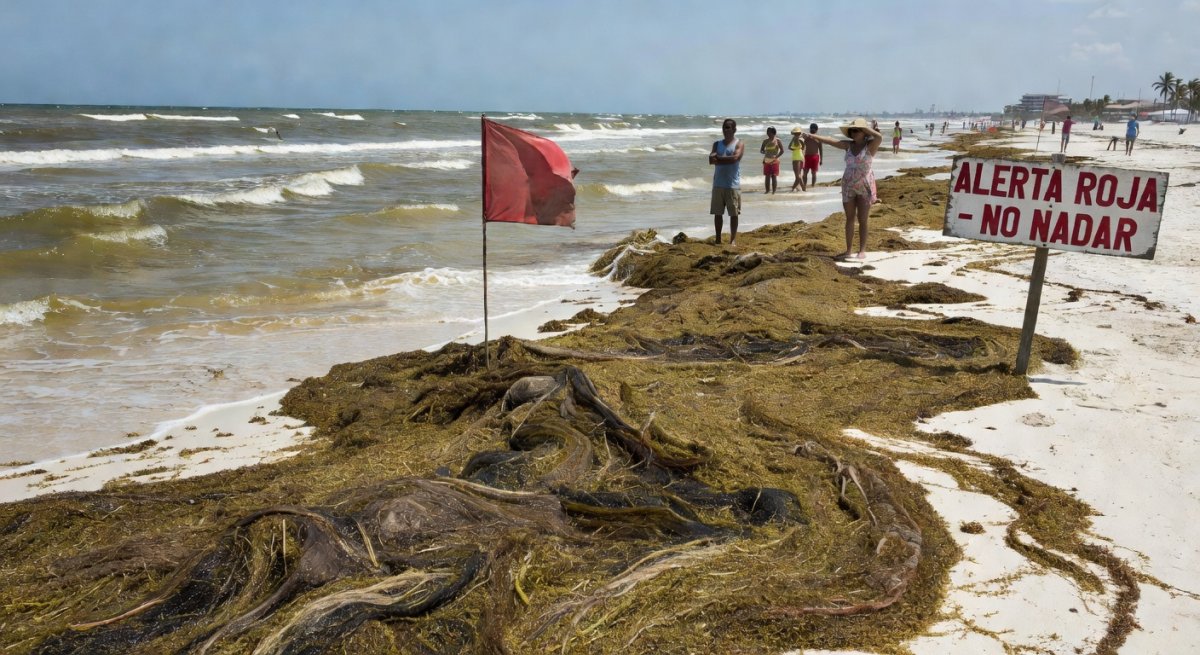
**From Cancún to Mahahual, sargassum influx puts nearly 50% of Riviera Maya beaches on red alert** Nearly 50 percent of beaches along the Riviera Maya in Quintana Roo have been placed on red alert following a significant influx of sargassum seaweed in recent days, according to monitoring data released by state authorities. The accumulation has rendered conditions unsuitable for swimming at multiple sites between Cancún and Mahahual. Head of the Sargassum Monitoring Center in Quintana Roo Esteban Amaro reported that substantial volumes arrived along the coastline starting in the last week, prompting the elevated alert status. “We have recorded high concentrations that affect water quality and beach usability from Cancún through Playa del Carmen, Tulum, and down to Mahahual,” Amaro stated in an official update issued by the state’s environmental monitoring office.

The Incident

State monitoring teams documented the arrival of dense mats of the floating brown seaweed at more than 40 of the approximately 85 monitored beach segments in the region. Red-alert designations indicate levels exceeding thresholds where swimming is discouraged due to potential skin irritation and reduced water clarity. Municipal crews in Benito Juárez, Solidaridad, Tulum, and Othón P. Blanco municipalities have begun mechanical removal operations using tractors and conveyor systems. Amaro noted that satellite imagery from the past 72 hours confirmed the scale of the event, with the heaviest deposits observed between Puerto Morelos and Akumal. Local lifeguard services have posted bilingual warning signs at access points and restricted water entry at flagged locations.

Background

Sargassum is a genus of macroalgae that forms large floating mats in the Atlantic Ocean, particularly within the Sargasso Sea. Periodic influxes to the Caribbean coast of Mexico have occurred since at least 2011, with major events recorded in 2015, 2018, and 2022. The seaweed originates from nutrient-rich waters influenced by river outflows and ocean circulation patterns, then drifts westward via the North Equatorial Current before reaching Quintana Roo shores. The Mexican federal environment ministry, SEMARNAT, has tracked annual volumes through its national sargassum observatory. In previous seasons, Quintana Roo received between 100,000 and 200,000 metric tons of the material during peak months of May through August. This year’s early-season pulse aligns with forecasts issued by the University of South Florida’s Optical Oceanography Laboratory, which uses satellite data to predict Caribbean landings. Tourism-dependent communities have developed standardized response protocols. Red, yellow, and green alert levels are determined by daily biomass measurements collected by the Sargassum Monitoring Center and shared with municipal civil-protection offices.

Response

Quintana Roo’s tourism board has coordinated with hotel associations to deploy additional containment barriers and collection vessels. Governor Mara Lezama Espinosa directed state resources toward priority tourist corridors while emphasizing that visitor safety remains the primary concern. “We are maintaining transparent daily reports so that travelers and residents alike have accurate information,” the governor said in a statement released through the state communications office. Cleanup operations currently involve approximately 350 workers across the affected municipalities. Collected sargassum is transported to designated drying and composting sites outside urban areas to reduce odor and prevent re-entry into the sea. The state environment secretariat has requested federal support for equipment maintenance and has activated its contingency fund for rapid-response purchases. Local scientists affiliated with the Center for Research and Advanced Studies of the National Polytechnic Institute (CINVESTAV) in Mérida continue water-quality sampling at red-alert sites to monitor dissolved oxygen and bacterial levels. Results are forwarded to the state health ministry for review.

Implications

The current influx coincides with the start of the summer high season, when hotel occupancy in the Riviera Maya typically exceeds 70 percent. Municipal finance departments have noted increased operational costs for mechanical removal, which can reach several million pesos per week during peak events. Tourism operators have reported limited cancellations so far, though some day-trip providers have adjusted itineraries to unaffected northern sections of Isla Mujeres. Longer-term management strategies under discussion include expanded offshore barrier systems and research into commercial uses for harvested sargassum, such as agricultural fertilizer or biofuel feedstock. SEMARNAT has indicated that a national action plan update is scheduled for review later this year. Further updates on alert status and removal progress will be issued daily by the Sargassum Monitoring Center and posted on the Quintana Roo state government portal.

This is Rosa Martinez for Global1 News, reporting from Mexico City. 🇲🇽

What's Your Reaction?

Like Like 0
Dislike Dislike 0
Love Love 0
Funny Funny 0
Wow Wow 0
Sad Sad 0
Angry Angry 0

Comments (0)

User