
Lebanon's Economy to Contract 6.4% as Salam Rules Out New Taxes and the Central Bank Opens a Deposit Recovery Account
Prime Minister Nawaf Salam said Lebanon's economy will contract 6.4 percent this year and defended a 2027 budget he says contains no new taxes, as the central bank opened a Deposit Recovery Account for funds recovered through court rulings and settlements.
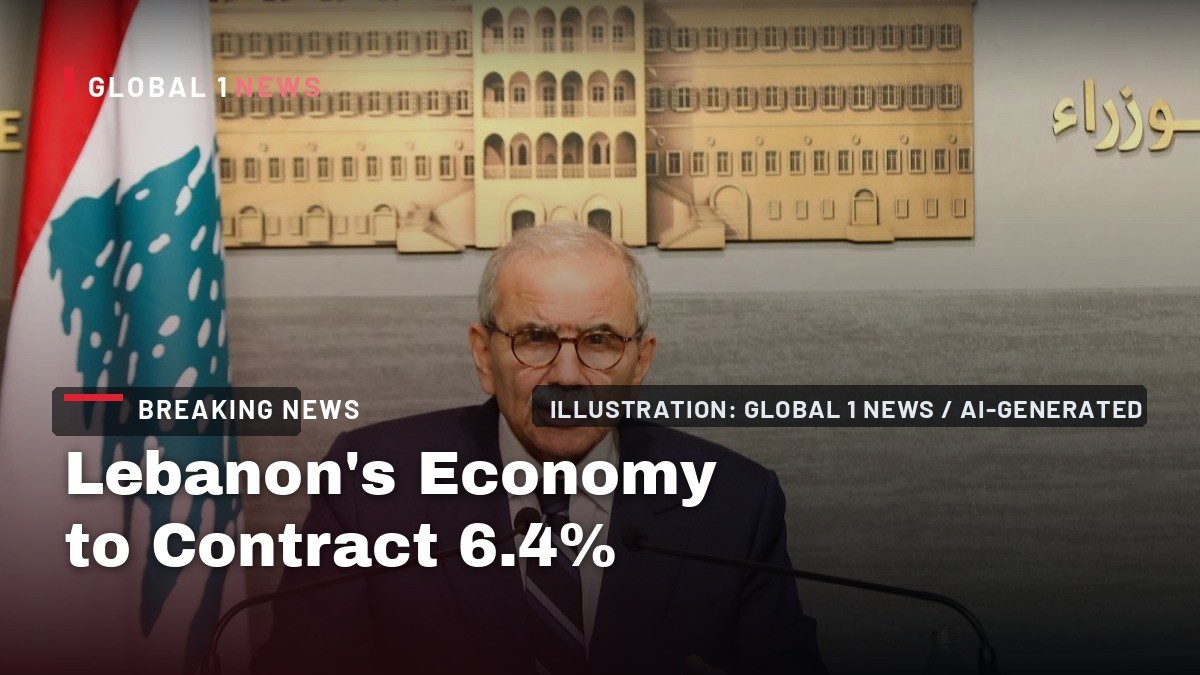
Lebanon's economy will contract by 6.4 percent this year, Prime Minister Nawaf Salam told the country from the Grand Serail on Thursday, as he defended a 2027 budget he says contains no new taxes and as the central bank opened a new account to recover misappropriated funds for depositors. The projection lands on top of a six-year financial collapse that has cost the lira more than 98 percent of its value since 2019 and frozen savers out of their own bank accounts.
Lebanon's Economy to Contract 6.4% as Salam Rules Out New Taxes and the Central Bank Opens a Deposit Recovery Account
Beirut - The address came in the same 24 hours that the Banque du Liban announced a new Deposit Recovery Account, a ring-fenced fund with its own ledger, and as President Joseph Aoun's challenge to the country's banking reform law continued to hold up talks with the International Monetary Fund. Salam framed his remarks as a direct accounting to citizens of the state's financial position, its spending priorities and its revenue sources.
A Recovery Cut Short
Salam said the Lebanese economy grew by 4.2 percent last year after years of contraction, and he described that figure as the beginning of a recovery. "The war imposed on Lebanon stopped this path and pushed the economy backward," he said, referring to the Iran solidarity front opened by Hezbollah against Israel in March 2026.
That recovery was real, but it was thin. The World Bank recorded the 4.2 percent expansion in 2025 as the fastest since the onset of the 2019 financial crisis, before the March escalation reversed the trend. The contraction Salam cited on Thursday restates the projection in the World Bank's Lebanon Economic Monitor, which attributes the reversal to the collapse in tourism, weaker consumption, disrupted supply chains, heightened insecurity and prolonged displacement.
What the Numbers Say
The World Bank said inflation is expected to rise to 17.5 percent this year, driven by supply disruptions, higher shipping costs and rising oil prices, which the bank said would further reduce people's purchasing power.
The longer arc is severe. Lebanon's financial crisis began in October 2019, and the scale of the financial system's losses was estimated at approximately $70 billion in 2022. Customer deposits in Lebanese banks fell from $172 billion in 2009 to just $88 billion in 2024, while bank assets fell from $217 billion in 2019 to $104 billion in 2024.
For savers, the practical measure of the collapse is the money that never came back. The central bank's governor, Karim Souaid, has said the bank's liabilities toward banks and depositors stand at about $79.5 billion, a figure he expects to decline only slightly, to around $79 billion, by the end of the year. Cumulative payments to depositors under Circulars 158 and 166 have reached about $6.1 billion.
The Deposit Recovery Account
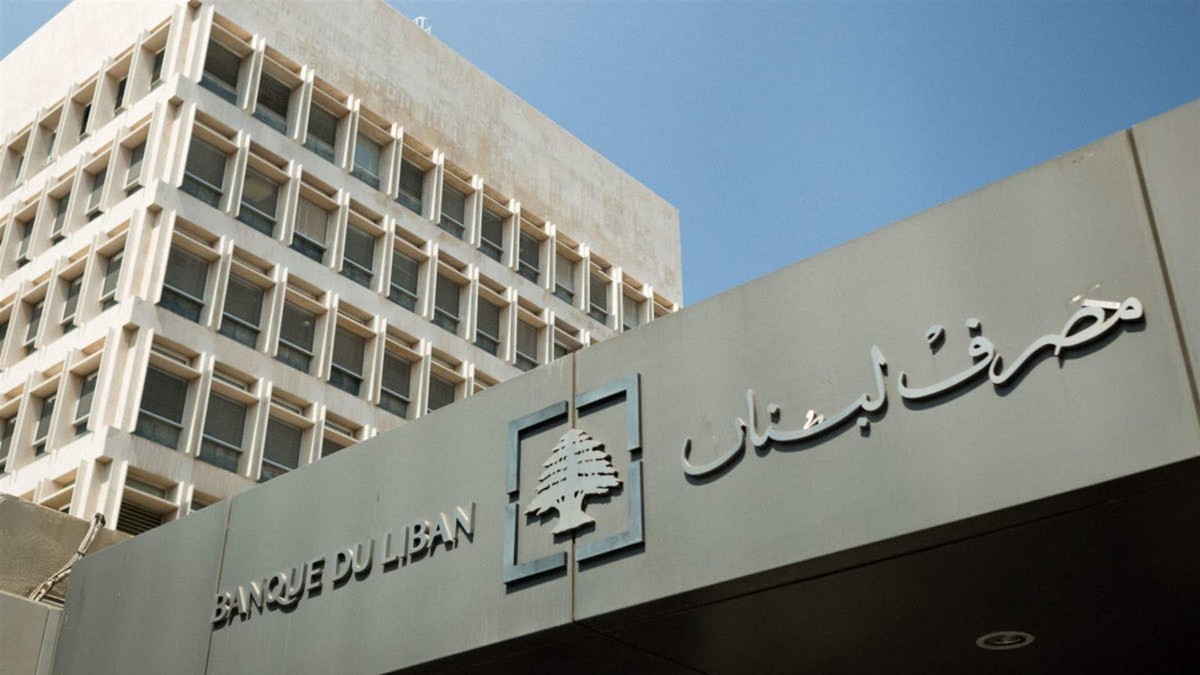
The Banque du Liban said it has begun and is continuing to take the necessary legal action before judicial authorities in Lebanon and abroad to recover funds that were embezzled, transferred or used unlawfully, or from which parties benefited without legal justification.
As part of that effort, the central bank said it has opened a separate and independent account called the Deposit Recovery Account. All funds and amounts recovered for the benefit of the Banque du Liban through court rulings, legal settlements or other measures in Lebanon or abroad will be transferred exclusively to the account. A dedicated account has also been opened with correspondent banks for the same purpose.
The account will be financially and accounting-wise separate from all other BDL assets and resources, and its use for any other purpose will be prohibited. The central bank said it has notified the relevant judicial authorities of the account's establishment and that it is designated exclusively for repaying deposits, describing the effort as part of an institutional commitment to restoring depositors' rights, upholding accountability and strengthening confidence in Lebanon's financial system.
A Budget With No New Taxes
Salam said the proposed 2027 budget amounts to around $7 billion. The Cabinet approved the draft budget last Thursday and sent it to Parliament the same day, with total spending set at about $6.9 billion. The draft maintains a nominally balanced budget while increasing spending on public sector salaries and social measures.
The finance bill totals 615 trillion Lebanese pounds, or about $6.9 billion, according to L'Orient Today. It was adopted by the Council of Ministers on Thursday 2 October 2026, signed by the president and sent the same day to Parliament, on the last day of the constitutional deadline. Financing for the new salary and social expenditures will rely on credit transfers, a withdrawal from the budget reserve endowed with $261 million, and improved collection of existing revenues.
The budget prioritizes public-sector salaries, healthcare and social assistance, Salam said, and the government is committed to protecting monetary stability and the purchasing power of citizens.
The Fight Over Article 3
The National reported that President Joseph Aoun appealed to the Constitutional Council over one of the amendments concerning the central bank's independence and power. The challenge targets Article 3 of the amended bank resolution law. The disputed provision sets objectives for managing bank failures, protecting deposits and limiting the use of public funds.
The challenge centres on the amended law's relationship with Lebanon's Code of Money and Credit and the independence of Banque du Liban. L'Orient Today and An-Nahar reported the wording revived a dispute over the central bank's statutory powers under Article 70 of the Code of Money and Credit.
Parliament adopted the amendments on 12 August 2026, after the original legislation passed in August 2025 and underwent an earlier constitutional challenge. Reuters reported the referral, while Lebanese outlets said the appeal had been lodged several days earlier and became public on 30 September. The Constitutional Council is expected to deliver its ruling within one month from 1 October 2026. The law has been referred and remains pending.
What the Fund Is Waiting For
The IMF's communications director, Julie Kozack, said on 1 October 2026 that the bank resolution law approved by Parliament is consistent with international standards, which for the fund is a critical criterion. She said the IMF understands the law was referred to the Constitutional Council by the president, and that as that process plays out, if any changes are made through the review, the fund will assess those changes for consistency with international standards and provide new advice to the authorities accordingly.
Kozack said other requirements on reaching a staff-level agreement include an appropriate financial gap law consistent with international standards, a 2027 budget, a medium-term fiscal framework and other reforms, including financial management and governance.
The precedent is not encouraging. Lebanon signed a staff-level agreement with the IMF in April 2022 under the then-government of Najib Mikati. Progress was limited, and the first attempt ended with the outbreak of war in autumn 2023.
Generators, Fuel and the Household Squeeze
Salam acknowledged the pressure facing households, particularly from rising generator subscription bills over the past two months and higher fuel prices, which he said have forced some families to choose between buying fuel and meeting other household needs.
He said that while some factors, including global oil prices, are outside the government's control, this does not relieve the government of its responsibilities. Salam warned generators, traders and importers against exploiting higher costs to make unjustified profits, saying that lower import and transportation costs should be reflected in lower prices for goods and services.
The 2027 budget includes a decree amending the transportation allowance for public sector employees: the allowance is now equivalent to five litres of gasoline per day, with a minimum of 500,000 Lebanese pounds and a maximum of 800,000 Lebanese pounds.
A Government Denying the Rumours
Salam's media office issued a clarification statement on 8 October 2026. Rumours circulating about positions attributed to Salam concerning changing the sect of the army commander or the central bank governor are fabricated and baseless, the statement said. It said Salam did not say in Washington what he does not say in Beirut, and that his declared and constant position is adherence to the application of the constitution.
The statement also explained the ownership of Inatra Investment, a joint-stock company whose shareholders come from the public and private sectors. Banque du Liban holds about 35 percent of its capital, the Finance Ministry less than 10 percent, and the remaining shares belong to private investors from Lebanon, Kuwait and Qatar, plus a number of individual shareholders.
The War That Keeps Biting
Hezbollah drew Lebanon into the regional conflict by attacking Israel in March 2026. Israel responded with a heavy air campaign and ground invasion that Lebanese authorities say have killed more than 4,300 people.
A framework agreement signed between Beirut and Tel Aviv on 26 June 2026 provides for a gradual Israeli withdrawal from Lebanese territory and the deployment of the Lebanese army in vacated areas. Israeli forces continue to occupy areas in southern Lebanon, and the strikes did not stop on Thursday: airstrikes hit Bani Hayan in Marjayoun and Mansouri in Sour, artillery shelled Haddatha and Haris in the Bint Jbeil district and Wadi Zebqine in Sour, and Israeli drones flew low over the coastal city of Tyre, according to L'Orient Today.
The Israeli military said an officer, Capt. Eliav Haim Tzapalamus, 21, was killed and three soldiers lightly wounded when a Humvee overturned during operational activity near the Litani River. It said the circumstances are under investigation.
What Happens Next
The immediate stakes are procedural. The bank resolution framework that the IMF has called a critical criterion remains pending before the Constitutional Council, and the financial gap law that would allocate the losses from the 2019 crash among the state, the central bank, commercial banks and depositors is still being prepared.
Salam used the same address to point forward on two domestic fronts. He said the government is working with the Ministries of Energy and Finance on sustainable solutions for the electricity sector, aiming to increase power supply and secure it regularly at a lower cost, with details to be announced in the coming weeks. He also announced the preparation of a comprehensive public transportation plan including more than 250 new buses, whose details the Minister of Public Works and Transport will present before the end of next week.
By Jessica Ali, Staff Writer
This article was produced with AI-assisted research and editorial support. Sources: L'Orient Today, Naharnet, LBCI Lebanon, The National, Arab News, Agence France-Presse, Daily Beirut, the World Bank, the International Monetary Fund and Banque du Liban.
What's Your Reaction?
 Like
0
Like
0
 Dislike
0
Dislike
0
 Love
0
Love
0
 Funny
0
Funny
0
 Wow
0
Wow
0
 Sad
0
Sad
0
 Angry
0
Angry
0

Editor-in-Chief at Global1.News. Atlanta-based journalist who cuts through the BS and tells it like it is. Lead anchor, host, and the voice you hear when the spin stops and the truth starts.











Comments (0)