
Kruger's Fallen 'Crown Prince': Ex-Ranger and State Vet Convicted of Rhino Poaching
A South African court has convicted former Kruger National Park ranger Rodney Landela and state veterinary technician Kenneth Muchocho of killing a white rhino in 2016, closing a ten-year insider-poaching trial ahead of sentencing on 16 October.
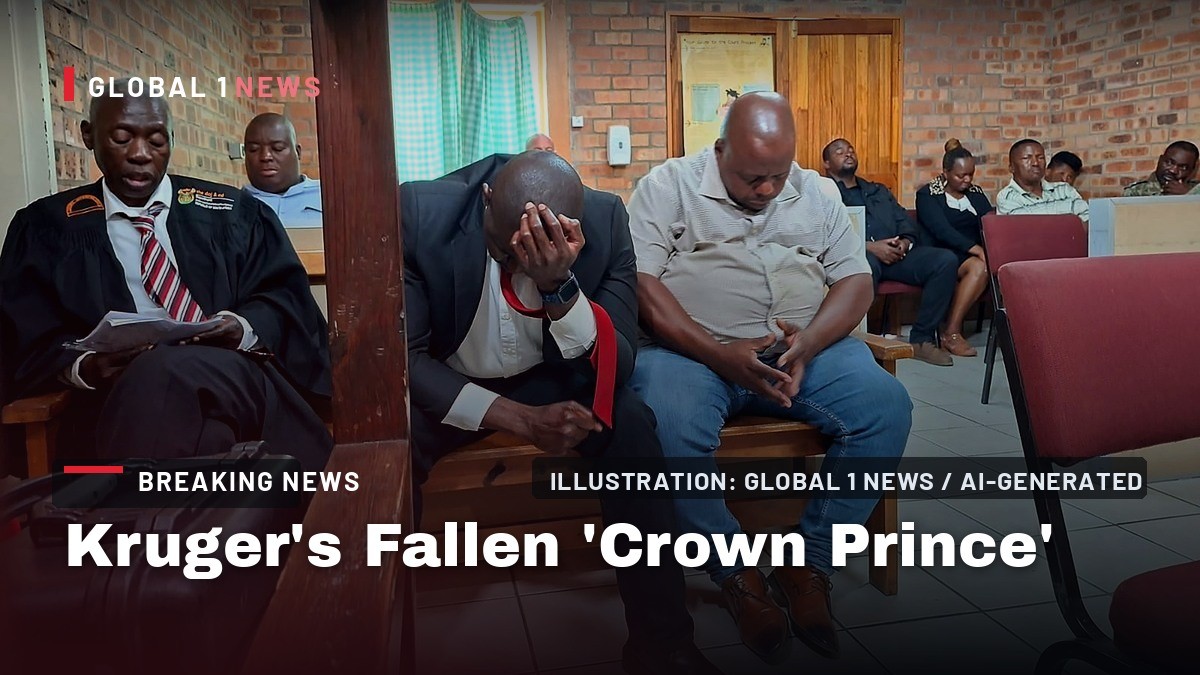
Nearly a decade after three gunshots cracked across a Kruger National Park patrol block, a regional magistrate has convicted two former park employees of killing a white rhino. The verdict closes one of the most closely watched insider-poaching trials in South African conservation history - and it lands hardest on a man once tipped to lead the park's ranger corps.
Kruger's Fallen 'Crown Prince': Ex-Ranger and State Vet Convicted of Rhino Poaching
Skukuza, South Africa - The Skukuza Regional Court delivered its verdict on Friday 9 October 2026, convicting former regional ranger Rodney Landela and former state veterinary technician Kenneth Muchocho - whose surname some outlets render as Mochocho - of killing a rhino in 2016. Both men remain in custody, with sentencing set for 16 October.
The Verdict That Took a Decade
Regional magistrate MJ Ngobeni found Landela and Muchocho guilty as charged on two counts: killing a rhino, and possession of a firearm with intent to commit a crime. Some outlets give the magistrate's first name as Mbongeni. Lowvelder reports he read the verdict over roughly five hours.
The magistrate rejected the men's claim that they had been framed, ruling the State had proved its case beyond reasonable doubt. The two had originally faced six charges. Four were withdrawn - among them theft of the rhino horns, conspiracy to commit a crime, defeating the ends of justice and escaping from lawful custody. Neither man was convicted on those counts.
Under South African law, killing a rhino carries a prescribed minimum sentence of 10 years' direct imprisonment. Conspiracy to commit a crime carries up to six years. No sentence has yet been handed down.
The Man They Called the Crown Prince
At the time of his arrest in July 2016, Landela was 34. He is 45 now. He joined SANParks in 2001 as a general worker and built a 15-year career, rising to regional ranger for Marula North, overseeing vast operational sections of the park.
Dr Xolani Funda, SANParks' general manager for area integrity management, testified that Landela was held in such high esteem he was considered the "crown prince" of the ranger corps and a likely candidate to become chief ranger. Shortly before his arrest, Landela had been nominated for an executive position at the Game Rangers' Association of Africa.
Muchocho was employed as an animal health technician by the Department of Agriculture, Forestry and Fisheries, stationed at Skukuza to monitor animal diseases. At the time of the killing, both men occupied positions of trust inside a park that depends on its own staff to protect the animals it holds.
A Dawn Shooting in Kingfisherspruit
Field rangers patrolling Block 37 in the Kingfisherspruit section heard three gunshots in quick succession on the morning of 27 July 2016. Soon afterwards they spotted two figures running through the bush towards a white Toyota Hilux bakkie.
Ranger teams dispatched to block escape routes intercepted the vehicle near the Majekejeni firebreak four-way junction. Muchocho was driving; Landela was in the passenger seat. Field ranger Samuel Ndlovu stopped the bakkie at gunpoint.
Landela told him they were looking for a cellphone signal to alert area mission manager Mbongeni Tukela about the gunshots reported in Block 37. Landela then got out of Muchocho's vehicle and entered Ndlovu's SANParks vehicle, instructing Muchocho to drive further down the road alone to find a signal. Corporal Lucky Ndlovu followed Muchocho's bakkie along the S106 road and saw the vehicle make a sudden U-turn.
What the Trackers Found in the Bush
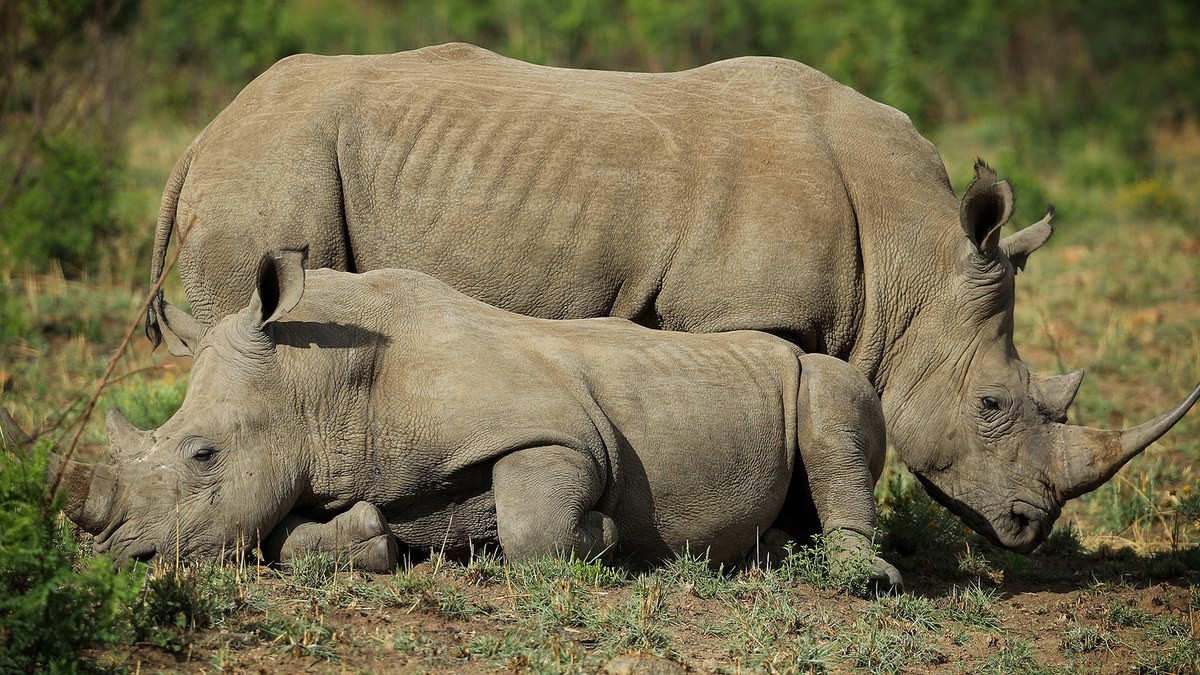
Tracking teams following footprints from the spot where the Hilux had initially been parked in Block 37 discovered a freshly killed sub-adult white rhino bull. It had a gunshot wound and its main horn had been hacked off at the base.
Trackers later followed wheel-spin marks and footprints about 20 metres into the bush, where they found two items concealed beneath a thorn bush: a rifle bag containing Landela's state-issued .375 CZ 550 Magnum hunting rifle, and a backpack containing the freshly severed rhino horn wrapped in plastic, a bloodstained axe and three spent .375 cartridge cases.
Lowvelder reports the State's evidence included an official park rifle issued to Landela being used to shoot the animal, and that the two horns of the rhino were also found in their possession.
'We Were Framed': The Defence
Both men denied involvement in the rhino killing and claimed they had been framed. Landela testified that on the evening before his arrest he had locked his state-issued .375 CZ 550 Magnum rifle, backpack, spent cartridges, axe and GPS unit in the safe in his office at Satara camp.
He told the court he was "still surprised to this day" how his rifle and equipment had ended up at a stash site in the bush alongside the severed rhino horn. Asked under cross-examination who might have framed him, he said he had no idea, and that he was unaware of anyone holding a grudge against him during his 15 years at SANParks.
He testified that he and Muchocho had been scouting for diseased wild dogs at the time of the incident. Landela also explained the rhino DNA found on his clothing and boots by saying he had approached the carcass later that afternoon during the investigation to check whether poachers had inserted poison to kill scavenging vultures. He said he had lifted a flap of skin on the animal's shoulder and suggested his clothing might have brushed against bloodied vegetation.
State witnesses, including senior investigators, disputed that account, testifying that Landela had remained under arrest and had not been permitted near the carcass.
Why the Magistrate Rejected It
The State prosecutor was advocate Lot Mgiba. Mgiba argued that for Landela's account to be true, someone would have had to gain access to Landela's locked office and safe at Satara camp, remove his service rifle, backpack and spent cartridges, shoot and dehorn a white rhino in Block 37, and then conceal the equipment and the severed horn beneath a bush along the S106 road.
Mgiba argued the accused could not have been framed because the rangers could not have known they would be at the scene. GPS data from Muchocho's vehicle showed, he said, that it had been parked there for more than 25 minutes before the rhino was shot.
Mgiba also argued that the accused's accounts in court were an afterthought, differing from the explanations they had given on the day of their arrest. The prosecution case drew on vehicle-tracking data, spent cartridges ballistically linked to Landela's rifle and rhino DNA recovered from his boots and jumpsuit. The magistrate found in favour of the prosecution on this central issue.
What SANParks Said
In a statement, SANParks welcomed the verdict as a "significant victory in the fight against wildlife crime and protection of South Africa's natural heritage".
"The organisation commends the National Prosecuting Authority, investigators, law enforcement agencies, witnesses, and all individuals who contributed to ensuring that justice was ultimately served," said SANParks spokesperson JP Louw.
For the park authority, the ruling closes a legal process that stretched more than ten years - and one that unfolded inside a reserve that has spent the same decade fighting collusion on its own payroll. SANParks has pointed to polygraph testing of rangers, run under its Integrity Management Plan, as one of the tools it uses to detect staff who cross the line.
Insider Poaching: Kruger's Real Weakness
The case drew attention to the risk of insider poaching, in which people working in conservation and other state structures can exploit their positions, access to park operations and specialist equipment to facilitate wildlife crime. From the outset the State argued that Landela's senior position, control over patrol deployments and access to key wildlife areas gave him capabilities valuable to poaching syndicates.
Kruger authorities identified a link between failed polygraph tests among rangers and increased poaching incidents; follow-up investigations resulted in seven staff dismissals. The park's Rhino Conservation Plan includes integrity management, strategic dehorning, layered security and technology, and polygraph testing of staff is continuing.
Earlier insider cases have also reached the courts. In April 2026 the Skukuza Regional Court convicted three former Kruger employees - Nyiko Gumede, Nomsa Ndlovu and Ludwick Mhlaba - of killing a rhino and conspiracy to commit a crime. Gumede and Ndlovu were each sentenced to 12 years' direct imprisonment, and Mhlaba to 10 years. Sifiso Mbuyane was sentenced to 28 years for killing two rhinos in the Kruger National Park. On 2 October 2026 the National Prosecuting Authority welcomed a 10-year direct imprisonment sentence imposed on Raphael Ngobeni (42), a Mozambican national, for Kruger offences committed in April 2026.
The Numbers Behind the Case
South Africa's environment ministry reported that 352 rhinos were poached nationally in 2025, a 16% drop from 420 in 2024. Within the Kruger National Park, however, 175 rhinos were lost in 2025, sharply up from 88 in 2024. Mpumalanga province, which contains most of Kruger, lost 178 rhinos in 2025.
For January to the end of August 2026, 230 rhinos were poached nationally, compared with 248 in the same period of 2025. In the Kruger National Park, 114 rhinos were lost in the first eight months of 2026, compared with 123 in the corresponding period of 2025.
The ministry said poaching accounted for 2.2% of South Africa's rhino population in 2025, below the estimated 3.5% population sustainability threshold. South Africa holds the world's largest rhino population - nearly 14,390 animals at the end of 2024, according to the International Rhino Foundation. More than 80% are white rhinos.
What Happens Next
Both men were remanded in custody pending sentencing on Friday 16 October 2026. Given the prescribed minimum for killing a rhino, the case now moves from guilt to punishment.
The conviction does not close the broader question the case raised - how a ranger once described as the future of Kruger's protection force allegedly became the very threat it was built to stop. For the men who tracked the footprints in Block 37 on that July morning, the answer now rests with the court that will sentence Landela and Muchocho next week.
By Jessica Ali, Staff Writer
This article was produced with AI-assisted research and editorial support. Sources: Daily Maverick, News24, Lowvelder and The Citizen, Maroela Media, South African National Parks, the National Prosecuting Authority, the Department of Forestry, Fisheries and the Environment, and the International Rhino Foundation.
What's Your Reaction?
 Like
0
Like
0
 Dislike
0
Dislike
0
 Love
0
Love
0
 Funny
0
Funny
0
 Wow
0
Wow
0
 Sad
0
Sad
0
 Angry
0
Angry
0

Editor-in-Chief at Global1.News. Atlanta-based journalist who cuts through the BS and tells it like it is. Lead anchor, host, and the voice you hear when the spin stops and the truth starts.












Comments (0)