
Pentagon Says Fort Hood Shooter's Execution Will Be Public, and Livestreamed
A Defense Department official says Nidal Hasan's execution will be livestreamed after Defense Secretary Pete Hegseth called it public. The Fort Hood shooter is scheduled to die by firing squad on 3 December 2026, the first US military execution in more than sixty years.
A Defense Department official says the execution of Nidal Hasan, the Army psychiatrist convicted of the 2009 Fort Hood mass shooting, will be livestreamed, after Defense Secretary Pete Hegseth described it as a public event. It is scheduled for 3 December at the Texas base where he killed 13 people.
Pentagon Says Fort Hood Shooter's Execution Will Be Public, and Livestreamed
Washington, D.C. — Hegseth's remarks, and the official's confirmation, would make Hasan the first US service member executed in more than sixty years.
A Date Set at the Same Hour, in the Same Place
Secretary of the Army Adam Telle, in an order released Tuesday, 6 October 2026, set the execution for 3 December at Fort Hood, Texas. President Donald Trump approved the execution on the recommendation of Defense Secretary Pete Hegseth. Pentagon spokesperson Sean Parnell announced the development Monday night, 5 October 2026, on X, writing: "Judgement day for Hasan has finally come."
Hegseth said the execution would take place at 1pm US Central Time, which is 19:00 GMT — the same time the 2009 shooting took place. He confirmed the timing and the site in remarks to the conservative outlet Real America's Voice. The White House referred questions from NPR and Al Jazeera to the Pentagon, which declined to elaborate beyond Parnell's post. The BBC contacted the White House for comment on whether Trump supports a livestreamed public execution.
What Happened at Fort Hood on November 5, 2009
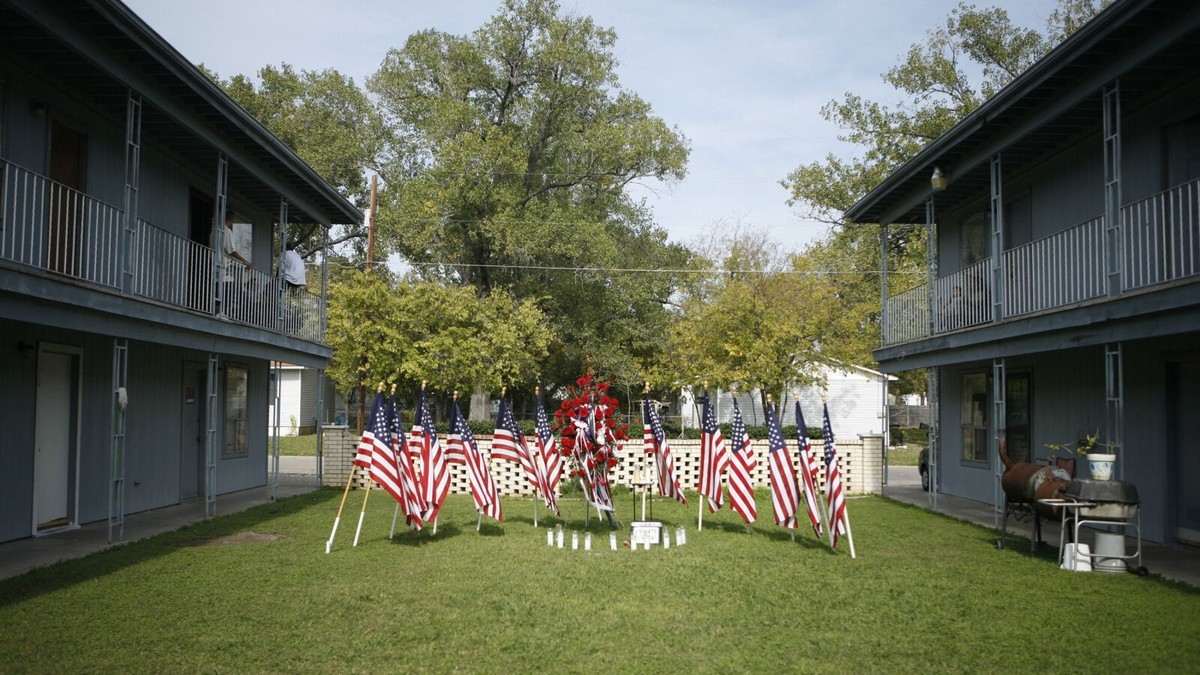
On 5 November 2009, Nidal Hasan, then an Army psychiatrist and major, opened fire at a medical processing center at Fort Hood, where troops were preparing to deploy to Afghanistan. He shouted "Allahu akbar" before opening fire. He killed 13 people and wounded 32 others. It was the deadliest non-combat attack on an American military base.
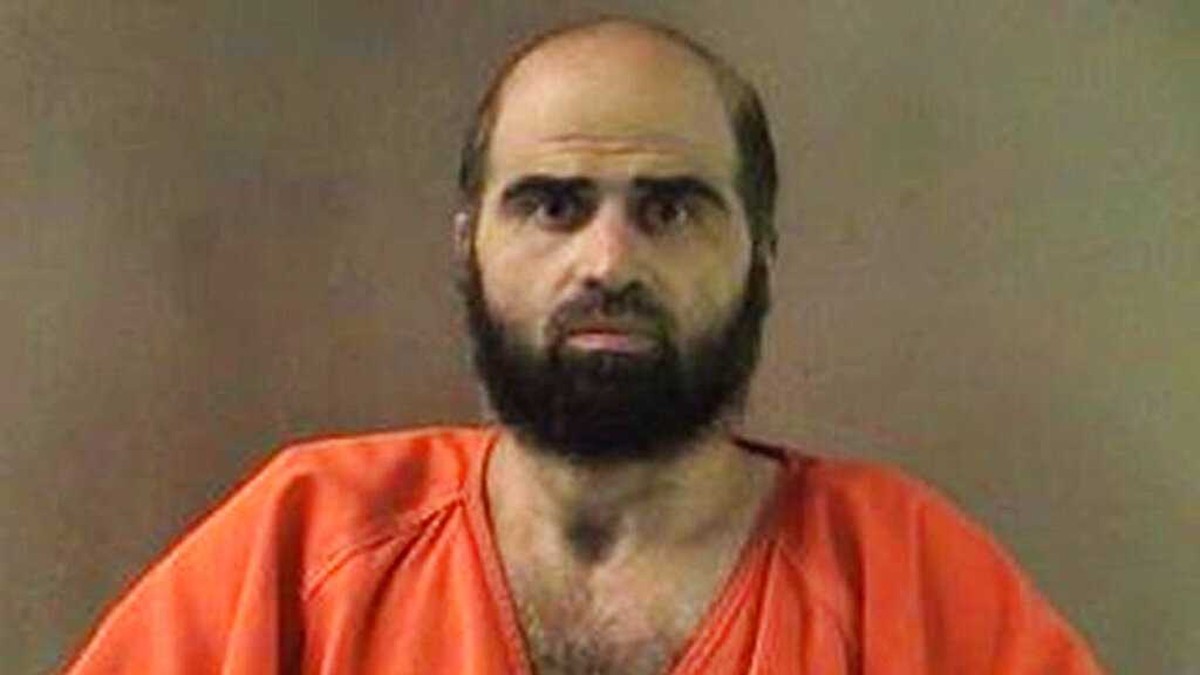
The attack ended when Hasan was shot by civilian security officers at the scene, leaving him paralyzed; he uses a wheelchair. He had served 21 years in the Army and rose to the rank of major, counseling soldiers with PTSD. Investigators found he had exchanged 18 emails with Anwar al-Awlaki, a radical cleric later killed in a US drone strike. At his court-martial, Hasan said he had acted to stop American soldiers deploying to Afghanistan from killing fellow Muslims, before his own impending deployment. He described the attack as an act of jihad and as retaliation for US military actions in the Middle East. A review led by William Webster, a former FBI director, concluded the bureau should have investigated his correspondence more thoroughly. Hasan was three weeks from his own deployment to Afghanistan, according to the Death Penalty Information Center.
From the Court-Martial to a December Date
In August 2013, a military jury convicted Hasan of 45 counts of premeditated murder and attempted murder and sentenced him to death. He was dismissed from the Army and has been held at Fort Leavenworth, Kansas, on military death row since. He acted as his own lawyer at trial and admitted "the evidence will clearly show that I am the shooter." He apologised for "any mistakes."
The sentence triggered an automatic appeals process that ended when the Supreme Court denied his final petition in the spring of 2025, clearing the way for Trump's approval. Hasan is one of only four people on the military's death row. Ronald Gray, convicted of multiple rapes and murders near Fort Bragg in the 1980s, is still on military death row despite having had his sentence approved by President George W. Bush in 2008 — an example of how long the process can take.
Hegseth's Words: 'We'll Make Sure That People Are Able to Watch It'
Defense Secretary Pete Hegseth, in an interview with Real America's Voice, said the execution will be "public." He said: "We'll make sure that people are able to watch it, that it's public, because people need to understand that there's serious consequences for these types of things." Hegseth said Hasan is "gonna get a firing squad of soldiers. As it should be." He called the decision a "no-brainer."
Asked whether Hasan had made any final requests or reached out to Trump, Hegseth replied: "Don't care. We'll see him on December 3rd." Hegseth also said: "It was a radical Islamist attack in uniform inside the ranks." A Defense Department official told the BBC, Al Jazeera and ABC News that the execution would be "livestreamed"; the Pentagon said more details would follow. It is not clear from Hegseth's remarks whether troops, spectators or US military officials would be present in person.
What Livestreaming an Execution Would Actually Mean
No state or federal execution has ever been televised in the United States. The last public execution in the country took place more than 90 years ago in Owensboro, Kentucky, on 14 August 1936. US Army regulation states that at least two media outlets should be selected as witnesses.
Deborah Denno, a death penalty expert and law professor at Fordham University, said livestreaming an execution could make the process "much more transparent" and inform the public: "I think it could possibly be a good idea because it would be transparent and the public would be fully aware that it's happening." She also says firing squads are "the least inhumane method of execution that we have," since, when done properly, death can occur in seconds. Brenner Fissell, a professor at Villanova Law and vice president of the National Institute of Military Justice, said firing squads "can be a quicker, cleaner, more precise way to execute a prisoner... I don't think that's what's motivating this. There's a perceived masculinity and military-ness to firing" squads.
The Legal Door That Is Still Open
Hasan is constitutionally entitled to pursue appellate review of his death sentence in civilian federal courts through habeas corpus, which would indefinitely delay the execution. Eugene R. Fidell, a visiting lecturer at Yale Law School specializing in military law, said a habeas petition "frankly might outlast the current administration, and who knows if the next one will have the same penchant for executions."
The Death Penalty Information Center's Robin Maher said the president's approval of the sentence is "another step closer to his execution. But that does not mean that his execution will be imminent." No statement from Hasan or his legal team on a habeas filing has been confirmed. The execution has not taken place; it is scheduled for 3 December 2026.
Why Now? The Shadow of a Botched Execution
The announcement came days after a botched lethal injection in Tennessee: Christa Pike survived a lethal injection attempt, and her case has dominated headlines and reignited debate over the past week. Corinna Lain, author of "Secrets of the Killing State," published last year, said: "For years now, states have been pushing this rock of Sisyphus uphill... They're spending millions of dollars, and yet they're having botched executions. So this moment in time is one where states are really thinking about: what are we doing and what best serves the death penalty? Whether the answer to that is firing squad is another question entirely."
Lain said lethal injections, because of their relative lack of gore, have kept the death penalty "out of sight, out of mind" for many people over the last five decades. She said: "There is a humane way to take a life. It's called life without parole." She added: "The death penalty in this country is dying its own slow death," and said the federal government's embrace of the firing squad, including in Hasan's case, could hasten it.
A Death Penalty Already in Retreat
Analysis by the Death Penalty Information Center shows death sentences have declined by 90% over the past three decades; fewer than 50 new ones have been imposed each year since 2015. A 2025 Gallup poll put public support for the death penalty at a five-decade low, with opposition highest among younger generations. Texas recently carried out the nation's first execution since Christa Pike's failed lethal injection, that of Jamaal Howard.
Against that backdrop, the federal government has moved in the other direction. In April 2026 the Trump administration announced it would add death by firing squad as an acceptable method for federal executions, along with gas asphyxiation and electrocution, as states struggle to procure and administer lethal injection drugs. The last US military execution was on 13 April 1961, when Army Private John Bennett was executed by hanging — a method no longer used by any American jurisdiction, and imposed for a crime no longer death-eligible. The last US military execution by firing squad was in 1945, for desertion during World War II. Firing squads have been used in just six modern executions, about 0.4%, in two states. Five US states allow the method: Idaho, Mississippi, Oklahoma, South Carolina and Utah.
Reaction, and the Argument Over What the Attack Was Called
Alonzo Lunsford, a Fort Hood shooting survivor, reacted to the execution order on Fox News' America's Newsroom on 8 October 2026, discussing the trauma of the 2009 attack. Thirty-two people were wounded in the attack. Hegseth said in September 2025 that he was "100 percent committed to ensuring the death penalty is carried out for Nidal Hasan."
Hegseth told several media outlets including The Hill at the time: "This savage terrorist deserves the harshest lawful punishment for his 2009 mass shooting at Fort Hood. The victims and survivors deserve justice without delays." Hegseth has said Barack Obama called the attack "workplace violence." The Pentagon initially treated the shooting as a workplace-violence incident rather than a terrorist attack, a classification that affected the victims' eligibility for Purple Hearts. There is no record of Obama himself using the phrase: at a memorial days after the attack he described the victims as Americans who had been unable to escape "the horror of war," while calling the shooting a tragedy and saying the killer would face justice.
What Comes Next Before December 3
South Carolina's protocol offers a template for how a firing squad is carried out in the United States: three volunteer shooters stand 15 feet, or 4.6 meters, from the condemned prisoner, who is strapped to a chair. A medical professional uses an X-ray to find the prisoner's heart and place a target over it. A hood is placed over the prisoner's head after his final words, and all three shooters fire at the same time without a verbal warning. It is not confirmed whether the Army will use the same protocol.
In April 2026, an autopsy in South Carolina revealed that shooters may have prolonged a prisoner's death by missing his heart. Trump authorised a record-breaking 13 federal executions in the waning days of his first term. Trump, at a recent event, said: "We also recently announced that we're going to deliver final justice to an evil killer, the Fort Hood shooter, Nidal Hassan... So he's getting the death penalty by firing squad." The execution remains scheduled for 3 December 2026. No confirmation has been given as to whether Trump personally would watch the livestream; the White House referred questions to the Pentagon.
By Jessica Ali, Staff Writer
This article was produced with AI-assisted research and editorial support. Sources: BBC, The Guardian, ABC News, Associated Press, NPR, Al Jazeera, and the Death Penalty Information Center.
What's Your Reaction?
 Like
0
Like
0
 Dislike
0
Dislike
0
 Love
0
Love
0
 Funny
0
Funny
0
 Wow
0
Wow
0
 Sad
0
Sad
0
 Angry
0
Angry
0

Editor-in-Chief at Global1.News. Atlanta-based journalist who cuts through the BS and tells it like it is. Lead anchor, host, and the voice you hear when the spin stops and the truth starts.













Comments (0)