
Residents airlifted to safety after flooding in central Chile
In the early hours of October 8, 2026, the Mapocho River overflowed its banks, turning streets in the town of Talagante into impromptu waterways. Police helicopters lifted dozens of residents – and even their pets – from homes that had become islands overnight.
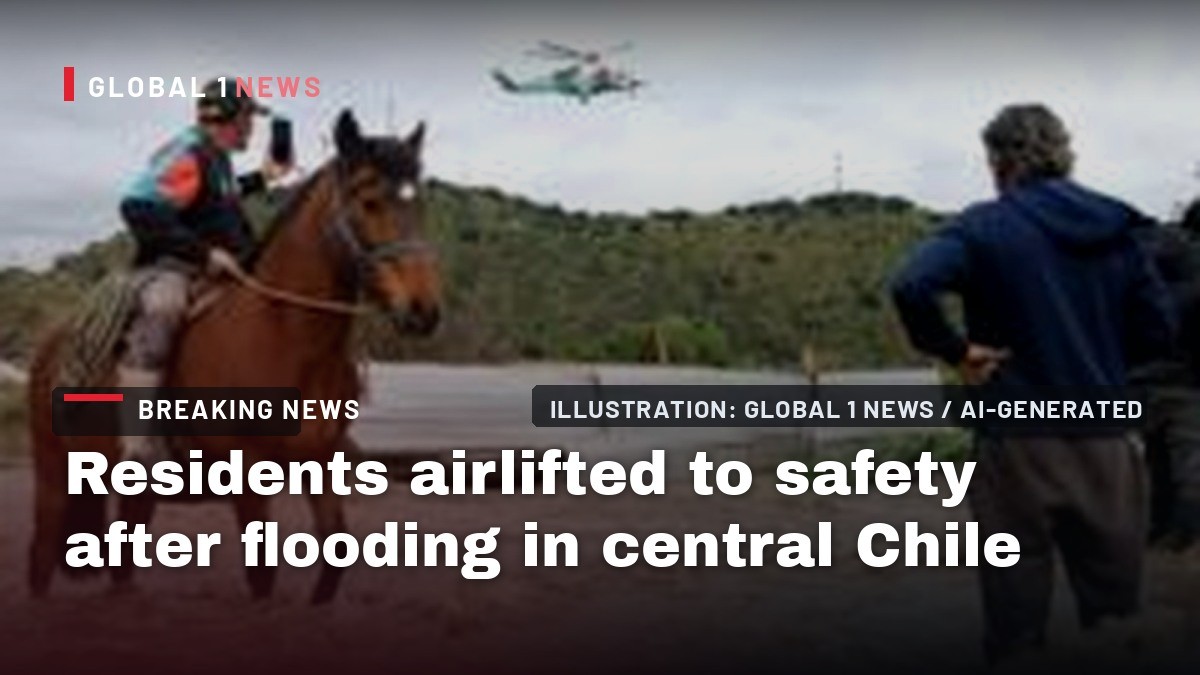
In the early hours of October 8, 2026, the Mapocho River overflowed its banks, turning streets in the town of Talagante into impromptu waterways. Police helicopters lifted dozens of residents – and even their pets – from homes that had become islands overnight. The emergency response, swift yet improvisational, underscores how climate‑driven extremes are reshaping daily life across central Chile, a region already bracing for the strongest El Niño on record.
From rain gauges to riverbanks: the meteorological backdrop
Santiago recorded 74 mm of rain in the first week of October, a figure meteorologists say marks the wettest October in 76 years. This deluge, part of a broader pattern of unusually heavy precipitation, is tied to the 2026‑2027 El Niño, which experts warn will sustain above‑average rainfall across central Chile throughout the southern hemisphere’s spring. The intensity of the storm system, amplified by a lingering El Niño, has turned what might have been a seasonal shower into a life‑threatening flood.
Climate scientists note that this El Niño is projected to be “the strongest in living memory,” a phrase that carries weight beyond academic circles. When such a powerful climate anomaly aligns with already shifting weather patterns, the result is a cascade of hazards: torrential rains in some zones, intensified droughts in others. The Mapocho’s breach is a stark illustration of that duality, a river that normally skirts the city now surged beyond its confines, catching residents off‑guard.
Talagante’s sudden crisis: a community caught unprepared
Talagante, a town 35 km south‑west of Santiago, found its streets transformed into swift currents after the river burst. Unlike the July storms that prompted pre‑emptive evacuations, this October event struck without warning. Dirt roads that usually served as quiet thoroughfares turned into flowing channels, trapping families in homes that were suddenly surrounded by water. Police helicopters became the only viable means of extraction, lifting people and animals from rooftops and riverbanks as the floodwaters rose through the night.
The lack of prior evacuation highlights a critical gap in local disaster preparedness. While authorities acted quickly once the situation became visible, the community’s surprise at the speed of the rise points to a need for more robust early‑warning systems, especially as climate anomalies become the new norm.
Human cost: lives lost and the lingering trauma
Amid the rescue operations, officials confirmed a death in the nearby city of San Bernardo, where a flooded underpass claimed a life. The cause of death remains under investigation, but the incident adds a somber note to an already dire situation. Families in Talagante, many of whom were rescued with only a few belongings, now face the emotional toll of displacement and the uncertainty of when, or if, they can return home.
Beyond the immediate loss, the psychological impact of being trapped by rising waters cannot be understated. Residents recount the terror of watching water swallow familiar streets, a trauma that will linger long after the river recedes. Such experiences deepen mistrust in infrastructure and raise questions about the adequacy of municipal planning in the face of climate‑driven threats.
Helicopter rescues: the limits of emergency response
The use of helicopters to airlift residents underscores both the ingenuity and the constraints of Chile’s emergency services. While the aerial operation saved lives, it also revealed logistical bottlenecks: limited aircraft, narrow windows of safe landing, and the need to prioritize the most vulnerable. Pets, often overlooked in disaster protocols, were also rescued, reflecting a compassionate but resource‑intensive approach.
These operations, however, cannot be scaled indefinitely. As climate change fuels more frequent extreme events, reliance on ad‑hoc aerial rescues may become unsustainable. The episode calls for a reassessment of ground‑based evacuation routes, flood barriers, and community shelters that can reduce dependence on costly air rescues.
El Niño’s broader regional implications
Chile’s experience is part of a larger tapestry of El Niño‑driven disruptions across the Americas. While central Chile grapples with excess rain, other regions face intensified droughts, a paradox that climate experts attribute to the same atmospheric phenomenon. The 2026‑2027 El Niño, described by the Met Office as potentially the strongest on record, is expected to reshape weather patterns worldwide, amplifying existing vulnerabilities.
For Latin America, the stakes are high. Agricultural zones dependent on predictable rainfall risk crop failures, while coastal cities confront heightened storm surges. The Chilean floods serve as a warning bell, illustrating how a single climate event can produce divergent impacts across the continent, demanding coordinated regional preparedness.
Policy gaps and the road ahead
The recent floods expose a policy vacuum in Chile’s urban planning and climate adaptation strategies. While meteorologists warned of above‑average rainfall, the absence of pre‑emptive evacuations in Talagante suggests that warnings are not translating into actionable measures on the ground. Strengthening early‑warning networks, investing in flood‑plain mapping, and establishing community shelters are immediate steps that could mitigate future crises.
Long‑term, Chile must integrate climate resilience into its infrastructure agenda. This includes reinforcing riverbanks, redesigning drainage systems, and ensuring that new developments respect flood‑risk zones. Without such systemic changes, each El Niño episode will likely repeat the pattern of surprise, rescue, and loss.
Local voices: resilience amid adversity
Amid the chaos, stories of solidarity emerged. Neighbors helped each other load belongings onto makeshift rafts, while volunteers coordinated with police to guide families toward the landing zones. These acts of community care highlight a resilient spirit that often goes unnoticed in statistical reports but is vital for survival when state capacities are stretched.
As the waters recede, the challenge will be to transform this spontaneous solidarity into organized, community‑led disaster preparedness. Empowering local groups with training, resources, and clear communication channels can turn collective empathy into a structured defense against the next flood, ensuring that Talagante and similar towns are not left to wait for helicopters when the river rises again.
This article was produced with AI-assisted research and editorial support. Reporting is based on the source material cited below. Sources: BBC News Latin America; bbc.co.uk; Global1.News (09 October 2026).
By Elena Vasquez, Staff Writer
What's Your Reaction?
 Like
0
Like
0
 Dislike
0
Dislike
0
 Love
0
Love
0
 Funny
0
Funny
0
 Wow
0
Wow
0
 Sad
0
Sad
0
 Angry
0
Angry
0

Latin America Correspondent at Global1.News. Based in Mexico City, covering politics, economics, energy, and culture across the region. Brings an on-the-ground perspective to stories spanning from the Rio Grande to Patagonia.












Comments (0)