
Ebola Outbreak in Congo on Track to Become Deadliest in History, WHO Warns
WHO warns Congo's Ebola outbreak, caused by the rare Bundibugyo strain, is on track to become the deadliest in history, with 4,300 cases and 2,000 deaths. Misdiagnosed for months, the virus is outpacing responders, and no approved vaccine exists yet.
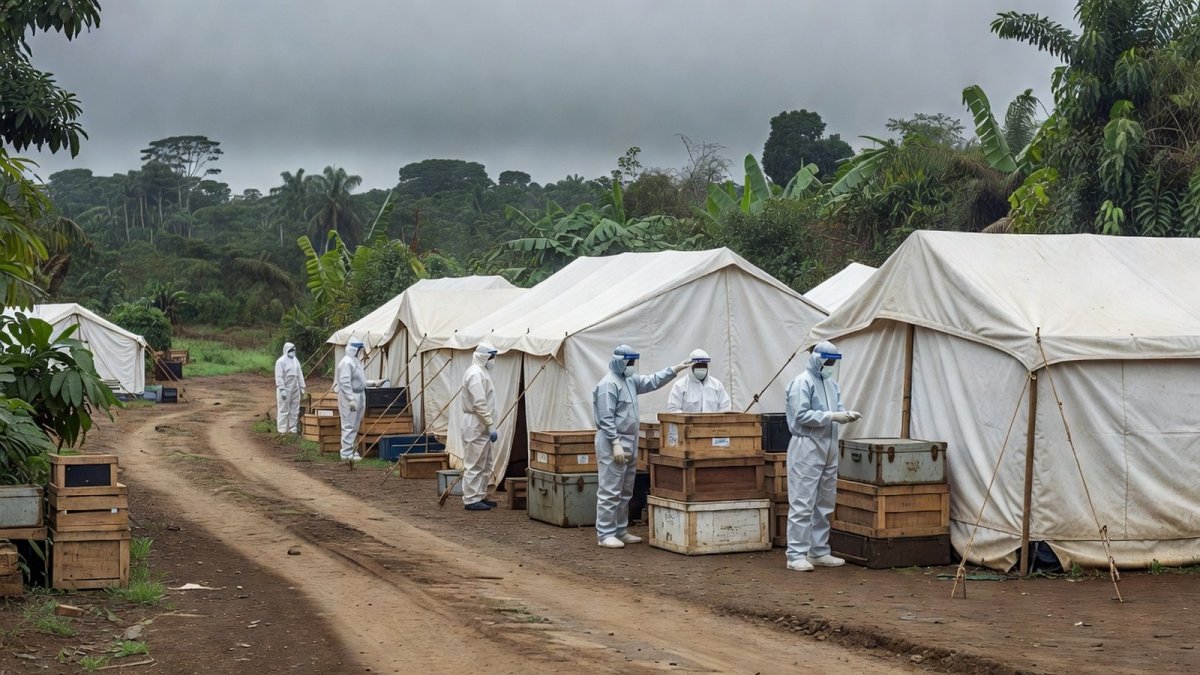
Folks, this is the warning global health officials have been dreading — and it landed this week with the full weight of the World Health Organization behind it. The Ebola outbreak tearing through the Democratic Republic of Congo is now on pace to eclipse the deadliest outbreak in recorded history, and the people fighting it say the virus is running faster than the world can respond.
Ebola Outbreak in Congo on Track to Become Deadliest in History, WHO Warns
Geneva, Switzerland — The World Health Organization issued a stark and urgent warning on Wednesday, August 12, 2026, that the Ebola outbreak ravaging the Democratic Republic of Congo is on a trajectory to become the deadliest in recorded history.
The Warning From Geneva
The World Health Organization issued a stark warning on Wednesday, August 12, 2026, that the Ebola outbreak ravaging the Democratic Republic of Congo is on a trajectory to become the deadliest in recorded history. WHO Director-General Tedros Adhanom Ghebreyesus told reporters that the current epidemic, driven by the rare Bundibugyo species of the virus, is outpacing all previous response efforts.
"At its current pace, it's on track to eclipse the West African Ebola outbreak of 2014 to 2016," Tedros said, referencing the epidemic that killed at least 11,000 people across Guinea, Liberia, and Sierra Leone. He added a sobering assessment: "The outbreak had a big head start, still way ahead of us, and we're playing catch-up." The admission signals a shift in tone from the global health body, which has been criticized for its slow initial response.
The numbers are staggering. As of this week, the outbreak has recorded at least 4,300 cases and more than 2,000 deaths, making it the fastest-growing Ebola outbreak in history. The 2014-2016 West Africa outbreak took approximately eight months to reach 1,000 deaths. This current epidemic, declared officially on May 15, 2026, has already doubled that grim milestone in a fraction of the time, according to WHO data.
A Head Start the World Didn't See Coming
The most troubling revelation is that the virus has been spreading silently for months before it was identified. Genetic sequencing has confirmed that the outbreak actually began in February 2026, not May as initially believed. For those early months, cases were systematically misdiagnosed as malaria or typhoid, allowing the virus to establish a deep foothold before the first alarm was raised.
Dr. Mohamed Janabi, WHO's Africa regional director, delivered a blunt assessment at a news conference in Bunia, near the epicenter. "We are chasing the virus, the virus is ahead of us," Janabi said, citing research that pinpointed the February origin. The three-month delay in detection has proven catastrophic, allowing the disease to spread across a vast, remote region before any coordinated containment effort could begin.
The outbreak is concentrated in eastern Congo, near volatile borders with South Sudan, Uganda, and Rwanda. This is a region characterized by poor infrastructure, ill-equipped health centers, and active armed conflict. The instability has crippled the response, with health workers reaching only about 30% of cases, according to Janabi. Some local health workers have gone on strike over lack of pay, further straining an overwhelmed system.
The Unique Threat of Bundibugyo
What makes this outbreak particularly terrifying is the culprit itself. The outbreak is caused by the Bundibugyo species of Ebola, a rare strain that has previously caused only two known outbreaks — one in Uganda in 2007 and another in 2012. Unlike the Zaire ebolavirus that drove the 2014-2016 epidemic, there is no approved vaccine and no recognized therapeutic drug specifically for Bundibugyo.
This scientific gap has left health workers fighting with one hand tied behind their backs. The licensed rVSV-ZEBOV vaccine, known commercially as Ervebo, transformed responses to Zaire ebolavirus outbreaks, effectively ending them in weeks. However, its effectiveness against Bundibugyo has long been uncertain. The WHO's Technical Advisory Group on Candidate Vaccine Prioritization recommended in May that Ervebo should not be used routinely during this outbreak outside a research setting.
After reviewing new animal and lab data, the advisory group reassessed the evidence on July 31 and recommended evaluating Ervebo in a Phase 3 trial during the current outbreak. This is a significant shift, acknowledging that while the vaccine may not be a perfect match, it could still offer some protection in a desperate situation.
Prepared for the Wrong Ebola
The global health community is now grappling with a painful truth: the world spent a decade preparing for the wrong virus. In a commentary published in STAT, Dr. Krutika Kuppalli, an infectious diseases physician and former WHO medical officer who served in Sierra Leone during the 2014-2016 epidemic, and Placide Mbala, a Congolese virologist at DRC's National Institute of Biomedical Research, laid out the problem starkly.
"We prepared for Ebola — but not this Ebola," they wrote. The commentary details how global preparedness efforts after 2014-2016 focused overwhelmingly on Zaire ebolavirus, pouring billions into vaccines, therapeutics, and diagnostic tools for that specific strain. Early in this outbreak, several molecular assays optimized for EBOV performed poorly against Bundibugyo virus, delaying diagnosis until updated assays could be developed.
This diagnostic failure had real-world consequences. In the critical early months, patients were tested with tools that could not reliably detect the virus, leading to false negatives and missed cases. The delay allowed the virus to spread unchecked through communities, contributing to the explosive growth we are now witnessing.
On the Ground in Eastern Congo
The human toll is being felt most acutely in the province of Ituri, which has reported the heaviest concentration of cases. The virus has now spread to at least five provinces, with a sixth, Bas-Uele, confirming its first case this week. A man who died in Buta had traveled from Isiro in Haut-Uele, raising concerns about inter-provincial transmission and the potential for the outbreak to expand its geographic footprint.
The response is hampered by more than just the virus. Misinformation about Ebola circulates widely in communities where some residents are deeply wary of outsiders, a legacy of decades of conflict and exploitation. This distrust is keeping some people away from clinics. Health workers report going door-to-door to build trust, but the sheer scale of the outbreak makes this approach unsustainable.
UNICEF's first international shipment of emergency Ebola response supplies arrived in Ituri on May 28, 2026, providing much-needed equipment and protective gear. The European Union announced a 5 million euro boost to the Ebola response in DR Congo. But these efforts, while welcome, are a drop in the bucket compared to the scale of the crisis. With only 30% of cases being reached, the virus continues to find new hosts faster than responders can contain it.
The Race for a Vaccine
In a rare piece of good news, the scientific community is mobilizing at unprecedented speed to develop a Bundibugyo-specific vaccine. The UK's medicines regulator, the MHRA, has given permission for the first human trials of a vaccine for Bundibugyo. The jab is being created by a team from the University of Oxford, based on the same technology used in the Oxford-AstraZeneca Covid vaccine.
The University of Oxford and the Serum Institute of India have launched the world's first Phase 1 trial of a Bundibugyo-specific vaccine. Moderna has also begun a Phase 1 trial of an mRNA vaccine candidate, leveraging the same platform that produced its highly effective Covid-19 vaccine. Three other groups are developing different vaccines for Bundibugyo, though they have not yet entered clinical trials, according to WHO officials.
In parallel, the WHO is sponsoring a clinical trial in DR Congo called the PARTNERS trial, which will test whether two existing antiviral therapies — the drug remdesivir and the monoclonal antibody MBP134 — can improve survival, alone and in combination. A separate EBO-PEP study is assessing oral obeldesivir as post-exposure prophylaxis among high-risk contacts.
What the Next Six Months Hold
Dr. Abdirahman Mahamud, WHO's director for health emergency alert and response operations, offered a sobering projection. The agency expects the outbreak to peak in about six months, but Mahamud was careful to caveat that forecast. "But ... that's the moderate scenario," he said. "There is a one-case scenario where this outbreak may last nine months to 12 months." The wide range reflects the deep uncertainty facing responders.
The WHO said on Wednesday it hoped to reverse the spread of the disease within three months but warned this meant bringing transmission under control, not ending the outbreak entirely. This is a critical distinction — even in the best-case scenario, the virus will continue to circulate for months, requiring sustained international support and vigilance.
A study published in Nature Medicine on Monday added a crucial piece to the epidemiological puzzle. Researchers found that the virus is genetically different from versions seen in the 2007 and 2012 Bundibugyo outbreaks, providing evidence that the current outbreak began when the virus jumped from an infected animal to a person, rather than stemming from earlier outbreaks. This suggests a new spillover event, likely from fruit bats or other wildlife, and means the virus is adapting to human hosts in ways that are not yet fully understood.
The Cost of Complacency
Ebola is a brutal disease. Symptoms appear within two to 21 days of infection, beginning with fever, headache, and tiredness, then progressing to vomiting and diarrhea that can lead to organ failure. The virus spreads through contact with infected bodily fluids such as blood or vomit, and contaminated surfaces. In a region with limited access to clean water and proper sanitation, these transmission routes are difficult to interrupt.
The 2014-2016 West Africa outbreak should have been a wake-up call. It killed at least 11,000 people out of more than 28,000 cases, devastating entire communities and exposing the fragility of global health security. Yet the world's response was to build defenses against the specific strain that caused that epidemic, leaving us vulnerable to the next one. The current outbreak is the price of that complacency.
The international community now faces a choice. It can continue to underfund and understaff the response, allowing this outbreak to become the deadliest in history, or it can mobilize the resources and political will needed to contain it. The WHO's warning is clear, the science is settled, and the clock is ticking. The question is whether the world will listen this time, or wait for the death toll to reach 11,000 before taking action.
By Jessica Ali, Staff WriterThis article was produced with AI-assisted research and editorial support. Sources: BBC News, Euronews, India Today, STAT News, Nature Medicine.
What's Your Reaction?
 Like
0
Like
0
 Dislike
0
Dislike
0
 Love
0
Love
0
 Funny
0
Funny
0
 Wow
0
Wow
0
 Sad
0
Sad
0
 Angry
0
Angry
0

Editor-in-Chief at Global1.News. Atlanta-based journalist who cuts through the BS and tells it like it is. Lead anchor, host, and the voice you hear when the spin stops and the truth starts.










Comments (0)