
Drone Attack Near Zaporizhzhia Nuclear Plant Kills One, IAEA Says
The IAEA confirmed a drone exploded at a bus stop used by staff of the Russian-occupied Zaporizhzhia Nuclear Power Plant, killing one and injuring at least 15. Chief Rafael Grossi condemned the attack and demanded an immediate halt to strikes on nuclear facilities.
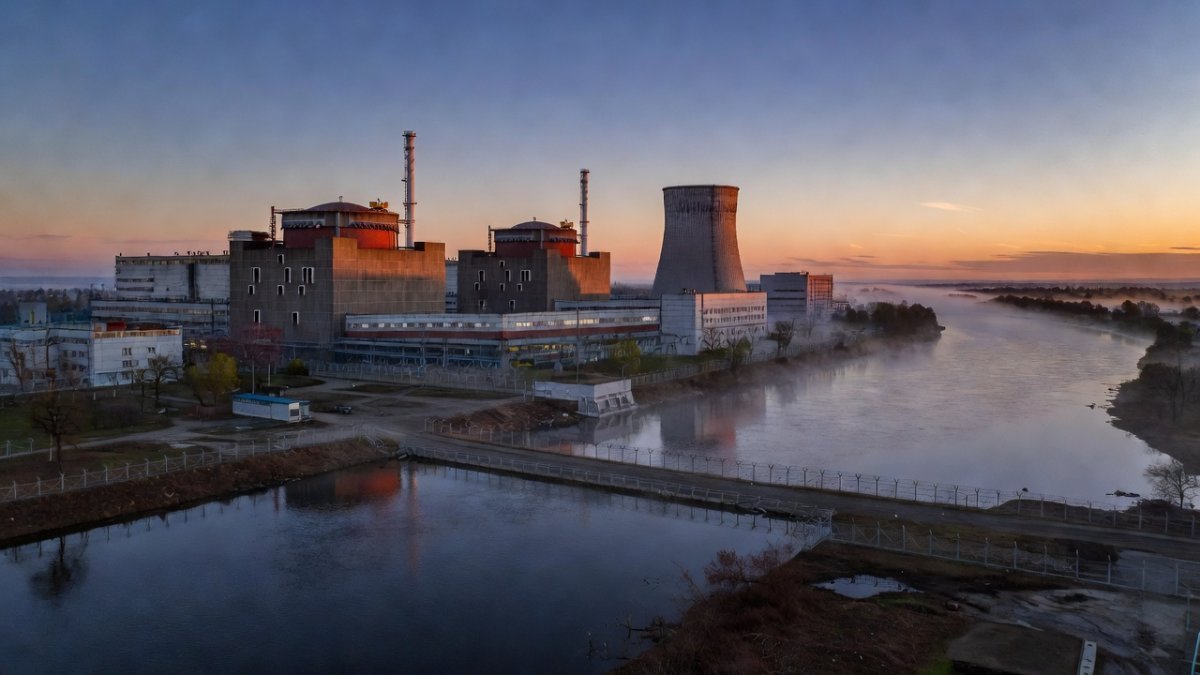
Fatal Drone Strike at Zaporizhzhia Staff Bus Stop Marks New Low for Nuclear Safety
The International Atomic Energy Agency (IAEA) confirmed on Tuesday that a drone exploded at a bus stop used by staff of the Russian-occupied Zaporizhzhia Nuclear Power Plant (ZNPP) in southern Ukraine, killing one person and injuring at least 15 others. The attack, which occurred around 6 a.m. local time, has been described by the plant's director as "the worst event the plant has faced" since the facility was seized by Russian forces in March 2022.
The incident underscores the precarious state of Europe's largest nuclear power station, which sits directly on the front lines of the war. The IAEA, which maintains a permanent presence of inspectors at the site, said the explosion caused 16 casualties among staff and subcontractors, including one death and three serious injuries. It was not immediately clear whether the drone was Russian or Ukrainian, and both sides have traded accusations over the attack.
IAEA Confirms Casualties and Condemns the Attack
In a post on X, the IAEA cited the plant's director in detailing the human toll of the strike. "The explosion caused 16 casualties among staff and subcontractors, including one death and three serious injuries," the agency said. The plant's director, whose name has not been released, described the incident as the most severe threat to the facility since the start of the full-scale invasion.
IAEA Director General Rafael Grossi responded with an unusually forceful statement, calling on "military commanders responsible for these actions as well as all others aiming [at] nuclear power plants and/or their staff to put an immediate stop to these unacceptable actions." Grossi added that such attacks "constitute great risks to nuclear safety and security during the conflict." His remarks reflect growing international alarm over the repeated targeting of the plant and its personnel.
The Strategic and Symbolic Importance of Zaporizhzhia NPP
The Zaporizhzhia Nuclear Power Plant, located near the city of Enerhodar on the Dnipro River, is the largest nuclear power station in Europe, housing six VVER reactors. Russian forces captured the facility on March 4, 2022, during the Battle of Enerhodar, marking the first full-scale military attack and occupation of an operational nuclear power plant in history. Since then, the plant has been a flashpoint in the conflict, with both Russia and Ukraine accusing each other of endangering nuclear safety.
The plant's location on the front lines has made it uniquely vulnerable. It has faced repeated shelling, external power cuts, and fire incidents since 2022. The IAEA has brokered ceasefires to enable repairs to restore the plant's back-up power line, but the underlying risks remain. Grossi has repeatedly warned that any major accident at the facility could have transboundary consequences for Europe, potentially contaminating vast areas and displacing millions of people.
Human Cost: Staff and Subcontractors Bear the Brunt
Tuesday's drone strike targeted a bus stop used by plant staff and subcontractors, a chilling reminder that the human cost of the conflict extends beyond the battlefield. The workers who keep the plant operational under occupation face daily risks, not only from the war but also from the psychological toll of working under constant threat. The IAEA's report of 16 casualties, including one death and three serious injuries, highlights the vulnerability of these essential workers.
The plant's director, in his assessment to the IAEA, framed the attack as a direct assault on the facility's operational integrity. While the drone did not strike the reactor buildings themselves, the proximity of the explosion to staff infrastructure raises serious questions about the safety protocols in place. The IAEA has not reported any damage to the reactors or safety systems, but the incident has heightened fears of a catastrophic accident.
Russia and Ukraine Trade Accusations Over the Attack
As with previous incidents at the plant, both Russia and Ukraine have moved quickly to blame each other for the drone strike. Russian officials, who control the plant and the surrounding area, have accused Ukrainian forces of targeting the facility in a deliberate provocation. Ukrainian authorities, in turn, have pointed to the Russian occupation as the root cause of the danger, arguing that the plant's presence on the front lines is a direct result of Moscow's invasion.
The lack of clarity over the drone's origin underscores the fog of war that has surrounded the plant since 2022. The IAEA has not attributed responsibility, and independent verification is nearly impossible given the restricted access to the occupied territory. This ambiguity has allowed both sides to use the plant as a propaganda tool, with each accusing the other of risking a nuclear disaster.
A History of Incidents and Near-Misses
Tuesday's attack is not an isolated event. The Zaporizhzhia plant has been the site of numerous incidents since the Russian occupation began. In 2022, the plant faced repeated shelling that damaged infrastructure and forced temporary shutdowns of some reactors. The IAEA has also condemned the reported killing of the plant's chief engineer, an incident Grossi called "an unacceptable attack on the plant and its management, seriously threatening nuclear safety."
The plant has also experienced external power cuts, which are critical because the reactors require a continuous supply of electricity to cool the fuel and prevent a meltdown. Backup diesel generators have been used on multiple occasions, but they are a temporary measure and carry their own risks. The IAEA has worked to broker ceasefires to allow repairs to the power lines, but the underlying instability remains a constant threat.
Grossi's Warnings and the Broader Nuclear Safety Framework
Rafael Grossi has been a persistent voice of caution throughout the conflict, warning that the Zaporizhzhia plant sits on the front lines and that any major accident could have catastrophic consequences for Europe. His latest statement, calling for an immediate stop to attacks on nuclear facilities and their staff, reflects the growing frustration within the international community over the lack of progress in securing the plant.
The IAEA's permanent presence at the plant, established on September 1, 2022, has provided a measure of oversight, but it has not been able to prevent attacks. The agency's inspectors have documented damage and reported on conditions at the site, but their ability to influence the behavior of the warring parties is limited. Grossi has repeatedly called for a demilitarized zone around the plant, but such proposals have not gained traction.
What This Means for Nuclear Safety in Europe
The drone strike on the bus stop is a stark reminder that the threat to nuclear safety in Europe is not hypothetical. The Zaporizhzhia plant, with its six reactors and spent fuel storage, poses a risk that could dwarf the 1986 Chernobyl disaster if a major accident were to occur. The transboundary consequences would be felt across the continent, affecting agriculture, health, and economies for decades.
For ordinary Russians and Ukrainians, the war has already brought immense suffering, and the prospect of a nuclear accident adds another layer of fear. The plant's staff, many of whom are Ukrainian citizens working under occupation, are caught in the middle, trying to maintain safety standards while navigating the dangers of war. The international community, through the IAEA, has a responsibility to press for the protection of the plant and its workers, but the path forward remains uncertain.
The attack on the bus stop is a grim milestone in a conflict that has already seen countless violations of international law. As Grossi noted, the actions of military commanders who target nuclear facilities and their staff are unacceptable and pose grave risks to nuclear safety and security. The question now is whether the international community will take meaningful steps to prevent the next incident, or whether the Zaporizhzhia plant will continue to be a pawn in a war that shows no signs of ending.
By Irina Volkov, Staff Writer
This article was produced with AI-assisted research and editorial support. Sources: IAEA, Reuters, The Moscow Times.
What's Your Reaction?
 Like
0
Like
0
 Dislike
0
Dislike
0
 Love
0
Love
0
 Funny
0
Funny
0
 Wow
0
Wow
0
 Sad
0
Sad
0
 Angry
0
Angry
0

Russia/Eastern Europe Correspondent at Global1.News. Covering Russian politics, energy, security, and the shifting dynamics of the post-Soviet space. Provides clear-eyed analysis on one of the world's most opaque regions.














Comments (0)