
Chief Justice Zalameda urged to accelerate resolution of labor cases
When the newly‑appointed Chief Justice Rodil Zalameda took his oath, labor groups across the Philippines saw a glimmer of hope that the long‑standing backlog of labor cases might finally be addressed.
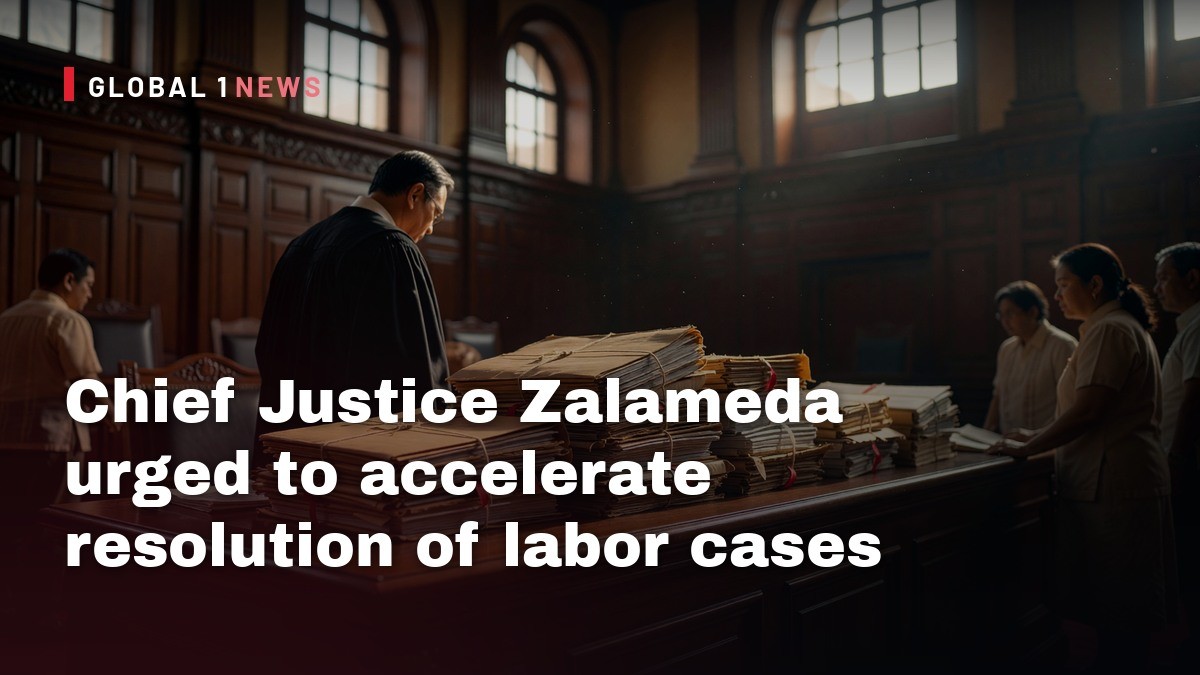
When the newly‑appointed Chief Justice Rodil Zalameda took his oath, labor groups across the Philippines saw a glimmer of hope that the long‑standing backlog of labor cases might finally be addressed. Yet a week after his appointment, the Federation of Free Workers (FFW) sounded the alarm, urging the high court to accelerate the resolution of thousands of pending disputes that affect everyday Filipino workers. In a statement delivered on November 7, FFW National President Sonny Matula appealed directly to Chief Justice Zalameda, asking for a sweeping review of “aging labor cases” that sit idle in the Supreme Court and the Court of Appeals, and for concrete steps to prevent further delays.
Why the backlog matters to the barangay
The human cost of a stalled labor case is starkly illustrated by Matula’s own words: “For a worker who has lost a job, every year of litigation means food, tuition and medicine that the family must struggle to afford.” In many barangays, a daily wage is the lifeline that sustains a household’s basic needs. When that wage is withheld or a dispute drags on for years, families face a cascade of hardships—from the inability to pay for school fees to the loss of essential medicines. The phrase “arawan ang sahod; sana ang hustisya, hindi dekada ang hintayan” captures the frustration of a worker whose livelihood is measured in days, not decades.
FFW board member Vilma Garcia, who also leads the De La Salle Health Institute Employees Union, underscored that a legal victory on paper is insufficient if the awarded wages, benefits, reinstatement or separation pay never reach the worker’s hands. “While the case is pending, transportation, food, education and medical expenses continue to pile up,” she said, emphasizing that timely justice can still make a meaningful difference in a family’s struggle to stay afloat.
The proposed “Writ of Manggagawa”
Among the reforms Matula and his colleagues are pushing is the introduction of a “Writ of Manggagawa.” This legal tool is designed to fast‑track cases involving workers’ right to unionize, a right that remains vulnerable to employer retaliation and procedural delays. By creating a dedicated writ, the Supreme Court could signal a prioritization of labor disputes, ensuring that cases do not linger while workers continue to lose income.
The concept mirrors other specialized writs in Philippine jurisprudence, yet it would be the first expressly aimed at protecting the economic welfare of the working class. If adopted, the writ could compel lower courts to adhere to stricter timelines and reduce the use of dilatory motions that often stall proceedings for years.
Digital court services for low‑income litigants
Another key demand from the FFW is the establishment of digital court services tailored for low‑income litigants. Many workers in the informal sector lack the resources to travel to Manila or provincial courthouses, where most labor cases are filed. By leveraging technology—online filing, virtual hearings, and electronic case tracking—the judiciary could lower the financial barrier to justice.
Such a shift would also align with the Supreme Court’s broader modernization agenda, which has already introduced e‑filing for certain civil cases. Extending these tools to labor disputes would not only speed up case management but also empower workers to monitor the progress of their claims without incurring additional travel costs.
Urgent action on the Wage Order No. 27 injunction
Beyond procedural reforms, the FFW highlighted a concrete case that illustrates the immediate stakes of judicial inaction. A Regional Trial Court injunction has halted the implementation of Metro Manila’s Wage Order No. 27, a measure that would raise the minimum wage for more than one million earners in the National Capital Region. The injunction, according to FFW National Vice President Jun Mendoza Ramirez, “is a grave injustice to more than a million minimum‑wage earners in Metro Manila.”
Ramirez urged the Supreme Court to act quickly on the challenge to the injunction, noting that each day of delay translates into a “dagdag na pagkakait” – an added denial of the expected wage increase. For families already stretched thin, the lost wage hike means continued hardship in meeting daily expenses, from transportation fares to school fees.
Chief Justice Zalameda’s track record
Matula pointed to Zalameda’s prior rulings as evidence that he understands the realities of Filipino workers. In cases such as Ascent Skills Human Resources Services v. Manuel and Keng Hua Paper Products v. Ainza, the chief justice demonstrated a sensitivity to labor concerns, balancing corporate interests with the need to protect workers’ rights. These decisions, while not detailed in the statement, were cited as a hopeful sign that Zalameda could extend the same fairness to the broader administration of labor justice.
The FFW’s appeal rests on the belief that the constitutional promise of full protection for labor must be reflected not only in the substance of judgments but also in the speed with which they are rendered and enforced. “Speedy labor justice must become a reality that workers and their families can experience,” Matula said, underscoring the urgency of translating legal principles into lived relief.
Potential impact on the broader labor movement
If the Supreme Court embraces the FFW’s proposals, the ripple effect could be profound. Faster case resolution would bolster confidence among unionized workers and those considering unionization, reinforcing the idea that the state stands behind labor rights. Moreover, a digital court system could democratize access to justice, allowing workers from remote provinces to file claims without the prohibitive costs of travel.
Conversely, continued delays risk deepening distrust in the judiciary, especially among sectors already skeptical of government institutions. The ongoing injunction on Wage Order No. 27, for instance, could fuel protests and further strain relations between labor groups and the administration, especially as the country approaches the 2028 general elections where labor issues are likely to be a pivotal campaign theme.
Looking ahead: what workers can expect
As the Supreme Court deliberates on the FFW’s urgent pleas, ordinary Filipinos watch closely. For many, the outcome will determine whether their families can finally afford a decent meal, pay for school tuition, or receive the medical care they need without sinking deeper into debt. The call for a “comprehensive review” of aging labor cases is more than a procedural request; it is a demand that the justice system honor its role as a protector of the most vulnerable.
In the weeks to come, labor leaders plan to keep the pressure on Chief Justice Zalameda, monitoring his docket and urging swift action on the Wage Order No. 27 injunction. As the nation grapples with inflation, rising living costs, and the lingering effects of the pandemic, the promise of “speedy labor justice” may well become a litmus test for the Philippines’ commitment to its workers and the democratic ideals that bind the archipelago together.
This article was produced with AI-assisted research and editorial support. Reporting is based on the source material cited below. Sources: Philstar.com; Global1.News (08 November 2026).
By Bella Reyes, Staff Writer
What's Your Reaction?
 Like
0
 Dislike
0
 Love
0
 Funny
0
 Wow
0
 Sad
0
 Angry
0

Philippines/Southeast Asia Correspondent at Global1.News. Manila-based journalist covering Philippine politics, environment, maritime security, and social issues. Passionate about marine conservation and the communities protecting the Philippines' natural heritage.














Comments (0)