
Danube at a Standstill: Europe's Energy Grid Teeters on the Brink as a River Runs Dry
Record-low Danube levels force nuclear shutdowns in Hungary and Romania, cripple hydro power in Serbia, and trigger an EU energy emergency at peak summer demand.
Danube at a Standstill: Europe's Energy Grid Teeters on the Brink as a River Runs Dry
Folks, let me cut through the noise and tell you exactly what is happening right now, because this is not a drill. We are watching a slow-motion catastrophe unfold in the heart of Europe. The Danube River-the lifeblood of a continent, the artery of commerce and power-is drying up. And as the water recedes, it is taking Europe's energy security down with it.
We aren't talking about a minor inconvenience for river cruises. We are talking about nuclear power plants being switched off, hydroelectric dams running at a fraction of their capacity, and governments begging citizens to stop using their air conditioners in the middle of a brutal summer heatwave. This is the reality of August 2026, and it is a stark, terrifying preview of what happens when we ignore the physics of our planet.
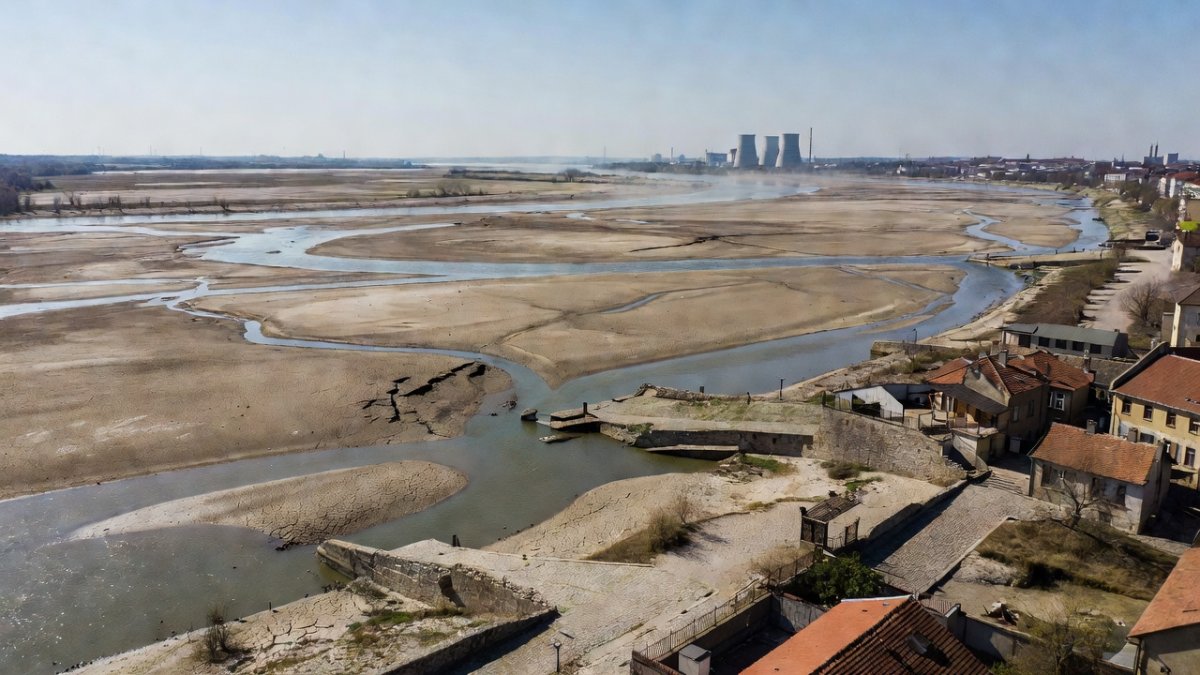
The satellite images from the European Space Agency (ESA) are damning. Comparing August 9, 2025, with August 4, 2026, you can see the Danube has visibly shrunk. Sandbanks that haven't seen the sun in decades are now sprawling expanses. This isn't a fluctuation; it's a collapse. And the consequences are hitting the grid with the force of a sledgehammer.
The Nuclear Gamble: Paks Goes Dark
Let's start in Hungary, because that is where the situation is most acute. The Paks nuclear power plant is not just a piece of infrastructure; it is the beating heart of the Hungarian energy system. We are talking about roughly 2 gigawatts of power-up to 40 percent of the country's entire electricity supply, according to analysts tracking the plant. It is a massive, reliable, carbon-free workhorse. But it has one fatal flaw: it requires the Danube to cool its reactors, and it has no backup water supply. On Wednesday, July 29, 2026, at 3 PM, MVM Paks announced they were shutting down Unit 3. The water level had fallen to a point where the safety margins were evaporating. Then came the hammer blow. Prime Minister Peter Magyar announced that the entire plant would be powered down on Sunday, August 2, 2026. Let me repeat that: the first full shutdown of the Paks plant in 44 years. We are talking about removing 25 to 30 percent of Hungary's electricity output at the peak of summer demand. Antal Kovacs, the plant's communications director, gave us the quote that should terrify everyone: the plant was simply not prepared for such an extremely low water level. They are scrambling. The government is planning to sink barges and build a riverbed sill just to keep the cooling water flowing. That is not a long-term strategy; that is a desperate act of triage. They are trying to build a dam out of scrap metal to keep the lights on.Relying on Imports: A Fragile Lifeline
Now, Prime Minister Magyar is trying to spin this. He insists supply remains secure, pointing to Hungary's ability to import between 3,600 and 3,800 megawatts of electricity. But folks, I have to ask: from where? You cannot import what your neighbors do not have. When you shut down a baseload nuclear plant, you don't just flip a switch and buy power from the corner store. You are entering a volatile, high-stakes market where prices spike and availability is never guaranteed. The government is preparing for possible electricity rationing. That is not the language of a secure grid; that is the language of a crisis. They are betting the farm on the kindness of strangers and the stability of a regional grid that is itself under siege. It is a gamble, and the Hungarian people are the ones who will pay the price if it fails.Romania's Dynamite Diplomacy
Head south to Romania, and the situation is equally dire, but the response is a bit more... explosive. The Cernavoda nuclear power plant, Romania's only working nuclear facility, was facing the same existential threat as Paks. The Danube was diverting away from its intake valves. So, what did they do? On August 3, 2026, the Romanian Navy blasted a rock outcrop in controlled explosions on the Bala channel. They used dynamite to try and force the river back toward the plant. They also planned to sink four rock-filled barges into the Danube to act as a makeshift dam, but they delayed that operation, citing unsafe conditions. Unsafe conditions? The entire situation is unsafe! This is a desperate, Hail Mary pass to keep the cooling water flowing. It is a testament to human ingenuity, sure, but it is also a testament to how utterly unprepared we are for the reality of climate change. You cannot dynamite your way out of a drought.Serbia's Grim Math: The Iron Gates Rust
Further downstream, Serbia is facing a different kind of energy nightmare. The Djerdap 1, also known as the Iron Gate, is a massive hydroelectric plant that relies on the sheer volume of the river to spin its turbines. But with the Danube at a historic minimum, the plant is operating at only about 20 percent of its capacity. Twenty percent! That is a catastrophic loss of clean, cheap power. Prime Minister Djuro Macut has convened an emergency energy meeting and has had to issue a plea that feels almost dystopian: he is calling on citizens to limit their air conditioning use during peak hours. In a heatwave. He is asking people to sweat it out so the grid doesn't collapse. The numbers from OSW analysis are brutal. The Iron Gates complex, which is jointly operated by Romania and Serbia, has only approximately 25 percent of the 1,400 megawatts allocated to each country still operational. We are losing three-quarters of the power output from one of Europe's largest infrastructure projects. And the water level from Bezdan to Slankamen has recorded a minus of 139 centimeters-a historic minimum. That is not just a threat to electricity; it threatens navigation and the entire river ecosystem.A Continent-Wide Failure
This is not an isolated incident. This is a systemic failure. The Anadolu Agency reports that reactors in Romania and France have also faced shutdowns or output cuts because of insufficient cooling water or rising river temperatures. France, the nuclear powerhouse of Europe, is being forced to throttle back its reactors because the rivers they use for cooling are too warm. It's a double whammy: not enough water, and what water is left is too hot to safely cool the reactors. The European Union is watching this unfold with growing alarm. They have said they are prepared to call an emergency meeting of the Electricity Coordination Group. That is the EU's version of a panic button. It is an admission that the market is failing and that political intervention is required to prevent blackouts. Energy officials across the region are warning that this drought is testing Europe's grid at the worst possible time-peak summer cooling demand. We are hitting peak demand and peak supply failure simultaneously. That is the definition of a perfect storm.Ghosts of the Past: History Rises from the Mud
It is a strange irony that as the modern world struggles to keep its lights on, the receding waters are revealing the ghosts of the past. Near Gigen, Bulgaria, the foundations of Constantine's Roman bridge have emerged from the mud. We are also seeing mammoth bones and, incredibly, Nazi warships surfacing from the riverbed. These are relics of World War II, sunk in the Danube and hidden for nearly a century. It is a powerful visual metaphor, folks. The river is giving up its secrets, but it is also exposing our vulnerabilities. We are so busy looking at the historical artifacts that we might miss the fact that the river is disappearing in front of our eyes. It is a stark reminder that civilizations rise and fall on their access to water, and we are currently failing that test.The Luxury of Disruption: River Cruises and Reality
And what about the river cruise lines? Viking, Avalon Waterways, AmaWaterways, and Riviera Travel are all scrambling. They are adjusting itineraries, swapping ships, and adding coach transfers to get passengers around the impassable stretches. The Regensburg-to-Passau stretch is the main constraint. I know that sounds trivial compared to nuclear shutdowns, but it is a symptom of the same disease. The Danube is a highway, and when the highway closes, everything stops. The economy of the region is built on this river, and it is grinding to a halt. The fact that luxury cruises are being disrupted is just the tip of the iceberg. Cargo shipping, agriculture, and industry all rely on this waterway.The Bottom Line: We Are Not Prepared
Here is the truth, and I am not going to sugarcoat it. Europe is not prepared for this. The Paks plant had no backup water supply. The Iron Gates is a victim of hydrology. The response has been reactive, desperate, and dangerous. We are using dynamite and sinking barges to fight a climate battle we should have seen coming decades ago. This is what happens when you build critical infrastructure on the assumption that the past is a reliable guide to the future. The past is gone. The Danube is lower than it has ever been, and it is not coming back without a fundamental shift in our climate. The EU needs to do more than call a meeting. They need to build interconnectivity that can withstand regional shocks. They need to invest in grid-scale storage and diversify their energy sources away from river-dependent nuclear and hydro. They need to take the threat of drought as seriously as they take the threat of a military invasion. To the citizens of Hungary, Serbia, and Romania: this is not your fault, but you are the ones who will suffer. To the leaders of Europe: stop treating this as a temporary anomaly. This is the new normal. The river is telling you something, and you need to listen before the lights go out for good. We have a choice. We can continue to react with dynamite and desperation, or we can start building a resilient future. The water is running out, folks. It is time to act like it. This article was produced with AI-assisted research and editorial support. Sources: Reuters, The Associated Press, The Guardian, Euronews, European Space Agency, OSW analysis, Anadolu Agency, Telex Hungary. By Jessica Ali, Staff WriterWhat's Your Reaction?
 Like
0
Like
0
 Dislike
0
Dislike
0
 Love
0
Love
0
 Funny
0
Funny
0
 Wow
0
Wow
0
 Sad
0
Sad
0
 Angry
0
Angry
0

Jessica Ali
Editor-in-Chief at Global1.News. Atlanta-based journalist who cuts through the BS and tells it like it is. Lead anchor, host, and the voice you hear when the spin stops and the truth starts.















Comments (0)