
Colombia Earthquake Death Toll Passes 265 as Rescuers Race Against Time in Shattered Cities
A magnitude 7.4 earthquake struck western Colombia on August 10, killing at least 265 people and leaving 496 missing as rescuers race to reach the remote epicenter near San Jose del Palmar amid nearly 100 aftershocks and collapsed infrastructure.
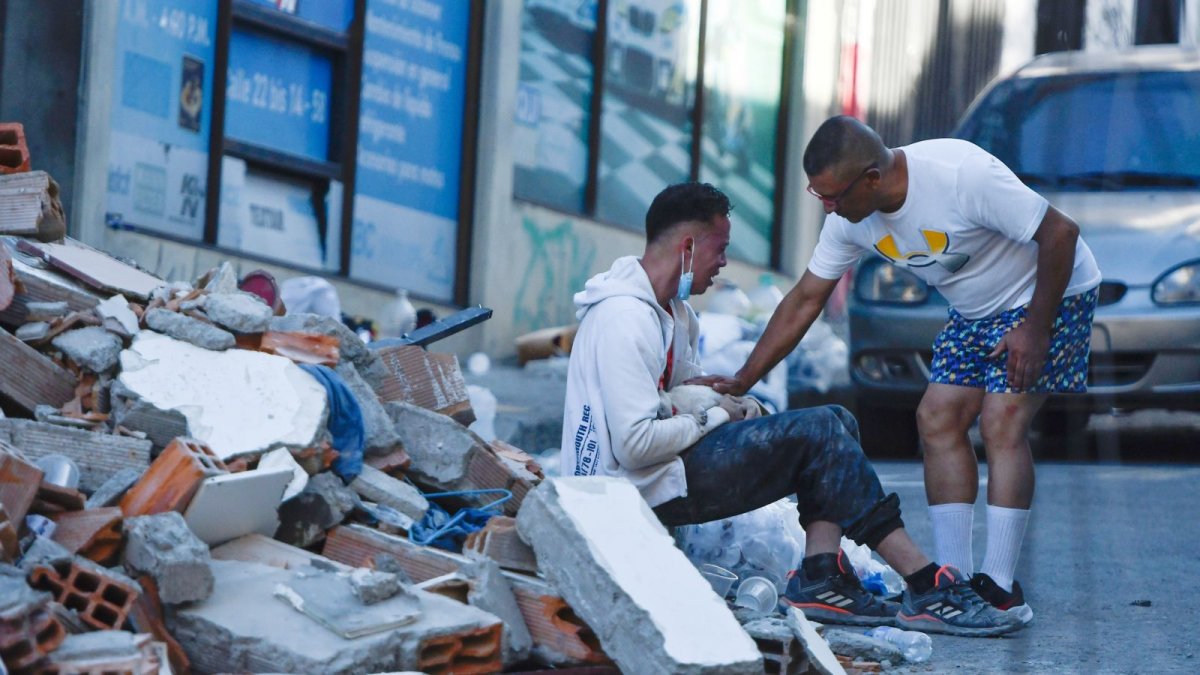
BOGOTÁ, Colombia — The ground beneath western Colombia has not stopped moving since Monday morning, and neither have the rescue crews digging through the rubble. A magnitude 7.4 earthquake — the strongest recorded in the country in the 21st century — has killed at least 265 people, injured more than 3,494, and left 496 missing, according to President Abelardo De La Espriella. The numbers, confirmed on Wednesday, August 12, are climbing by the hour as crews reach isolated communities cut off by landslides and damaged roads.
The quake struck at 7:34 a.m. local time on Monday, August 10, centered just 5 kilometers (3 miles) south of San José del Palmar, a community of roughly 4,800 people in the western department of Chocó. The U.S. Geological Survey placed the epicenter about 400 kilometers (250 miles) west of Bogotá, at a depth of approximately 103 kilometers. The force of the tremor was felt across a massive swath of the country — from Bogotá and Medellín to Cali, Pereira, Manizales, and Armenia — and even rattled parts of neighboring Ecuador and Panama.
A National Disaster Declared in the First Days of a New Presidency
President Abelardo De La Espriella, sworn into office just days before the quake according to Reuters, has declared a national disaster and a state of emergency to expedite recovery funding. Speaking from Pereira, the capital of the coffee-growing Risaralda region, the president decreed a three-month economic relief measure for the area. "It broke my heart going through the city center and seeing all these businesses destroyed," he said, adding that he hoped the measures would be "a breath of air in the middle of this tragedy."
The president's commitment was unequivocal: "We aren't going to leave people alone. They are in our hearts and we are going to tend to people with our full determination." The declaration unlocks emergency funds and streamlines bureaucratic processes for aid distribution, but the logistical reality on the ground remains grim. A senior UN worker has warned that food distribution will be crucial in the coming days, while an indigenous leader living near the epicenter told reporters his community has yet to receive any help at all.
The timing could not be more challenging. The new administration is navigating its first major crisis with infrastructure already compromised, and the damage to transportation networks is hampering every aspect of the response.
Casualty Figures Rise Steadily as Cities Report Devastating Losses
The death toll has been a moving target since Monday. A CNN count based on official reports put the toll at more than 200 on Tuesday. Separate city reports from Tuesday morning totaled 254 dead, including 101 in Pereira and 95 in Cali, Colombia's third-largest city. By Wednesday, President De La Espriella confirmed the figure had risen to at least 265 dead, with 3,494 injured and 496 still unaccounted for. In Cali, public health secretary German Escobar said the morgue was full and crews were bringing more bodies in from the streets.
Rescuers work in 30-degree-Celsius (86-degree-Fahrenheit) heat that accelerates decomposition and adds urgency to the search for survivors; combined with the physical toll of moving debris by hand, it is pushing rescue teams to their limits.
Hospitals Overwhelmed as Medical Infrastructure Collapses
In Cali, the damage to medical facilities has created a secondary crisis. The top floors of a hospital — including areas dedicated to pediatric care — collapsed, trapping some patients while about 600 others were treated on a street strewn with rubble, according to the hospital's director, Irne Torres Castro, speaking to Caracol television. The collapse of a major city's hospital infrastructure is a systemic failure with long-term consequences: patients who survived the quake now face care in makeshift outdoor triage centers, and a health system already strained by the volume of injured is operating at reduced capacity.
Electricity, water, healthcare, and phone service remain disrupted in several areas, especially in Chocó near the epicenter — complicating rescue efforts and severing the lines of communication families need to confirm the fate of loved ones.
Six Airports Closed and Roads Impassable in the Quake Zone
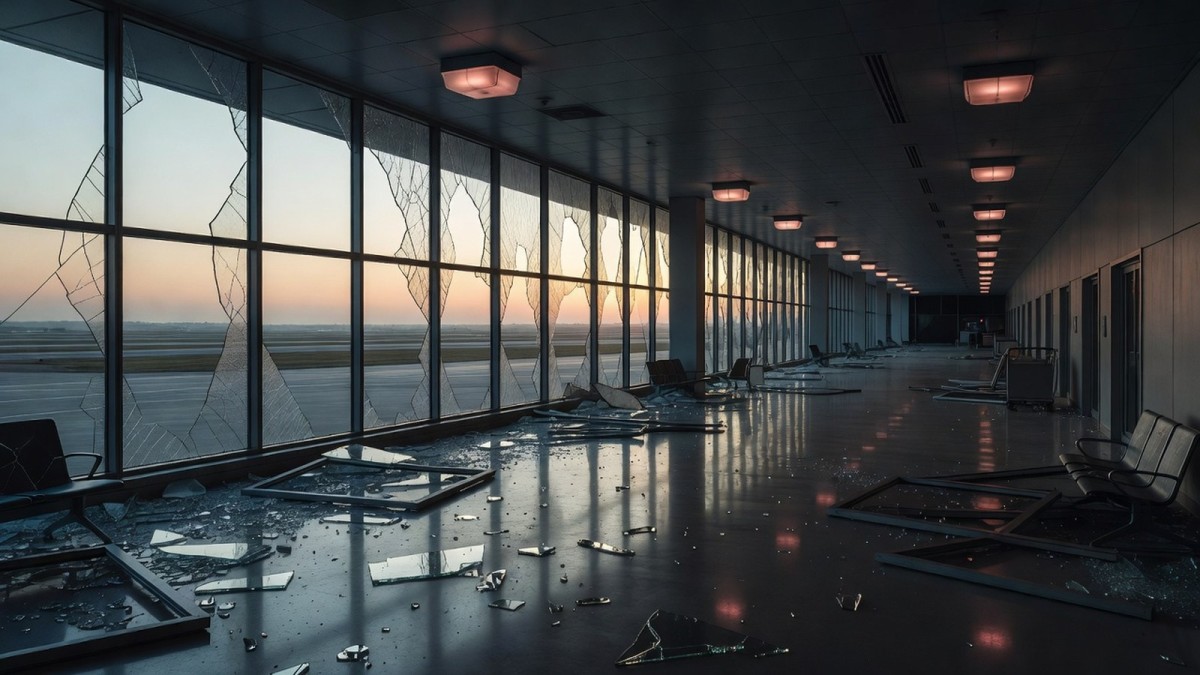
Civil aviation authorities have closed six airports — Quibdó, Pereira, Manizales, Armenia, Cartago, and Buenaventura — due to damage. The closure of these airports effectively isolates the affected region from rapid aerial supply lines, forcing aid to travel by road through terrain that has been fractured by the quake. Dozens of roads have been reported affected, with landslides and buckled pavement blocking key routes.
CNN reported Tuesday that rescuers had been unable to reach the epicenter area. The community of San José del Palmar, sitting just kilometers from where the quake originated, remains largely inaccessible. This is a recurring tragedy in Chocó, one of Colombia's most remote and historically underserved departments. The infrastructure fragility that existed before the quake — poor roads, limited connectivity, and sparse medical facilities — has been catastrophically exposed.
The U.N. humanitarian office (OCHA) estimated that roughly 5,000 homes were damaged. The president earlier said around 1,600 buildings were damaged, at least 61 of them completely collapsed. Dozens of buildings collapsed and hundreds of residences were destroyed across the affected region. The scale of displacement is likely to create a secondary humanitarian crisis as survivors seek shelter.
Nearly 100 Aftershocks Keep Survivors on Edge
The ground has not settled. Monitoring agencies registered nearly 100 aftershocks as of Tuesday morning, with Colombia's Geological Service initially recording 21 aftershocks in the immediate aftermath. Each tremor reignites panic among survivors and poses additional risks to already weakened structures.
The aftershocks also complicate rescue operations. Crews must balance the urgency of digging for survivors against the danger of entering structures that could collapse at any moment. The psychological toll on residents is immense — every rumble sends people running into the streets, reliving the terror of Monday morning.
Colombia sits on the Pacific "Ring of Fire" and is one of South America's most seismically active countries, though a quake of this magnitude is rare. The Geological Service confirmed this was the strongest earthquake recorded in the country in the 21st century, surpassing previous events that shaped the nation's building codes and disaster preparedness.
Stories of Survival and Grief Emerge from the Rubble
Amid the devastation, stories of resilience are emerging. In Cali, Brian Osorio Zuluaga was at work when the quake struck. He raced home on a motorcycle and found the five-story La Torre del Limonar residential complex collapsed. Shouting into the wreckage, he heard a faint reply: "Yes, I'm here. I'm with a baby." With seven others, he lifted a heavy concrete slab and helped clear a path, and the baby was rescued alive. It is a moment of hope in a sea of loss.
Influencer Jose Gallego was at Pereira airport recording when the shaking began. "There were people injured, bleeding, screaming and trying to reach their families but there wasn't any signal. I crossed the city on foot; it took two hours and the scenes were devastating." His account underscores the communications blackout that has plagued the response, leaving families in agonizing uncertainty.
Fernanda Gaviria, 33, watched from a grocery shop opposite a collapsed building. "They've already pulled several people out, some alive and some dead. I still can't believe it — yesterday at this same time I said hello to them, and today they're gone." Álvaro López, cradling his dog, described the destruction of his neighborhood: "Our building has basically been left in ruins, and the building next to ours? Completely collapsed."
International Aid Pours In as the Region Faces a Long Recovery
World leaders have offered assistance, CNN reported, and international relief organizations are mobilizing. The quake came just over a month after two major tremors killed more than 6,300 people in neighboring Venezuela — a reminder that this region of South America is under constant seismic threat. The international community's response will be critical in the coming weeks as Colombia grapples with the scale of this disaster.
The recovery will be measured in months and years, not days. The closure of airports, the damage to roads, and the disruption of basic services mean that even reaching the affected populations is a monumental task. The president's three-month economic relief measure for the Risaralda region is a start, but the rebuilding of homes, hospitals, and infrastructure will require sustained commitment.
For now, the focus remains on the search for the 496 missing. Every hour that passes reduces the chances of finding survivors, but rescue crews continue to work through the heat, the aftershocks, and the exhaustion — hoping for more stories like the baby rescued from La Torre del Limonar.
As the sun sets on another day of digging, the people of western Colombia are holding onto the president's promise: "We aren't going to leave people alone." The international community must hold them to that pledge.
By Jessica Ali, Staff Writer
This article was produced with AI-assisted research and editorial support. Sources: CNN, The Associated Press, Reuters, CNBC, Anadolu Agency, U.S. Geological Survey, OCHA.
What's Your Reaction?
 Like
0
Like
0
 Dislike
0
Dislike
0
 Love
0
Love
0
 Funny
0
Funny
0
 Wow
0
Wow
0
 Sad
0
Sad
0
 Angry
0
Angry
0

Editor-in-Chief at Global1.News. Atlanta-based journalist who cuts through the BS and tells it like it is. Lead anchor, host, and the voice you hear when the spin stops and the truth starts.













Comments (0)