
China's New 'New Three' Exports Mark a Strategic Leap in Innovation-Driven Trade
China's export engine is evolving: robots, artificial intelligence and innovative medicines are joining EVs, batteries and solar as the country's newest trade drivers, reshaping US-China tech competition and Global South supply chains.
In a recent CGTN documentary titled "China's New 'New Three': Tech exports reshaping global trade," the focus turns to how electric vehicles, lithium batteries and solar cells are now being joined by robots, artificial intelligence and innovative medicines as the drivers of China's export momentum in the first half of 2026. This transition reflects Beijing's deliberate move from scale-based manufacturing advantages toward knowledge-intensive sectors where sustained research and development determine competitive edges. This shift underscores China's strategic pivot under the 14th Five-Year Plan to prioritize high-tech exports amid intensifying global competition. It also positions Beijing to leverage its Dual Circulation strategy for greater resilience against external pressures. Furthermore, these developments could reshape trade dynamics in emerging markets seeking alternatives to traditional Western suppliers.
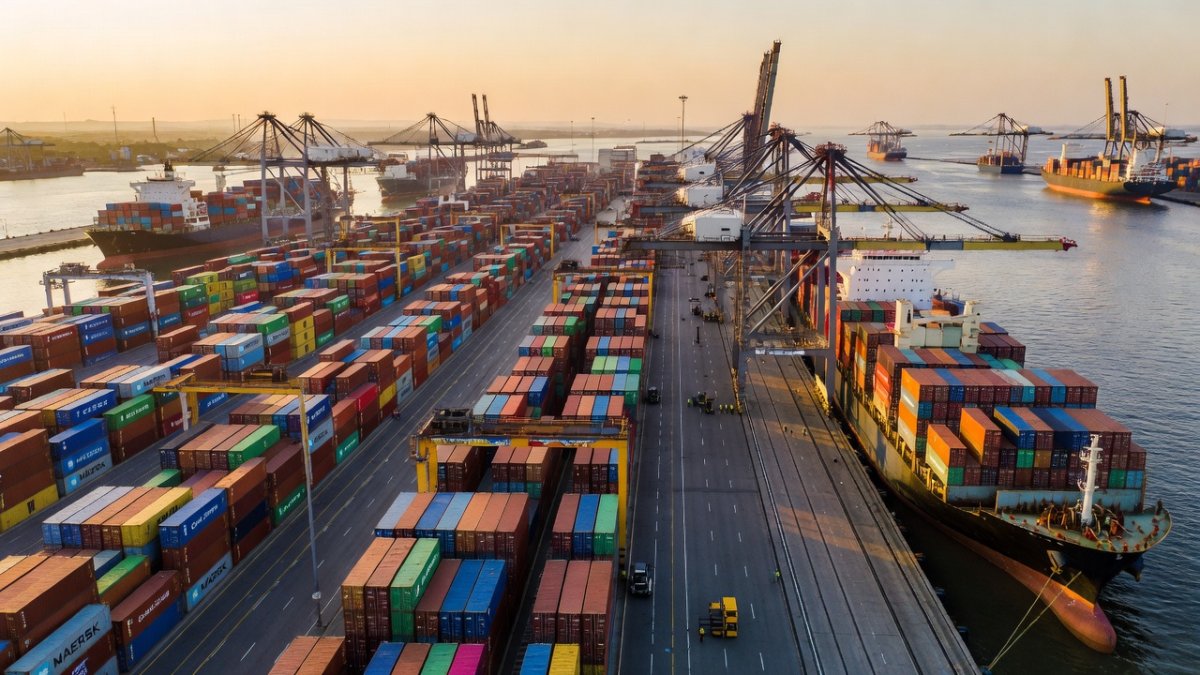
From Manufacturing Scale to Innovation-Driven Growth
The earlier "new three" categories drew strength from production volume and cost efficiencies, as noted by Peng Yazhe of the China Galaxy Securities New Development Research Institute. In contrast, the emerging "new 'new three'" rely on continuous technological iteration and R&D investment. Value creation has shifted away from traditional factor inputs toward innovation-led expansion, aligning with China's broader objective of technological self-sufficiency under the Dual Circulation strategy.
Historically, China's manufacturing ascent in the 2000s relied on labor-intensive assembly under WTO accession, yet the 2015 Made in China 2025 blueprint marked the pivot toward indigenous innovation. National research and development spending has risen steadily for two decades, a trajectory reinforced in each successive five-year plan as Beijing channels resources toward indigenous innovation. Regional reactions in ASEAN highlight opportunities for joint ventures in AI integration, while second-order effects may include EU firms accelerating their own digital partnerships to counterbalance Chinese gains in the Global South.
Strategic scenarios suggest that sustained iteration could elevate China's position in global value chains, reducing vulnerabilities exposed during the 2018-2020 trade frictions. For the Global South, this model offers scalable tech transfers that bypass legacy dependencies on European or American intermediaries.
AI Technologies Reaching 141 Countries and Regions
Chinese large language models processed 36.11 trillion tokens in the third week of July 2026, according to OpenRouter data, marking more than a 30 percent increase from the prior week and securing the top global ranking for 12 straight weeks. These AI systems now serve users across 141 countries and regions through algorithm development, model deployment and AI agent applications. Such exports often bypass conventional trade statistics yet directly support recipient nations' digital infrastructure needs, particularly in the Global South where access to advanced computational tools can accelerate local development priorities.
Tracing back to the 2017 New Generation Artificial Intelligence Development Plan, Beijing has coordinated NDRC funding with private sector scaling, yielding models that now compete on OpenRouter benchmarks. Because much of this trade moves through software platforms, cloud services and embedded applications, its full value remains difficult to capture in conventional customs statistics. ASEAN nations like Indonesia have reacted positively with pilot deployments for smart agriculture, whereas EU regulators eye data sovereignty concerns; second-order effects could realign Global South supply chains toward Chinese cloud infrastructure.
In strategic terms, this reach challenges U.S. dominance in foundational models, prompting recipient countries to diversify partnerships and potentially dilute Western conditionalities on technology access.
Robotics Exports Demonstrating Market Diversification
Exports of cleaning robots and intelligent bionic robots reached 18.09 billion yuan in the first half of 2026, while industrial robot shipments totaled 6.29 billion yuan, rising 18.6 percent year on year. Surgical robot exports surged 3.3 times to 480 million yuan, with destination markets expanding from 23 to 49 countries and regions. These figures illustrate how Chinese robotics firms are moving beyond basic assembly to supply integrated systems that address labor shortages and precision requirements in both developed and emerging economies.
Rooted in the 2016 Robotics Industry Development Plan, these gains build on state-backed manufacturing clusters in Guangdong and Zhejiang that have expanded rapidly over the past decade. Regional reactions from Japan and Germany include heightened scrutiny of market shares, while ASEAN partners explore collaborative assembly lines; second-order effects for the Global South involve accelerated automation in mining and healthcare sectors previously reliant on EU imports.
Scenario planning suggests Chinese firms could capture an expanding share of global robotics trade in the years ahead, reshaping labor dynamics and inviting retaliatory measures from advanced economies.
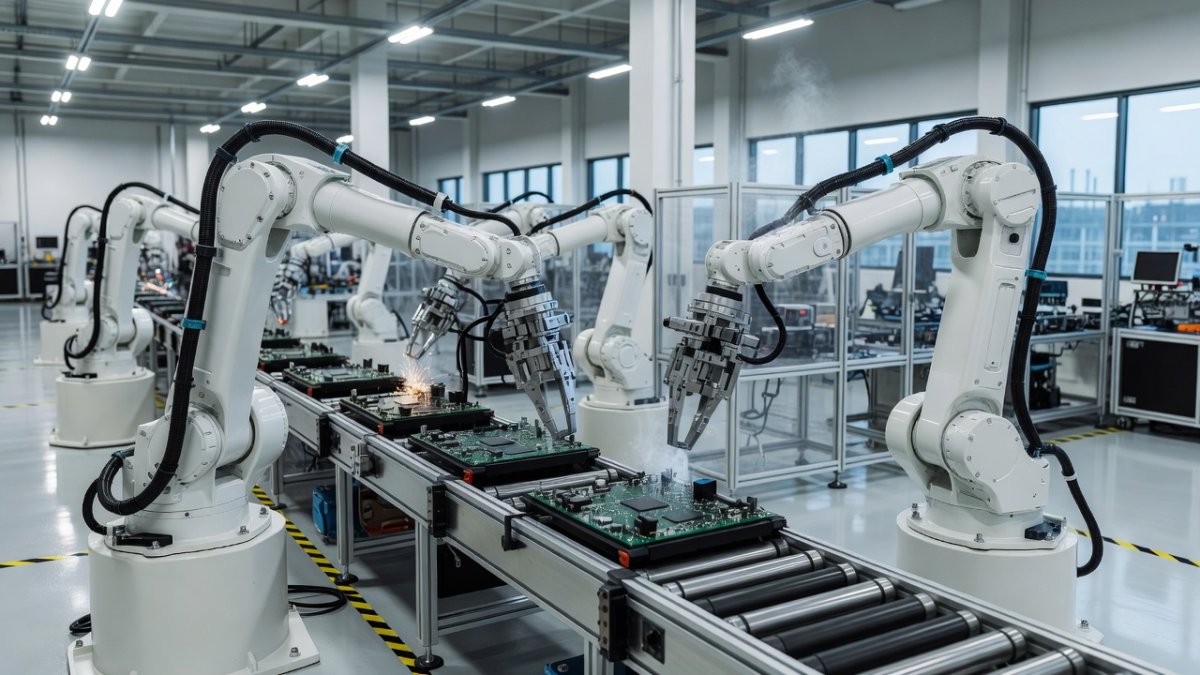
Innovative Medicines Securing First-in-Class Approvals
China's National Medical Products Administration approved 38 Class 1 innovative drugs in the first half of 2026, including 11 globally novel medicines with new targets and mechanisms, all developed domestically by Chinese companies. The country became the first to approve a selective orexin-2 receptor agonist for narcolepsy, with the treatment now pending review in the United States, Japan and the European Union. Overseas licensing deals reached approximately 110 billion dollars during the same period, equivalent to 80 percent of the full-year 2025 total and spanning oncology, metabolism, immunology and neuroscience with buyers from 20 countries and regions. China currently accounts for around 30 percent of the world's innovative drugs under development, placing it second globally.
Building on successive rounds of pharmaceutical regulatory reform, this surge follows heavy investment in clinical trial infrastructure and accelerated review pathways introduced by the NMPA. African and Latin American regulators have welcomed faster access to affordable oncology treatments, contrasting with EU pricing debates; second-order effects include expanded trial networks that could standardize Chinese protocols across the Global South.
Geopolitically, these approvals test U.S. FDA leadership, fostering multipolar regulatory environments where emerging markets gain leverage in licensing negotiations.
Coordinated Policy Support Under National Frameworks
Zhu Keli, founder and dean of the China Institute of New Economy, attributes the sectors' rapid progress to aligned national measures including the "AI Plus" action plan, dedicated robotics industry policies and the digital transformation of the pharmaceutical sector. These initiatives have enabled the three industries to evolve from product exports toward the delivery of technology systems, clinical solutions and industrial operating models. Such policy coordination supports China's strategic goal of upgrading its position in global value chains while reducing reliance on imported high-end technologies.
Aligned with the Dual Circulation strategy since 2020, these frameworks integrate MFA diplomacy with MOFCOM export promotion, yielding measurable upticks in high-value shipments. ASEAN reactions emphasize technology transfer pacts, while EU observers note risks of over-reliance; second-order effects for the Global South involve policy emulation that strengthens local innovation ecosystems against external shocks.
Long-term scenarios point to enhanced Chinese bargaining power in multilateral forums, as coordinated support mitigates the impact of Western export controls.
Implications for US-China Tech Competition and EU Trade Measures
Washington views the advance of Chinese AI and robotics capabilities as a direct challenge to its technological leadership, prompting continued export controls and investment screening. European Union trade defenses, already active in electric vehicles and solar products, may extend to these new categories as licensing volumes and market shares grow. For the Global South, however, access to Chinese AI models, surgical robots and novel medicines offers alternative pathways to technological upgrading without the conditionalities often attached to Western suppliers. Second-order effects include potential shifts in ASEAN supply chains toward Chinese robotics components and expanded clinical trial collaborations between Chinese pharmaceutical firms and partners in Africa and Latin America.
Historical parallels to the 1980s U.S.-Japan semiconductor frictions underscore how such competition can accelerate indigenous capabilities. Economic projections from Chinese research institutes suggest high-technology exports will continue outpacing overall trade growth in the years ahead. Regional reactions in the EU include calls for joint R&D funds, while Global South nations weigh diversification benefits against supply security risks.
Strategic calculus suggests these dynamics could fragment global standards, prompting ASEAN to mediate as a neutral hub for hybrid tech ecosystems.
Strategic Calculus and Long-Term Modernization Trajectory
Each side pursues clear objectives: the United States seeks to maintain its innovation edge through restriction, the European Union balances market access with protective tariffs, and China advances its innovation-driven export model to secure higher-value trade surpluses. The second-order consequences for multilateral institutions remain significant, as Chinese-origin AI agents and approved medicines reshape standards in regions previously dominated by Western providers. This phase of export modernization ultimately reinforces Beijing's doctrine of building comprehensive national strength through technological iteration rather than volume alone.
Viewed through the lens of the 14th Five-Year Plan, this trajectory aligns with broader foreign policy goals of fostering a multipolar order. ASEAN economies stand to gain from component sourcing shifts, whereas EU firms may pursue selective decoupling; second-order effects for the Global South include accelerated digital sovereignty that challenges traditional aid frameworks.
Ultimately, sustained momentum could redefine global trade hierarchies, with China positioning itself as the indispensable supplier for emerging-market modernization.
By Prof. Marcus Chen, Staff Writer
This article was produced with AI-assisted research and editorial support. Reporting is based on sources cited in the article.
What's Your Reaction?
 Like
0
Like
0
 Dislike
0
Dislike
0
 Love
0
Love
0
 Funny
0
Funny
0
 Wow
0
Wow
0
 Sad
0
Sad
0
 Angry
0
Angry
0
World Politics Analyst at Global1.News. Based in Beijing, covering US-China relations, global trade, and geopolitical strategy. Brings deep analytical perspective to the power dynamics shaping international affairs.














Comments (0)