
Concerns About ‘WWII Allies’ at US-China Summit
At the U.S.–China summit in September 2026, both presidents highlighted the wartime alliance between their nations, recalling that the United States and the Republic of China fought side‑by‑side against Japan during World War II.
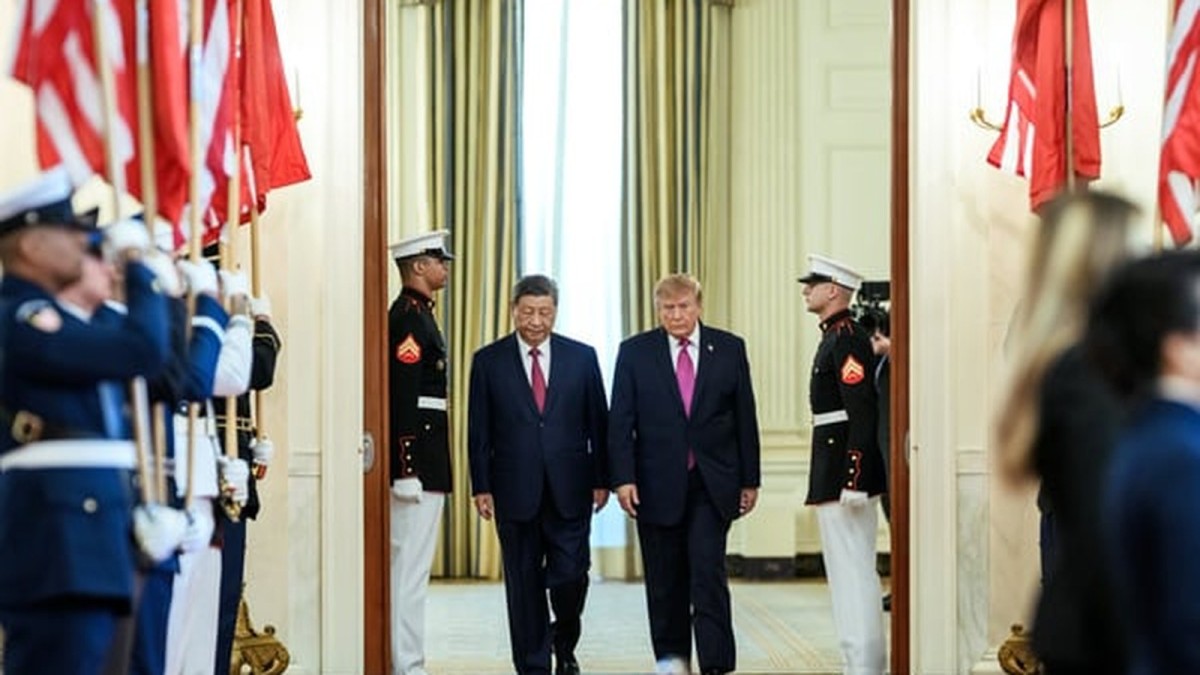
At the U.S.–China summit in September 2026, both presidents highlighted the wartime alliance between their nations, recalling that the United States and the Republic of China fought side‑by‑side against Japan during World War II. While the historical fact is indisputable, analysts note that the invocation of that shared past carries a strategic weight that extends far beyond a simple gesture of goodwill. In recent years, Beijing has increasingly weaponised the memory of the 1940s to bolster its diplomatic agenda, especially in partnership with Moscow. The latest summit therefore raises fresh concerns about how the two powers may seek to reshape the post‑war order by reframing the narrative of World II.
From 2015’s “New Model” to a 2026 “Correct History”
In 2015, on the 70th anniversary of the war’s end, U.S.–China relations were relatively stable. Beijing then promoted a “New Model of Major‑Country Relations,” emphasizing its role as a co‑creator of the post‑war order alongside the United States and other Western powers. The language was largely ceremonial, acknowledging a shared victory without implying a coordinated future agenda.
By contrast, the 2026 summit references a more assertive stance. The article notes that China’s historical narrative has shifted since 2015, moving from a benign acknowledgment toward an active campaign to define a “correct” version of World II history. This shift is closely tied to Beijing’s partnership with Moscow, suggesting that the wartime memory is now being harnessed as a diplomatic tool rather than a mere reminder of past cooperation.
Russia’s Role in Reinforcing the Narrative
The COVID‑19 pandemic and Russia’s invasion of Ukraine accelerated a convergence between Beijing and Moscow. Both nations faced widespread criticism from the West, prompting them to lean on a shared sense of historical grievance. In May 2024, during Putin’s official visit to China, the two leaders issued a joint statement pledging to “defend the results of the victory of the Second World War” and to oppose “negation, distortion, and falsification” of that history. The wording explicitly linked the two countries’ diplomatic posture to a collective defence of the World II legacy.
Subsequent statements reinforced this alignment. In March 2025, State Councilor Wang Yi reiterated that China and Russia would jointly promote a “correct understanding” of the war and use that foundation to shape a more “just and reasonable” international order. By May 2025, during Russia’s Victory Day celebrations, Xi Jinping and Putin jointly warned against any revival of Japanese militarism or Nazi ideology, directly tying historical condemnation to contemporary security concerns.
Targeting Japan: From Historical Grievances to “Neo‑Militarism”
China’s wartime narrative has increasingly been directed at Japan. The joint statements of 2025 and 2026 explicitly labelled Japanese militarism as a lingering threat, urging the Japanese government to “learn lessons” from its wartime crimes and to avoid “reviving” militarist symbols such as the Yasukuni Shrine. The language evolved from a historical reminder to a present‑day accusation of “neo‑militarism,” a term that entered Chinese discourse in late 2025 and was amplified in 2026.
This shift is significant because it reframes Japan’s contemporary security policies—particularly its growing defence capabilities—as a continuation of past aggression. By casting Japan’s actions as “neo‑militarism” and “remilitarization,” Beijing seeks to delegitimize Tokyo’s security posture while simultaneously rallying regional allies around a shared narrative of historical victimhood.
Extending the Narrative Beyond Russia
While the Sino‑Russian partnership is the core conduit for the wartime narrative, China has also begun inserting anti‑Japanese language into statements with other partners. The source material mentions that China incorporated criticism of Japan’s “militarism” into bilateral statements with various countries, and that similar language appeared at the United Nations General Assembly in September 2026. This pattern indicates an effort to internationalise the historical argument, presenting it as a broader, multilateral concern rather than a bilateral grievance.
By embedding the narrative in multilateral forums, Beijing aims to create a normative framework that frames any challenge to its position on Japan as a denial of historical truth. This strategy also pressures countries that maintain close security ties with Tokyo to reconsider their stances lest they appear to support a revisionist view of World II history.
Strategic Implications for the Regional Order
The melding of historical narrative with contemporary security policy has concrete implications for the Indo‑Pacific balance of power. The source material notes that China’s military activities have already expanded beyond the First Island Chain into the Second Island Chain, the Western Pacific, and the South Pacific. By coupling these moves with a moral claim of defending the “fruits of victory,” Beijing seeks to legitise its maritime expansion as a continuation of the anti‑imperialist struggle of the 1940s.
For the United States and its allies, the challenge is twofold: countering China’s material capabilities while also addressing the persuasive power of its historical argument. The U.S.–China summit’s reference to the wartime alliance, however benign on the surface, may be interpreted by Beijing as an opening to deepen the narrative partnership with Moscow, thereby complicating diplomatic efforts to isolate China on security issues.
Looking Ahead: The 80th Anniversary as a Litmus Test
The upcoming 80th anniversary of the World II victory in 2025, highlighted in both Chinese and Russian statements, serves as a focal point for the narrative campaign. By positioning the anniversary as a moment to “promote a correct view of the history of World War II,” the two powers intend to cement a shared historical lens that justifies their current geopolitical ambitions.
How the anniversary is commemorated will likely signal the intensity of the narrative push. If China and Russia continue to issue joint statements that link historical memory to contemporary policy—particularly in urging Japan to abandon “militarism”—the international community can expect a more pronounced use of history as a diplomatic lever. For policymakers in Tokyo, Washington, and beyond, the task will be to disentangle legitimate historical remembrance from strategic manipulation, ensuring that the memory of World II remains a foundation for peace rather than a pretext for geopolitical coercion.
This article was produced with AI-assisted research and editorial support. Reporting is based on the source material cited below. Sources: The Diplomat; thediplomat.com; Global1.News (04 October 2026).
By Kenji Tanaka, Staff Writer
What's Your Reaction?
 Like
0
Like
0
 Dislike
0
Dislike
0
 Love
0
Love
0
 Funny
0
Funny
0
 Wow
0
Wow
0
 Sad
0
Sad
0
 Angry
0
Angry
0

Japan Correspondent at Global1.News. Tokyo-based voice covering Japanese politics, technology, economy, and culture. Tracks the intersection of tradition and innovation in one of the world's most dynamic societies.











Comments (0)