
The wealthy Cuban Americans ready and waiting for Havana to fall
In the glitter of Miami’s Biscayne Bay, a new generation of Cuban‑American elites gathered behind the polished façade of a plastic surgeon’s mansion. Sixto’s own story illustrates the stakes.
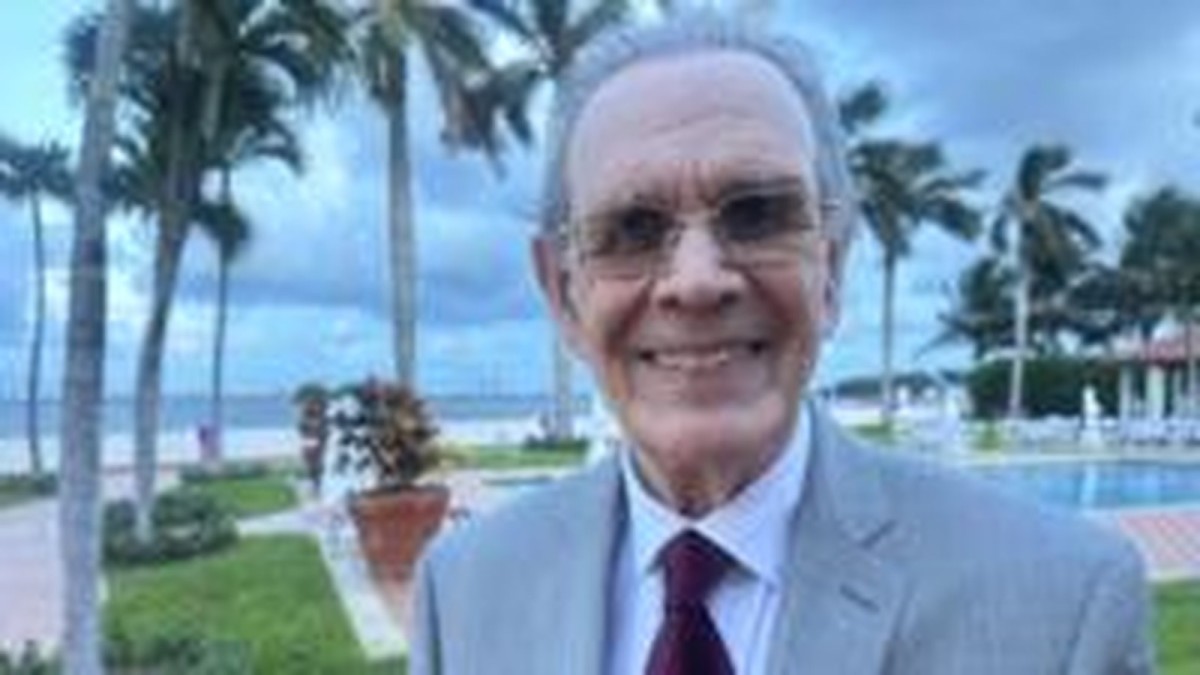
In the glitter of Miami’s Biscayne Bay, a new generation of Cuban‑American elites gathered behind the polished façade of a plastic surgeon’s mansion. Their purpose was not a social soirée but a strategic planning session for a future that, in their view, will begin the moment Cuba’s communist regime falls. The fourth meeting of the Cuban‑American National Chamber of Commerce (CANCC) turned a private poolside lounge into a makeshift war‑room, where rum, Rolex watches and a shared memory of expropriation fueled discussions about a “day after” Cuba.
Old Money, New Ambitions
Among the attendees were names that echo through the Cuban diaspora—families linked to Bacardi, Babun and other storied surnames. Their wealth, built in Florida after fleeing the 1959 revolution, now fuels a vision of reconstruction that blends entrepreneurial ambition with a personal sense of loss. CANCC president Juan Omar Sixto, a real‑estate developer who fled as a teenager, framed the gathering as “the most prominent Cuban‑American entrepreneurs in Miami‑Dade County” uniting under one roof to prepare for a post‑regime Cuba.
Sixto’s own story illustrates the stakes. He claims his father lost five properties and a farm in Pinar del Río to the revolution, a loss he says still haunts his family. While he insists he does not intend to evict any current occupants, he demands “restitution or compensation,” even if it amounts to “just a penny on the dollar.” The sentiment reflects a broader desire among this cohort to translate personal grievances into a political platform for future investment.
Blueprints for a “Day After”
The CANCC has already drafted a series of proposals that read like a corporate restructuring plan for a nation. Among them is a blueprint for a Cuban Stock Exchange, committees on energy infrastructure, and a focus on food security. Agricultural expert Hugo Orizondo, also present, described Cuba as “a black hole” but emphasized the “potential for investment.” He argued that foreign investors would bring “money and technology” essential for ending the island’s dependence on food imports.
These proposals are not merely wishful thinking; they are accompanied by “countless documents and logistical plans” that have been compiled over decades. Some analysts, however, caution that such detailed schematics may be premature. The Cuban government’s recent announcement of 176 economic liberalisation measures—intended, according to President Miguel Díaz‑Canel, to “advance the defence of socialism” and expand social justice—has been dismissed by the CANCC as cosmetic, offering no real guarantees for investors.
U.S. Policy and the Trump Administration’s Role
Sixto attributes the current optimism to the Trump administration’s “push to force total change on the island.” He claims the chamber has “the ear of some high‑profile contacts,” including people close to Secretary of State Marco Rubio. The promise, according to Sixto, is that “together with deliveries of humanitarian aid and medical supplies, we’d go and do business in Cuba right away.”
Yet the broader U.S. political landscape tempers these ambitions. Associate professor Mike Bustamante of the University of Miami notes that the upcoming November mid‑term elections and the administration’s entanglement in the “Iran war” reduce appetite for further foreign adventures. He describes the U.S. approach as a “drip‑drip‑drip of sanctions,” suggesting that escalation beyond economic pressure is unlikely in the near term.
Sanctions, Blackouts and the Limits of Pressure
Washington’s “maximum pressure” campaign has already taken a heavy toll on everyday Cubans. The island has endured a major blackout affecting millions, and its oil supply has been effectively shut off since January. These measures have intensified hardship but, according to Bustamante, have not yet created “the ingredients for a political inflection point.” The regime’s recent liberalisation steps, though limited, indicate a willingness to adapt without relinquishing control.
The Cuban government has not publicly responded to the CANCC gathering, but historically such exile groups provoke strong reactions from revolutionary loyalists. They argue that the exiles’ demands for land restitution ignore the historical context of slavery and indentured labor that underpinned the wealth of the landed gentry. The regime frames the claims as “bitterness by a corrupt landed gentry” who amassed fortunes on the backs of exploited workers.
Land, Titles and the Heart of Reconstruction
Land ownership sits at the core of the exiles’ reconstruction agenda. Sixto’s personal loss of farmland is echoed by Nicolás Gutiérrez, president of the National Association of Sugar Mill Owners of Cuba, an exile organization championing title claims. Gutiérrez asserts that “most of our sugar mills have been dismantled, but we will recover those lands and put them into production,” signalling a clear intent to re‑assert pre‑revolutionary property rights.
These claims raise complex questions about restitution, compensation and the future of Cuban agriculture. While Sixto is willing to accept modest compensation, the broader exile community seeks a legal framework that would recognise their historic titles. The Cuban government, for its part, points to the 19th‑century abolition of slavery and indentured labor as evidence that the old landed elite’s wealth was built on exploitation, casting restitution as a perpetuation of past injustices.
Regional Implications and the Spectre of Intervention
The CANCC’s vision cannot be examined in isolation from the wider Latin American context. Recent U.S. interventions, such as the brief military operation in Venezuela earlier this year, have left a lingering distrust of foreign involvement across the region. Cuban exiles, aware of this sentiment, present their plans as a private‑sector‑led reconstruction rather than a U.S.‑backed regime change.
Nevertheless, the reliance on high‑level contacts within the State Department and the framing of the “day after” as contingent on a regime collapse inevitably tie the project to Washington’s strategic calculations. As Bustamante warns, the United States is currently more focused on managing existing conflicts than launching new ones, suggesting that any overt intervention in Cuba would face significant political headwinds.
What Lies Ahead for Cuba and Its Diaspora
The gathering at the Miami mansion underscores a deepening divide between a wealthy exile community that sees itself as the rightful heir to Cuba’s future and a revolutionary government that views those same claims as an extension of historic exploitation. While the CANCC’s proposals are detailed and the exiles’ resources are considerable, the path to a post‑communist Cuba remains fraught with uncertainty.
For ordinary Cubans, the daily reality of blackouts, fuel shortages and limited food imports continues to dominate. The exiles’ talk of stock exchanges and foreign investment may feel distant to those struggling to keep the lights on. Yet the very fact that such plans are being drafted signals a shift: the diaspora is moving from a posture of protest to one of proactive, albeit contested, nation‑building.
Whether the “day after” will arrive through a sudden political rupture, a negotiated economic pact or a gradual erosion of the regime’s legitimacy remains unclear. What is certain, however, is that the conversation now takes place not only in Havana’s streets but also in the polished pools of Miami, where old money meets new ambition, and where the future of an island nation is being charted by those who once fled its shores.
This article was produced with AI-assisted research and editorial support. Reporting is based on the source material cited below. Sources: BBC News Latin America; bbc.co.uk; Global1.News (04 October 2026).
By Elena Vasquez, Staff Writer
What's Your Reaction?
 Like
0
Like
0
 Dislike
0
Dislike
0
 Love
0
Love
0
 Funny
0
Funny
0
 Wow
0
Wow
0
 Sad
0
Sad
0
 Angry
0
Angry
0
Latin America Correspondent at Global1.News. Based in Mexico City, covering politics, economics, energy, and culture across the region. Brings an on-the-ground perspective to stories spanning from the Rio Grande to Patagonia.









Comments (0)