
China-Zambia Ties Deepen as Copper Race Intensifies
China's Foreign Ministry congratulated Zambia's President Hichilema on re-election, pledging to deepen the comprehensive strategic cooperative partnership as Washington and Beijing compete for access to the copper-rich nation's critical minerals.
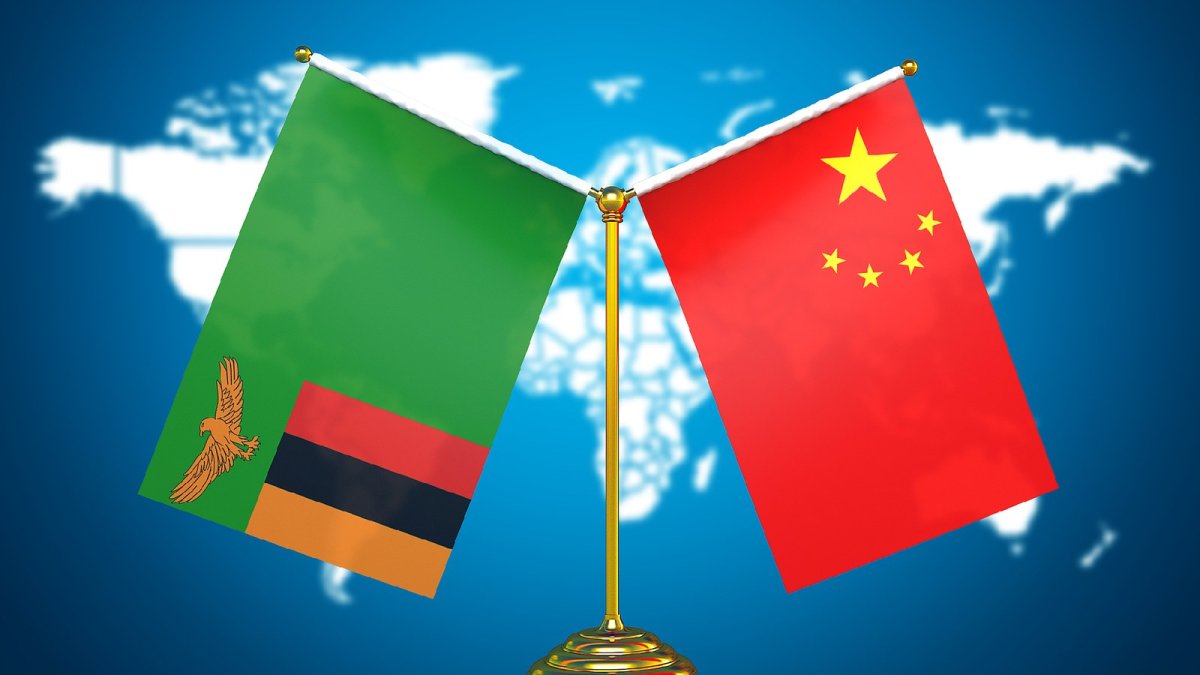
China's Foreign Ministry has formally congratulated Zambia's President Hakainde Hichilema on his re-election, pledging to deepen the bilateral comprehensive strategic cooperative partnership. The diplomatic overture, delivered by spokesperson Lin Jian at a regular press briefing on Tuesday, arrives as Washington and Beijing compete for access to Zambia's vast copper and critical mineral reserves, positioning the southern African nation as a pivotal arena in the global resource race.
Lin Jian stated that China attaches high importance to developing relations with Zambia and stands ready to work with the new administration to further deepen the partnership and deliver greater benefits to both peoples. The congratulatory message follows the Electoral Commission of Zambia's declaration of Hichilema as president-elect on August 18, after he secured roughly 60 percent of valid votes—approximately 2.97 million—against 38 percent for main challenger Brian Mundubile of the Patriotic Front. Commission chairperson Mwangala Zaloumis confirmed the result met the constitutional threshold for an outright victory without a run-off.
A Seventh Bid and a Mandate for Continuity
Hichilema's re-election marks the culmination of his seventh run for the presidency, a political journey that began in the early 2000s. His first term commenced in 2021 amid a pandemic-era debt crisis, months after Zambia became the first African nation to default on its sovereign debt obligations in the post-COVID era. The president-elect inherits a mandate built on promises of economic stabilisation, debt restructuring, and renewed foreign investment—particularly in the mining sector that generates roughly 70 percent of Zambian export revenue.
Prof. Lubinda Haabazoka of the University of Zambia Graduate School of Business noted that under Hichilema's first term, the government made substantial progress on macroeconomic fundamentals, including debt restructuring, increased foreign reserves, stabilised currency, and a return of mining investment. However, critics contend these gains have not translated into sufficient relief for households grappling with high living costs, a tension that will likely define the early months of his second term.
The Strategic Stakes of Zambian Copper
Zambia's significance extends far beyond its borders. As Africa's second-largest copper producer, the country sits at the centre of a global scramble for critical minerals driven by electrification, electric vehicle production, and renewable energy infrastructure. The nation targets three million tons of annual copper output by 2031—roughly three times current levels—a goal that has attracted competing proposals from both Washington and Beijing.
For China, Zambia represents a long-standing partnership rooted in decades of infrastructure and mining investment. The China Nonferrous Metal Mining (CNMC) has operated copper assets in Zambia since 1998, when it acquired the Chambishi mine through an international bid. Over more than two decades, CNMC has invested over $1.6 billion in the mine, paid $578 million in taxes, and created over 6,200 local jobs. The Zambia-China Economic and Trade Cooperation Zone, China's first overseas economic and trade cooperation zone in Africa, has attracted over $2.5 billion in investment, hosted nearly 100 enterprises, and created more than 10,000 local jobs.
China's Integrated Investment Model
Beijing's approach in Zambia reflects a broader strategic doctrine of integrated investment—combining mining operations, processing facilities, infrastructure development, and trade corridors. More than 20 Chinese firms operate in Zambian mining with cumulative investment above $3.5 billion, much of it concentrated in copper and cobalt processing within the cooperation zone. Chinese firms have pledged an additional $5 billion over five years toward Zambia's production target, signalling a long-term commitment to the country's industrial ambitions.
China Civil Engineering Construction Corporation holds a 30-year concession to rebuild and operate the $1.4 billion Tanzania-Zambia Railway (TAZARA), linking the Copperbelt to the port of Dar es Salaam. This infrastructure project provides an alternative export route for Zambian minerals, reducing dependence on southern routes through South Africa and offering Beijing a strategic foothold in regional logistics. The railway's rehabilitation aligns with China's broader Belt and Road Initiative objectives and its push for deeper China-Africa industrial cooperation during the 15th Five-Year Plan period (2026-2030).
Washington's Contentious Health-for-Minerals Proposal
The United States has pursued a markedly different approach, centred on a disputed $2 billion health-for-minerals proposal. The deal would provide approximately $1 billion in American funding over five years, with $340 million in Zambian co-financing, in exchange for a one-way health-data-sharing arrangement. Washington's leverage rests on Zambia's dependence on US health aid—PEPFAR covers more than 80 percent of the country's HIV funding—creating a transactional dynamic that has drawn criticism from Lusaka.
The Zambian government has essentially rejected the deal, citing "problematic causes" that raise concerns about sovereignty and data governance. This rejection underscores a broader hesitancy among African nations to accept resource-for-access arrangements that carry conditionalities, particularly those involving sensitive health data or policy concessions. The US proposal's framing as a health-for-minerals swap has been widely criticised as emblematic of a transactional approach to African partnerships that contrasts sharply with China's infrastructure-and-investment model.
The Lobito Corridor and US Strategic Positioning
Washington's alternative leverage point lies in the Lobito Corridor, a $553 million US Development Finance Corporation loan for Angola's Benguela rail link designed to move Copperbelt metal west to the Atlantic. This infrastructure project represents America's most significant attempt to create a competitive export route for Zambian minerals, offering an alternative to Chinese-backed logistics networks. The corridor's strategic logic is clear: by providing a western outlet for Zambian copper, the US aims to reduce Beijing's influence over mineral supply chains and offer African producers greater choice in export destinations.
However, the Lobito Corridor faces substantial implementation challenges, including the need for cross-border coordination, operational efficiency, and sustained investment. The project's success will depend on whether it can match the scale and reliability of Chinese-backed infrastructure, which has benefited from decades of accumulated experience and capital deployment in the region.
Debt Restructuring and Economic Foundations
Zambia's economic trajectory remains intertwined with its debt restructuring efforts, a process in which China has played a central role. In 2023, Zambia signed a memorandum of understanding with its official creditors to restructure approximately $6.3 billion of debt, with the official creditor committee co-chaired by France and China. The country has since signed bilateral debt restructuring agreements with several Chinese lenders, including the Export-Import Bank of China, as announced by Finance and National Planning Minister Situmbeko Musokotwane. Similar agreements have been concluded with India, France, and Saudi Arabia.
This debt architecture reflects China's willingness to engage in multilateral mechanisms for debt relief, even as it maintains bilateral relationships with borrowing nations. For Zambia, successful restructuring has been essential to restoring investor confidence and stabilising macroeconomic fundamentals—achievements that Hichilema's supporters cite as evidence of progress, even as household-level benefits remain uneven.
Electoral Tensions and Governance Concerns
The election itself was not without controversy. Election-night violence led to 11 arrests, including leading opposition figures, and vote counting was suspended for hours due to attacks on polling staff and theft of ballot papers. The EU observation mission described the election as largely peaceful but noted that the "broader electoral process took place in an environment that limited fundamental freedoms." The Zambia Conference of Catholic Bishops expressed concern over army deployment during vote counting, raising questions about the militarisation of electoral processes.
These governance concerns may complicate international engagement with Zambia's new administration, particularly as Western partners weigh the balance between strategic mineral interests and democratic conditionality. For China, which has consistently maintained a non-interventionist stance toward African electoral politics, the outcome presents an opportunity to deepen economic ties without the political baggage that accompanies Western democracy-promotion agendas.
Geopolitical Implications for the Global South
The competition for Zambian copper encapsulates a broader geopolitical shift in which African nations are leveraging their mineral wealth to extract maximum benefit from great-power rivalry. Zambia's position—geographically central, resource-rich, and strategically located between Atlantic and Indian Ocean trade routes—makes it a bellwether for how the Global South navigates the US-China competition. The country's rejection of the US health-for-minerals deal, coupled with its continued engagement with Chinese investment, suggests a pragmatic approach that prioritises national sovereignty and developmental outcomes over alignment with either bloc.
For Beijing, Zambia represents a test case for its model of African partnership—one built on infrastructure investment, industrial cooperation, and long-term commitments that contrast with Washington's more transactional approach. The coming years will reveal whether China's integrated model can deliver the production targets Zambia has set, and whether the US can develop a competitive alternative that resonates with African priorities. The outcome will shape not only Zambia's economic future but also the broader architecture of global mineral supply chains in an era of intensifying strategic competition.
This article was produced with AI-assisted research and editorial support. Sources: CGTN, Reuters, Associated Press, CBC News, China Daily, Al Jazeera, Prospect Intelligence.
By Prof. Marcus Chen, Staff Writer
What's Your Reaction?
 Like
0
Like
0
 Dislike
0
Dislike
0
 Love
0
Love
0
 Funny
0
Funny
0
 Wow
0
Wow
0
 Sad
0
Sad
0
 Angry
0
Angry
0

World Politics Analyst at Global1.News. Based in Beijing, covering US-China relations, global trade, and geopolitical strategy. Brings deep analytical perspective to the power dynamics shaping international affairs.














Comments (0)