
'Don't axe Youth Parliament' pleads teen member
The Department for Digital, Culture, Media and Sport (DCMS) is poised to withdraw its financial commitment to the UK Youth Parliament, a programme that has, since its inception in 1999, offered more than 300 young people a platform within the House of Commons.
The Department for Digital, Culture, Media and Sport (DCMS) is poised to withdraw its financial commitment to the UK Youth Parliament, a programme that has, since its inception in 1999, offered more than 300 young people a platform within the House of Commons. As the government signals that the scheme may not survive beyond March 2027 in its current form, voices from across the political spectrum are urging a rethink, arguing that the cost‑cutting rationale does not outweigh the democratic value of nurturing the next generation of citizens.
Why the Youth Parliament Matters
The Youth Parliament, administered by the National Youth Agency, gives elected members aged 11 to 18 the rare opportunity to debate in the very chamber where the nation’s laws are forged. These annual sessions, held on days when MPs are not sitting, allow young people to present issues that matter to their peers directly to senior legislators. Recent campaigns have tackled topics ranging from lowering the voting age to providing free period products in schools, illustrating the body’s capacity to spotlight concerns that often escape mainstream political discourse.
Beyond the symbolic presence in Westminster, participants gain tangible skills. The DCMS has highlighted the programme’s role in building confidence, leadership and employability, describing it as a “national platform to represent their peers, engage with decision‑makers and develop confidence, leadership and skills for life and work”. For many, the experience is a formative step towards civic engagement, an outcome that cannot be measured purely in fiscal terms.
The Funding Puzzle
In the most recent financial year the Youth Parliament received £453,000 in taxpayer funding, contributing to a cumulative spend of roughly £2.4 million of public money between 2017 and 2024. While these figures are modest compared with the broader public‑sector budget, they have become a focal point for the government’s austerity narrative. A DCMS spokesperson confirmed that no final decision on post‑March 2027 funding has been made, but indicated Downing Street’s intention to discontinue support “in its current form”.
Critics argue that the emphasis on “money is tight” masks a deeper strategic shift. Labour MP Jess Asato suggested the decision stems from a perceived lack of “diversity of voices” within the Youth Parliament, while Conservative MP Patrick Spencer framed the move as an unavoidable trade‑off in a climate of fiscal restraint. The tension between cost‑saving and democratic investment lies at the heart of the current debate.
Young Voices on the Frontline
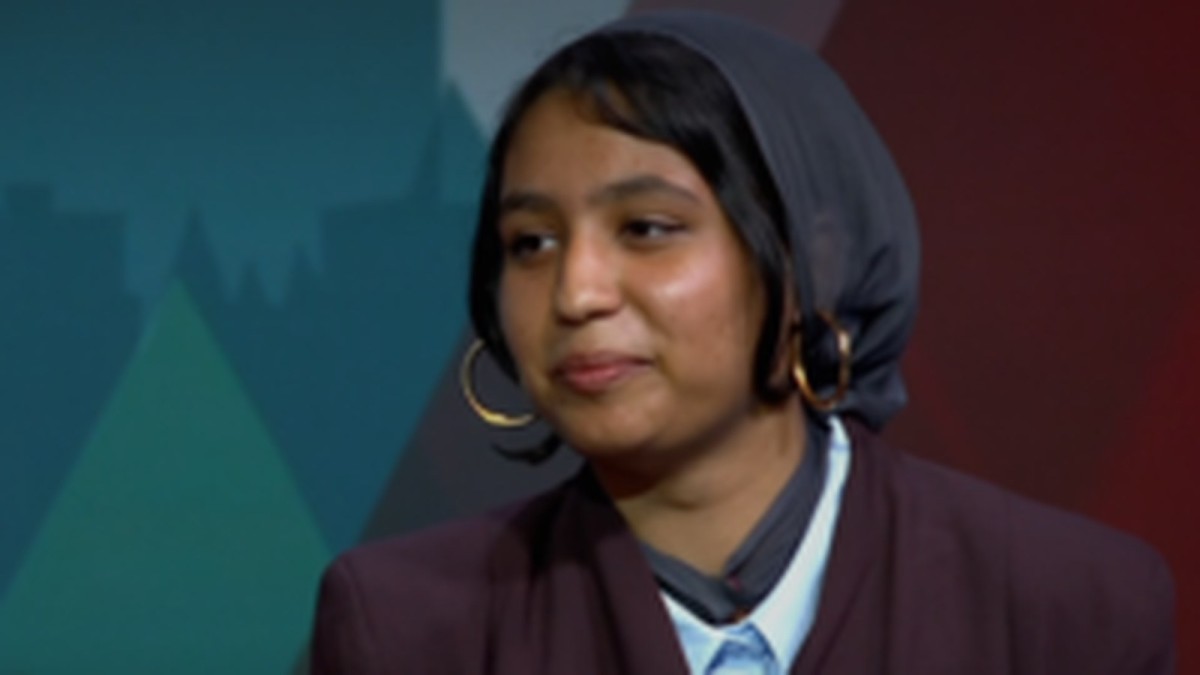
Aman Fatima, a Member of Youth Parliament (MYP) for Essex, articulated the personal stakes of the funding debate. “If the government is to cut the Youth Parliament there should be reasons and there has to be alternatives, even if the funding is tight,” she told BBC Politics East. Fatima stressed that young people constitute “the next generation” of government and that their insights are essential for identifying societal challenges. “Money is tight but you also want young people's opinions; them to tell you what's wrong and the challenges they are facing,” she added.
Fatima’s remarks echo a broader sentiment among participants that the platform does more than teach public speaking – it channels youthful perspectives into the national conversation. While some observers claim the Youth Parliament’s impact is limited, Fatima counters that “we do contribute to how the government works today”, underscoring the programme’s perceived relevance to policy formation.
Political Reactions Across the Aisle
Labour’s Jess Asato expressed concern that the Youth Parliament does not reflect a sufficiently varied demographic, suggesting that a more locally anchored model could broaden participation. “I think what the government's trying to say is we need things much more locally that bring a lot more young people into that political or democratic engagement,” she said, citing her own constituency’s successful youth council as a template for grassroots involvement.
Conversely, Conservative MP Patrick Spencer defended the fiscal decision, acknowledging the difficulty of balancing limited resources against competing priorities. “The reality is this government needs to make cuts because it needs to fund things that it's planning to do,” he remarked, framing the withdrawal as a pragmatic, albeit painful, necessity rather than a targeted attack on youth engagement.
Potential Alternatives and the Way Forward
The DCMS has hinted at a forthcoming scheme aimed at boosting young people’s involvement in democracy, with announcements expected later this autumn. While details remain scant, the promise of a new initiative raises questions about continuity. Will any successor model retain the national visibility of debating within the House of Commons, or will it devolve to a patchwork of local councils, as Asato proposes?
Stakeholders, including youth representatives and civil‑society organisations, are urging the government to articulate clear alternatives before any funding cessation takes effect. The argument is not merely about preserving a budget line but about safeguarding a pipeline for future leaders. Without a transparent transition plan, the risk is a loss of institutional memory and a gap in the civic education landscape.
Public Money and Democratic Value: A Balancing Act
The fiscal figures attached to the Youth Parliament are modest, yet they sit within a broader context of public spending scrutiny. The programme’s £453,000 annual allocation represents a fraction of the DCMS budget, but the decision to withdraw it signals a willingness to prioritise other initiatives. This raises a fundamental policy question: how should governments weigh the intangible benefits of democratic participation against concrete budgetary constraints?
Analysts note that programmes fostering civic engagement often yield long‑term dividends that are difficult to quantify. The Youth Parliament’s legacy, as described by the DCMS, includes developing “confidence, leadership and skills for life and work”, attributes that contribute to a healthier democratic culture. In an era where political disengagement among young people is a persistent concern, the removal of such a platform could exacerbate apathy unless replaced by an equally compelling alternative.
What Comes Next for Young Politicians?
With the funding horizon uncertain beyond March 2027, current MYPs like Aman Fatima face an ambiguous future. Their immediate concern is securing a successor framework that preserves the national stage and the opportunity to address MPs directly. The government’s promised autumn announcement will be closely watched by youth advocates, educators and local councils alike.
In the meantime, the debate over the Youth Parliament’s fate underscores a broader societal conversation about the place of young people in the democratic process. Whether the scheme is re‑imagined, re‑scaled or replaced, the imperative remains clear: any future model must retain the capacity to amplify youthful voices, ensuring that the next generation is not merely a demographic statistic but an active participant in shaping the nation’s future.
This article was produced with AI-assisted research and editorial support. Reporting is based on the source material cited below. Sources: BBC News UK; bbc.co.uk; Global1.News (05 October 2026).
By Erica Thornton, Staff Writer
What's Your Reaction?
 Like
0
Like
0
 Dislike
0
Dislike
0
 Love
0
Love
0
 Funny
0
Funny
0
 Wow
0
Wow
0
 Sad
0
Sad
0
 Angry
0
Angry
0

US Politics and Policy Correspondent at Global1.News. Based in Washington DC, covering American politics, policy, elections, and the courts. Knows how the system works and tells you what it actually means.












Comments (0)