
Supporters of jailed ex-PM Imran Khan begin march in Pakistan
Supporters of Pakistan’s jailed former prime minister Imran Khan have launched a march from the north‑west, intensifying a political standoff that has already drawn nationwide attention.
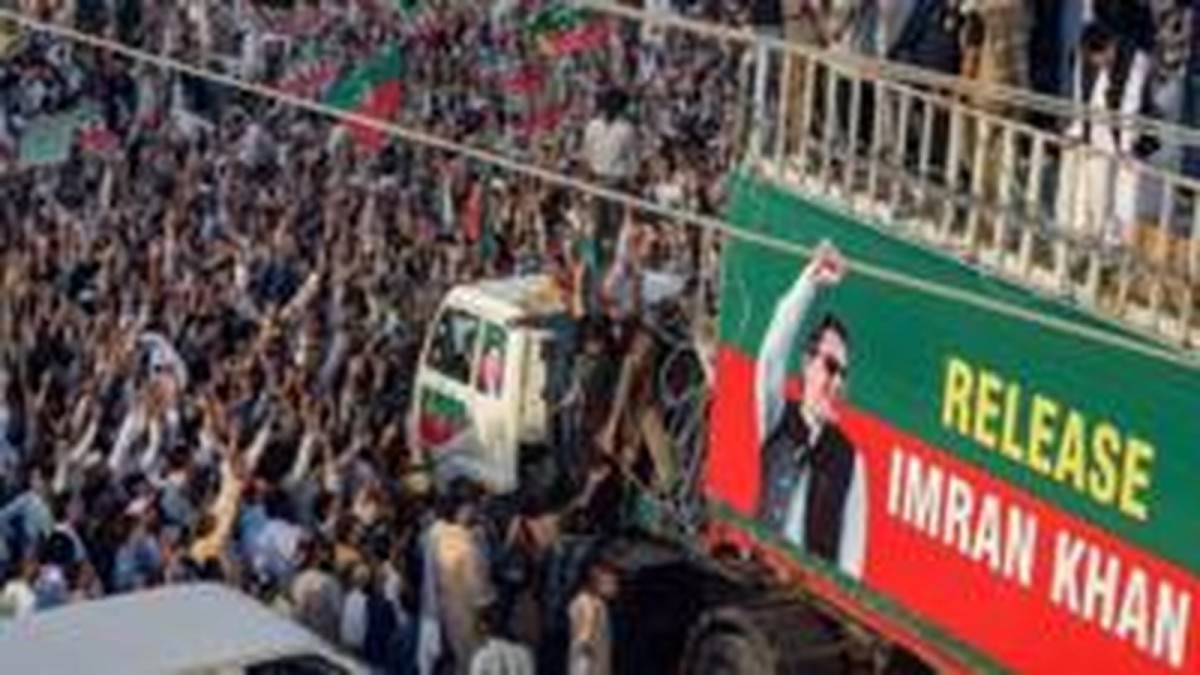
Supporters of Pakistan’s jailed former prime minister Imran Khan have launched a march from the north‑west, intensifying a political standoff that has already drawn nationwide attention. The demonstration, which began on Sunday in Lakki Marwat—about 275 km from the capital—signals a renewed push by the Pakistan Tehreek‑e‑Insaf (PTI) to pressure the government for Khan’s release and for urgent medical care. While the march’s ultimate destination has not been formally announced, provincial officials anticipate it will reach a town roughly 80 km west of Islamabad by Thursday, underscoring the speed and scale of the mobilisation.
Background to the March
The protest follows a series of stalled negotiations between the PTI and the federal government. Talks that were scheduled for the previous week were postponed to allow for dialogue, but they ended in a deadlock, prompting the PTI to resume its street campaign. The party’s grievance centres on the authorities’ refusal to grant Khan access for consultations on national and political issues, as well as a demand for an immediate medical examination at a private hospital specified by the court.
Imran Khan, now 74, has been incarcerated since August 2023 on corruption charges that total more than 100 cases. He maintains that the accusations—ranging from leaking state secrets to the alleged sale of state gifts—are politically motivated. His imprisonment has been marked by periodic health concerns, including a recent claim by his family that he has lost most of the vision in his right eye due to inadequate medical attention while in custody.
Health Concerns and Legal Controversies
Health issues have become a focal point of the PTI’s campaign. In August, Khan was briefly transferred to a state‑run hospital for a medical examination after his family raised alarms about his deteriorating condition. Doctors later declared him “medically fit,” a judgment that the PTI and his family dispute, noting that the assessment fell short of a court‑ordered examination at a specific private facility.
The dispute over medical care reflects broader legal tensions. The PTI has criticised the government for defying the court order that mandated a private‑hospital examination, arguing that the denial undermines Khan’s right to adequate health treatment while incarcerated. This legal friction is compounded by the recent arrest of Khan’s sister, Aleema Khanum, in Lahore on 20 September, on charges of mobilising people to create “law and order situations” and chanting slogans deemed objectionable by authorities.
Political Implications of the March
Even behind bars, Khan remains a potent political figure. Past demonstrations in his support have escalated into violent confrontations, most notably after his arrest in May 2023, which led to the ransacking of a military residence in Lahore and resulted in at least eight fatalities before the army intervened. The current march revives that volatile dynamic, as the PTI seeks to translate street pressure into political leverage.
Provincial leader Sohail Afridi, chief minister of Khyber Pakhtunkhwa—a province governed by the PTI—has publicly urged participants to “play an active role in the political process,” suggesting that the movement aims to permeate every corner of the country. His statements indicate a strategic intent to broaden the protest’s geographic reach, potentially turning the march into a nationwide rallying point for PTI supporters.
Government Response and Security Measures
The federal interior minister, Mohsin Naqvi, has accused Afridi of “sabotaging” the negotiations, alleging that the Khyber Pakhtunkhwa administration has reneged on earlier counter‑terrorism commitments. This accusation underscores the friction between provincial and federal authorities, a tension that could complicate any coordinated response to the march.
In anticipation of the march’s approach to Islamabad, authorities have erected barriers using shipping containers to block key access routes to the capital. While the PTI has not officially declared an intention to reach Islamabad, the physical obstructions suggest that the government is preparing for potential escalation and is keen to limit the protest’s penetration into the capital’s core.
Regional and International Context
The PTI’s mobilisation occurs against a backdrop of broader regional instability and heightened scrutiny of Pakistan’s internal security. Former international cricket captains, who share a personal connection with Khan from his days as national team captain, have appealed to Prime Minister Shehbaz Sharif for humane medical treatment for the former leader. Their involvement reflects a blend of personal loyalty and political signalling, as prominent public figures lend their voices to a contentious domestic issue.
Pakistan’s political turbulence also resonates beyond its borders, given the country’s strategic importance in South Asia. The escalation of street protests and the government’s heavy‑handed security measures could attract attention from neighbouring states and international observers monitoring democratic processes and human rights practices in the region.
Potential Trajectories for the Protest
Analysts note that the march’s progress will hinge on several variables: the willingness of provincial authorities to sustain the protest, the government’s capacity to maintain order without inflaming public sentiment, and the health status of Khan himself, which remains a rallying point for supporters. If the march reaches the vicinity of Islamabad by Thursday as anticipated, it could trigger a decisive confrontation between PTI activists and security forces.
Should the government opt for a conciliatory approach—perhaps by allowing a limited medical examination or by reopening dialogue—the protest could de‑escalate, preserving public order while addressing some of the PTI’s demands. Conversely, a hardline stance, reinforced by the existing container barriers and heightened security alerts, may provoke further civil unrest, potentially reigniting the deadly clashes witnessed in earlier protests.
Outlook and Implications for Pakistan’s Political Landscape
The current march underscores the enduring influence of Imran Khan within Pakistan’s political arena, despite his incarceration. The PTI’s capacity to mobilise thousands across provinces demonstrates a robust organisational network that can challenge federal authority when grievances align with public sentiment, particularly around health and perceived political persecution.
In the coming weeks, the interplay between provincial leadership, federal security apparatus, and the PTI’s grassroots mobilisation will shape the trajectory of Pakistan’s domestic stability. The outcome of this protest will likely influence future negotiations over Khan’s legal status, the handling of political dissent, and the broader balance of power between the centre and the provinces. Observers will be watching closely to see whether the march culminates in a negotiated settlement or escalates into further confrontation, a development that could have lasting repercussions for Pakistan’s democratic processes and its regional standing.
This article was produced with AI-assisted research and editorial support. Reporting is based on the source material cited below. Sources: BBC News Asia; bbc.co.uk; Global1.News (05 October 2026).
By Kenji Tanaka, Staff Writer
What's Your Reaction?
 Like
0
Like
0
 Dislike
0
Dislike
0
 Love
0
Love
0
 Funny
0
Funny
0
 Wow
0
Wow
0
 Sad
0
Sad
0
 Angry
0
Angry
0

Japan Correspondent at Global1.News. Tokyo-based voice covering Japanese politics, technology, economy, and culture. Tracks the intersection of tradition and innovation in one of the world's most dynamic societies.










Comments (0)