
Ceuta Migrant Crisis Reshapes US Midterm Immigration Debate
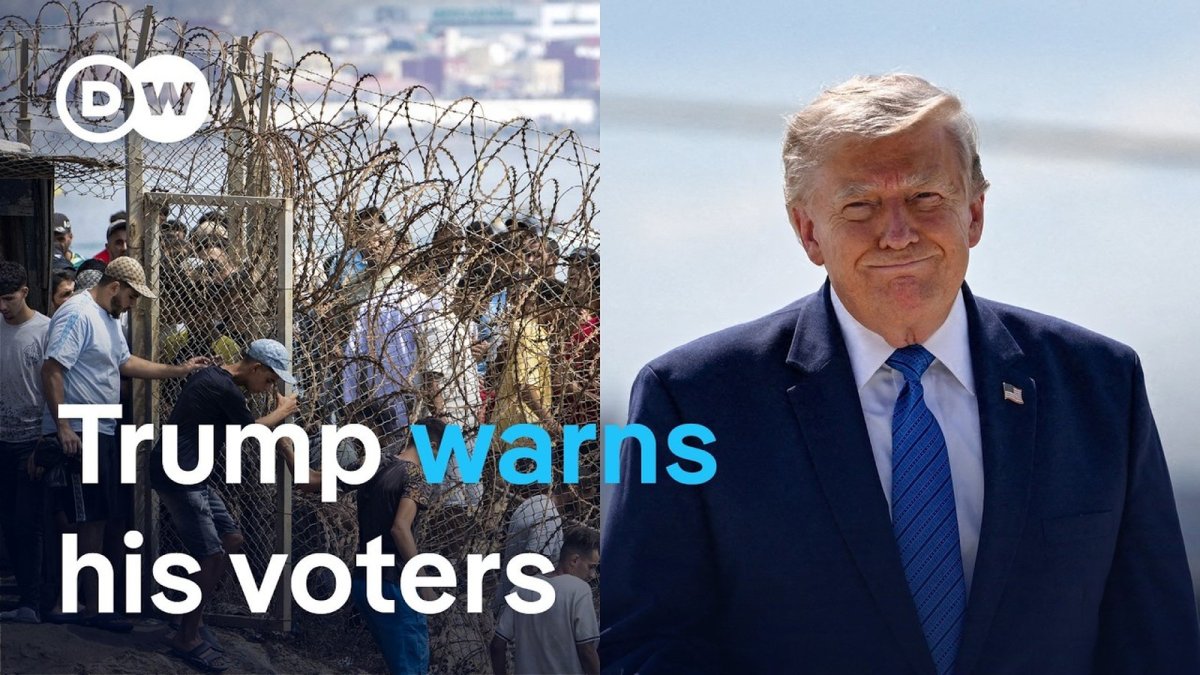
In a recent DW News report titled "Could a migration crisis in Spain help Republicans in November's midterms?", the surge of 60,000 migrants into Ceuta from Morocco in late July 2026 is shown reshaping US political messaging. This coverage directly connects to ordinary Mexican families in border colonias from Tijuana to Ciudad Juárez, where similar rhetoric about invasions influences daily decisions on migration, work, and family separation under the Sheinbaum administration.
In a recent DW News report titled "Could a migration crisis in Spain help Republicans in November's midterms?", the surge of 60,000 migrants into Ceuta from Morocco in late July 2026 is shown reshaping US political messaging. This coverage directly connects to ordinary Mexican families in border colonias from Tijuana to Ciudad Juárez, where similar rhetoric about invasions influences daily decisions on migration, work, and family separation under the Sheinbaum administration.
Ceuta Surge and US Midterms: Rhetoric Reaches Mexican Border Communities
Mexico City, Mexico – August 1, 2026 — The DW News video highlights how events in the Spanish enclave of Ceuta are being leveraged in US midterm campaigns just months before the November 2026 elections. Mexican families in northern states watch these developments closely because US immigration policy shifts often alter flows through the southern border and affect remittances sent home to communities in Oaxaca and Guerrero.
The Ceuta Surge: Europe's Southern Border Collapses
About 60,000 migrants crossed illegally from Morocco into the Spanish North African enclave of Ceuta in late July 2026, with at least 57 people dying during the surge according to local media reports that range from 34 to 41 confirmed deaths. Spain PM Pedro Sánchez called the incident a violation of Spain's territorial integrity. Italy suspended the EU's border-free Schengen arrangements with Spain in response. The influx followed Spain's Supreme Court ruling that migrants stopped at sea while trying to reach Ceuta or Melilla cannot be summarily returned to Morocco. As of Friday evening more than 48,000 people had voluntarily returned to Morocco, Spanish officials said, while Spain's Interior Ministry reported around 25,000 returned by Friday with thousands more expected. Spain deployed extra police and military personnel to Ceuta but rejected calls to declare a national emergency. Ceuta sits on the North African coast separated from mainland Spain by the Strait of Gibraltar and remains one of the EU's only land borders with Africa, long a flashpoint in Spain-Morocco relations.

This scale of movement, organized in part through social media and echoing the 2021 precedent, highlights the collapse of routine border controls. The human cost appears in migrant accounts of people dying and pleas for others not to come, while the rapid returns show both the pull of opportunity and the push of enforcement limits. For families watching from afar, these events underscore how quickly numbers can shift and affect daily life in border communities.
Trump's "Invasion" Rhetoric and the US-Mexico Connection
US President Donald Trump stated at a White House Cabinet meeting on Friday that the Ceuta events look like an invasion of a country by hundreds of thousands of people and warned the same thing will happen to the United States if Republicans do not get elected, except worse and much bigger. Trump argued the US currently has the safest border in the world and that if Republicans lose power the country will be invaded at levels that make Spain look small time. In comments to Fox News, Trump said it is terrible and that the picture from Ceuta will be the United States in three years if the wrong side gets in. On Truth Social, Trump wrote that what happened in Spain with tens of thousands of illegal immigrants invading occurred in the United States during the Sleepy Joe Biden Administration and will happen again only worse, urging voters to vote Republican. White House Deputy Chief of Staff Stephen Miller said similar scenes occurred under Biden and warned Democrats would allow an even larger influx. White House Communications Director Steven Cheung linked the Ceuta images to the US debate and said Trump's election had prevented comparable situations. Vice President JD Vance posted on X that the images were an unfortunate reminder of the consequences of mass migration and radical left-wing globalist policies. The State Department said the US stood with the people of Spain and all Europeans against what it called an egregious violation of sovereignty and blamed the crisis on Spain's deliberate efforts to enable mass illegal migration into Europe.
The way "invasion" language migrates from Spain to the US-Mexico border is not new. History shows that US election cycles repeatedly reshape Mexican migration policy, from enforcement priorities to consular outreach, and the Ceuta images now give that cycle a fresh visual anchor. For Mexican officials in the SRE and the Secretaría de Seguridad y Protección Ciudadana, the lesson is that European border crises can become American talking points within hours, changing the tone of bilateral conversations long before any policy shifts.
Republicans and the Immigration Playbook
An NPR and AdImpact analysis from July 17, 2026, showed Republicans and supporting organizations ran nearly 300 immigration-related ads nationwide since the start of 2026 compared to 62 ads from Democrats. One ad funded by MAGA KY PAC against Rep. Thomas Massie cost over $831,000 and contributed to Massie losing his primary to Trump-endorsed Ed Gallrein. A $928,000 ad buy in the Michigan governor's race featured Republican candidate Perry Johnson on immigration and ICE. Cameron Shelton, professor of political economy at Claremont McKenna College, noted that campaigns are not trying to change minds but are trying to shape what the election is about. Newsweek polling analysis indicated the issue may not provide Republicans the same edge heading into the 2026 midterms because the political landscape on immigration has shifted significantly since the spring, even though immigration was a winning issue for Republicans in the 2024 elections.

The Human Cost — What Migrants Face
A Reuters migrant testimony stated it is not good at all and not fun either because people are dying and begged others not to come. Ceuta resident Carmen Gonzalez Bermudez told the BBC that in 2021 police and military were doing something but yesterday they were in the streets but were not doing nothing. Resident Víctor Ortiz Sotomayor told the BBC the city was packed with immigrants in every square and street mainly looking for food. Ceuta's President Juan Jesús Vivas had appealed to Madrid for help after a rise in attempted crossings. These accounts mirror the dangers faced by Mexican and Central American migrants crossing into the United States, where families in border cities like Matamoros and Nogales track similar risks through the Guardia Nacional and INM operations.
What This Means for Mexican Families and Communities
The Ceuta events and resulting US rhetoric carry direct implications for Mexican families divided by the border, with many in colonias near the Rio Grande relying on cross-border work and remittances that could face new restrictions if midterm outcomes harden enforcement. Mexican institutions including the SRE and SEGOB monitor how US State Department statements on sovereignty violations influence bilateral talks, while campesinos and maquiladora workers in states like Chihuahua and Baja California see policy shifts affect labor flows. The Sheinbaum administration's approach to migration builds on AMLO legacy programs yet must respond to heightened US political pressure that echoes the Ceuta narrative of invasion and returns.
Mexico receives tens of billions of dollars in remittances from the US annually, supporting countless households and local economies. Millions of Mexican-origin people live in the US, with Latino voters forming a key electorate whose daily realities include divided families across the border. When campaign language frames migration as an invasion, it ripples into border communities where relatives weigh staying connected against the uncertainty of policy shifts and enforcement waves.
The historical pattern of US elections influencing Mexican migration policy means families often adjust plans around election cycles, from work opportunities to visits. Concrete data on remittances shows how tightly linked the economies remain, yet heated rhetoric can heighten anxiety in places where people maintain ties on both sides. This affects not just individuals but whole networks that rely on steady flows of support and communication.
Communities in the US with large Mexican-origin populations feel the weight when global events like the Ceuta surge get linked to domestic debates. The focus on sovereignty in official statements adds to the sense that family decisions could face new hurdles, reminding everyone how interconnected lives across borders truly are and how rhetoric can touch the most personal aspects of daily life.
What to Watch For
If implemented, continued Republican ad spending and midterm campaigns through November 2026 could lock immigration as a central issue, affecting US-Mexico cooperation on border security managed by SEDENA and the Guardia Nacional. Spain-Morocco relations and any changes to Schengen arrangements may prompt parallel discussions in Mexican diplomacy with the United States. Mexican voters and diaspora communities in the US will track whether the Ceuta precedent alters enforcement priorities at ports of entry from Tijuana to Ciudad Juárez.
The US midterms in November 2026 stand as a key date when control of Congress could shift border policy and US-Mexico cooperation. A Republican-controlled Congress might accelerate changes that build on current rhetoric, affecting everything from enforcement priorities to diplomatic channels. Observers note how past elections have already altered Mexican approaches, suggesting similar adjustments could follow depending on results.
Spain-Morocco diplomatic fallout from the Ceuta events carries EU-wide implications, as seen in Italy's Schengen suspension and Spain's rejection of an emergency declaration despite extra deployments. These tensions could influence how Europe manages its southern borders moving forward, with potential ripple effects on global migration discussions that reach Mexican communities through shared policy lessons.
Mexican consulates and diaspora organizations are preparing for possible shifts by monitoring developments closely. With immigration ads already dominating airwaves and analysts pointing to efforts to define election topics, families and networks on both sides of the border will track how these elements evolve and what they mean for ongoing ties and support systems.
The Ceuta surge and its translation into US midterm messaging underscore how distant border events reshape policy debates that reach Mexican households through family separations, economic pressures, and shifting enforcement at the southern border. Mexican communities remain attentive as November 2026 approaches.
By Rosa Martinez, Staff Writer
This article was produced with AI-assisted research and editorial support. Reporting is based on sources cited in the article.
What's Your Reaction?
 Like
0
Like
0
 Dislike
0
Dislike
0
 Love
0
Love
0
 Funny
0
Funny
0
 Wow
0
Wow
0
 Sad
0
Sad
0
 Angry
0
Angry
0

Latin America/Andes Correspondent at Global1.News. Based in Bogota, covering politics, environment, energy, and social movements across the Andean region. Passionate about environmental journalism and communities protecting their land.














Comments (0)