
Huawei says it’s made a 100 percent Chinese PC
Huawei just rolled out a desktop it calls the Qingyun HM650, and it’s bragging that every part inside is made in China. That’s a clear signal that this isn’t a novelty; it’s a strategic push to lock out Intel, AMD and Qualcomm from one of the world’s biggest buying blocs.
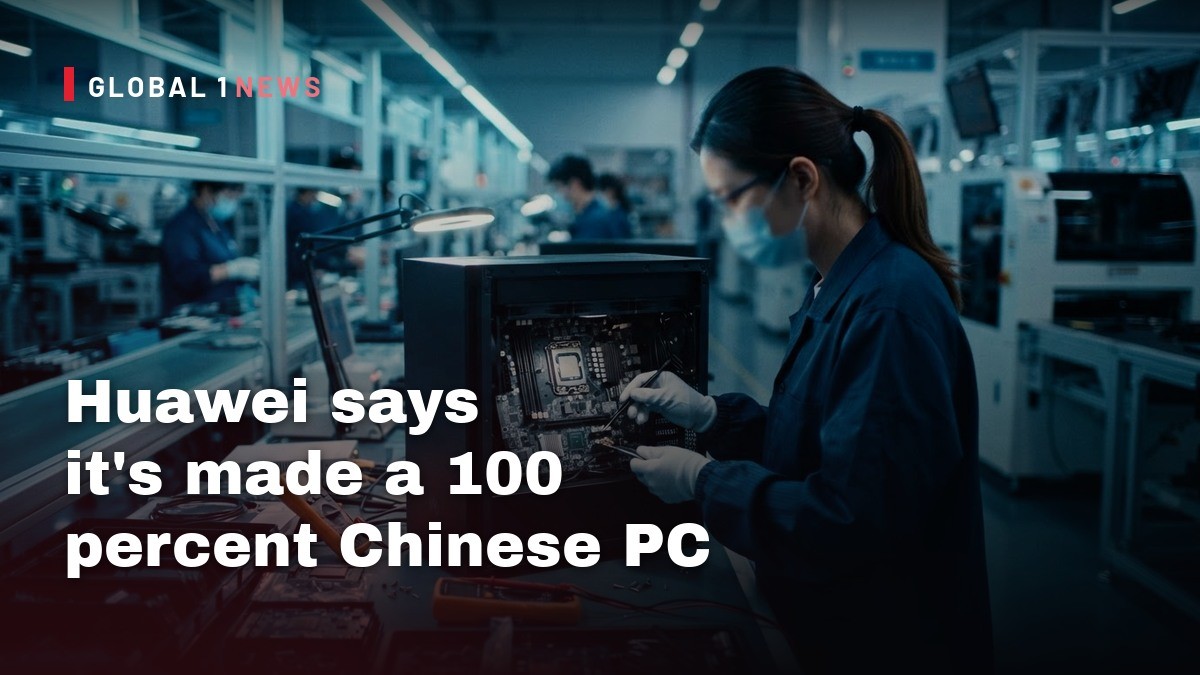
Huawei just rolled out a desktop it calls the Qingyun HM650, and it’s bragging that every part inside is made in China. The machine is built around Huawei’s own Kirin X90 – a ten‑core, twenty‑thread processor clocked at 2.3 GHz – and runs a newly‑minted enterprise version of HarmonyOS, the home‑grown OS Huawei is pushing to replace Android across its product line. A single Chinese government agency has already ordered 600 of these boxes, and Beijing has ordered all its ministries to ditch “Wintel” gear in favour of locally‑sourced alternatives. That’s a clear signal that this isn’t a novelty; it’s a strategic push to lock out Intel, AMD and Qualcomm from one of the world’s biggest buying blocs.
What the Qingyun really means for the PC market
The launch of the Qingyun HM650 arrives at a time when the global PC market is already under pressure from soaring memory costs. The Register notes that Intel, AMD and Qualcomm are all feeling the squeeze, and a wave of Chinese‑made alternatives could accelerate the contraction. Even if some of the components aren’t 100 % Chinese‑designed – many non‑Chinese firms still run factories on Chinese soil – the fact that Huawei can claim a “made‑in‑China” label gives it a political edge in a market where the state is a massive buyer.
For independent hosting providers and data‑centre operators, the implication is simple: you may soon be forced to choose between a foreign‑sourced server stack that costs more and a domestic stack that could be cheaper but less proven. The risk profile shifts dramatically when you have to comply with a government mandate to replace your existing Wintel fleet. That’s a capital‑expenditure shock that can’t be ignored, especially for firms that run thin margins on colocation or managed‑hosting contracts.
HarmonyOS in the enterprise – hype or practical?
Huawei’s new HarmonyOS version is pitched as an “enterprise” OS, but the reality on the ground is still murky. The Register’s coverage tells us the OS is intended to “end its dependence on Android,” yet there’s no hard data on how many enterprise apps have been ported or how the OS performs under heavy‑load workloads. From a founder’s perspective, the key question is whether HarmonyOS can integrate with the existing tooling stack – monitoring, backup, orchestration – that you’ve built over years of production experience.
If HarmonyOS ends up being a closed ecosystem with limited third‑party support, you could face a costly migration nightmare. The safest play is to keep a mixed environment: continue running proven Linux or Windows workloads while piloting HarmonyOS on low‑risk workloads. That way you hedge against a sudden policy shift without locking yourself into an untested platform.
China’s procurement push – a warning for vendors
The fact that a single agency has already placed an order for 600 units is a micro‑example of a broader trend. Beijing’s directive to replace foreign‑made PCs with domestic alternatives means any vendor hoping to sell into the Chinese public sector must either partner with a local manufacturer or risk being sidelined. For us in the Caribbean and other emerging markets, the lesson is clear: diversify your supply chain now, before a similar policy shock hits your own government contracts.
From a risk‑management angle, you should start mapping out alternative component sources – especially for critical parts like CPUs, memory modules and power supplies. Even if you can’t source a full‑stack Chinese solution, having a contingency plan for a partial swap can keep you from a supply‑chain bottleneck that could cripple service delivery.
Japan’s cyber‑security emergency – funding with strings attached
Japan’s recent ¥10 billion emergency package for cyber‑defence underscores how quickly a nation can pivot when a wave of attacks hits critical infrastructure. The Register notes that the funding is aimed at bolstering basic infosec hygiene, deploying AI tools for threat aggregation, and supporting victims of attacks that have hit railways, retailers, a KFC logistics provider and cloud operators.
For independent hosting firms, the Japanese move is a cautionary tale. When a government throws money at cyber‑defence, it often comes with expectations of compliance and data‑sharing. If you have clients in Japan or are looking to expand into that market, you’ll need to be ready to meet stricter audit requirements and possibly integrate with national threat‑intel platforms. Investing now in AI‑driven security tooling and robust incident‑response processes can pay dividends if you ever need to satisfy a similar regulatory demand.
Lenovo’s reshuffle – what it says about the APAC market
Lenovo’s decision to move Amar Babu from the Asia‑Pacific helm to a global role at Motorola highlights the importance of leadership continuity in a region that remains a growth engine for PC and mobile hardware. The Register points out that under Babu’s watch, Lenovo maintained its #1 PC position in APAC, grew its mobile share (Motorola nearing 9 % in India and #2 in Japan), and saw “nearly double‑digit” market‑share gains in infrastructure.
What matters for us as independent providers is the signal that the APAC market is still fertile ground for diversified hardware portfolios. Lenovo’s success was built on a mix of PCs, smartphones and infrastructure gear – a reminder that a single‑product focus is risky. If you’re eyeing APAC expansion, consider bundling compute, storage and networking solutions to match the multi‑product strategies that are winning contracts in the region.
Vietnam’s home‑grown security chip – a glimpse of sovereign tech
Vietnam’s announcement of a domestically‑designed 28‑nm security chip for USB storage devices adds another data point to the global shift toward sovereign technology. The chip, already in use for government and defence data storage, is intended to protect the national digital‑signature certification system and critical‑infrastructure assets across electricity, water, oil & gas, and telecoms.
For hosting providers, the rise of locally‑designed security silicon means you may soon be asked to certify that your storage solutions incorporate “trusted” hardware. While the Register notes that the chip still needs more testing before it’s trusted with state secrets, the very fact that a nation is building its own encryption‑in‑silicon capability suggests a future where foreign‑made storage devices could be barred from certain contracts. Keeping an eye on such developments and being ready to integrate approved security chips into your hardware stack could become a competitive advantage.
Apple’s education win in the Philippines – a reminder of market nuances
Apple’s quiet but massive sale of 172,000 MacBook Neos to the Philippine Department of Education shows how a single, well‑targeted deal can move volumes dramatically. The Register reports this is Apple’s biggest ever education sale anywhere, underscoring the brand’s pull in emerging markets when the right price‑point and product mix are offered.
From a business‑risk perspective, the lesson is that even in markets dominated by low‑cost Windows or Android devices, premium hardware can carve out a niche if you align with government programmes. For hosting providers, partnering with education ministries or similar public‑sector bodies can open doors to bulk procurement contracts – but you must be ready to meet the compliance, support and lifecycle‑management expectations that come with large‑scale deployments.
In short, the global hardware landscape is shifting under our feet. China’s push for a 100 % domestic PC, Japan’s emergency cyber‑funding, Vietnam’s home‑grown security chip and Apple’s education blitz all point to a world where sovereign, secure, and policy‑driven buying decisions dominate. Independent hosting firms must diversify supply chains, build flexible OS and security stacks, and stay nimble enough to pivot when a government edict or a new security standard arrives. The only way to survive – and thrive – in this new era is to treat every hardware choice as a risk decision, not just a cost line item.
— Allan Ali, Founder
This article was produced with AI-assisted research and editorial support. Reporting is based on the source material cited below. Sources: The Register; theregister.com; Global1.News (11 November 2026).
By Allan Ali, Global1.News
What's Your Reaction?
 Like
0
 Dislike
0
 Love
0
 Funny
0
 Wow
0
 Sad
0
 Angry
0

Publisher of Global1.News. Automation architect, systems builder, and the guy making sure the truth gets published.













Comments (0)