
Ceuta Crisis: 60,000 Migrants Storm Spanish Enclave as EU Border Politics Explode
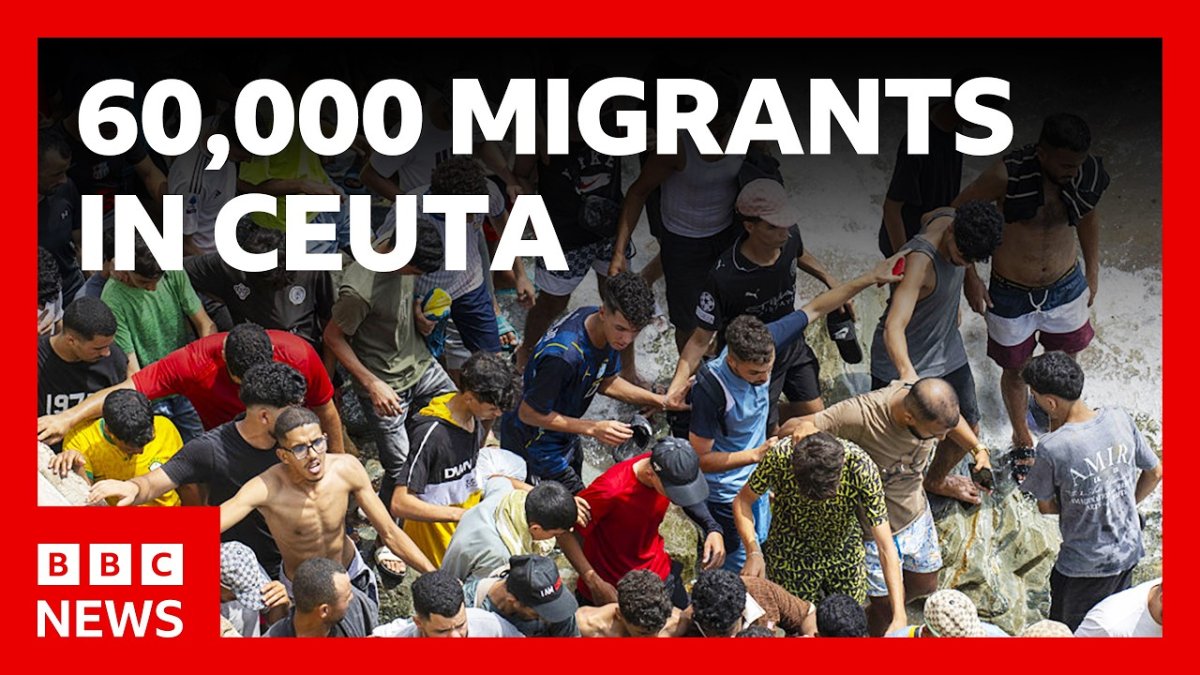
In a recent BBC News report, viewers saw the chaotic scenes that unfolded in the Spanish enclave of Ceuta as an estimated 60,000 migrants crossed from Morocco into the territory within little more than a day, overwhelming border defences and throwing Madrid, Rabat and Brussels into a political crisis. At least 57 people died during the surge, according to local media, and Spanish authorities deployed armed forces to restore order.
In a recent BBC News report, viewers saw the chaotic scenes that unfolded in the Spanish enclave of Ceuta as an estimated 60,000 migrants crossed from Morocco into the territory within little more than a day, overwhelming border defences and throwing Madrid, Rabat and Brussels into a political crisis. At least 57 people died during the surge, according to local media, and Spanish authorities deployed armed forces to restore order.
Ceuta Crisis: 60,000 Migrants Storm Spanish Enclave as EU Border Politics Explode
Ceuta, Spain – 31 July 2026 — An unprecedented mass crossing from Morocco into the Spanish North African city of Ceuta has left at least 57 people dead, triggered a military deployment, and ignited a diplomatic war inside the European Union over migration and border security. Spanish Prime Minister Pedro Sánchez has blamed trafficking mafias for what he called a "violation of Spain's territorial integrity."
The Mass Crossing That Overwhelmed Ceuta
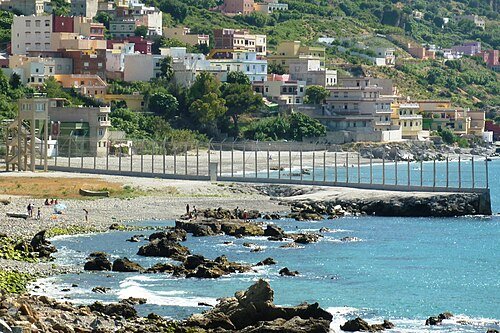
The scale of the crossing changed dramatically on the morning of 30 July, when several thousand people gathered on the coast and at crossing points near Ceuta. Most entered by swimming around the Tarajal and Benzú breakwaters, sliding down concrete embankments into the sea to reach Spanish beaches, while others crossed on foot through the Tarajal area. On the Spanish side, beaches were soon covered in rubber rings and flippers; some migrants celebrated their arrival, while more than a dozen drowned in the attempt. Local officials had appealed to Madrid for help after a rise in attempted crossings in the preceding days, but border controls apparently broke down under the pressure. Between 20 and 29 July, around 1,500 people had already arrived in the city — an exceptionally high figure for such a short period, with most being Moroccan nationals, alongside Algerians previously in Morocco, numerous unaccompanied minors, and some families with children.
Overnight into Friday the flow continued without pause. Spanish Interior Ministry figures indicated 50,000 arrivals since early Thursday, though Spanish media citing Reuters placed the Thursday total closer to 2,000-3,000. Clashes erupted at border gates where migrants threw rocks at Guardia Civil officers. Thousands of young men slept on streets and squares after reaching land. The Interior Ministry stated that armed forces would reinforce the Civil Guard, and similar deployments occurred in Melilla where local officials recorded 300 to 400 crossings. Reception centres for unaccompanied minors reached roughly 2,400 per cent of normal capacity. Ceuta President Juan Jesús Vivas described the arrivals as equalling around 70 per cent of the city’s population of roughly 83,600 and requested a national emergency declaration, which the Interior Ministry declined.
Ceuta resident Carmen Gonzalez Bermudez described seeing thousands of people in swimming costumes emerging from the sea. She acknowledged that most sought a better future yet stressed the city could not accommodate them. Another resident, Víctor Ortiz Sotomayor, said the enclave was packed with migrants in every square and street, mainly looking for food, and that many locals stayed indoors out of fear. Most arrivals were young men, though women, children and babies were also visible. Migrants reached shore on inner tubes with mobile phones sealed in waterproof pouches; some cheered for Spain and kissed the ground upon landing.
Why Now: The Supreme Court Ruling and the Traffickers' Calculus
The immediate trigger for the surge was the subject of intense dispute. Weeks before the crisis, Spain's Supreme Court ruled on 29 June that migrants stopped at sea while trying to reach Ceuta or Melilla cannot be summarily returned to Morocco, requiring instead the ordinary immigration procedure. The ruling arose from the case of an Algerian national intercepted at sea in 2024 and handed straight back to Moroccan authorities; the court found that summary return could only apply to people attempting to breach the physical containment elements of the land perimeters, such as border fences. Spain's Interior Ministry accused human trafficking networks of exploiting the ruling to "encourage the flow of undocumented migrants." Speaking on Friday during a visit to Ceuta, Sánchez said the surge was caused by criminal networks purposefully misinterpreting the ruling, adding that "trafficking mafias took a self-serving interpretation of a Supreme Court ruling" which "spread like wildfire."
Humanitarian organisations disputed any direct causal link, noting that sea crossings had occurred for months and years beforehand. Other analyses pointed to the socio-economic situation of young Moroccans, social media mobilisation, and the degree of control Morocco exercised over its side of the border. Achraf Maimouni of the Moroccan Association for Human Rights hinted the border at Tarajal had been opened "under unusual circumstances." Morocco faces high unemployment and witnessed Gen Z anti-government protests last year, with young people demanding better opportunities. UN data showed 2,826 crossings into Ceuta up to 15 July this year compared with 994 in 2025, 476 in 2024 and 467 in 2023, indicating a sharp recent increase even before the Supreme Court decision.
Moscow's Neighbours, Europe's Border: The Diplomatic Firestorm
Italy’s response was swift. Prime Minister Giorgia Meloni called the images "shocking" and wrote on social media that "uncontrolled illegal immigration poses a concrete threat to the security of Europe's borders." On Friday Italy suspended the Schengen zone agreement with Spain on free movement; since the two countries share no land border, this effectively means extra checks for flights. Spanish Foreign Minister José Manuel Albares accused Italian Foreign Minister Antonio Tajani of weaponising immigration for political ends, calling such remarks "improper" for "a partner and friendly country from which we expect European solidarity and not partisan demagoguery," and summoned the Italian ambassador to Madrid. Czech leader Andrej Babiš also called for the temporary suspension of Spain's Schengen membership. Sánchez responded on X: "Solidarity and empathy are optional. Respect for European treaties and data is not."
The Schengen Area spans 29 European countries with open internal borders. The Italian move highlighted how quickly migration pressure can fracture that system. Spanish officials emphasised that Ceuta and Melilla form the EU’s only land border with Africa and argued that unilateral actions by partners undermined collective responsibility. The episode exposed tensions between frontline states and northern governments over burden-sharing.
Global Reactions and the Wider Geopolitical Context
US President Donald Trump called the situation a "catastrophe" blaming "weak law, bad management." EU chief Ursula von der Leyen said the images were "unacceptable" and must "stop immediately." Finland's Interior Minister Mari Rantanen backed Meloni and said Spain had failed to protect its border. German Chancellor Friedrich Merz demanded Morocco "take back illegal migrants immediately." In Fnideq, Moroccan authorities fired water cannons at migrants; crowds gathered around a torched vehicle on the Moroccan side. More than 48,000 people had voluntarily returned to Morocco by Friday evening, Spanish officials said. At least 7,000 of those who crossed in the last 24 hours are minors, officials estimated.
Ceuta and Melilla represent the European Union's only land border with Africa. Morocco has long claimed sovereignty over both cities while Spain regards them as integral national territory. The crisis revived memories of May 2021, when around 8,000 people entered Ceuta over days after a diplomatic crisis with Morocco over Spain's treatment of Polisario Front leader Brahim Ghali. Ordinary residents in Ceuta now face overcrowded streets and strained services, while migrants who reached the enclave described desperate conditions on both sides of the border.
The Western Sahara Factor and Spain's Diplomatic Tightrope
Algeria and Morocco have strained relations because Algeria opposes Morocco's claim over Western Sahara and supports the Polisario Front. In 2022, Algeria suspended its friendship treaty with Spain after Madrid endorsed Morocco's autonomy proposal. After four years of frozen relations, Spain and Algeria reconciled with Sánchez visiting Algeria on 20 July — days before the Ceuta surge. Analysts told Western media that Morocco may have felt scorned by Spain's overtures to Algeria, amid reports that Moroccan authorities may have encouraged the crossing. Spain rejected suggestions the crisis was manufactured by Morocco as retaliation for the Spanish-Algerian reconciliation. This interpretation remains speculative and reflects the complex interplay of migration control and regional diplomacy.
The Western Sahara dispute continues to shape Spain-Morocco ties. Madrid’s 2022 shift toward Rabat’s autonomy plan cooled relations with Algiers and left Spanish diplomats navigating competing North African interests. The recent Ceuta events illustrate how quickly migration flows can become entangled with these longstanding geopolitical frictions, affecting daily life for residents in the enclaves and migrants alike.
Analysis: What Comes Next for Spain, Morocco and the EU
Spain's dependence on Moroccan border cooperation was exposed by the speed of the collapse. The political pressure on Sánchez's government at home is mounting as opposition parties question the handling of the crisis. The strain on the Schengen system and the rise of intra-EU border politics now threaten the principle of free movement across the bloc. The humanitarian dimension remains stark: at least 57 people died, thousands of minors are among the arrivals, and one returning migrant told Reuters: "It's not good at all, and it's not fun either. I mean, people are dying here. I beg you, please, if you haven't come yet, don't come. Don't do it."
Returns are continuing, EU summits on migration are expected, and the unresolved question of what prompted the Moroccan side to allow the border to collapse lingers. The episode underscores how migration management in the EU’s southern neighbourhood intersects with domestic politics in Spain, Italy and beyond, while ordinary people in Ceuta confront the immediate consequences of overwhelmed infrastructure and heightened tensions. Future policy responses will likely focus on reinforced external controls and renewed diplomatic engagement with Rabat, yet the underlying drivers of irregular movement remain unaddressed.
By Irina Volkov, Staff Writer
This article was produced with AI-assisted research and editorial support. Reporting is based on sources cited in the article.
What's Your Reaction?
 Like
0
Like
0
 Dislike
0
Dislike
0
 Love
0
Love
0
 Funny
0
Funny
0
 Wow
0
Wow
0
 Sad
0
Sad
0
 Angry
0
Angry
0

Russia/Eastern Europe Correspondent at Global1.News. Covering Russian politics, energy, security, and the shifting dynamics of the post-Soviet space. Provides clear-eyed analysis on one of the world's most opaque regions.










Comments (0)