
Sonia Gandhi Memoir Sparks Heated Debate Among Former Parliamentarians and Commentators
In this article, I unpack the key arguments raised, situate them within the framework of Indian political institutions, and assess the potential implications for citizens, policymakers, and the media ecosystem.
India Today’s recent panel discussion, hosted by senior journalist Rajdeep, brought together three veteran political figures – former BJP Rajya Sabha MP Rakesh Sinha, ex‑Congress MP Shaktisinh Gohil, and author‑commentator Rasheed Kidwai – to examine the release of Sonia Gandhi’s memoir and its reverberations across the political spectrum. The debate, aired on 10 November 2026, offered a rare cross‑party lens on how the memoir, titled simply “Sonia,” may reshape perceptions of the Congress leadership, influence voter sentiment ahead of the upcoming Uttar Pradesh assembly elections, and affect the broader narrative of Indian democracy. In this article, I unpack the key arguments raised, situate them within the framework of Indian political institutions, and assess the potential implications for citizens, policymakers, and the media ecosystem.
Contextualising the Memoir Within Indian Political History
The memoir’s launch marks the first extensive personal account by a senior Congress figure since the party’s post‑Independence era biographies of Jawaharlal Nehru and Indira Gandhi. While the video does not disclose the book’s full content, the panelists agreed that the memoir is an attempt by Sonia Gandhi to shape her legacy in a period when the Congress faces dwindling electoral fortunes. The discussion highlighted that memoirs in Indian politics have traditionally served as instruments of narrative control, often timed to coincide with critical electoral junctures.
Rashid Kidwai, who has authored several political analyses, noted that the memoir arrives at a moment when the Congress is seeking to reinvent its image after successive defeats in state assemblies. He linked the timing to the party’s strategic need to re‑engage with its grassroots base, especially in states where the Congress still commands significant organisational structures, such as Kerala and Punjab. Kidwai’s observation underscores the memoir’s role not merely as a personal recollection but as a calculated political communication tool.
Former BJP MP Rakesh Sinha framed the memoir within the broader contest between the two dominant national parties. He argued that the memoir is likely to be scrutinised by the BJP’s central leadership as part of its broader narrative that the Congress is an “out‑of‑touch” establishment. Sinha’s perspective reflects the BJP’s longstanding emphasis on portraying the Congress as a relic of a bygone era, a theme that has been reinforced through the party’s use of social media and its own political literature.
Shaktisinh Gohil, representing the Congress viewpoint, countered that the memoir provides an opportunity for the party to humanise its leadership and reconnect with voters who still associate the Gandhi family with the nation’s founding ideals. He reminded the audience that the Congress’s constitutional framework, anchored in the party’s internal democratic processes, allows for such personal narratives to be integrated into its policy discourse, especially through the party’s central election committee and its outreach programmes.
Party Reactions and Internal Dynamics
The panelists each highlighted how the memoir could influence internal dynamics within their respective parties. Rakesh Sinha suggested that the BJP’s parliamentary wing may use the memoir as a reference point in debates on governance, especially when confronting Congress‑led opposition in state legislatures. He implied that the BJP’s internal think‑tanks, such as the BJP’s Policy Research Unit, might incorporate excerpts from the memoir to critique past Congress policies on health and education.
Shaktisinh Gohil warned that the memoir could also expose fissures within the Congress itself. He pointed out that senior leaders who have long served under the Gandhi family might feel sidelined if the memoir emphasizes a particular narrative that marginalises dissenting voices. Gohil’s concern resonates with the Congress’s ongoing internal reforms, overseen by the All India Congress Committee, which aim to democratise candidate selection and strengthen state‑level leadership.
Rashid Kidwai added that the memoir’s reception among the Congress’s youth wing, the Indian Youth Congress, will be pivotal. He noted that the youth wing’s digital outreach, coordinated by the party’s Media and Communication Department, could either amplify the memoir’s positive messages or, if the book is perceived as out‑of‑touch, accelerate the exodus of young activists to alternative political platforms, including the Aam Aadmi Party and regional parties.
The discussion also touched on the role of the Election Commission of India (ECI) in monitoring political literature during election periods. While the video did not mention any formal complaints, the panelists agreed that the ECI’s guidelines on political campaigning could be invoked if the memoir is used as a direct campaign tool, especially in the lead‑up to the Uttar Pradesh elections scheduled for early 2027.
Implications for Policy Debates on Health and Education
Given the panel’s composition, the conversation naturally gravitated towards policy areas where Sonia Gandhi has been a vocal advocate, notably health and education. Rakesh Sinha highlighted that the memoir’s recollections of the National Rural Health Mission (NRHM) and the establishment of the All India Institute of Medical Sciences (AIIMS) in underserved regions could be leveraged by the BJP to contrast its own health initiatives, such as the Ayushman Bharat scheme.
Shaktisinh Gohil argued that the memoir’s emphasis on the expansion of primary education under the Sarva Shiksha Abhiyan could reinforce the Congress’s claim that it laid the groundwork for universal education. He suggested that the Ministry of Education, through its ongoing National Education Policy (NEP) implementation, might reference the memoir’s historical context when discussing continuity and change in Indian education policy.
Rashid Kidwai pointed out that the memoir may also bring to light lesser‑known collaborations between the Congress and scientific institutions, such as the Indian Council of Medical Research (ICMR) and the Indian Institute of Technology (IIT) system, during the early 2000s. He speculated that these references could be used to argue for a more research‑oriented health policy, a stance that aligns with the Ministry of Health’s current push for evidence‑based interventions.
The panel collectively agreed that the memoir’s policy anecdotes could serve as a reference point for parliamentary debates, particularly in the Rajya Sabha, where many of the memoir’s events unfolded. The discussion underscored how personal narratives can shape legislative discourse, especially when they intersect with ongoing policy reforms.
Media Strategy and Public Perception
The debate also examined the memoir’s role in the broader media ecosystem. India Today’s description of the video emphasises the channel’s position as a leading English news outlet, suggesting that the memoir’s launch will be amplified across television, digital, and social platforms. Rakesh Sinha noted that the BJP’s media cell is likely to produce counter‑narratives, using both traditional print and digital outlets to challenge the memoir’s claims.
Shaktisinh Gohil stressed that the Congress’s own media apparatus, coordinated through the party’s Press Relations Office, will need to manage the narrative carefully. He warned that any perceived missteps in promoting the memoir could be seized upon by opposition parties, especially given the heightened scrutiny of political memoirs in the age of fact‑checking.
Rashid Kidwai highlighted the role of independent fact‑checkers, such as the Press Council of India and emerging digital verification platforms, in scrutinising the memoir’s factual accuracy. He argued that the memoir’s credibility will hinge on how well it aligns with documented parliamentary records, which are publicly accessible through the Lok Sabha and Rajya Sabha archives.
Finally, the panel reflected on the impact of the memoir on the Indian electorate’s perception of political leadership. They agreed that personal stories can humanise leaders, but they also risk exposing contradictions that may erode public trust. In a country where political legitimacy is closely tied to perceived integrity, the memoir’s reception will be a barometer of the Congress’s ability to reconnect with voters.
Regional Repercussions: Focus on Uttar Pradesh
The timing of the memoir’s release, as noted by the panel, coincides with the Uttar Pradesh (UP) political calendar. The BJP, which currently governs UP, may use the memoir as a foil in its campaign messaging, especially in constituencies where the Congress still retains a foothold. Rakesh Sinha suggested that the BJP’s state unit could reference the memoir in rallies to underscore the contrast between the “development agenda” of the BJP and the “legacy politics” of the Congress.
Shaktisinh Gohil warned that the Congress’s performance in UP will be a litmus test for the memoir’s effectiveness as a rallying point. He highlighted that the party’s state leadership, under the guidance of the Uttar Pradesh Congress Committee, must translate the memoir’s themes into concrete outreach programmes, such as health camps and educational workshops, to resonate with the electorate.
Rashid Kidwai observed that the memoir could also influence the discourse around the role of the Gandhi family in regional politics. He noted that the memoir’s narrative may be used by regional parties, such as the Samajwadi Party and the Bahujan Samaj Party, to position themselves as alternatives to both the BJP and Congress, especially if they can claim to embody the “people’s voice” that the memoir purportedly champions.
The panel concluded that the memoir’s impact on UP will be mediated by the state’s complex caste and community dynamics, which are central to any electoral strategy. The Ministry of Social Justice and Empowerment’s data on demographic composition will likely be consulted by all parties as they calibrate their messaging in the run‑up to the 2027 assembly elections.
Long‑Term Significance for Indian Democracy
Beyond immediate electoral calculations, the panelists reflected on the memoir’s broader significance for democratic discourse in India. Rashid Kidwai argued that political memoirs serve as primary sources for future scholars studying the evolution of Indian party politics, especially when they are corroborated by parliamentary records and archival material from institutions such as the National Archives of India.
Shaktisinh Gohil emphasized that the memoir could inspire a new generation of political writers, encouraging them to document their experiences within the democratic process. He suggested that academic institutions, including the Indian Institutes of Technology and the Indian Institutes of Management, could incorporate the memoir into curricula on political communication and public policy.
Rakesh Sinha cautioned that the memoir’s narrative must be critically examined to avoid the pitfalls of hagiography. He reminded the audience that the Indian Constitution, upheld by the Supreme Court, provides the ultimate framework for evaluating any political claim, and that the judiciary’s role in adjudicating disputes arising from political literature remains a vital safeguard.
In sum, the debate hosted by India Today illuminated the multifaceted ways in which Sonia Gandhi’s memoir intersects with party politics, policy debates, media strategy, regional electoral dynamics, and the broader health of Indian democracy. As the memoir circulates among political elites, journalists, and the voting public, its true impact will be measured not only by sales figures but by how it shapes the narratives that drive India’s democratic journey in the years ahead.
By Dr. Raj Patel, Staff Writer
This article was produced with AI-assisted research and editorial support. Reporting is based on the source material cited below. Sources: India Today video report (10 November 2026); India Today; Global1.News
What's Your Reaction?
 Like
0
 Dislike
0
 Love
0
 Funny
0
 Wow
0
 Sad
0
 Angry
0
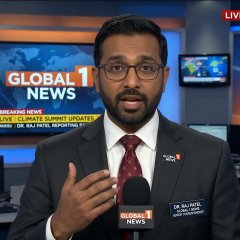
India/South Asia Correspondent at Global1.News. Analytical voice with a background in science and health journalism. Based in New Delhi, covering Indian politics, education, healthcare, technology, and policy. Breaks down complex data into clear, actionable reporting.









Comments (0)