
England Vows Truly Phone-Free Schools by 2027, With No Wording to Judge
England will toughen its school mobile phone guidance from September 2027, pushing schools beyond "not seen, not heard" to keep devices inaccessible all day, but the Department for Education has not released the wording.
England's schools are being pushed past "not seen, not heard" on smartphones. What the government has promised is a tougher rule. What it has produced so far is an intention, a date, and no published wording. The law that carries it is already live. The detail is not.
England Vows Truly Phone-Free Schools by 2027, With No Wording to Judge
London, England — The Department for Education announced on 9 November that it will strengthen its statutory guidance on mobile phones in schools in England, with the change due to be implemented in September 2027 and schools encouraged to move sooner where possible. The strengthened text will tell schools to go beyond "not seen, not heard" — the rule that lets a phone stay in a bag — and keep devices out of reach all day. It will not be a legal requirement. Schools will only be encouraged to drop the bag-and-pocket compromise. Asked for the wording it intends to publish, the department did not provide it.
What the Government Actually Announced
The department said schools should adopt whole-school strategies that keep phones "out of use and inaccessible throughout the school day". It noted that some schools already run lockable pouches, collection at the start of the day, secure storage or an outright ban on site, and said the strengthened guidance "will build on this leadership, giving every school clearer backing to keep phones inaccessible and helping parents and pupils understand what a truly phone-free school day means". Education Secretary Lucy Powell said: "Children should not be using smartphones at any point during the school day, full stop." She said the aim was "to take the next leap towards truly phone-free schools", and that the message to parents and pupils was: "school is for learning and friendship, not scrolling." Schools Week reported that the announcement was timed to meet the deadline of national print newspapers.
A Duty to Have Regard Is Not a Ban
The legal machinery sits in section 36 of the Children's Wellbeing and Schools Act 2026, which inserts section 550C into the Education Act 1996. Section 550C(1) states: "The appropriate person for a school in England must have regard to guidance described in subsection (2) in exercising functions in relation to the conduct of the school." Subsection (2) is broad by design: it covers mobile phones and "other personal interactive communication devices", used during school hours and on school premises. The Act's own notes describe the effect as a clear legal expectation that the guidance must be followed unless there is a legally justifiable reason not to. The section also defines the school day as the span from the start of the first session to the end of the last, and it excludes devices the school itself provides. Section 36 came into force on 29 June 2026, and the guidance says schools "should begin following it from 1 September 2026".
Sixteen Per Cent Is the Number That Started This
One finding is central to the department's case. It said: "While most schools set out that phones should be not seen and not heard, only 16 per cent of secondary pupils say phone rules are followed all of the time, and with the rapid increase in technology take-up and emerging evidence, pupils, schools and parents need more clarity." That figure comes from a department survey carried out in June. The department added that access to phones "risks pulling children away from their learning and from each other", and that school "should be a place that provides a clear break from those pressures". Polling published in March found that 40 per cent of children aged 9 to 16 were turning down real-world opportunities in order to spend time online. Charlotte Ashton, co-founder of the campaign group Generation Focus, said pupils were still "TikToking in the toilets" under the softer rules. She said: "Ultimately, we need to get to a point where it's not normal for every single child to have a personal internet-enabled device in their pockets with them 24/7."
The Gap Between the Promise and the Classroom
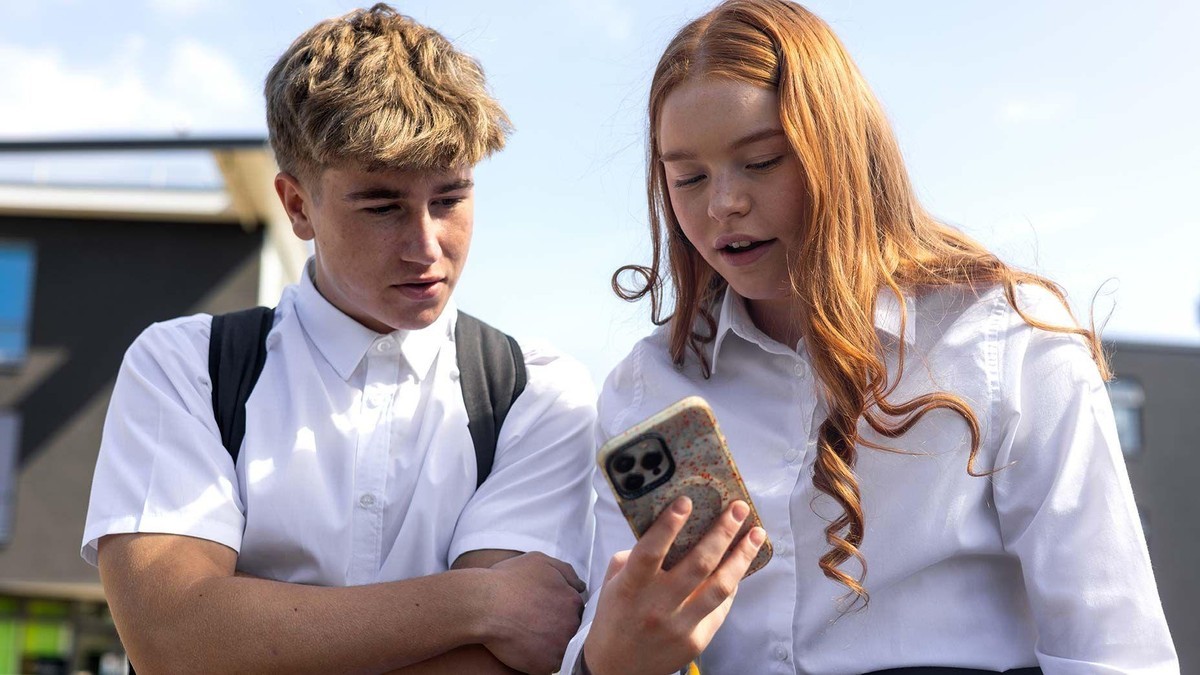
For this academic year, nothing has changed: what governs a school today is the text already in force, which applies in England and covers lessons, the time between lessons, breaktimes and lunchtime. The department's timetable for the toughened version runs to the autumn of 2027. During consideration of the Bill in the House of Lords, the minister Baroness Smith said the government would review the guidance in the light of the department's annual behaviour survey and make any necessary revisions by then. When the duty was being added to the Bill, she told the Lords the government would table an amendment "creating a clear legal requirement for schools"; what schools received was a duty to have regard. That is a commitment to revise, not a draft on a desk. The strengthened version has not been published, and until it is, head teachers are left with the discretion the current document already gives them.

The Heads Say They Cannot Afford It
Paul Whiteman, general secretary of the NAHT school leaders' union, said phones could raise "safety issues" and act as an "unhelpful distraction", but that going beyond a "not seen, not heard" approach "comes at a cost". He said: "If schools are to implement some of the more robust measures suggested in this guidance, they will need access to additional funding and support." Pepe Di'Iasio, general secretary of the Association of School and College Leaders, said school leaders "cannot simply make mobile phones disappear". He said: "If all schools are going to be expected to have lockable pouches or other secure storage facilities for every pupil, the cost involved will be very significant indeed." He added that the policy is "not feasible unless the government puts in the funding required to meet these costs". Asked about funding on BBC Breakfast, Powell said she wanted heads to have the autonomy to implement the policies that work best for their schools.
The Schools That Already Did It Anyway
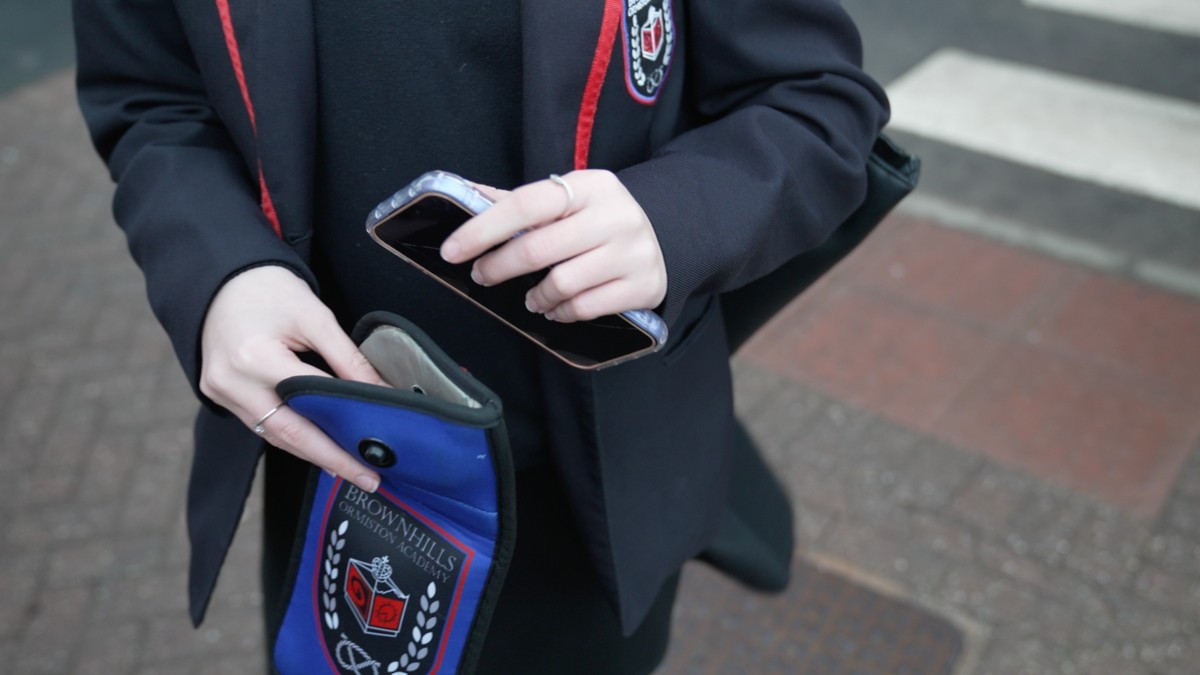
Karl Harrison, head teacher at Burnage Academy for Boys in Manchester, told BBC Breakfast his school had spent 20,000 pounds on metal detectors and phone pouches. He said some pupils felt their freedom had gone, but that locking phones away had increased how much they socialised. He said: "People now can talk to each other, instead of scrolling on a device." He said focus in lessons had improved and that "people are achieving higher grades". Caty Reid, head teacher of Clayton Hall Academy, said every pupil in Years 7 to 11 had been given a pouch, with phones "switched off and locked away on arrival, then unlocked at the end of the school day". Staff had since seen "students playing and talking together more", better engagement, improved attendance and "fewer incidents of hurtful behaviour online". Independent reporting puts pouches at around 20 to 25 pounds each. Jo Sharrock, head teacher at Putney High School in southwest London, said the pouches had "liberated" pupils and staff and were "worth every second" it took to implement the policy.
What the Review Found About the Scrolling
The Milburn review's interim report found that disengagement can begin as early as 12 or 13. In focus groups, "every one of a group of ten 12 and 13-year-olds told us they went to bed between midnight and three in the morning because they were scrolling on their phone". Alan Milburn, the former health secretary, is due to publish his final report on young people not in education, employment or training next week. Powell has tied the phone policy to curriculum change, saying: "Alongside our curriculum reforms, this is about making school unmissable - giving every child more chances to learn, connect and thrive." She said such policies could achieve a "whole-school culture change" and that this was "what we want to see happening everywhere". Ministers are also recasting the curriculum, with a renewed focus on key stage 3 and a warning from Powell that pushing exam content younger risks turning secondaries into "early exam factories".
The Politics of Who Got There First
Shadow Education Secretary Laura Trott said she was "delighted that Labour have finally listened to us and agreed to properly ban smartphones in schools". She said: "This sudden outbreak of common sense is welcome, but we are lacking joined up thinking from Labour when it comes to technology in schools." The Conservatives pushed an amendment in the Lords in February calling for phones to be banned, and the Bill stalled between the two houses before ministers settled on a duty to have regard. The Lords accepted a suggestion from shadow education minister Baroness Barran that the Bill provide potential exemptions for sixth form students, boarding pupils and those using phones as medical devices. Liberal Democrat schools spokesperson Caroline Voaden called the guidance "a positive step", said heads should decide how phones are kept out of reach, and warned that pupils with special educational needs or caring responsibilities must still be able to reach a phone.
The Second Front: EdTech, Ofsted and Enforcement
Phones are only half of the announcement. The department is also launching a consultation on independent safety certification for education technology, intended to give parents and schools confidence that the kit in classrooms is safe. Last week, education minister Paul Waugh said there was a risk of a "wild west" of such products in schools across England. More than 150 clinicians have warned of a "crisis" in children's physical and developmental health linked to screen-based learning. Trott said a review of safety standards around classroom technology was the right thing to do. Inspection already reaches the phone question: a department spokesperson said schools' mobile phone policies are monitored as part of Ofsted inspections from April, and the Act's explanatory notes say inspectors would assess those policies and how they are implemented. The guidance also tells head teachers they "can and should identify mobile phones and similar devices as something that may be searched for in their school behaviour policy".
Four Nations, and One Separate Ban
Education is devolved, so the answer depends on where a pupil lives. In Scotland, the government has said it will introduce a new law to restrict the personal use of phones in schools, and ran a consultation over the summer. In Wales, the Senedd recently voted against a motion to introduce a national statutory ban in classrooms; schools are still encouraged to restrict phones, but heads keep the flexibility to set their own rules. In Northern Ireland, Education Minister Paul Givan opened a 12-week consultation in August on whether to ban phones by law, calling for "a stronger and more consistent approach across our education system". All of that is separate from the United Kingdom's planned ban on social media for under-16s, due in March, which would shut children out of Instagram, Snapchat and TikTok.
By Jessica Ali, Staff Writer
This article was produced with AI-assisted research and editorial support. Sources: BBC News, ITV News, Sky News, The Independent, Schools Week, Politics.co.uk, GOV.UK Department for Education guidance, legislation.gov.uk and The Guardian. Cover: Global 1 News editorial image. Photographs: BBC News; Eye Ubiquitous/Alamy via The Guardian.
What's Your Reaction?
 Like
0
 Dislike
0
 Love
0
 Funny
0
 Wow
0
 Sad
0
 Angry
0

Editor-in-Chief at Global1.News. Atlanta-based journalist who cuts through the BS and tells it like it is. Lead anchor, host, and the voice you hear when the spin stops and the truth starts.















Comments (0)