
Ceasefire in Tatters: The Strait of Hormuz Standoff and America's Economic Escalation Against Iran
In a recent CGTN panel discussion, analysts dissected the unraveling of the US-Iran ceasefire and the dangerous escalation over the Strait of Hormuz, questioning whether Washington can be trusted to honor any new agreement.
In a recent CGTN panel discussion, analysts dissected the unraveling of the US-Iran ceasefire and the dangerous escalation over the Strait of Hormuz, questioning whether Washington can be trusted to honor any new agreement. The discussion, framed around the "Agreement in tatters," comes at a critical juncture: a 60-day ceasefire that expired on Monday, 17 August 2026, has been effectively abandoned by both sides, with President Donald Trump ruling out an extension and stating there are "no talks or conversations going on, or scheduled" with Tehran. As the conflict enters its sixth month, the strategic calculus has shifted from military strikes to economic warfare and a high-stakes confrontation over one of the world's most vital maritime chokepoints. The panel's central question—whether diplomacy can reopen the Strait of Hormuz—now hangs in the balance, with profound implications for global energy markets, the Gulf states, and the Global South.
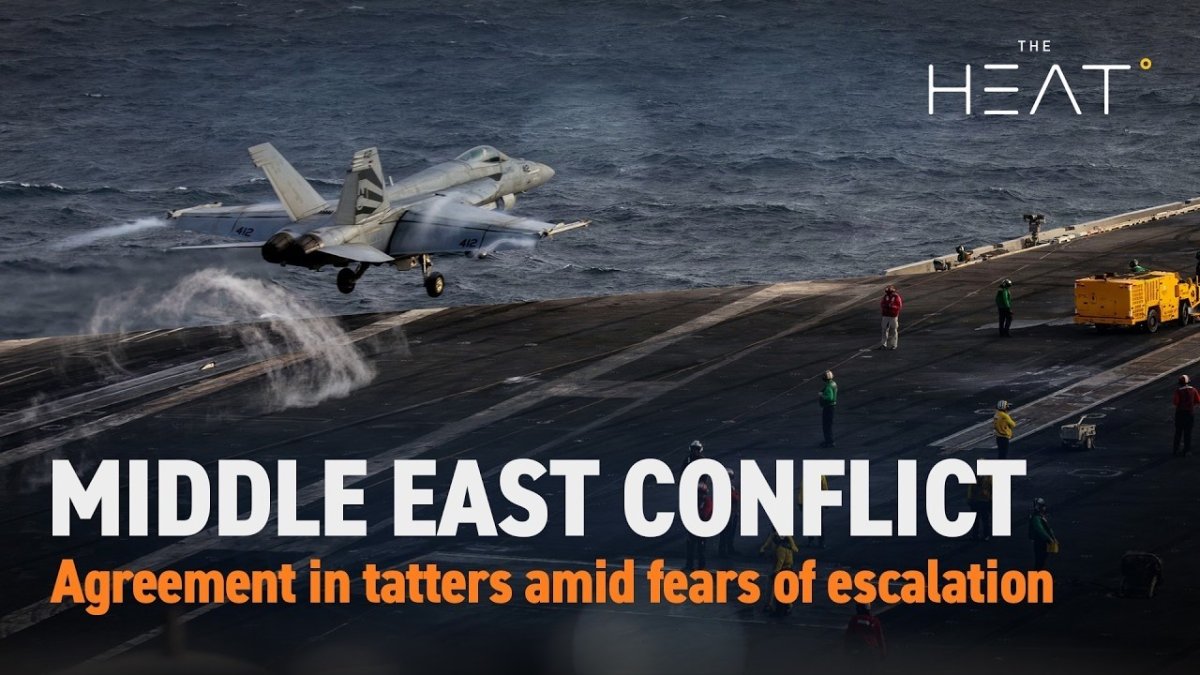
The Ceasefire Collapse and the "New U.S. Territory" Gambit
The expiration of the ceasefire marks a formal end to any pretense of near-term de-escalation. The conflict, which began on 28 February 2026 with US-Israeli airstrikes that killed several Iranian officials including Supreme Leader Ali Khamenei, has evolved into a protracted war of attrition. President Trump's declaration on 18 August that the Strait of Hormuz is a "New U.S. Territory" represents a dramatic and legally dubious escalation. In a Truth Social post, Trump asserted, "We control it. We control it with the blockade," referring to the US naval blockade of Iranian ports. However, international legal experts are unanimous that declaring an international waterway as US territory would constitute a flagrant violation of international law, specifically the United Nations Convention on the Law of the Sea, which guarantees freedom of navigation through straits used for international navigation.
This move follows an earlier, abandoned proposal to impose a 20% toll on cargo transiting the strait—a plan scrapped after US officials determined it would be illegal. The shift from a toll scheme to a territorial claim suggests a more aggressive posture, but it also reveals a degree of strategic improvisation. Al Jazeera's Mike Hanna noted on the CGTN panel that Trump's move showed "a degree of frustration" over the deadlock in the five-month-old conflict. The target audience, Hanna argued, may be an American public that continues to oppose the war. This domestic political dimension is crucial: with the conflict dragging on and no clear victory in sight, the Trump administration appears to be doubling down on maximalist rhetoric to project strength, even if the legal and operational foundations are shaky.
Economic D-Day: Sanctions as a Weapon of Mass Disruption
On 19 August, President Trump announced what he called the "most crushing economic operation" against Iran, declaring that Tehran "failed to take" the opportunity to make a deal and would now face "economic warfare and isolation on an unprecedented scale." The announcement, framed as "an ECONOMIC D-DAY," threatens sanctions against any country providing "any type of lifeline to Iran"—including oil smuggling, swap lines, cash transfers, exchange houses, ship registries, and front companies. This builds on the existing Operation Economic Fury campaign, which has already imposed sweeping sanctions on Iran's oil, shipping, and financial sectors, alongside the naval blockade of Iranian ports.
The secondary-sanctions threat is particularly significant for the Global South and major energy importers. China, as a principal importer of Gulf crude, depends on the Strait of Hormuz for a significant share of its energy imports. Chinese analysts are closely monitoring these threats because they could directly hit Chinese refiners and tanker operators who continue to engage with Iranian crude. The CGTN framing treats Washington's escalation as destabilizing for global energy security, a perspective that resonates with Beijing's stated preference for de-escalation and multilateral dialogue. The threat to punish any nation that facilitates Iranian trade is a coercive tool aimed at forcing global compliance, but it risks alienating key partners in Asia and the Gulf who have historically maintained pragmatic economic ties with Tehran.
Tehran's Response: Defiance and Economic Counter-Narrative
Iranian Foreign Minister Abbas Araghchi has dismissed the US threats as "economic terrorism" and a "diversion from America's own crisis: unprecedented debt & surging interest costs." In a pointed rebuke, Araghchi wrote, "Doubling down on failed policies will only bring further defeat—and enmity of Iranians." This framing is deliberate: it seeks to reposition the economic war as a symptom of US weakness rather than strength, highlighting America's fiscal vulnerabilities while portraying Iran as a resilient adversary that has weathered decades of sanctions.
Iranian state media has echoed this defiance. IRIB, the state broadcaster, dismissed the announcement as following "the failure of military aggression," while Tasnim news agency asserted that Tehran "has learned how to circumvent these restrictions and has become very skilled at doing so." This narrative of resilience is not without basis—Iran has developed sophisticated networks for sanctions evasion over the past decade, including barter arrangements, third-country transshipment, and the use of front companies. However, the scale of the current pressure campaign, combined with the naval blockade, represents a qualitatively different challenge. The question is whether Iran's circumvention capabilities can withstand the combined weight of US naval power, financial isolation, and diplomatic pressure from Gulf states.
The Gulf States' Dilemma: UAE Embargo and Omani Stalemate
The conflict is now forcing Gulf states to choose sides, with significant economic and diplomatic consequences. The United Arab Emirates has suspended all financial ties with Iran, accusing Tehran of launching two ballistic missiles towards its waters—a claim Iran denies, calling it a "false-flag operation." Nader Habibi, a Middle East economics professor at Brandeis University, told the CGTN panel that the US "strongly encouraged or induced" the UAE embargo, noting a phone call between Secretary of State Marco Rubio and Emirati National Security Advisor Sheikh Tahnoon bin Zayed Al Nahyan. This suggests that Washington is actively leveraging its Gulf allies to tighten the economic noose around Iran, even at the cost of regional economic disruption.
Oman, which shares control of the Strait of Hormuz with Iran, presents a more complex picture. Tehran and Muscat have been in talks about a deal on commercial shipping through the strait, but President Trump has threatened to "bomb the s---" out of Oman if it "gets in the way" of US operations. Former US ambassador to Oman Marc Sievers said the talks have "effectively stalled" and that Oman appears to have "lost the support of the United States." This is a significant development: Oman has historically served as a neutral mediator in Gulf conflicts, and its marginalization removes a potential diplomatic channel. The pressure on Oman illustrates the broader dilemma for smaller Gulf states—they are being forced to align with Washington's maximalist approach or face the consequences, even if that alignment undermines their own economic interests and regional stability.
Navigational Risks and the China Factor
The persisting navigation risks in the Strait of Hormuz were underscored on 18 August when the UK Maritime Trade Operations agency reported that a cargo vessel was struck by a projectile while transiting the strait. This incident, coming on the same day as Trump's territorial declaration, signals that the waterway remains a high-risk zone despite the ceasefire's expiration. Iran insists the strait stays closed until Trump agrees to talks, a position that directly threatens the free flow of oil and liquefied natural gas that underpins global energy markets.
For China, this is not an abstract geopolitical contest. Beijing has consistently called for restraint and dialogue, and Chinese analysts view the secondary-sanctions threats as a direct challenge to China's energy security. The Strait of Hormuz is a critical artery for Chinese crude imports from Saudi Arabia, Iraq, and the UAE, and any sustained disruption would have immediate consequences for Chinese refiners and the broader economy. The CGTN framing, which treats Washington's escalation as destabilizing for global energy security and the Global South, aligns with Beijing's broader strategic narrative of opposing unilateral sanctions and advocating for multilateral solutions. However, China's room for maneuver is constrained: while Beijing has deep economic interests in maintaining trade with Iran, it also seeks to avoid a direct confrontation with Washington that could jeopardize its access to global financial systems and technology.
Strategic Calculus: What Each Side Wants and the Road Ahead
The current impasse reflects a fundamental mismatch of objectives. Washington, under President Trump, appears committed to a policy of maximum pressure aimed at regime change or complete capitulation—the "ECONOMIC D-DAY" rhetoric suggests a belief that overwhelming force, both military and economic, will eventually break Iranian resistance. The target audience, as Mike Hanna noted, may be domestic: an American public that opposes the war but might be persuaded by a narrative of decisive action. However, this approach carries significant risks: it alienates allies, destabilizes global energy markets, and provides no clear exit strategy.
Tehran, for its part, is betting on resilience and time. By framing the conflict as a test of American will and economic strength, Iran seeks to outlast the pressure campaign, leveraging its strategic position astride the Strait of Hormuz as a bargaining chip. The Iranian insistence that the strait remains closed until Trump agrees to talks is a high-stakes gambit: it threatens global economic disruption but also risks provoking a direct military confrontation that Iran cannot win.
The second-order effects for the Gulf states are profound. The UAE's embargo and Oman's marginalization demonstrate that Washington is willing to sacrifice regional economic integration and diplomatic nuance for the sake of a unified front against Iran. For the Global South, including China, the conflict represents a test of the post-war international order: can a single power unilaterally declare an international waterway as its territory and impose secondary sanctions on any nation that defies it? The answer to that question will shape not only the future of the Strait of Hormuz but also the broader rules governing global trade and energy security. As the CGTN panel concluded, the path to reopening the strait runs through diplomacy—but that path appears increasingly narrow, with both sides seemingly committed to a course of escalation rather than negotiation.
By Prof. Marcus Chen, Staff Writer
This article was produced with AI-assisted research and editorial support. Reporting is based on sources cited in the article.
What's Your Reaction?
 Like
0
Like
0
 Dislike
0
Dislike
0
 Love
0
Love
0
 Funny
0
Funny
0
 Wow
0
Wow
0
 Sad
0
Sad
0
 Angry
0
Angry
0

World Politics Analyst at Global1.News. Based in Beijing, covering US-China relations, global trade, and geopolitical strategy. Brings deep analytical perspective to the power dynamics shaping international affairs.













Comments (0)