
Evergrande Founder Xu Jiayin Sentenced to Life: The Final Reckoning of China's Property Empire
Xu Jiayin, founder of collapsed property giant Evergrande, was sentenced to life in prison by a Shenzhen court on Thursday, with personal property confiscated and firms fined 15.82 billion yuan. The verdict caps the fallout from Evergrande's 2021 collapse and signals Beijing's resolve to discipli...
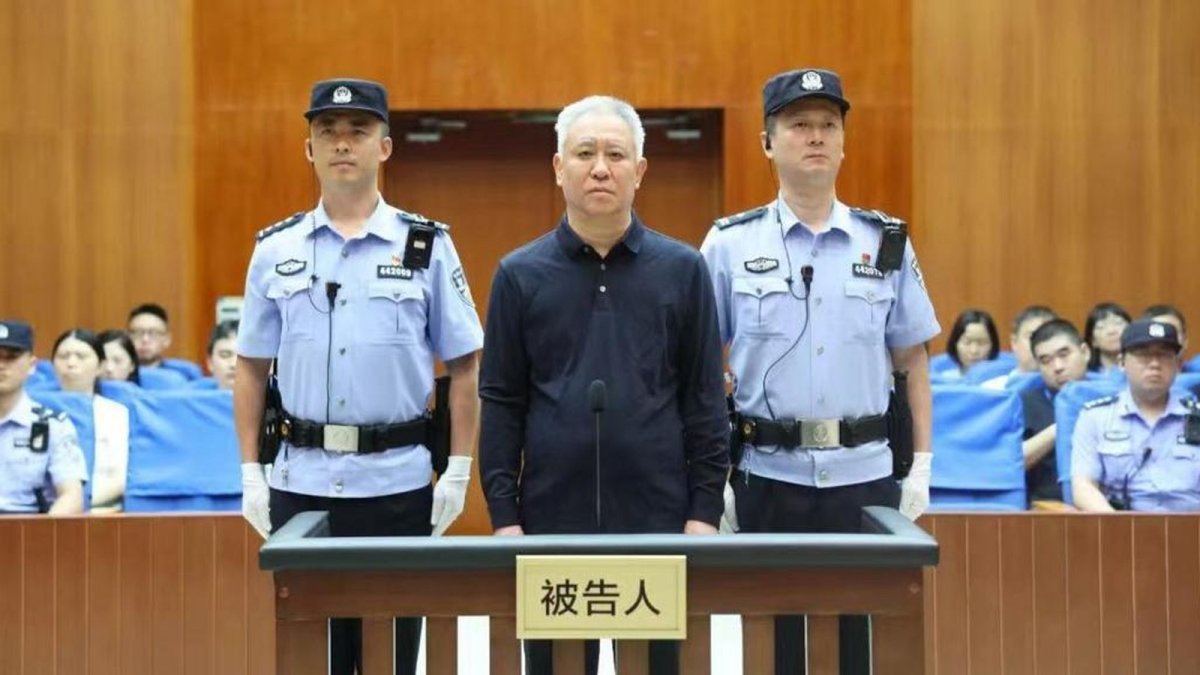
Evergrande Founder Xu Jiayin Sentenced to Life: The Final Reckoning of China's Property EmpireThe Shenzhen Intermediate People's Court delivered a landmark verdict on Thursday, sentencing China Evergrande Group founder Xu Jiayin, also known as Hui Ka Yan, to life imprisonment on charges of financial fraud, bribery, and embezzlement. The court also ordered the confiscation of all of his personal property and the deprivation of his political rights for life, marking the definitive judicial conclusion to the collapse of a company that once symbolized China's breakneck urbanization drive. The verdict, delivered in a first-instance ruling, ranks among the most severe punishments meted out to a private-sector tycoon in the country's modern economic history, and it sends an unmistakable signal about Beijing's resolve to impose Party discipline over capital and enforce financial stability at any cost.
The Verdict and the Scale of the Fraud
The court's ruling was sweeping in its scope and severity. Xu, 67, was convicted of multiple crimes, including illegally absorbing public deposits, fundraising fraud, fraudulent issuance of securities, illegal disclosure of important information, offering bribes by an entity, illegally granting loans, illegally using funds, and occupational embezzlement. The Shenzhen court fined Evergrande Group 8.82 billion yuan (USD 1.23 billion) and Evergrande Real Estate Group 7 billion yuan (USD 1.04 billion), for a combined corporate penalty of 15.82 billion yuan (USD 2.35 billion). The court found that from 2016 to 2021, Evergrande and Xu engaged in "sustained, large-scale financial fraud," systematically inflating assets and concealing liabilities. The judgment stated that these crimes "seriously disrupted the socialist market economic order, infringed upon public and private property rights and undermined the integrity of official conduct," with amounts "exceptionally large" and circumstances "particularly egregious."The Fall of a Titan: From Asia's Richest Man to Prisoner
Xu's trajectory embodies the rise and fall of China's debt-fueled property boom. Raised by his grandmother in rural Henan province, Xu founded Evergrande in 1996 and built it into the nation's largest real estate developer, at one point achieving a stock market valuation exceeding USD 50 billion. He was briefly estimated to be Asia's richest person, a testament to the immense wealth generated by China's urbanization. However, his aggressive expansion strategy, funded by massive borrowing, became a liability when Beijing introduced the "three red lines" policy in 2020 to cap property developers' debt levels. Evergrande's subsequent struggle to meet interest payments, its fire-sale of properties at steep discounts, and its eventual collapse in 2021 triggered a cascading crisis that shook the entire sector, leaving millions of home buyers with unfinished apartments and exposing domestic banks to billions in non-performing loans. A Hong Kong court ordered the liquidation of the crisis-hit company in January 2024.Beyond Xu: The Purge of the Executive Suite
Thursday's verdict was not limited to Xu alone. In a coordinated judicial action, the Shenzhen Intermediate People's Court and the Shenzhen Nanshan District People's Court delivered verdicts in related cases involving 56 Evergrande personnel. Among those sentenced were Xu's two sons, Xu Tenghe and Xu Zhijian, along with other executives including Zhen Litao, Ke Peng, Du Liang, and Liang Dong. Prison terms ranged from 18 years down to one year and 10 months, accompanied by fines or property confiscation. The courts ordered the continued recovery of illegal gains and restitution for any unrecovered amounts. This sweeping prosecution of the entire senior management cadre demonstrates that Beijing views the Evergrande affair not as the failure of a single individual, but as a systemic breakdown of corporate governance that required comprehensive judicial remediation.The Strategic Calculus: Party Discipline Over Capital
The sentencing must be understood within the broader context of Xi Jinping's doctrine of "common prosperity" and the ongoing campaign to rein in "chaotic expansion of capital." For years, Beijing has sought to shift from a growth-at-all-costs model to one emphasizing "high-quality development." The Evergrande verdict is the most dramatic enforcement of this principle to date. By imposing a life sentence and total asset confiscation, the court is signaling that no private enterprise, regardless of its size or political connections, is above the law. The message to other property developers is unambiguous: the era of leveraging political influence to secure cheap credit and evade regulatory oversight is over. The verdict also serves as a warning to local governments that colluded with developers to inflate land prices and GDP figures, reminding them that financial imprudence will have personal consequences.Implications for the Property Sector and Financial Stability
The ruling carries profound implications for China's ongoing property-sector deleveraging campaign. Since the 2020 "three red lines" policy, Beijing has walked a tightrope between deflating the property bubble and preventing a systemic financial crisis. The Evergrande liquidation and subsequent criminal prosecutions are part of a deliberate strategy to allow market discipline to work while ensuring that the costs of failure are borne by shareholders and executives, not by the state or ordinary depositors. The court's emphasis on "compensation for losses taking priority over the enforcement of fines and property confiscation" indicates a pragmatic approach: recovering funds for defrauded home buyers and creditors takes precedence over punitive financial penalties. This prioritization is designed to maintain social stability by addressing the grievances of the millions of households affected by unfinished properties.Geopolitical and Investor Confidence Considerations
For international investors, the verdict is a double-edged sword. On one hand, it demonstrates that China's legal system is capable of holding powerful corporate figures accountable, a positive signal for rule-of-law advocates. On the other hand, the severity of the punishment and the sweeping nature of the asset confiscation may reinforce perceptions of political risk for foreign capital operating in China. The case also has extraterritorial ramifications: Hong Kong regulators have imposed a HK$300 million fine on PwC over its audits of Evergrande, with HK$1 billion set aside for shareholder compensation. This suggests that the fallout from Evergrande will continue to reverberate through global accounting and financial regulatory circles. The message to foreign investors is that China is serious about cleaning up its financial system, but the methods may be more draconian than Western norms would dictate.Historical Context: The Three Red Lines and the 2021 Collapse
To fully grasp the significance of Thursday's verdict, one must revisit the policy decisions that precipitated Evergrande's downfall. The "three red lines" policy, introduced by the central government in August 2020, set strict limits on property developers' debt-to-asset ratios, net debt ratios, and cash-to-short-term-debt coverage. Evergrande, which had aggressively expanded through high-yield offshore bonds and shadow banking channels, was among the most exposed developers. When the policy took effect, the company's access to new credit dried up almost overnight. By late 2021, Evergrande had defaulted on its offshore debt obligations, triggering a wave of panic across the sector. The company's subsequent attempts to sell assets and complete projects were hampered by its massive liabilities, estimated at over USD 300 billion. The January 2024 liquidation order from a Hong Kong court formalized the company's demise, but the criminal proceedings in Shenzhen have now provided the political and legal closure that Beijing deemed necessary.What This Means for China's Economic Model Going Forward
The Evergrande sentencing is not merely a legal event; it is a foundational statement about the future direction of China's political economy. The verdict reinforces the central government's authority over capital, signaling that the financial system will be managed for the benefit of the real economy and social stability, not for the enrichment of a few oligarchs. For local governments, the message is clear: reliance on land sales and property development as primary revenue sources is no longer a viable or permissible strategy. For state banks, the ruling underscores the need for rigorous risk assessment and due diligence in lending practices. For the broader population, the verdict offers a measure of justice for the home buyers who lost their life savings in Evergrande's collapse. As China navigates its transition to high-quality development, the Evergrande case will stand as a cautionary tale and a benchmark for how the Party-state intends to discipline capital, protect consumers, and maintain financial stability in an increasingly uncertain global environment.By Prof. Marcus Chen, Staff WriterThis article was produced with AI-assisted research and editorial support. Reporting is based on sources cited in the article.
What's Your Reaction?
 Like
0
Like
0
 Dislike
0
Dislike
0
 Love
0
Love
0
 Funny
0
Funny
0
 Wow
0
Wow
0
 Sad
0
Sad
0
 Angry
0
Angry
0

Marcus Chen
World Politics Analyst at Global1.News. Based in Beijing, covering US-China relations, global trade, and geopolitical strategy. Brings deep analytical perspective to the power dynamics shaping international affairs.














Comments (0)