
HRW urges Thailand to halt deportation of 26 Karen villagers to Myanmar
A Community Under Threat: The Karen Villagers of Ban Pa Deng In the misty foothills of Kaeng Krachan National Park, a community that has called this land home for generations now faces an uncertain and frightening future. This week, Human Rights Watch issued an urgent plea to Thai authorities: halt the deportation of 26 ethnic Karen villagers currently detained in Bangkok, warning that returning them to Myanmar could place them in grave peril. The story begins on 10...
A Community Under Threat: The Karen Villagers of Ban Pa Deng
In the misty foothills of Kaeng Krachan National Park, a community that has called this land home for generations now faces an uncertain and frightening future. This week, Human Rights Watch issued an urgent plea to Thai authorities: halt the deportation of 26 ethnic Karen villagers currently detained in Bangkok, warning that returning them to Myanmar could place them in grave peril.
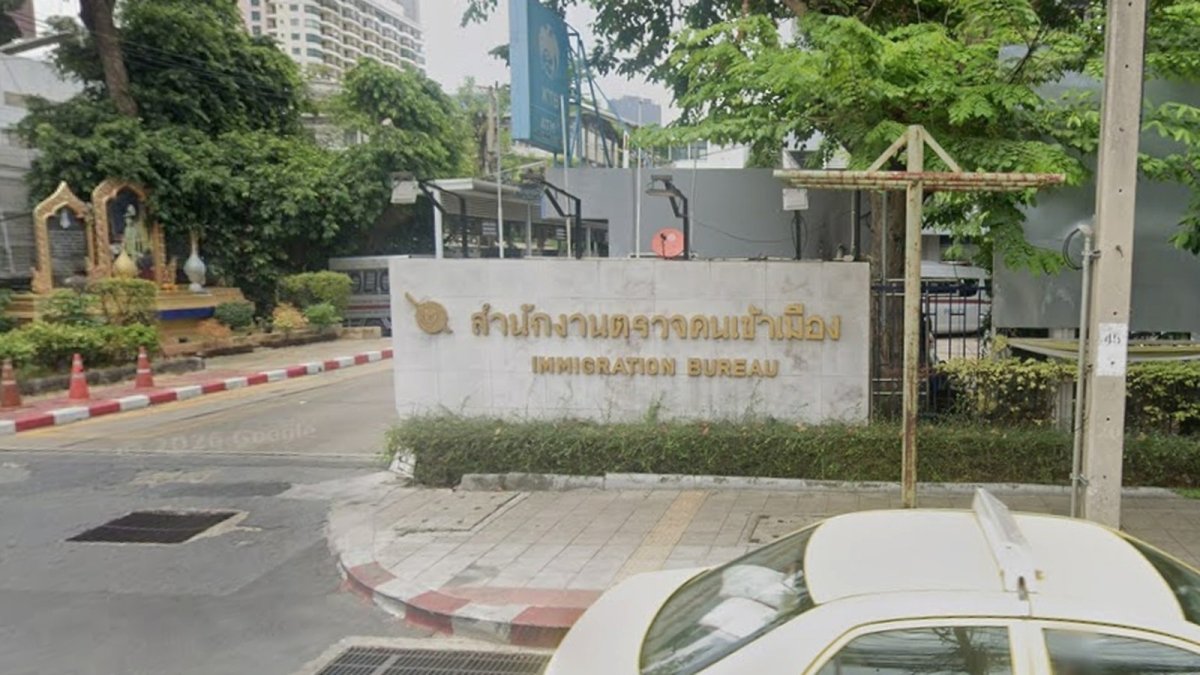
The story begins on 10 August, when district and forestry officials, accompanied by Thai military personnel, raided a Karen community in Ban Pa Deng village, deep within the boundaries of Kaeng Krachan National Park in Phetchaburi province. The operation targeted residents who could not produce proof of Thai citizenship. In a single morning, 28 villagers were arrested—among them eight children and two pregnant women. Two individuals were later released after officials verified their residence registration records, but the remaining 26 were transferred to the Suan Phlu Immigration Detention Center in Bangkok, where they now face immigration charges and the prospect of deportation to Myanmar.
For the families left behind in Ban Pa Deng, this is not an abstract legal matter. It is the latest chapter in a long and painful story of displacement, uncertainty, and fear. Community leaders have told Human Rights Watch that Thai authorities have recently begun classifying undocumented Karen in the national park as "illegal immigrants," a designation that leaves them vulnerable to arrest and deportation at any moment. Residents report that at least 10 villagers remain unaccounted for after being deported to Myanmar roughly two months ago.
A Warning From Human Rights Watch
"Deporting ethnic Karen villagers to Myanmar would put them at risk of grave danger," said Elaine Pearson, Asia director at Human Rights Watch, in a statement that carries the weight of documented evidence. The rights group points to Myanmar's military, which has carried out mass killings, torture, arbitrary arrests, and unlawful attacks since the February 2021 coup. The numbers are staggering: more than 2 million people have been internally displaced within Myanmar, and over 100,000 refugees have fled to neighboring countries, including Thailand.
For Thai readers, this is not distant news. The border between Thailand and Myanmar stretches over 2,400 kilometers, and Thai communities in Phetchaburi, Prachuap Khiri Khan, and beyond have long shared cultural and familial ties with Karen communities on both sides of the frontier. The Karen people have lived in these areas for generations, long before national borders were drawn and long before Kaeng Krachan National Park was established in 1981.
Legal Obligations and the Principle of Non-Refoulement
The legal stakes here are significant. Human Rights Watch warns that deporting the 26 villagers could violate Thailand's obligations under the UN Convention Against Torture and the international principle of non-refoulement, which prohibits returning people to places where they face a genuine risk of persecution, torture, or other serious harm. This is not merely an international nicety—it is a binding legal commitment that Thailand has voluntarily undertaken.
Moreover, Thailand's own domestic law reinforces this protection. The Prevention and Suppression of Torture and Enforced Disappearance Act, which came into force in 2022, explicitly prohibits deportation where there is a substantial risk of torture or ill-treatment. This law was a landmark achievement for human rights advocates in Thailand, and its application in this case will be closely watched by legal experts, civil society organizations, and the international community alike.
The question now is whether Thai authorities will honor both their international commitments and their own domestic legislation. The 26 detainees at Suan Phlu Immigration Detention Center are not anonymous statistics—they are mothers, fathers, children, and grandparents with names, faces, and stories. Two of the women are pregnant. Eight are children. Their futures hang in the balance.
Ancestral Lands and the UNESCO World Heritage Listing
The deeper context of this case reaches back centuries. Karen communities have inhabited the forested highlands of present-day Thailand and Myanmar for generations, living in harmony with the land that would eventually become Kaeng Krachan National Park. When the park was established, these communities found themselves suddenly classified as encroachers on land they had stewarded for their ancestors and their descendants.
The situation became more complicated in 2021, when the Kaeng Krachan Forest Complex was added to the UNESCO World Heritage List. The listing was a source of national pride for Thailand, recognition of the area's extraordinary biodiversity and natural beauty. But it also brought increased scrutiny and pressure on Thai authorities to prohibit human settlement within the park's boundaries—including by Karen communities who have lived there for generations.
UN human rights experts, Thailand's own National Human Rights Commission, and Indigenous groups have all raised concerns about the treatment of Karen ancestral land rights in Kaeng Krachan. The tension between conservation goals and Indigenous rights is not unique to Thailand—it is a challenge faced across the ASEAN region—but the human cost is real and immediate. For the Karen of Ban Pa Deng, the UNESCO listing has not brought celebration but rather an intensification of pressure and the threat of removal from their ancestral home.
Ahead of the UN Human Rights Council Review
The timing of this case is particularly significant. In November, Thailand will undergo its periodic review before the UN Human Rights Council in Geneva, part of the Universal Periodic Review process that examines the human rights records of all UN member states. This review will scrutinize Thailand's compliance with its international obligations, and the treatment of ethnic Karen in Kaeng Krachan National Park is likely to feature prominently in the discussions.
"Ahead of the UN Human Rights Council's review of Thailand's human rights record in November, the Thai government should immediately end its abusive treatment of ethnic Karen in the Kaeng Krachan National Park," Pearson said. The message is clear: the world is watching, and Thailand's standing on the international stage will be affected by how it handles this case.
For Thailand, which has positioned itself as a responsible member of the international community and a leader within ASEAN, the stakes are considerable. The country has made significant progress in recent years on human rights issues, including the passage of the anti-torture legislation. But cases like this one threaten to undermine that progress and call into question the sincerity of Thailand's commitments.
What This Means for Thailand and the Region
For Thai readers, this story raises profound questions about who we are as a nation and how we treat the most vulnerable among us. The Karen villagers of Ban Pa Deng are not foreigners who wandered across an unmarked border—they are members of communities that have lived in this land for generations, sharing in its history, its culture, and its identity. Their fate is intertwined with our own.
The implications extend beyond the 26 individuals currently detained. Across Thailand, there are estimated to be hundreds of thousands of people without full citizenship documentation, many of them members of ethnic minority communities who have lived in Thailand for generations. How Thailand treats these communities sends a powerful signal about the country's commitment to human rights, the rule of law, and human dignity.
Regionally, this case resonates across ASEAN. Myanmar's ongoing crisis has created a humanitarian catastrophe that affects all its neighbors, including Thailand. The principle of non-refoulement is not merely a legal technicality—it is a fundamental protection for people fleeing persecution and violence. If Thailand is seen to be sending people back into danger, it could have ripple effects throughout the region and damage Thailand's credibility as a responsible regional actor.
There is also a deeper cultural dimension. In Thai Buddhist tradition, compassion and kindness toward all beings are central values. The treatment of the Karen villagers raises questions about whether we are living up to these values in our treatment of our fellow human beings. The Karen communities of Kaeng Krachan are part of the rich tapestry of Thai society, and their well-being should be a matter of concern for all of us.
A Call for Compassion and Justice
As the 26 detainees await their fate at Suan Phlu Immigration Detention Center, their families in Ban Pa Deng wait with them in spirit. The children among them deserve a future free from fear. The pregnant women deserve to give birth in safety and dignity. And all of them deserve to be treated with the compassion and justice that Thai values and international law both demand.
Human Rights Watch has called on Thai authorities to halt the deportations and to review the cases of the 26 villagers individually, with full respect for their rights and their circumstances. The organization has also urged the Thai government to address the broader issue of Karen ancestral land rights in Kaeng Krachan National Park, in consultation with the affected communities and in line with international standards.
The coming weeks will be critical. Will Thailand choose the path of compassion and legal compliance, or will it proceed with deportations that could have devastating consequences for the individuals involved and lasting damage to the nation's reputation? The answer will reveal much about the kind of country Thailand aspires to be.
For the Karen villagers of Ban Pa Deng, for their families, and for all who believe in justice and human dignity, the hope is that Thailand will make the right choice. The world is watching, and history will remember.
By Ann Srisawat, Staff Writer
This article was produced with AI-assisted research and editorial support. Sources: Khaosod English.
What's Your Reaction?
 Like
0
Like
0
 Dislike
0
Dislike
0
 Love
0
Love
0
 Funny
0
Funny
0
 Wow
0
Wow
0
 Sad
0
Sad
0
 Angry
0
Angry
0

Southeast Asia Correspondent at Global1.News. Based in Bangkok, covering Thai and Southeast Asian politics, economy, technology, and culture. Deep regional perspective on one of the world's most dynamic regions.














Comments (0)