
Pakistan’s Escalating Response to Cross-Border Terrorism
The response from the Taliban‑run Afghan government was atypical; rather than employing ground fire against Pakistani border posts, it deployed unmanned aerial vehicles on September 23.
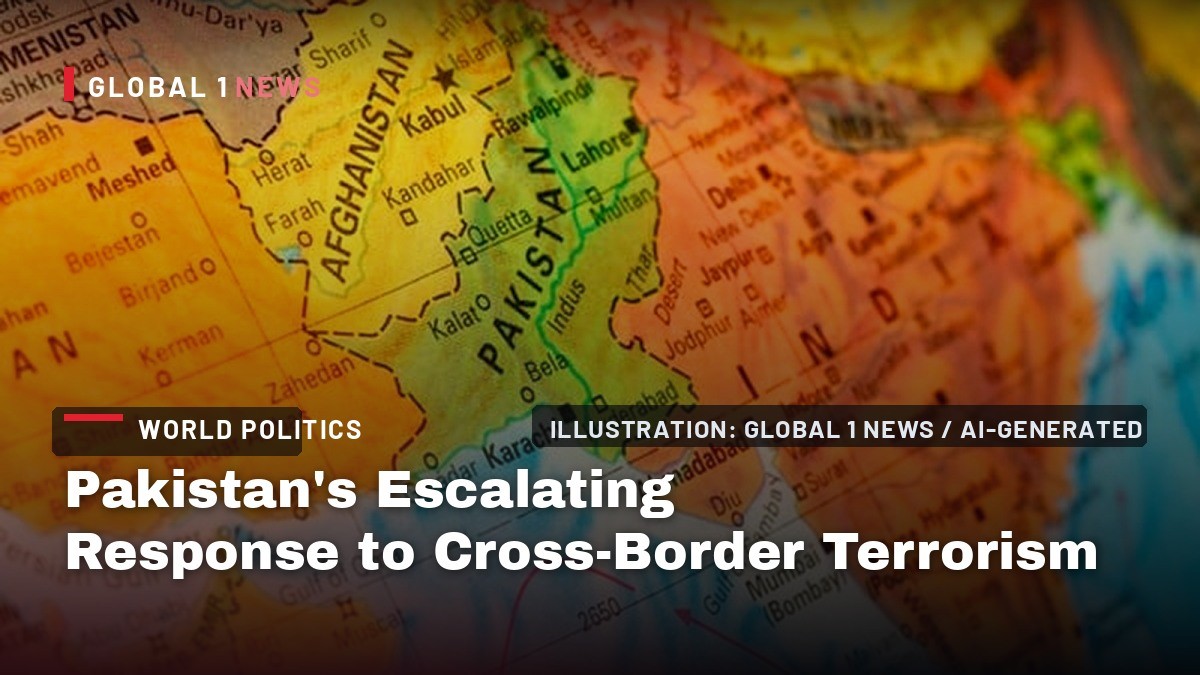
In the wake of the September 18, 2026 terrorist assault on a mosque in Kohat—an attack that claimed at least 31 lives, including 16 police officers, and injured more than 100 civilians—Pakistani authorities have escalated a kinetic campaign across the porous Durand Line that marks a decisive shift in Islamabad’s long‑standing policy of restrained cross‑border retaliation. The incident, attributed by Pakistani officials to the Hafiz Gul Bahadur‑led Ittehad ul Mujahideen Pakistan (IMP) and its ideological ally, the Tehreek‑e‑Taliban Pakistan (TTP), has reignited a volatile cycle of airstrikes, drone incursions, and diplomatic deadlock that threatens to undermine the fragile peace initiatives brokered by Turkey and Qatar.
Chronology of the September 2026 flare‑up
Following the Kohat mosque bombing, Pakistani forces neutralised the assailants after an hour‑long gun battle and, on September 21, launched retaliatory airstrikes against alleged IMP positions in Afghanistan’s Paktika and Kunar provinces, claiming the elimination of 28 militants. The response from the Taliban‑run Afghan government was atypical; rather than employing ground fire against Pakistani border posts, it deployed unmanned aerial vehicles on September 23. Pakistani air defenses downed eight of these drones, which officials dismissed as “unfrightening ‘flying toys’.”
In the early hours of September 24, Islamabad intensified its campaign, conducting a second wave of air raids targeting ten locations across Afghanistan. The Pakistani information minister confirmed that these strikes were a direct reaction to the Afghan drone incursions, underscoring a newly assertive posture that departs from earlier, more circumscribed uses of force.
Historical pattern of Pakistan’s cross‑border force
Since the Taliban’s return to power in August 2021, Pakistan has employed airpower inside Afghanistan on a limited basis. The first documented use of force occurred in April 2022 after a terrorist attack in North Waziristan, a strike that the Pakistani Foreign Office did not publicly acknowledge, even as the Taliban lodged a complaint at the United Nations Security Council. A similar episode unfolded in March 2024, when Islamabad again struck Afghan territory following a North Waziristan attack; this time, the Foreign Office openly recognized the operation while emphasizing respect for Afghan sovereignty.
Subsequent incidents in December 2024 and October 2025 followed comparable scripts: airstrikes were paired with diplomatic overtures, such as the visit of Pakistan’s Special Representative for Afghanistan, Ambassador Muhammad Sadiq, to Kabul, and later, Deputy Prime Minister and Foreign Minister Ishaq Dar’s trip in April 2025. However, the October 2025 strike—targeting the TTP’s leadership in the heart of Kabul—marked a qualitative escalation, prompting a more robust Afghan retaliatory response and a diplomatic impasse that has persisted.
The breakdown of trilateral mediation
The recent escalation must be understood against the backdrop of a series of stalled mediation efforts. In March 2025, Sadiq’s second visit to Kabul set the stage for Dar’s April trip, which the Pakistani Foreign Office framed as an attempt to cultivate “good, friendly, neighborly relations.” From May through August 2025, Islamabad intensified this diplomatic track with China, culminating in a trilateral foreign‑minister meeting in Beijing. The three parties pledged to enhance communication, economic cooperation, regional connectivity, and security coordination.
Despite these high‑level engagements, the diplomatic momentum faltered. Turkey’s intelligence chief, Ibrahim Kalin, arrived in Islamabad on September 17, 2026, pursuing a Turkish‑Qatari mediation agenda. Kabul’s refusal to receive Kalin in Kandahar—where the Taliban’s supreme leader Mullah Hibatullah Akhunzada dismissed him as “Westernized”—signaled a waning Afghan receptivity to external mediation. The identification of an Afghan national among the Kohat suicide bombers further eroded the fragile trust necessary for any substantive peace process.
Strategic implications for regional security
The shift toward sustained air operations, exemplified by the February 2026 long‑term military campaign aimed at neutralising terrorist networks inside Afghanistan, reflects a broader recalibration of Pakistan’s security doctrine. By normalising the use of coercive power, Islamabad signals a willingness to unilaterally enforce its security perimeter, potentially redefining the Durand Line from a contested frontier to a de‑facto security buffer zone.
This posture reverberates across Northeast Asia’s security architecture. South‑Asian states, particularly India and China, monitor the escalation closely, given their own border sensitivities and the potential for spillover effects on trans‑national extremist movements. Moreover, the involvement of China in earlier trilateral talks underscores Beijing’s strategic interest in stabilising the Afghan‑Pakistani corridor as part of its Belt and Road Initiative, a factor that may influence future diplomatic calculations.
Domestic political calculus in Islamabad
Within Pakistan, the escalation aligns with internal political dynamics. The Deputy Prime Minister and Foreign Minister Ishaq Dar’s high‑profile visits and public statements about “neighborly relations” serve to project a narrative of decisive leadership against cross‑border terrorism, resonating with domestic constituencies demanding security and stability. The timing of the September 2026 strikes—coinciding with Turkey’s mediation overtures—allows the government to portray itself as the primary actor defending national sovereignty against external threats.
Conversely, the intensity of the response risks inflaming public opinion if civilian casualties were to rise, a scenario that could provoke criticism from human‑rights organisations and opposition parties. The balance between demonstrating resolve and avoiding a protracted conflict will shape Islamabad’s political legitimacy in the coming months.
Prospects for renewed diplomatic engagement
Given the entrenched mistrust and the recent pattern of kinetic escalation, immediate prospects for a comprehensive peace settlement appear dim. The failure of Turkey‑Qatar mediation, compounded by the Taliban’s rebuff of Turkish officials and the identification of Afghan nationals among the perpetrators, suggests that any future diplomatic breakthrough will require a recalibrated framework that addresses both security concerns and the political sensitivities of the Taliban regime.
Potential avenues include a renewed trilateral dialogue that incorporates China’s security guarantees, leveraging Beijing’s influence over the Taliban to secure a more robust monitoring mechanism for cross‑border militant activity. Additionally, confidence‑building measures—such as joint border patrols or a mutually supervised ceasefire monitoring body—could lay the groundwork for incremental de‑escalation, provided they are anchored in verifiable commitments from both sides.
Forward‑looking analysis
The September 2026 flare‑up marks a watershed moment in Afghanistan‑Pakistan relations, crystallising a transition from sporadic, low‑intensity incursions to a sustained campaign of airpower that normalises coercive pressure as a policy instrument. This evolution reflects Islamabad’s frustration with the perceived safe havens that Afghan territory provides to groups like the IMP and TTP, and it underscores the limits of external mediation when confronted with entrenched mistrust.
For scholars of Korean foreign policy, the episode offers a cautionary parallel: reliance on multilateral mediation without robust enforcement mechanisms can falter when state actors perceive existential security threats. Korea’s own experience with the North‑South dialogue—where confidence‑building steps are essential to sustain negotiations—highlights the importance of coupling diplomatic overtures with credible security assurances. In the South‑Asian context, any durable peace will likely hinge on a calibrated blend of diplomatic engagement, economic incentives, and a calibrated security architecture that respects Afghan sovereignty while addressing Pakistan’s legitimate security concerns.
In the months ahead, the trajectory of this conflict will be shaped by the interplay of regional powers, the resilience of Taliban governance, and the willingness of external mediators to adapt their strategies. Should the current escalation persist, it may compel a re‑engagement of the United Nations or a renewed push for a broader regional security framework that includes India, China, and the United States, echoing the multilateral approaches that have historically underpinned stability in Northeast Asia.
This article was produced with AI-assisted research and editorial support. Reporting is based on the source material cited below. Sources: The Diplomat; thediplomat.com; Global1.News (30 September 2026).
By Prof. David Park, Staff Writer
What's Your Reaction?
 Like
0
Like
0
 Dislike
0
Dislike
0
 Love
0
Love
0
 Funny
0
Funny
0
 Wow
0
Wow
0
 Sad
0
Sad
0
 Angry
0
Angry
0

East Asia/Technology Correspondent at Global1.News. Seoul-based voice covering Korean politics, technology, business, and culture. Analyzes how technology and geopolitics intersect across East Asia.













Comments (0)