
Why can’t my son do maths? Father fires gun after confronting teacher
In the quiet fields of Sikhio district, a small primary school became the center of a startling incident that has left parents, teachers and the wider community grappling with questions of safety, education and the pressures that families face.
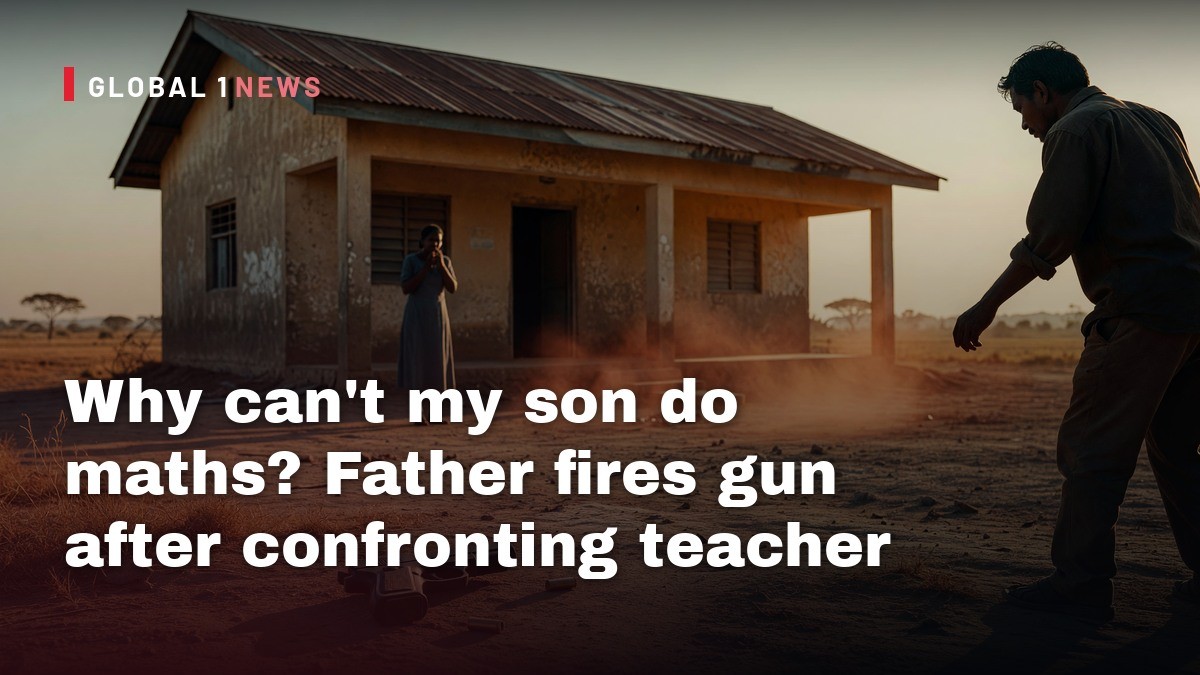
In the quiet fields of Sikhio district, a small primary school became the center of a startling incident that has left parents, teachers and the wider community grappling with questions of safety, education and the pressures that families face. On the afternoon of 2 November, a father, identified by police as 54‑year‑old Manachai Chanthasom, fired two shots into the air after a heated exchange with a teacher over his child's inability to read and perform basic addition. The episode, captured by local police and reported by Khaosod English, underscores the fragile balance between parental expectations, educational challenges and the social fabric of rural Thailand.
What happened at Ban Na Dee School?
The incident unfolded at Ban Na Dee School, a modest institution serving roughly thirty students with the support of seven teachers. According to police superintendent Colonel Thatchaphon Chinwong, Mr Chanthasom arrived at the school to collect his child around 15.20, only to become involved in an argument with a teacher. The dispute centered on the child's struggle with reading and simple arithmetic, a concern that evidently struck a nerve.
Preliminary investigations reveal that the father was intoxicated at the time and, in a moment of anger, discharged a .38‑calibre handgun twice into the air. No one was injured, and there was no damage to school property. After firing the shots, the suspect fled in a pickup truck to a public area within the village. Police later located him, arrested him and seized the firearm. He now faces charges of illegal possession of a firearm and ammunition, carrying a firearm in a public place without reasonable cause, and drink‑driving.
Immediate impact on the school community
The shock reverberated through the school grounds. When reporters visited the following day, they found the school closed for two days as authorities and school officials assessed the situation. The temporary closure, though brief, disrupted the routine of young learners who rely on the school not only for education but also for a safe, structured environment.
Apilak Kanna, a 23‑year‑old relative of a student, expressed his concern, noting that such incidents could leave children frightened and affect their concentration in class. He emphasized that schools should be sanctuaries for children, free from the fear of violence, and called for stronger security measures to monitor visitors and parents entering the premises.
Underlying pressures on parents and teachers
While the act of firing a weapon is unequivocally condemnable, the episode also highlights deeper societal pressures. In many rural Thai communities, education is seen as a pathway out of agricultural hardship. Parents often place high expectations on their children’s academic performance, sometimes without the resources or support needed to meet those expectations.
Teachers, meanwhile, navigate limited resources and large responsibilities, especially in isolated schools like Ban Na Dee where staff numbers are small. The tension between a parent’s frustration over a child’s learning difficulties and a teacher’s capacity to address them can become volatile, particularly when compounded by alcohol consumption.
Legal and cultural context of firearm possession
Thailand’s gun laws are strict, and illegal possession of firearms carries severe penalties. The charges against Mr Chanthasom reflect the seriousness with which authorities treat the unlawful carrying and use of weapons. The fact that he possessed a .38‑calibre handgun, a firearm not typically associated with rural agricultural life, raises questions about how such weapons find their way into small communities.
From a cultural perspective, the act of firing a weapon into the air—sometimes seen in celebratory contexts—takes on a different meaning when used as an expression of anger. In Buddhist‑influenced Thai society, the principle of non‑violence (ahimsa) is a core value, and any breach of that principle, especially in a setting meant for children, is met with strong social disapproval.
Community response and calls for safety measures
Local residents, like Apilak, voiced a desire for heightened security at the school. Suggestions included stricter monitoring of visitors, verification of parental identities, and possibly the presence of a security guard or liaison officer during school hours. Such measures aim to restore confidence among parents that their children can learn without fear.
Beyond physical security, there is a call for community support systems that can assist families dealing with educational challenges. Initiatives such as after‑school tutoring, parental workshops on learning strategies, and counseling services could alleviate the frustration that sometimes erupts into conflict.
Implications for regional education policy
The incident at Ban Na Dee School, though isolated, may prompt provincial education authorities to review safety protocols across rural schools in Nakhon Ratchasima and neighboring provinces. Ensuring that schools have clear guidelines for handling disputes, especially those involving parents, could prevent escalation.
Moreover, the event highlights the need for continued investment in teacher training, particularly in classroom management and communication with parents. Equipping teachers with tools to navigate sensitive conversations about a child’s academic progress may reduce the likelihood of confrontations turning hostile.
Looking ahead: Healing and prevention
As the legal process unfolds for Mr Chanthasom, the community must focus on healing. The temporary closure of Ban Na Dee School gave teachers and parents a moment to reflect on the importance of a calm, supportive learning environment. Reopening the school will require not only physical security measures but also emotional reassurance for students who witnessed the unsettling event.
In the broader tapestry of Thai society, this episode serves as a reminder that education, safety and community well‑being are intertwined. By addressing the root causes of parental frustration, reinforcing the principle of non‑violence, and strengthening school security, the community can work together to ensure that the simple act of learning remains a peaceful and hopeful experience for every child.
This article was produced with AI-assisted research and editorial support. Reporting is based on the source material cited below. Sources: Khaosod English; khaosodenglish.com; Global1.News (04 November 2026).
By Ann Srisawat, Staff Writer
What's Your Reaction?
 Like
0
 Dislike
0
 Love
0
 Funny
0
 Wow
0
 Sad
0
 Angry
0

Southeast Asia Correspondent at Global1.News. Based in Bangkok, covering Thai and Southeast Asian politics, economy, technology, and culture. Deep regional perspective on one of the world's most dynamic regions.














Comments (0)