
Canada-U.S. Trade Talks Intensify, Unions Challenge Tariffs
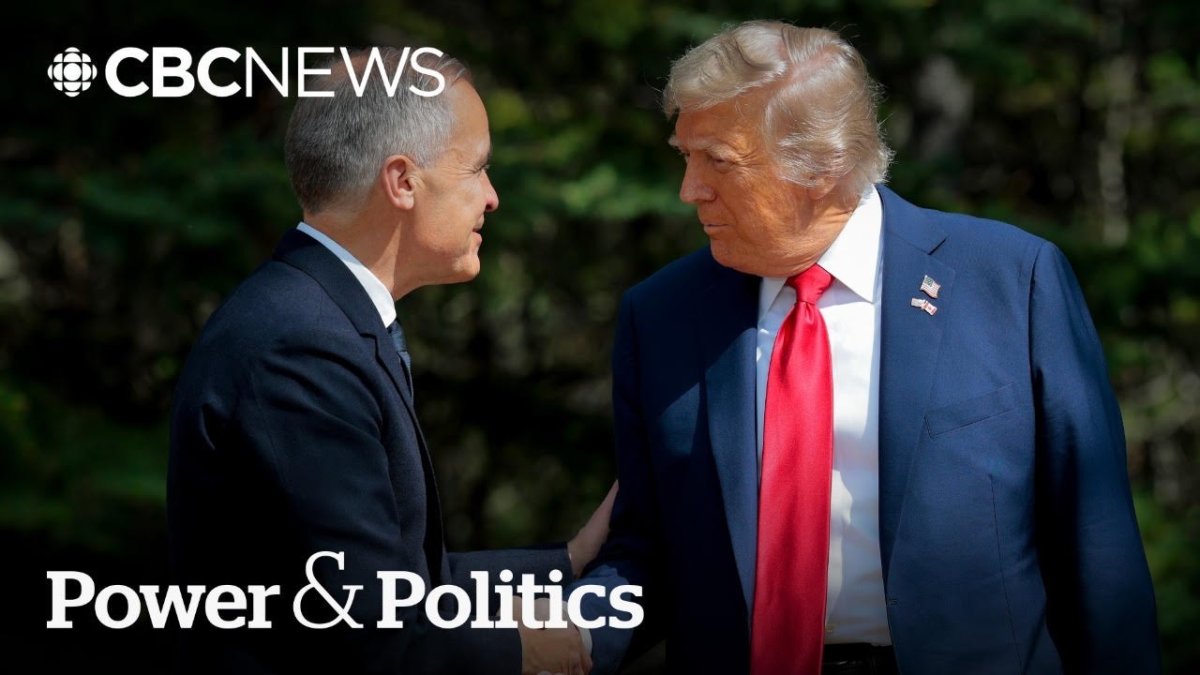
In a recent CBC News report on Power & Politics, Ontario's representative in Washington described the U.S. capital as abuzz with activity as Canada's top negotiators arrived for urgent talks. The segment explored how two major trade unions have written directly to the U.S. trade representative urging reconsideration of new tariffs, raising questions about whether momentum could shift in the dispute.
In a recent CBC News report on Power & Politics, Ontario's representative in Washington described the U.S. capital as abuzz with activity as Canada's top negotiators arrived for urgent talks. The segment explored how two major trade unions have written directly to the U.S. trade representative urging reconsideration of new tariffs, raising questions about whether momentum could shift in the dispute. This development arrives as federal officials work to protect Canadian exports worth nearly $20 billion US from the latest round of levies.
Canada-U.S. Trade Negotiations Intensify as Unions Challenge Tariff Threats
Ottawa, Ontario – This Week — Trade Minister Dominic LeBlanc travelled to Washington this week for the first in-person meetings since the Trump administration imposed 50 per cent Section 338 tariffs on a range of Canadian goods. Canada's chief negotiator Janice Charette and Ambassador Kirsten Hillman joined the discussions, which LeBlanc described on social media as comprehensive. The two sides agreed to remain in close contact ahead of the August 19 deadline when the new levies are scheduled to take effect.
Section 338 Tariffs Target Canadian Exports
The Office of the U.S. Trade Representative estimated the affected Canadian imports at nearly $20 billion US, with some analyses placing the figure closer to $28 billion US. The administration justified the measures by pointing to Canada's retaliation against earlier U.S. auto tariffs, which caused American auto exports to Canada to fall 22 per cent since April of last year. Provincial restrictions on U.S. alcohol and dairy products also featured in the justification, with American wine sales in Canada dropping $343 million US in 2025.
These tariffs represent a significant escalation in an already tense bilateral relationship that has long relied on integrated supply chains across the border. Canadian exporters in sectors ranging from steel to forestry now face heightened uncertainty, prompting many firms to accelerate contingency planning for potential supply disruptions. Analysts note that the measures could ripple through manufacturing hubs in southern Ontario and Quebec, where just-in-time production models depend on seamless cross-border flows.
Further complicating matters, the tariffs coincide with broader U.S. efforts to reshape North American trade dynamics amid global supply-chain realignments. Ottawa has emphasised that any prolonged standoff risks undermining the spirit of the Canada-United States-Mexico Agreement, which was designed precisely to foster stability. Business groups on both sides have begun quietly lobbying for exemptions, underscoring how deeply intertwined the two economies remain despite political rhetoric.
Trade Unions Urge Reconsideration of Levies
On Tuesday the international heads of the United Steelworkers and the International Association of Machinists and Aerospace Workers sent a joint letter to U.S. Trade Representative Jamieson Greer. The unions called on the administration to delay the 50 per cent tariffs, arguing that trade policy should focus on challenges from China rather than further dividing Canada and the United States. Ontario representative David Paterson told CBC News that genuine frustration exists on both sides and that the current moment offers an opportunity to reset the relationship.
The union intervention highlights a rare alignment of labour interests across the border, where workers in auto parts, aerospace and steel production stand to lose the most from disrupted trade. Canadian union leaders have echoed these concerns, noting that thousands of well-paying jobs in Windsor, Oshawa and Hamilton could be placed at risk if the levies take hold. This cross-border solidarity may prove influential in Washington, where domestic political calculations often weigh heavily on trade decisions.
Paterson's remarks also point to underlying fatigue among negotiators who have managed successive rounds of tariff threats since 2018. Both countries benefit from predictable market access, and union pressure could help shift the narrative away from confrontation toward pragmatic solutions. Observers suggest that highlighting shared economic vulnerabilities may encourage U.S. officials to carve out carve-outs for key Canadian inputs before the August deadline.
Prime Minister Carney Engages Directly With Washington
Prime Minister Mark Carney spoke with President Trump last week and the leaders agreed to intensify talks. Carney has stated he sees no value in using energy exports as leverage and instead favours building toward an agreement before the August 19 deadline. Last week he met premiers in Charlottetown, Prince Edward Island, to coordinate possible responses while keeping the focus on de-escalation between the two closest neighbours.
Carney's approach reflects a deliberate strategy of steady diplomacy rather than public confrontation, consistent with Canada's traditional preference for quiet negotiation. By convening premiers from across the country, the prime minister has sought to present a united front that underscores the national stakes involved. This coordination also allows Ottawa to gather granular data on regional vulnerabilities that could inform targeted responses if talks falter.
Energy remains a sensitive file, with Alberta and Saskatchewan particularly exposed to any escalation. Carney's refusal to weaponise exports signals an intent to preserve long-term trust, even as short-term pressures mount. The August 19 timeline now serves as a focal point for both capitals, with Canadian officials preparing fallback positions should a framework agreement prove elusive.
Opposition Leader Calls for Zero-Tariff Outcome
Conservative Leader Pierre Poilievre has written to Carney accusing the government of caving on dollar-for-dollar counter-tariffs and the Digital Services Tax without securing meaningful concessions. Poilievre argues Canada should accept nothing short of a tariff-free trade deal and has warned that President Trump senses weakness in Ottawa's approach. His position reflects broader Conservative criticism of the federal handling of the file on Parliament Hill.
Poilievre's stance resonates with voters in trade-dependent ridings who fear that incremental concessions could erode Canada's negotiating leverage over time. By framing the issue as a test of resolve, the opposition seeks to capitalise on public anxiety about rising living costs tied to cross-border commerce. Yet critics within the government contend that an uncompromising posture risks provoking further U.S. retaliation.
The debate has also spilled into parliamentary committees, where members are examining the legal authorities Ottawa might invoke should retaliatory measures become necessary. Poilievre's call for a zero-tariff outcome sets a high bar that may prove difficult to achieve given the current political climate in Washington, but it keeps pressure on the government to deliver tangible results before the next election cycle.
U.S. Political Pressures Create Opening
President Trump's approval ratings have reached a second-term low, with Silver Bulletin tracking showing a net approval of -20.6. An NYT/Siena pollster described the figures as a historic low for the president, a development that coincides with midterm elections scheduled for November 2026. Paterson noted that the decline in U.S. auto exports to Canada is now being noticed in Washington, potentially strengthening Canada's negotiating hand.
These domestic headwinds in the United States create a narrow window for Canadian negotiators to press for concessions that might otherwise be politically unpalatable. Midterm cycles often prompt administrations to seek quick wins on trade files that affect key swing states and congressional districts. Canadian officials are quietly highlighting mutual economic pain points to align with U.S. lawmakers facing re-election pressures.
At the same time, the low approval numbers could embolden protectionist voices within the administration who view tariffs as a tool to rally the base. Ottawa must therefore balance assertive advocacy with the need to avoid actions that might further inflame U.S. political sensitivities ahead of the 2026 vote.
Provincial Leaders Highlight Economic Leverage
Ontario Premier Doug Ford has emphasised that Canada remains the top customer for U.S. electricity, potash and oil, arguing that American industries must feel the impact of any prolonged dispute. Canada continues to maintain retaliatory tariffs on U.S. cars, auto parts, steel and aluminum even after lifting other levies last summer. These measures underscore the federal-provincial coordination required to manage cross-border supply chains that employ hundreds of thousands of workers.
Provincial premiers have also stressed the importance of maintaining unified messaging to avoid giving Washington opportunities to divide Canadian interests. Ford's focus on electricity exports, for instance, resonates strongly in border communities where hydro sales generate substantial revenue. Similar concerns animate leaders in Manitoba and British Columbia, where resource exports form the backbone of local economies.
This provincial-federal alignment has produced detailed contingency plans that include targeted support for affected industries. By demonstrating that Canada can respond symmetrically, premiers hope to deter further escalation while preserving room for negotiated compromises that protect core export sectors.
Path Forward Focuses on Partnership
With the August 19 deadline approaching, federal officials are preparing responses while prioritising continued dialogue. The involvement of major U.S. unions and the visible presence of Canadian negotiators in Washington suggest both sides recognise the mutual costs of escalation. For Canadian readers, the outcome will directly affect housing affordability through construction material costs, energy prices and the broader cost of living tied to Bank of Canada interest rate decisions.
Canadian negotiators are exploring sector-specific exemptions that could shield the most vulnerable industries while allowing the broader talks to proceed. This pragmatic focus on achievable outcomes reflects lessons learned from previous disputes, where incremental progress proved more durable than sweeping declarations. Continued engagement with U.S. congressional allies remains a key pillar of this strategy.
Impact on Canadian Families and Businesses
The tariff standoff is already translating into higher costs for everyday Canadians, particularly in grocery aisles where imported produce and packaged goods face upward price pressure. Auto dealerships in Ontario and Quebec report lengthening wait times and rising sticker prices as parts shipments slow, while construction firms across the Prairies warn that lumber and steel tariffs could add thousands to new home builds. Dairy farmers in Atlantic Canada and the Eastern Townships face retaliatory risks that threaten export contracts painstakingly negotiated under CUSMA.
Energy bills may also climb in provinces reliant on cross-border electricity trade, with households in New Brunswick and Manitoba most exposed. Small businesses dependent on U.S. tourism or just-in-time supply chains are deferring investments amid uncertainty, a pattern that could dampen regional growth in border communities from Windsor to Winnipeg. Provincial variations are stark: resource-heavy provinces brace for commodity swings, while manufacturing centres prepare for potential layoffs.
These pressures compound existing affordability challenges, prompting calls for targeted federal supports that avoid fuelling inflation. Economists caution that prolonged uncertainty could influence Bank of Canada rate decisions, further tightening household budgets in an already strained environment.
What Happens Next
The August 19 in-force date for the 50 per cent levies looms as the immediate deadline, though Canadian officials continue to push for a framework agreement that could delay or dilute the measures. The Aug. 1 hard deadline has already passed without resolution, leaving negotiators with limited runway before the next escalation. Ottawa has signalled readiness to impose additional retaliatory tariffs on U.S. goods if talks collapse, targeting politically sensitive sectors to maximise leverage in Washington.
With the November 2026 U.S. midterms approaching, Canadian strategists view the electoral calendar as a potential pressure point that could encourage compromise. Premiers have indicated they will reconvene in early August to review progress and calibrate responses, while federal officials maintain daily contact with their U.S. counterparts. The emphasis remains on de-escalation, yet contingency planning continues in parallel to ensure Canada can respond swiftly should the August 19 deadline pass without agreement.
By Alex Thompson, Staff WriterThis article was produced with AI-assisted research and editorial support. Reporting is based on sources cited in the article.
What's Your Reaction?
 Like
0
Like
0
 Dislike
0
Dislike
0
 Love
0
Love
0
 Funny
0
Funny
0
 Wow
0
Wow
0
 Sad
0
Sad
0
 Angry
0
Angry
0

Canada Correspondent at Global1.News. Based in Toronto, covering Canadian politics, energy, trade, and US-Canada relations. Provides the Canadian perspective on North American and global affairs.















Comments (0)