
Russia Hits Kyiv's Southern Bridge Again, and the Capital's Dnipro Crossings Seize Up
Russian drones struck Kyiv's Southern Bridge repeatedly on 1 October and again in the early hours of 2 October, forcing the closure of the Paton Bridge and restricting the Metro Bridge as one person was killed in the Darnytskyi district.
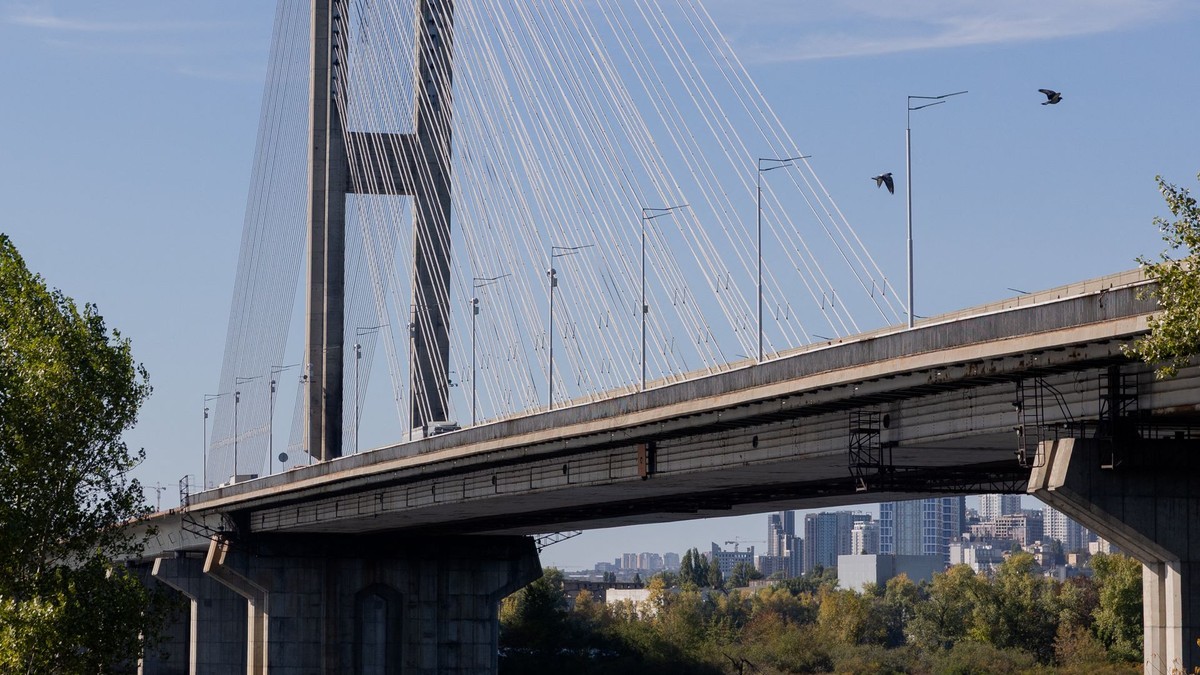
Russian drones struck Kyiv's Southern Bridge repeatedly on 1 October and again in the early hours of 2 October. Within hours, three of the capital's crossings over the Dnieper were closed or restricted, and a bridge that carries a metro line, six lanes of highway traffic and utility cables became the centre of a new phase in Moscow's campaign against the city.
Russia Hits Kyiv's Southern Bridge Again, and the Capital's Dnipro Crossings Seize Up
Kyiv, Ukraine — The first drones came in daylight, around 11:30 a.m. local time on 1 October, striking near the supports of the Southern Bridge while cars and a metro train were crossing it. At least three Russian drones hit the crossing that day, and by the morning of 2 October the Southern Bridge was closed in both directions, the Paton Bridge was shut and traffic on the Metro Bridge had been reduced to a single lane. Kyiv Mayor Vitali Klitschko said the bridge's supports, roadway, crash barriers and the concrete structure protecting the metro line had all taken damage.
Three Strikes in Two Days on One Bridge
The sequence began on 1 October, when at least three Russian drones struck the Southern Bridge. The first two hit during the day and targeted the bridge's support structure, halting metro and surface public transport across the span. Later that night a third strike hit the roadway, and metro workers shut off power to the tracks. After the daytime strikes, a preliminary inspection by the municipal enterprise Kyivavtodor found no critical damage, and surface public transport resumed — buses No. 22 and No. 91 returned to their regular routes via the bridge. Inspections of the metro structures continued, with green line trains running between Syrets and Vydubychi and between Osokorky and Chervonyi Khutir. Then the bridge was hit again. Klitschko wrote on Telegram: "Another strike on the Southern Bridge. Emergency services are heading to the site." Emergency crews were sent, the metro tracks were de-energized, and traffic was suspended once more.
Why the Pivdennyi Bridge Matters More Than Its Traffic Count
The Pivdennyi Bridge, also called the South Bridge, is a cable-stayed crossing over the Dnieper and the city's second combined road-and-metro bridge. It opened to vehicular traffic on 25 December 1990, with metro service beginning on 30 December 1992 when the left-bank Osokorky station opened. It carries six lanes of road traffic, three in each direction, as part of the E40 international highway and the M03 national route, plus two tracks of the Syretsko-Pecherska green metro line, pedestrian walkways and utility lines. Its total width is 41 metres and its total length 1,256 metres, with a main navigational span of 271 metres and a ferroconcrete double-column pylon 135 metres high. It connects the right bank around Vydubychi with the left-bank districts of Osokorky and Pozniaky, and is the shortest route from central Kyiv toward Boryspil International Airport. Political analyst Yuriy Romanenko said this single crossing handles nearly 90 percent of cargo traffic moving between the left and right banks of Kyiv.
A New Warhead, and a New Kind of Target
Serhii Beskrestnov, an adviser to the President of Ukraine on defence technologies, known as "Flash", said on 30 September that Russian forces had used a 40-kilogram shaped-charge warhead on Geran-type jet drones, designed to destroy power poles and the steel structures of bridges. The Institute for the Study of War said a shaped charge focuses its explosive energy to enhance penetration of hardened steel and concrete targets, causing more extensive damage to bridges, armored vehicles, fortifications, pylons and other reinforced structures. The ISW assessed that such technological adaptations to the Geran strike drone could allow Russian forces to repeatedly conduct precise strikes against structural vulnerabilities, and that over time this could seriously damage infrastructure such as the Southern Bridge, which Russian forces have found difficult to significantly damage or destroy. The ISW also said the type of drone warhead used to strike the bridge remains unclear at this time. On 30 September, Beskrestnov said Russia tested a drone with a cumulative cutting warhead specifically designed to destroy high-voltage pylons.
The Interception Math Has Changed
In the week ending 1 October, Ukraine downed 81 percent of the 1,933 long-range aerial drones Russia launched, down from well over 90 percent for propeller-powered drones. President Volodymyr Zelensky said Ukraine's interception rate for jet-powered "shaheds" is now 55 percent. Zelensky said Russia launched more than 100 attack drones at Ukraine overnight into 2 October, nearly half of them jet-powered; the Ukrainian military intercepted the majority, and some got through and hit their targets. The Geran-5 is Russia's latest jet-powered one-way attack drone: small, with a tubular fuselage reminiscent of a missile rather than a drone, flying higher and faster and significantly more difficult to shoot down. A senior engineer working for a defense contractor, speaking anonymously to the Kyiv Independent, said the Geran-5 flies 150 kph faster than the Geran-4, so the goal is to intercept from the front rather than the rear, "a much harder problem to solve". Beskrestnov said Russia was working on a system of radio beacons to better guide drones deep inside Ukrainian territory.
Moscow's Explanation, and What It Leaves Out
The Russian defence ministry said on Telegram that its drones hit a bridge over the Dnieper in Kyiv, a power station in the surrounding region, the Izmail port near Odesa and a cargo vessel, saying all were used for military purposes. Its statement said: "The Armed Forces of the Russian Federation continue to strike port and energy infrastructure facilities in Ukraine, as well as maritime vessels used for the benefit of the Ukrainian armed forces. Overnight, as a result of unmanned aerial vehicle strikes, targets in the city of Kyiv were hit—specifically a combined road and rail bridge over the Dnipro River, which ensures the transfer of troops and logistical military cargo toward Ukrainian groupings in Donbass." Sergey Perminov, a member of the Russian Federation Council, said strikes on the Southern Bridge aim to sever military supply chains and impede the transport of personnel, heavy weaponry and ammunition stockpiles. The ISW said Russian forces struck the Southern Bridge as part of their campaign to destroy the Ukrainian economy and to make life difficult in the Ukrainian capital. Russian milbloggers claimed the aim was to disrupt traffic and compound damage through repeated strikes on the same area.
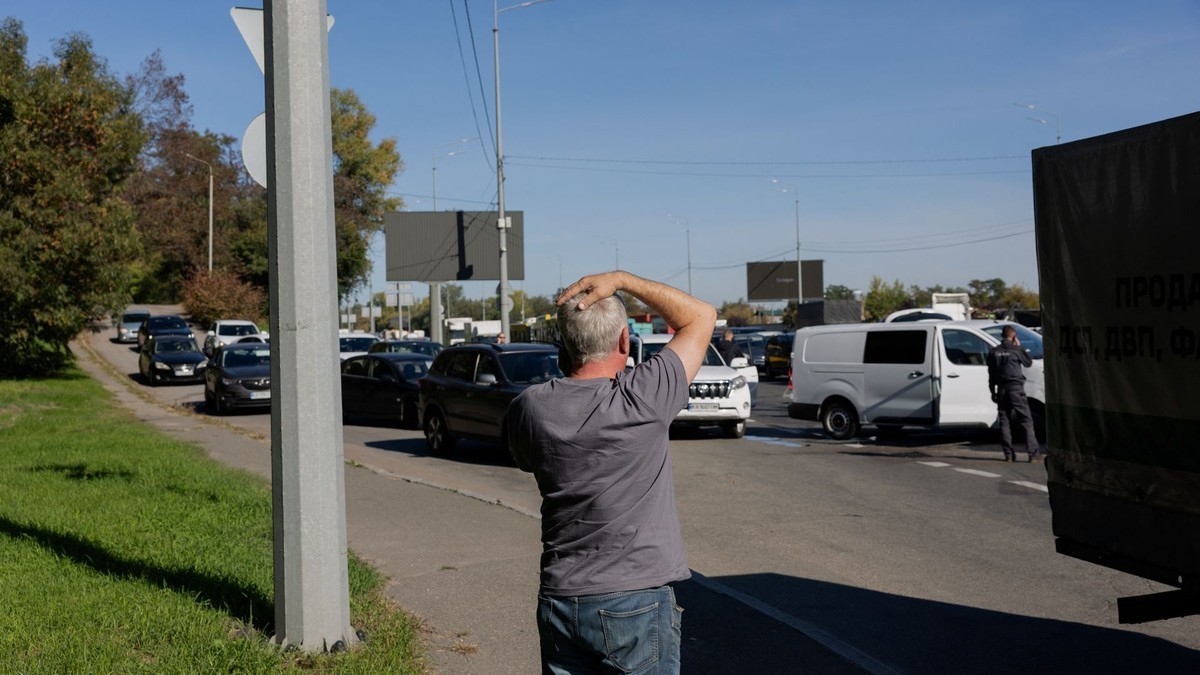
The City That Has to Keep Moving
By 2 October, commuters were working around three damaged or restricted crossings. The Paton Bridge was shut, with Reuters reporting both directions closed and Klitschko saying traffic on it was fully restricted from the western bank toward the eastern bank. The Metro Bridge was limited to one lane from the eastern bank toward the western bank. Bus routes were diverted via the Darnytskyi and Podilskyi bridges, and some Kyiv residents crossed the Dnipro bridges on foot. Klitschko said the metro is ready to resume traffic on the Southern Bridge during a "yellow" air-raid alert, naming that condition. Debris fell in an open area in the Holosiivskyi district, damaging windows in a non-residential building and several cars, with no fire and no casualties there. In the Darnytskyi district, a 25-story residential building was damaged; one person was killed and two injured, authorities confirmed, according to Suspilne. Russian attacks elsewhere in Ukraine overnight killed at least six people and injured 38, officials said.
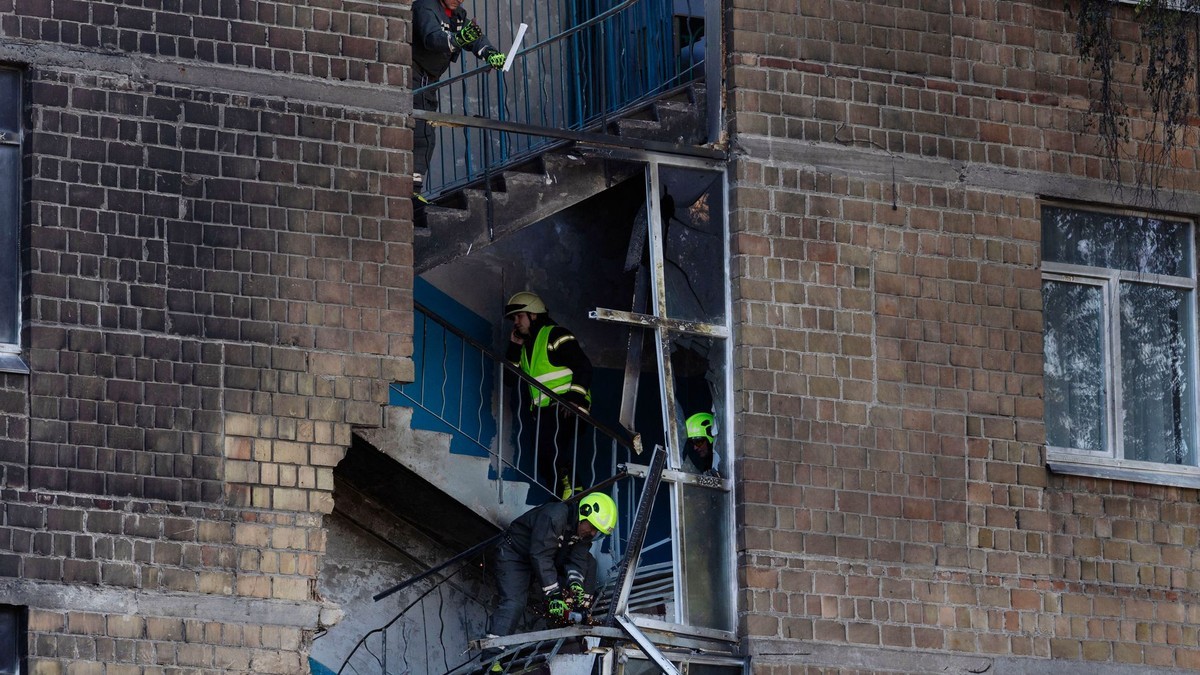
A Record Month of Russian Losses, on a Front That Is Not Moving
Russia suffered its highest losses of 2026 in September: 46,230 soldiers killed or wounded, according to the Ukrainian military. Al Jazeera notes it cannot verify casualty claims from either side. Russian casualties have run at about 40,000 a month since June, and Zelensky set a goal in January of 50,000 Russian casualties a month. Russia reportedly lost 2,090 troops on 28 September, its highest 24-hour casualty rate of the war, according to UK Defence HQ. Ukraine's Third Army Corps has inflicted particularly heavy losses in the area around Lyman, where the third phase of a counteroffensive called Operation Vivaldi has reclaimed 176 sq km (68 sq miles) of territory in recent weeks. Corps commander Brigadier General Andriy Biletsky said it succeeded by feigning an attack from the west and "forced it to senselessly burn through its reserves in counterattacks precisely in that direction", then attacked from the north. Among its tactics was the use of remotely operated Russian armoured personnel carriers filled with explosives that smashed into Russian defences. Russia denied the gains, posting videos as purported evidence. The Institute for the Study of War has estimated Russia's net territorial gains this year at 148 sq km, nowhere near the 5,300 sq km Russia claims.
Ukraine's Answer Comes at the Refineries
On 2 October, Ukrainian forces struck oil facilities in Russia's Volgograd and Samara regions, the General Staff said. In Volgograd, drones targeted industrial facilities in the city, home to a large oil refinery, sparking a fire and leaving one person injured after hitting an apartment building, a regional governor said. President Vladimir Putin said Ukraine's strikes on oil refineries in Russia, one of the world's leading oil producers, have cost Russia 1 percent of gross domestic product, as people formed long lines to refill their car tanks amid the damage. In late September, Ukrainian drones struck the Perm and Novoshakhtinsk refineries on 25 September, and the Ilsky refinery the following day. Two days later they struck four oil deposits in the Krasnodar Krai region. They also struck the NPP Zavod Iskra factory, which makes electronic components for the Kh-59 cruise missiles Russia flies into Ukraine, and the Pantsir-S air defence system; the Efremovsky Synthetic Rubber Plant, which makes solid rocket fuel for the Iskander-M ballistic missile; and the foundry and five buildings of the Azov Optical-Mechanical Plant.
What the Intercepted Documents Say About Winter
The New York Times reported on 2 October that Ukraine showed European partners what it said were intercepted Russian plans to cut off major cities from power, heat and water this winter. The document outlines a series of strikes involving up to 1,000 missiles, drones and bombs. Targets include electrical substations, hydroelectric plants, thermal power plants and boiler facilities. Most concerning, the document indicates that Russia plans to force Ukraine's three operating nuclear power plants to shut down by striking the distribution substations connecting them to the power grid. The plan also calls for attacks on water infrastructure, including pumping stations and treatment facilities, using dozens of ballistic missiles and glide bombs. The Financial Times reported that Zelensky said Putin had lifted restrictions on strikes and that Russia had intensified attacks on civilian targets. Ukraine's economy minister, Oleksandr Kravchenko, told the Guardian that air-raid alerts cost the Ukrainian economy $45 million for each hour businesses stop their operations, and Prime Minister Sergii Koretskyi said there had not been a single day since the summer without an attack on energy infrastructure.
What Is Established, and What Is Not
Several things about the strikes remain unresolved. The type of drone warhead used against the Southern Bridge is still unclear — the Institute for the Study of War said Russian milbloggers disagreed among themselves about whether a shaped-charge Geran variant struck the bridge or the power lines. Officials found no critical damage after the 1 October daytime strikes and have not declared any structural failure, and the bridge has not been declared permanently closed. No specific number of drones shot down on the night of 1-2 October has been confirmed; Zelensky said more than 100 were launched, nearly half of them jet-powered, and that the majority were intercepted. What is not in dispute is that the campaign has widened. According to the Kyiv Independent, the 1 October strikes were the first time Russian drones had targeted one of the capital's bridges, and the Dnipro crossing that carries the metro's green line has now joined the list of infrastructure Moscow is trying, methodically, to break.
By Jessica Ali, Staff Writer
This article was produced with AI-assisted research and editorial support. Sources: Kyiv Independent, Reuters, Al Jazeera, Institute for the Study of War, RBC-Ukraine, Ukrainian National News, The New Voice of Ukraine, Suspilne, The New York Times, Financial Times.
What's Your Reaction?
 Like
0
Like
0
 Dislike
0
Dislike
0
 Love
0
Love
0
 Funny
0
Funny
0
 Wow
0
Wow
0
 Sad
0
Sad
0
 Angry
0
Angry
0

Editor-in-Chief at Global1.News. Atlanta-based journalist who cuts through the BS and tells it like it is. Lead anchor, host, and the voice you hear when the spin stops and the truth starts.















Comments (0)