
Bolivia Arrests Its Top Prosecutor in a DEA-Supported Sweep, Two Days After US Visa Sanctions
Bolivia's government says police arrested Attorney General Roger Mariaca and 13 others accused of protecting drug traffickers, in an operation carried out by Bolivian officers with support from the U.S. DEA, two days after Washington revoked his visa.
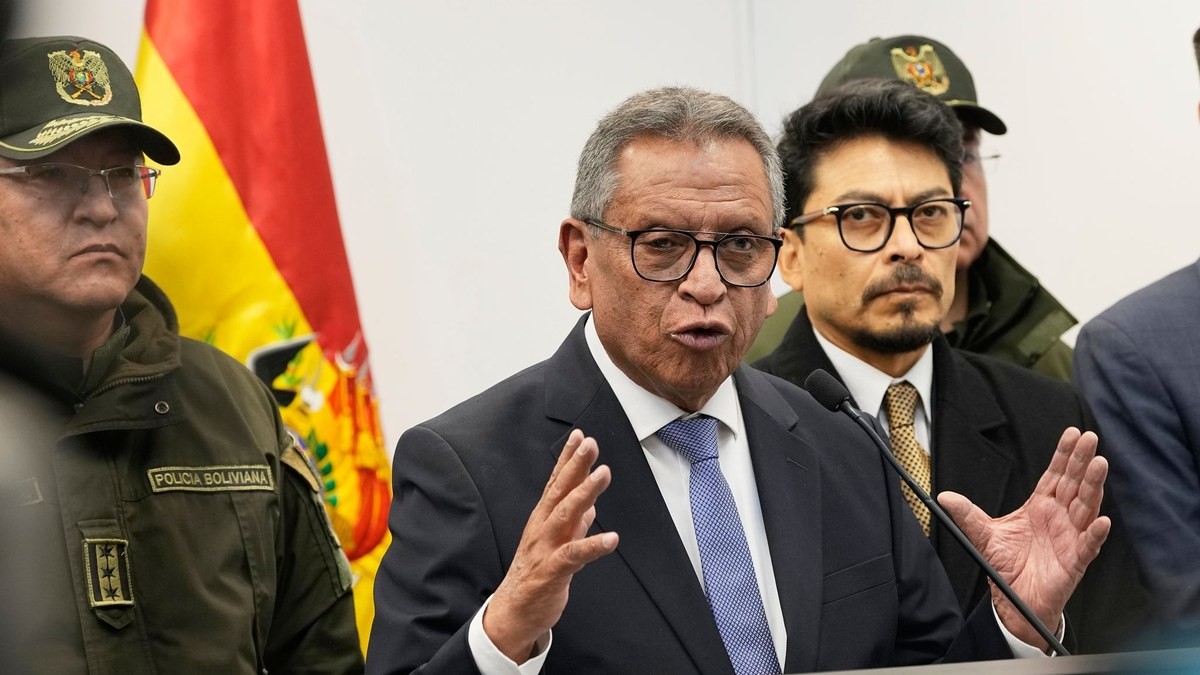
Bolivian police have arrested Attorney General Roger Mariaca and 13 others accused of protecting drug traffickers, the government said Thursday, in an operation it says was executed by Bolivian officers with support from the U.S. Drug Enforcement Administration and other international bodies. Mariaca was detained at Santa Cruz's Viru Viru airport on Wednesday night, two days after the Trump administration revoked his visa over corruption allegations. Interior Minister Marco Antonio Oviedo said the state had dismantled a criminal organization entrenched in the justice system.
Bolivia Arrests Its Top Prosecutor in a DEA-Supported Sweep, Two Days After US Visa Sanctions
La Paz, Bolivia — The government confirmed the operation at a news conference in the capital on Thursday, hours after police detained Mariaca and Santa Cruz prosecutor Alberto Zeballos at the airport and officers cleared staff from the Public Ministry's offices in Sucre.
Fourteen Detained and a Criminal Organisation, the Government Says
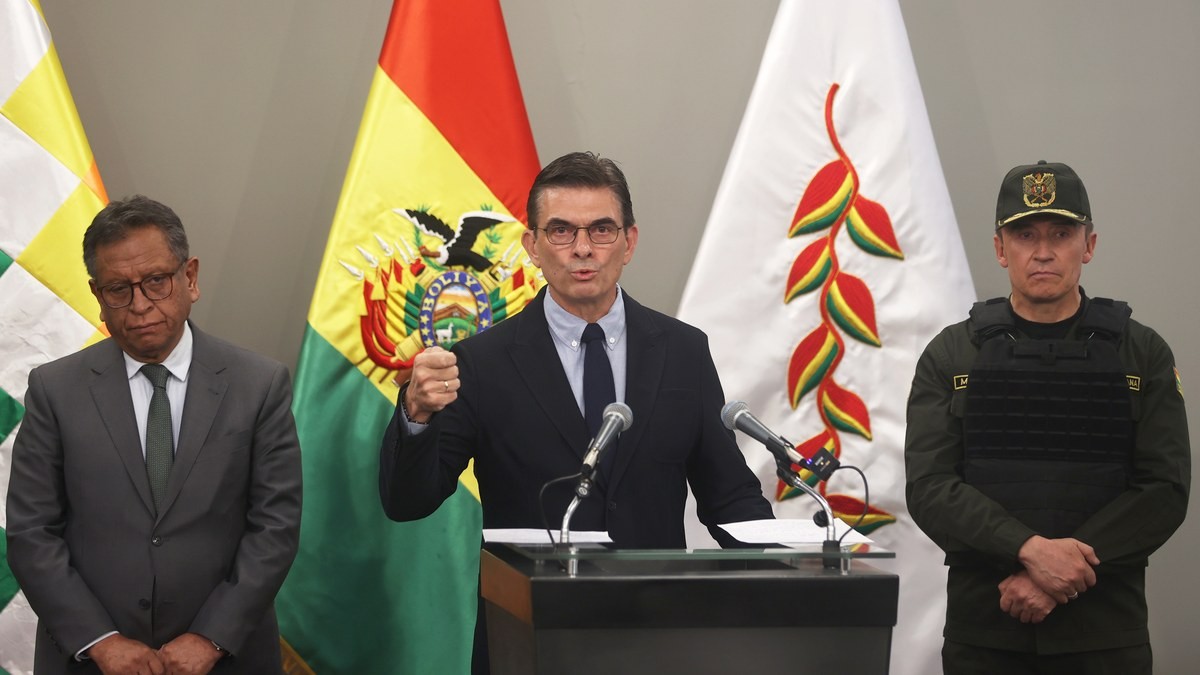
Police detained 14 people in all, the government said: Mariaca, Zeballos — who has also been sanctioned by Washington — and two further prosecutors targeted by this week's U.S. visa measures, according to local media reports. Oviedo said four members of the Public Ministry were among those held. Speaking in La Paz flanked by Defence Minister Ernesto Justiniano and Presidency Minister Fernando Aramayo, Oviedo said the organization, headed by Mariaca, had been aimed at protecting and encouraging narcoterrorism in Bolivia. The police operation had support from the DEA and other international bodies but "was executed by Bolivian police," he said. Oviedo urged lawmakers to overhaul the justice system and warned officials against cooperating with criminal groups. "Either you stand with the law ... or you stand with crime, with narcoterrorism," he said.
Who Is Roger Mariaca
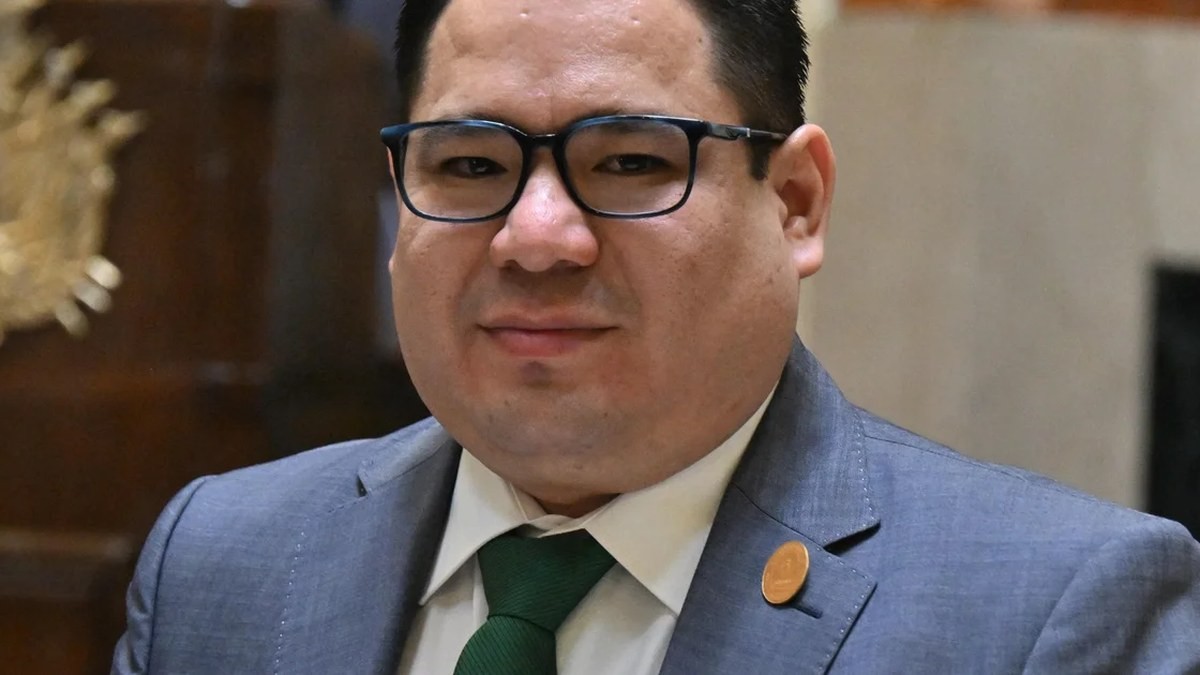
Mariaca was elected to a six-year term by lawmakers in 2024, when Bolivia's legislature was still dominated by the Movement Toward Socialism party of former President Evo Morales, and took office at the end of that year. His term runs to 2030. He previously served as the chief prosecutor in Santa Cruz, Bolivia's largest and most economically important department, and his office's handling of drug-trafficking cases had already drawn criticism before this week. Since taking the national post he has clashed with President Rodrigo Paz, who entered office last November and ended nearly two decades of socialist rule. Paz has aligned Bolivia with Washington and resumed cooperation with the DEA, which Morales expelled in 2008 alongside the U.S. ambassador, accusing both of seeking to overthrow his government. Before Monday, the State Department had already named Mariaca publicly for what it called significant corruption.
What Washington Accused Him Of
The State Department announced the visa restrictions on Monday 28 September. It accused Mariaca of receiving "bribes to facilitate drug trafficking and help violent criminals evade justice." The measure was framed as part of a policy that restricts entry for foreign citizens and their immediate relatives who undermine a democratically elected government through corruption or drug trafficking. Reporting on the scale of the Bolivian portion does not agree: AP put the wider batch at 27 officials, former officials and family members from Bolivia, Colombia, Ecuador and Peru, and said the Bolivian share was more than 20 prosecutors and judges, 12 of them current visa holders and nine who would be refused one. CBS, reporting AFP's wire, counted 12 Bolivian officials plus nine others declared ineligible. The Bolivian outlets Brujula Digital and eju.tv named 13 individuals, among them a former justice minister, three prosecutors, three judges, a police colonel and a businessman. Washington tied the announcement to a statement by the leaders of the Shield of the Americas on 22 September.
The Nearly $300,000 in the Ambulance
Prosecutor Daniel Ortuno said officers found 3.53 million bolivianos — about $294,000 — and an additional $10,000 in an ambulance leaving Mariaca's home in Santa Cruz in the early hours of Thursday. AFP, reporting the same seizure, rounded it to "$300,000 in cash smuggled out of his house in an ambulance." Oviedo alleged the bundles were proceeds of extortion targeting people who went to prosecutors for help. The vehicle was stopped hours after Mariaca was detained at the airport, not days later, and the government placed the total cash at just over $300,000. The Office of the Attorney General and the Santa Cruz prosecutor's office did not immediately respond to AFP's requests for comment. Mariaca did not immediately comment on his arrest.
Mariaca's Answer Was Interference, Not Evidence
Two days earlier, Mariaca had stood in Sucre surrounded by several prosecutors and given a nationally televised answer. He rejected the sanctions, refused to accept that his work and image had been put "in doubt by decisions or pronouncements from abroad ... without the possibility that the facts be clarified in the corresponding instances," and said the U.S. move was an act of "interference" and "political pressure" aimed at his investigations. He said the measure would not change the Public Ministry's work. He was speaking from Sucre, the seat of the office he ran, and the same city where police would move on the ministry's premises two nights later. "Respect between states, yes; interference in our institutions, no," he said. "We respect the sovereign decisions of the United States, but we expect the independence of Bolivia's institutions to be respected." Days later, with the list of corruption cases his office is working behind him, he added: "I will not retreat a single centimeter from the investigations that correspond to my management."
The Marset Failure That Follows Him
The government's case against Mariaca leans on a man he could not keep behind bars. As Santa Cruz's chief prosecutor, he led the office when alleged Uruguayan drug kingpin Sebastian Marset fled his home in the city in July 2023, on the eve of a massive police operation to capture him, according to AFP. Marset stayed on the run for more than two and a half years. Oviedo, asked about that operation, said authorities detained and then swiftly released him: "They let him go, and not only that, they returned his seized assets." The DEA added Marset to its Most Wanted Fugitive List in May 2025 and the State Department's Transnational Organized Crime Rewards Program put up to $2 million behind information leading to his arrest, on top of a $100,000 Bolivian reward announced in 2023. He was caught in Santa Cruz in March 2026 in a dawn raid involving hundreds of officers, and the DEA said it did not take part, leaving the capture to local law enforcement. He appeared in federal court in Alexandria, Virginia, on a money-laundering conspiracy charge and has not been convicted. Journalist Amalia Pando has alleged Mariaca met alone with Marset ten days before he was handed to the United States; that allegation has not been established.
The Case He Was Pursuing When the Visa Went
What Mariaca was investigating when Washington moved against him is the case that has unsettled Bolivia for two months. In August, police detained Argentine political consultant Fernando Cerimedo, a campaign adviser to President Paz and to Argentina's Javier Milei, on suspicion of the attempted femicide of his former partner and on a separate allegation of illicit enrichment. Mariaca's office sought pre-trial detention, citing "the imminent danger of flight and procedural obstruction," according to the Argentine outlet Nexofin. Cerimedo is being held in La Paz and is accused of attempted homicide against Nadia Beller, who was shot by hitmen. His defence lawyer, Ernesto Guiraldes, said "he is innocent, but he is at the disposal of Justice." Beller testified publicly: "He sent the hitmen, he knows who they are." Those remain allegations and defence claims, not findings. Mariaca also listed a timber shipment seized abroad with about 1,000 tonnes of drugs inside, and purchases of what he called "gasolina basura" and crude oil above market prices, as cases he said touched the current administration. He said the Cerimedo file had annoyed politicians backed by the United States, and that he would not back down.
A Government That Asked for Evidence, Then Made an Arrest
The sequence matters. On Monday, Oviedo said the visa revocations rested on data arriving from Washington and that U.S. policy on the matter was very serious. "If they have issued these revocations, it must be because they have proof," he said, adding that Bolivia would request complementary information and open its own investigations. Presidential spokesman Jose Luis Galvez said on Wednesday that the request had gone through diplomatic channels the previous day and that the Executive "can control the procedures it promotes from Bolivia, but not the response times of U.S. authorities." That night, police went to Viru Viru. Anti-drug prosecutor Miguel Gonzales said on a live broadcast on the Public Ministry's official Facebook account that Mariaca had been detained without a warrant and that he did not know why. Officers also moved on the ministry's offices in Sucre, where the attorney general's staff had been preparing a statement. Claudia Pardo, the office's head of communications, said as she and colleagues were surrounded by hooded police: "We denounce before the entire Bolivian population this intervention that is being carried out illegally."
What Friday's Assembly Session Decides
The National Assembly is expected to debate the designation of a new attorney general on Friday, according to AP. That is the immediate institutional consequence of an arrest that leaves the country's top prosecutorial office in play while the president who clashed with its holder remains in office. Not everyone accepts the framing. Cochabamba governor Leonardo Loza rejected the suggestion that a U.S. visa decision should cost Mariaca his job: "If a country takes away your visa, that does not imply they have to remove you from office. Not at all. That is not a sentence." Defence Minister Justiniano, asked whether extradition could follow, said the matter could lead to an investigation, to judicial progress in the United States and probably to a request later, but that it was not Bolivia's domain and that U.S. authorities would answer for it.
Why This Matters Beyond Bolivia
Mariaca is the highest-ranking figure caught in a widening U.S. push that uses visa power as its first instrument. The same Monday announcement reached Colombia, Ecuador and Peru, taking in two Colombians — a business magnate and a lawmaker — two Ecuadorians and a Peruvian judge, AP reported. Secretary of State Marco Rubio had toured Colombia, Ecuador and Peru this month, pledging support for their anti-trafficking efforts, and he described the Bolivian arrests as "bold and decisive actions to combat narco-trafficking, systemic corruption, and transnational organized crime." Bolivia's government says it has broken up a criminal organization inside the justice system. Mariaca says the Americans acted to shield the people his office was investigating. One of those two accounts is now the official one, and the other belongs to a man in custody.
By Jessica Ali, Staff Writer
This article was produced with AI-assisted research and editorial support. Sources: Associated Press, AFP, CBS News, Los Angeles Times, Al Jazeera, The Guardian, Le Monde, the U.S. Drug Enforcement Administration, the U.S. Department of State, La Razón, Brujula Digital, eju.tv, NODAL, Noticias Argentinas, El Deber, Nexofin, FM Bolivia and La Jornada.
What's Your Reaction?
 Like
0
Like
0
 Dislike
0
Dislike
0
 Love
0
Love
0
 Funny
0
Funny
0
 Wow
0
Wow
0
 Sad
0
Sad
0
 Angry
0
Angry
0

Editor-in-Chief at Global1.News. Atlanta-based journalist who cuts through the BS and tells it like it is. Lead anchor, host, and the voice you hear when the spin stops and the truth starts.









Comments (0)