
Lebanon-Israel Trilateral Framework Signals Shift in Regional Security Dynamics
The June 26, 2026, Trilateral Framework Agreement between Lebanon and Israel, brokered by the United States, emerges directly from the renewed fighting that formed part of the wider 2026 Iran war. This development intersects longstanding Sunni-Shia competition, Gulf states' diversification strategies, and the stalled Arab-Israeli normalization track. It also raises questions about Hezbollah's future role and energy corridor stability in the eastern Mediterranean.
The June 26, 2026, Trilateral Framework Agreement between Lebanon and Israel, brokered by the United States, emerges directly from the renewed fighting that formed part of the wider 2026 Iran war. This development intersects longstanding Sunni-Shia competition, Gulf states' diversification strategies, and the stalled Arab-Israeli normalization track. It also raises questions about Hezbollah's future role and energy corridor stability in the eastern Mediterranean. The agreement arrives at a moment when Lebanon's state institutions face acute pressure from reconstruction needs estimated at over $20 billion following the 2024-2025 escalation, while Israeli security planners seek durable buffers against cross-border threats that have persisted since the 1978 Litani Operation.
Lebanon-Israel Trilateral Framework Agreement Signals Potential Shift in Regional Security Dynamics
Beirut, Lebanon – August 1, 2026 — US Secretary of State Marco Rubio described the Lebanon-Israel Trilateral Framework Agreement as "unprecedented" during remarks tied to the July 31 Al Arabiya English broadcast, noting it marked the first official government-to-government talks between the two sides in nearly 30 years. The agreement commits the parties to Hezbollah disarmament, phased Israeli withdrawals from southern Lebanon, and eventual normalization steps under continued US oversight. These elements place the framework at the center of US-Iran rivalry and efforts to reshape security arrangements along the Israel-Lebanon frontier. Lebanese officials have privately emphasized that any progress hinges on securing international reconstruction pledges, with the World Bank and European donors already signaling conditional support tied to verifiable implementation milestones.

The Path to the Trilateral Framework
Talks opened in April 2026 after intensified clashes between Israel and Hezbollah that formed part of the broader 2026 Iran war. On April 14, Rubio met Israeli Ambassador Yechiel Leiter and Lebanese Ambassador Nada Hamadeh Moawad at the State Department in Washington. Five rounds of negotiations followed, mediated by State Department Counselor Dan Holler, with the two ambassadors heading their respective delegations. A US-brokered 10-day ceasefire took effect on April 16 to create space for substantive discussions. Intensive sessions in late June produced the framework after four days of concentrated diplomacy. The sequence echoes earlier mediation patterns but benefits from altered battlefield realities after the 2024-2025 exchanges, which inflicted an estimated $15 billion in infrastructure damage across southern Lebanon and northern Israel.
Lebanese President Joseph Aoun's administration entered the process with explicit priorities centered on restoring state monopoly over force and unlocking IMF program negotiations stalled since 2022. Israeli counterparts, led by Prime Minister Benjamin Netanyahu's security cabinet, conditioned any withdrawal on concrete disarmament benchmarks rather than the ambiguous language of UN Resolution 1701. The April ceasefire allowed both sides to test political will without immediate escalation, though sporadic incidents continued near the Blue Line. US mediation leveraged financial incentives, including potential access to eastern Mediterranean gas revenue sharing, to bridge gaps that had derailed prior indirect talks.
Core Commitments and Implementation Timeline
The Trilateral Framework Agreement outlines three interlocking tracks. First, the parties agree to the disarmament of Lebanese Hezbollah. Second, Israel commits to progressive troop withdrawals from southern Lebanon. Third, the document envisions eventual normalization of bilateral ties. Rubio stated there remained "a lot of work ahead" and characterized the signing as "the beginning of the beginning." A sixth round of talks occurred in Rome from July 14-16 with expectations described as low by observers. Lebanese President Joseph Aoun traveled to Washington on July 19 to discuss implementation directly with Rubio and also met President Trump at the White House. Early steps include Lebanese army deployments to positions vacated by Hezbollah units, monitored through joint US-Lebanese technical committees.
Implementation timelines remain deliberately flexible, with quarterly review mechanisms established under US auspices. Disarmament is sequenced to begin with heavy weapons storage under Lebanese army supervision, followed by phased integration of lighter units into state structures. Israeli withdrawals are linked to verified milestones rather than fixed dates, reflecting lessons from the 2000 unilateral pullout that left security vacuums exploited by Hezbollah. Normalization language is aspirational, referencing trade, water, and energy cooperation without immediate diplomatic exchange. Funding for Lebanese reconstruction, potentially channeled through a Gulf-backed facility, serves as the primary incentive for Beirut's compliance.

Hezbollah Rejection and Domestic Lebanese Reactions
Hezbollah Secretary-General Naim Qassem immediately rejected the framework as "null and void," arguing it undermined Lebanese national sovereignty. Protests broke out in Beirut following the June 26 signing. These reactions reflect Hezbollah's entrenched position within Lebanon's political and military landscape and its alignment with Iranian strategic interests. Lebanese army deployments southward have been reported as part of early implementation steps, yet the group's continued operational capacity remains a central variable. Domestic divisions surfaced along sectarian lines, with Christian and Sunni factions largely supportive while Shia communities expressed concerns over economic fallout from lost Iranian financing.
Lebanese political analysts note that Hezbollah's rejection preserves its narrative of resistance but risks isolating it from broader Lebanese constituencies exhausted by the 2020 Beirut port explosion's aftermath and subsequent currency collapse. The group's parliamentary bloc has signaled willingness to obstruct cabinet decisions tied to the framework, potentially triggering renewed institutional paralysis. International observers assess that sustained US and Gulf financial pressure could gradually erode Hezbollah's veto power, though short-term enforcement remains uncertain.
Strategic Calculus
Lebanon's state institutions seek restored sovereignty through army control of the south and reconstruction funding from Gulf and Western sources, leveraging the framework to renegotiate IMF terms and attract $10-15 billion in pledged aid. Their leverage lies in diplomatic recognition and the threat of state collapse that would destabilize the region. Israel prioritizes a security guarantee eliminating Hezbollah's rocket threat and a normalization pathway that reduces isolation, holding military superiority and control over disputed maritime boundaries as primary leverage. Hezbollah and Iran view the agreement as an existential challenge to the resistance axis, with Tehran treating Hezbollah as the crown jewel of its forward defense strategy coordinated through the IRGC Quds Force; their leverage rests on retained operational capacity and the ability to disrupt energy infrastructure.
The United States pursues Iran containment, assured Israeli security, and a restructured regional order that advances selective normalization. Washington's leverage includes sanctions relief calibration, military aid packages, and coordination with Gulf partners on reconstruction financing. Each actor calculates that partial implementation may prove more stable than outright rejection, yet misaligned incentives around disarmament sequencing could stall progress. Iranian responses to the 2026 war losses have already prompted proxy recalibration, making Hezbollah's survival calculations more defensive than in prior decades.
Historical Context and Linkages to Past Agreements
The current framework references earlier benchmarks, including the 1949 armistice, Israel's 2000 withdrawal from southern Lebanon, and UN Resolution 1701 that ended the 2006 war. Unlike those arrangements, the 2026 document introduces direct normalization language and explicit disarmament obligations under trilateral US participation. This evolution occurs against the backdrop of the 2026 Iran war, which has altered the balance of leverage available to both Beirut and Jerusalem. Analysts at the Soufan Center note that the agreement intersects the wider US-Iran conflict, raising sovereignty and accountability questions for Lebanese state institutions.
Deeper historical patterns trace to the 1978 Litani Operation and the 1982 invasion, which established the occupation lasting until 2000 and catalyzed Hezbollah's founding as a resistance movement. The 2006 July War produced UNSCR 1701's deployment of Lebanese forces and UNIFIL expansion, yet left disarmament clauses unimplemented. Lebanon's 2020 port explosion and ensuing economic contraction, compounded by the 2024-2025 war's destruction toll exceeding 50,000 housing units, have shifted domestic incentives toward state-centric solutions over militia dominance. These precedents illustrate why the 2026 framework attempts more intrusive mechanisms than its predecessors.
Regional Implications
If implemented, the framework could influence Gulf states' calculations on energy infrastructure security and further Arab-Israeli normalization efforts. Saudi Arabia and the UAE see potential stabilization that protects investments in Lebanese reconstruction while advancing their own diversification away from Iranian influence. Qatar's established ties to Hezbollah and Iran position it as a potential spoiler or mediator depending on compensation mechanisms. Energy corridor security in the eastern Mediterranean, encompassing the Karish and Leviathan fields, gains added importance as reduced border tensions could enable joint development talks previously blocked by Hezbollah threats.
Turkish foreign policy may adjust to avoid marginalization in Levantine energy routes, while Israeli-Palestinian dynamics could face demonstration effects from managed de-escalation. Continued Israeli strikes remain possible until Hezbollah disarmament advances, while Iranian responses through remaining proxies could shape second-order effects across the Levant. The coming months will test whether the US-brokered process can translate the June 26 commitments into durable changes on the ground, with Gulf financial commitments serving as the decisive variable for Lebanese compliance. Gulf sovereign wealth funds from Saudi Arabia and the UAE are positioning reconstruction financing as a lever to secure stakes in Lebanese energy projects, aligning with OPEC+ efforts to stabilize eastern Mediterranean gas supplies amid global market volatility. The 1949 armistice line retains legal relevance as a baseline reference point in any final demarcation talks under the new framework.
By Malik Hassan, Staff Writer
This article was produced with AI-assisted research and editorial support. Reporting is based on sources cited in the article.
What's Your Reaction?
 Like
0
Like
0
 Dislike
0
Dislike
0
 Love
0
Love
0
 Funny
0
Funny
0
 Wow
0
Wow
0
 Sad
0
Sad
0
 Angry
0
Angry
0
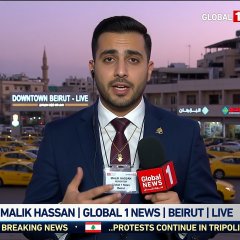
Middle East Correspondent at Global1.News. Based in Beirut, covering politics, conflict, energy, and society across the Middle East. Brings context and depth to a region often reduced to headlines.










Comments (0)