
A Tajik Bank Shuts Side Door for Russian Cardholders
In the wake of intensified Western sanctions on Central Asian financial institutions, the recent ultimatum issued by Tajikistan’s Humo Bank to its Russian clientele epitomizes the evolving nexus between geopolitical pressure and regional banking practices.
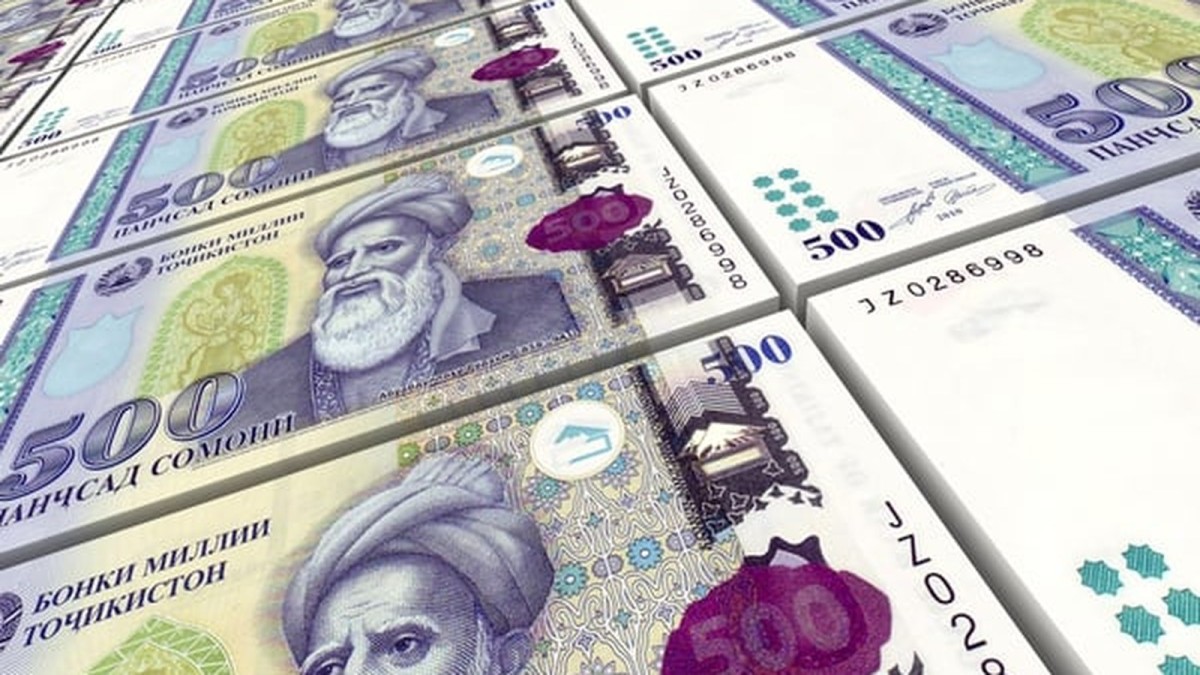
In the wake of intensified Western sanctions on Central Asian financial institutions, the recent ultimatum issued by Tajikistan’s Humo Bank to its Russian clientele epitomizes the evolving nexus between geopolitical pressure and regional banking practices. Effective 1 October 2026, the bank requires Russian cardholders to present themselves for biometric verification in Dushanbe by 30 September 2026, failing which their cards will be deactivated. This directive, announced through a statement to the Russian outlet Lenta.ru, underscores how external sanction regimes are reshaping the operational contours of Tajik banking.
Regulatory Context and the Humo Bank Mandate
The Humo Bank notice frames the biometric requirement as a fraud‑prevention measure, yet a client relayed via the Telegram channel Ostorozhno Novosti that the bank’s staff described the action as a restriction on “certain categories of non‑resident individuals” whose accounts were opened remotely. The client reported a stalled transfer of approximately 300 euros and a cessation of bank communication, highlighting the practical impact of the policy on everyday users.
Humo Bank further stipulated that any new card issued to a Russian client would be valid only for the duration of the holder’s legal stay in Tajikistan and would not exceed a one‑year term. This conditional issuance aligns with the bank’s broader risk‑management posture, suggesting a pre‑emptive response to potential regulatory scrutiny from Western authorities or payment‑system operators.
Sanctions Landscape and Regional Spillover
The ultimatum follows a year of escalating Western pressure on Tajik financial entities. In October 2025, the European Union’s 19th sanctions package targeted Dushanbe City Bank, Spitamen, and Commercebank of Tajikistan for their links to Russia’s financial system and for facilitating cross‑border payments that support the Russian economy. Those three institutions collectively held roughly one‑fifth of all deposits in Tajikistan, prompting a sector‑wide tightening of transfer capabilities to Russia.
Although the EU removed the three banks from its sanctions list in April 2026, citing improved compliance and anti‑money‑laundering standards, the episode left a lasting imprint on the sector. The National Bank of Tajikistan has not clarified whether Humo’s biometric requirement stems from regulator directives, payment‑system mandates, or an internal risk assessment, but the timing suggests a pre‑emptive alignment with evolving sanction dynamics.
Historical Role of Non‑Resident Cards in the Region
Since Visa and Mastercard withdrew from Russia in 2022, Russian residents have increasingly turned to “friendly” jurisdictions for card issuance to sustain international payments. When Kazakhstan imposed a 12‑month limit on non‑resident cards and required in‑person issuance in January 2025, many intermediaries shifted operations to Tajikistan, Kyrgyzstan, and Uzbekistan. Humo Bank, alongside the International Bank of Tajikistan, responded by offering remotely issued five‑year cards denominated in U.S. dollars and euros, priced at roughly 15,000 to 70,000 rubles.
These remotely issued cards filled a critical gap for Russian users seeking access to global payment networks, yet their very existence attracted heightened scrutiny from sanctioning bodies and payment‑system operators, as evidenced by the subsequent EU restrictions on top‑ups from cards issued in the three Central Asian states.
Economic Stakes for Tajikistan
Remittances from Tajik migrants in Russia constitute a decisive pillar of the Tajik economy, reaching $5.8 billion in 2024—equivalent to 45.3 percent of gross domestic product, the highest share globally. By the close of 2024, over 90 percent of payments in Tajik‑Russian trade were settled in rubles, and the National Bank’s head affirmed that Tajik banks engage exclusively with Russian banks not subject to sanctions.
The dual imperative of maintaining open financial channels to Russia while preserving access to SWIFT and Visa networks places Tajik banks in a precarious balancing act. Humo Bank’s decision to curtail remotely onboarded Russian clients can be read as an effort to safeguard this delicate equilibrium, especially in light of the broader sector’s experience with sanction‑induced disruptions.
Implications for Russian Cardholders
For Russian users, the Humo ultimatum signals a tightening of alternative payment avenues. Should cardholders fail to appear in person, their accounts will be closed, compelling them to seek comparable services in neighboring Kyrgyzstan or Uzbekistan—countries that previously absorbed demand when Kazakhstan restricted non‑resident cards. This migration risk may expose Russian clients to similar regulatory pressures if those jurisdictions encounter comparable sanction pressures.
The practical burden on Russian cardholders includes the logistical challenge of traveling to Dushanbe, the uncertainty of card validity limited to a one‑year stay, and the potential loss of funds tied up in pending transfers, as illustrated by the client’s stalled 300‑euro transaction. The episode thus illustrates how macro‑level sanction policies translate into tangible constraints on individual financial behavior.
Strategic Outlook for Tajik Banking
Looking ahead, Tajik banks are likely to continue calibrating their risk frameworks in response to external sanction dynamics. Humo Bank’s proactive restriction of remotely issued Russian accounts may preempt more severe regulatory actions from the EU or payment‑system entities such as Visa, which could otherwise compel broader sectoral compliance measures.
Nevertheless, the reliance on remittances and ruble‑based trade underscores the necessity for Tajik institutions to retain functional channels with Russia. The sector’s future may involve a bifurcated approach: maintaining compliant, in‑person issued cards for sanctioned‑free clients while progressively phasing out remote issuance for high‑risk categories. Such a strategy would aim to preserve essential remittance flows while mitigating exposure to sanction‑related disruptions.
Regional Geopolitical Implications
The Humo Bank episode reflects a broader pattern in Northeast Asian geopolitics where financial intermediation becomes a lever of diplomatic pressure. As Western sanctions extend beyond direct Russian targets to include third‑party jurisdictions, Central Asian states must navigate competing demands from Moscow, Western regulators, and global payment networks.
In this context, Tajikistan’s banking policy will likely continue to be shaped by the twin imperatives of economic necessity—anchored in remittance inflows and trade with Russia—and the need to demonstrate compliance with international anti‑money‑laundering standards. The evolution of Humo Bank’s client‑screening practices will serve as a bellwether for how the country balances these forces, informing both regional financial stability and the broader geopolitical calculus surrounding sanction regimes.
This article was produced with AI-assisted research and editorial support. Reporting is based on the source material cited below. Sources: The Diplomat; thediplomat.com; Global1.News (04 October 2026).
By Prof. David Park, Staff Writer
What's Your Reaction?
 Like
0
Like
0
 Dislike
0
Dislike
0
 Love
0
Love
0
 Funny
0
Funny
0
 Wow
0
Wow
0
 Sad
0
Sad
0
 Angry
0
Angry
0

East Asia/Technology Correspondent at Global1.News. Seoul-based voice covering Korean politics, technology, business, and culture. Analyzes how technology and geopolitics intersect across East Asia.












Comments (0)