
Canada Matches US Tariffs as Trade War Spirals — Mexico Watches T-MEC Future Nervously
In a recent DW News report, the escalating trade war between the United States and Canada reached a new low, with Ottawa matching Washington's tariffs dollar-for-dollar on hundreds of products.
In a recent DW News report, the escalating trade war between the United States and Canada reached a new low, with Ottawa matching Washington's tariffs dollar-for-dollar on hundreds of products. While the cameras focus on the frosty relations between Prime Minister Mark Carney and President Donald Trump, the real tremor is felt thousands of miles south, in the factories of Monterrey, the farms of Sinaloa, and the tianguis of Mexico City, where the future of the T-MEC—and with it, over 80% of Mexican exports—hangs in the balance.
The collapse of US-Canada negotiations is not a distant diplomatic squabble; it is a seismic event for the North American supply chain that Mexico depends on for its economic survival. As Canada prepares to slap retaliatory tariffs on September 8, 2026, Mexican officials are watching closely, knowing that the same aggressive posture could soon be turned fully toward them.
Canada Matches US Tariffs as Trade War Spirals—Mexico Watches T-MEC Future Nervously
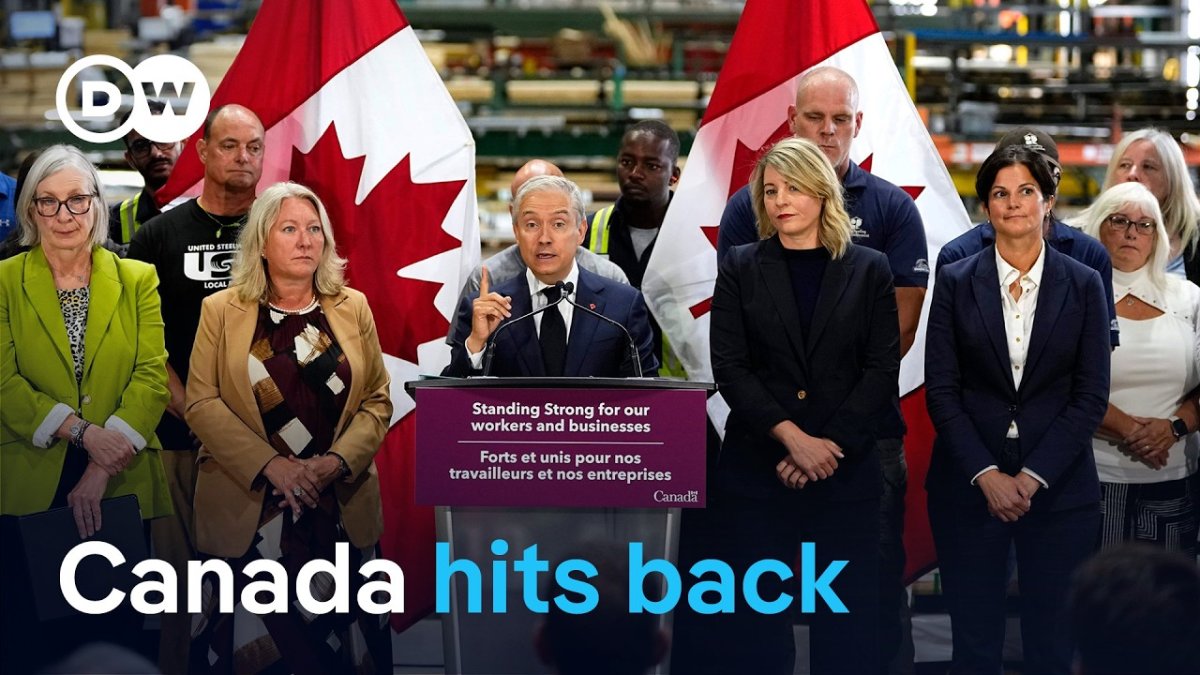
Mexico City, Mexico — The polite fiction of North American partnership evaporated this week. Canada announced retaliatory tariffs on roughly 700 US products—ranging from steel and dairy to appliances and electronics—with rates of 15%, 25%, or 50% set to take effect on September 8, 2026. The move was designed to mirror, "dollar-for-dollar, rate-for-rate," the tariffs imposed by the Trump administration, according to Canadian Finance Minister François-Philippe Champagne.
Section 1 — The Story Unfolds
The breakdown was abrupt. US Trade Representative Jamieson Greer stated that Canada declined to finalize a deal minutes before fresh Trump tariffs took effect. Ottawa's Finance Ministry countered that the US "proposed new terms that were not in Canada's best interest, basically, asking too much of Canada, and offering too little in return." In essence, Canada walked away from the table rather than sign what Prime Minister Carney called a "bad deal."
The immediate trigger was Trump's decision to impose 50% tariffs on about $20 billion worth of Canadian goods after talks collapsed. But the deeper issue, as the DW News report highlighted, is a fundamental shift in Washington's posture toward its northern neighbor. "We learned during the negotiations that the Americans want to destroy our major industries, including autos, steel and aluminum," Carney said, framing the dispute not as a trade disagreement but as an existential threat. "That was one of the main reasons we said no."
Canada's counter-tariffs cover $27.6 billion in imports from the US, targeting politically sensitive sectors: steel, dairy, agricultural equipment, pulp and paper, and electronics. This is not random; it is a surgical strike aimed at the industrial heartlands that form Trump's political base. The Canadian government also announced a "multi-billion dollar support package" to shield workers, farmers, and businesses from the fallout.
Section 2 — Why This Hits Home for Mexico
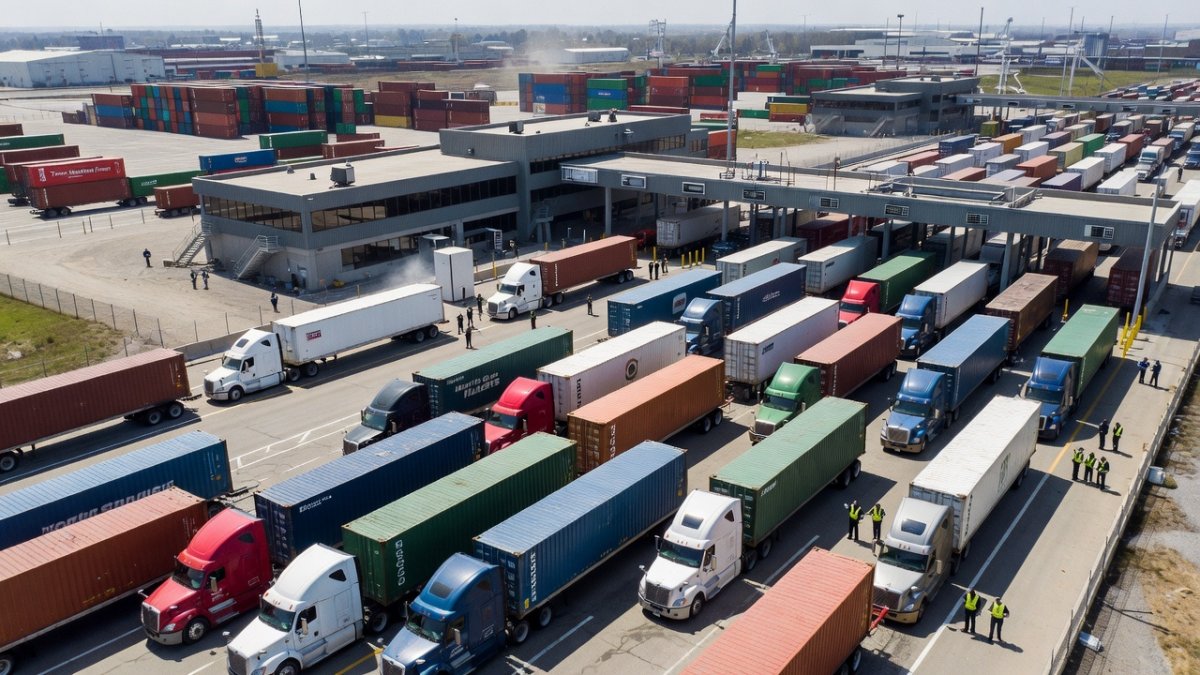
For Mexican families, this is not a spectator sport. Mexico is the top US trading partner, with roughly $900 billion USD in annual trade flowing between the two nations. Over 80% of Mexican exports head to the US market. When the US and Canada fight, the supply chains that connect the three countries—auto plants in Puebla, electronics in Tijuana, agricultural goods in Michoacán—are caught in the crossfire.
The DW News video underscores a critical point: Canada is the second-largest US trading partner, trailing only Mexico. If Washington is willing to treat its second-largest partner with such hostility, what does that portend for the number one? The answer lies in the stalled USMCA/T-MEC renewal. Trump refused to renew the treaty this summer after Canada and Mexico formally requested a 16-year extension. When asked about the impact of the US-Canada collapse on the T-MEC, Carney was blunt: it was "certainly not good news."
For Mexican exporters, the T-MEC is the lifeline that guarantees preferential access to the US market. Without it, the 50% tariffs currently threatened on Mexican steel and aluminum, and the 25% duties on automobiles, could become the new normal. The uncertainty is already rippling through the economy, from the maquiladoras of Ciudad Juárez to the auto parts suppliers in Querétaro.
Section 3 — What Ottawa Is Doing
Canada is not going quietly. Prime Minister Carney has declared that Canada is "at war" over trade with the US, a rhetorical escalation that would have been unthinkable just a few years ago. The Canadian strategy is twofold: retaliate immediately and prepare for a long siege. The counter-tariffs are designed to inflict maximum political pain on the US, targeting products from states that voted for Trump in the last election.
But there is a limit to Canada's leverage. The US is Canada's largest trading partner, absorbing 70% of its exports. In the DW News report, David Henig, Director of the UK Trade Policy Project, analyzed the power dynamics, suggesting that while Carney may have a stronger political position than Trump—due to public support at home—the economic asymmetry is stark. Canada cannot simply replace the US market overnight.
The DW News report also explored whether Canada could pivot toward Europe. Alberto Rizzi of the European Council on Foreign Relations noted that while the EU and Canada could deepen ties under the CETA agreement, Europe cannot easily replace the US as Canada's main trading partner. The geography of trade is unforgiving; you cannot ship Alberta oil or Ontario auto parts to Berlin as cheaply as you can to Detroit.
Section 4 — The War of Words
The diplomatic language has deteriorated into schoolyard taunts. Trump took to social media to declare, "WE DON'T NEED CANADA, THEY NEED US!" and floated the idea of renaming Lake Ontario to "Lake America." This follows his administration's earlier decision to rename the Gulf of Mexico as the "Gulf of America"—a change that almost nobody outside the US government implements. Even Google shows "Gulf of Mexico" first for users outside the US.
For Mexicans, the renaming of the Gulf is a cultural affront, a dismissal of shared history and geography. It signals a broader disregard for the sovereignty and dignity of Mexico's northern neighbor. The taunts directed at Canada are a warning: if Trump treats a G7 ally with such contempt, what can Mexico expect?
Carney's response has been measured but firm. "An attitude at the negotiation table that Canada is a subsidiary of the United States is not something we're going to accept," he said. This resonates deeply in Mexico, where the memory of US interventionism is long and the desire for respect is strong. The phrase "subsidiary" strikes a chord in a country that has fought for centuries to assert its independence from foreign powers.
Section 5 — Sheinbaum's Delicate Dance
President Claudia Sheinbaum is walking a tightrope. Unlike Canada, which has chosen confrontation, Mexico has opted for a strategy of calm diplomacy and optimism. Sheinbaum has expressed confidence that she can reach a trade deal with Trump, avoiding the full brunt of the tariffs that have hit Canada.
Economy Minister Marcelo Ebrard, her chief trade negotiator, is staying in Washington for several days, working to lower the 50% US tariffs on Mexican steel and aluminum and the 25% duties on automobiles. Mexico has urged calm, emphasizing the interdependence of the two economies. The message from the Palacio Nacional is clear: Mexico wants to be a partner, not an adversary.
But the contrast with Canada is stark. While Ottawa vows strong pushback, Mexico is seeking accommodation. This is a calculated risk. Sheinbaum's government believes that Mexico's unique position—as the top US trading partner and a key player in supply chains for autos, electronics, and agriculture—gives it leverage that Canada lacks. Yet, the collapse of US-Canada talks suggests that Trump is not interested in rational negotiation; he is interested in dominance.
Earlier in August, Carney spoke with Sheinbaum, thanking Mexico for its support in combating Canadian wildfires, including the deployment of over 400 firefighters. That spirit of cooperation now seems like a distant memory. The question is whether Sheinbaum's diplomatic warmth can survive Trump's transactional aggression.
Section 6 — What's Next for North American Trade
The immediate future is bleak. No further US-Canada negotiations are currently scheduled. Trump has threatened 50% tariffs on Canadian automobiles, car parts, and steel starting January 1, 2027. If those tariffs take effect, they will devastate the integrated North American auto industry, which relies on parts crossing the border multiple times before final assembly.
For Mexico, the stakes are existential. The T-MEC renewal is not just a trade agreement; it is the framework for the country's economic model. Without it, Mexican exports face a patchwork of tariffs and uncertainty that could drive investment away to Asia or Europe. The DW News report asked whether compromise is possible. The answer, for now, is no.
The global trade system is under strain, but the DW News report also noted that globalization is not dead. It is evolving, fragmenting into regional blocs. Mexico must decide which bloc it belongs to. The US is its natural partner, but if Washington treats its partners as vassals, Mexico may need to look elsewhere—to Europe, to Latin America, to Asia.
What to Watch For
In the coming weeks, watch for three things. First, the outcome of Ebrard's negotiations in Washington. If Mexico secures a carve-out from the steel and aluminum tariffs, it will be a major victory for Sheinbaum. Second, the reaction of US businesses to the Canadian counter-tariffs. If the pain becomes too great, Trump may be forced to backtrack. Third, the fate of the T-MEC renewal. If Trump refuses to engage, Mexico must prepare for a world without preferential access to the US market.
The Canadian example offers a lesson: standing up to Trump comes with a cost, but so does capitulation. Carney's decision to walk away from a "bad deal" may be the braver choice, but it leaves Canada isolated. Sheinbaum's path of engagement may yield short-term gains, but it risks long-term dependency.
For the families in the colonias of Mexico City, the campesinos in Oaxaca, and the workers in the maquiladoras of Tijuana, the outcome of this trade war will determine their livelihoods. The tortillería on the corner, the taquería downtown, the quinceañera dress shop—all are connected to the global economy in ways that are invisible until they break.
The US-Canada trade war is not a distant conflict. It is a warning shot across Mexico's bow. The question is whether Mexico's leaders can navigate these treacherous waters without sacrificing the country's sovereignty or its people's prosperity. The world is watching, and the stakes could not be higher.
By Rosa Martinez, Staff Writer
This article was produced with AI-assisted research and editorial support. Reporting is based on sources cited in the article.
What's Your Reaction?
 Like
0
Like
0
 Dislike
0
Dislike
0
 Love
0
Love
0
 Funny
0
Funny
0
 Wow
0
Wow
0
 Sad
0
Sad
0
 Angry
0
Angry
0

Latin America/Andes Correspondent at Global1.News. Based in Bogota, covering politics, environment, energy, and social movements across the Andean region. Passionate about environmental journalism and communities protecting their land.














Comments (0)