
The End of an Era: The SDF Dissolves Into the Syrian Army
The Kurdish-led Syrian Democratic Forces have formally dissolved as an independent armed group, with fighters integrated into the Syrian army under an agreement with Damascus. Hailed by U.S.
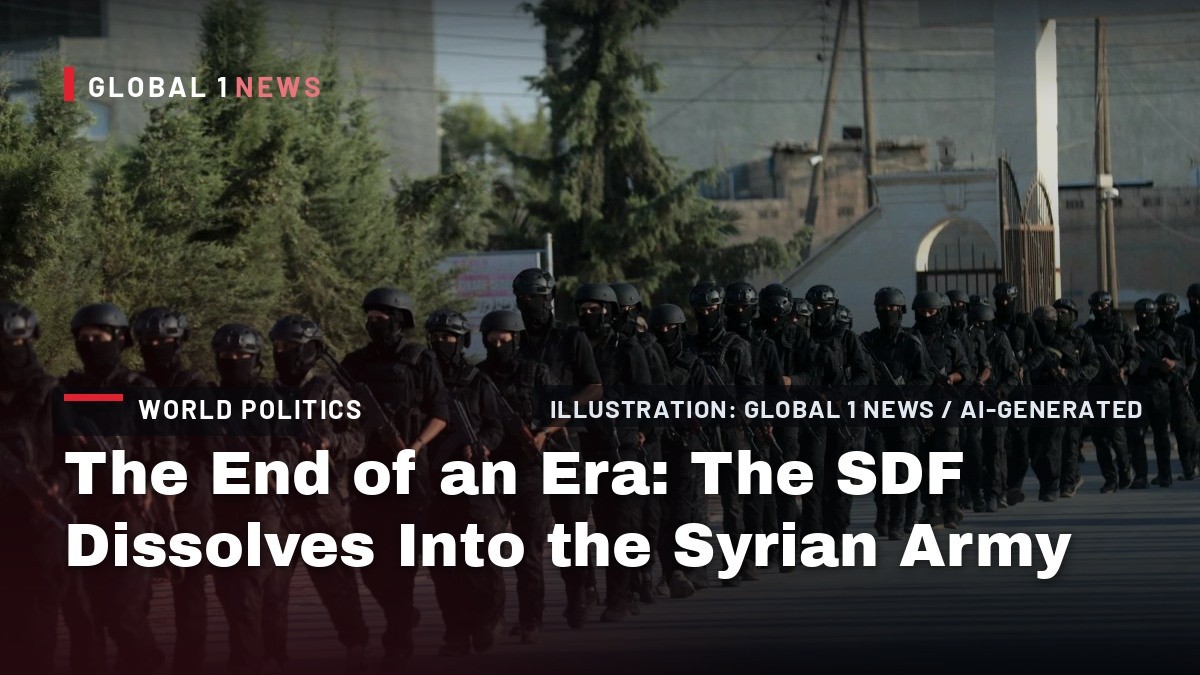
In a development that would have been unthinkable just two years ago, the Syrian Democratic Forces (SDF) has formally dissolved as an independent armed group. The announcement, made by SDF commander Ferhat Abdi Şahin—known globally as Mazloum Abdi—from the presidential palace in Damascus on Tuesday, marks the culmination of a dramatic realignment of power in post-Assad Syria. The integration of the Kurdish-led militia into the Syrian army's brigades represents a seismic shift in the Middle East's geopolitical chessboard, closing a chapter that began with the fight against the Daesh caliphate and ending with the restoration of unified state authority over Syrian territory.
Damascus, Syria – Aug. 25, 2026 — The move, welcomed by U.S. Special Envoy for Syria Tom Barrack as a step toward "a united Syria for all," effectively dismantles the autonomous military structure that has governed northeastern Syria for over a decade. For Türkiye, it validates a long-held position that parallel armed structures along its southern border must be eliminated. For Damascus, it is a triumph of state consolidation. For the Kurds, it is a gamble—a bet that constitutional recognition and political participation will prove more durable than the guns they are now laying down.
The 2015 Founding and the War Against Daesh
To understand the magnitude of this dissolution, one must revisit the circumstances of the SDF's birth. Established in 2015 with direct backing from Washington, the SDF was cobbled together as a multi-ethnic fighting force dominated by the People's Protection Units (YPG), the Syrian branch of the Kurdistan Workers' Party (PKK). The PKK, which has waged a decades-long insurgency against the Turkish state, is designated a terrorist organization by Ankara, Washington, and Brussels—a fact that created an enduring paradox in U.S. policy.
Despite Türkiye's strenuous objections as a NATO ally, the United States partnered with the SDF as its principal ground force against Daesh. The partnership proved militarily effective: SDF fighters spearheaded the grueling campaigns to liberate Raqqa, Deir el-Zour, and the final territorial remnants of the so-called caliphate in Baghuz in 2019. In the process, the SDF expanded its control over roughly a quarter of Syrian territory, including the country's most valuable oil fields in the northeast—assets that would become a source of leverage, contention, and strategic value for years to come.
The collapse of the Daesh caliphate did not, however, lead to the SDF's dissolution. Instead, the group entrenched itself as a semi-autonomous governing authority, managing civil administration, security, and resource extraction in the northeast. This arrangement persisted through the final years of Bashar Assad's rule, sustained by U.S. military presence and the tacit acceptance of a fragmented Syria.
The Assad Ouster and the New Damascus Calculus
The political landscape shifted irrevocably in late 2024 with the ouster of Bashar Assad and the establishment of new authorities in Damascus under President Ahmed al-Sharaa. The collapse of the Assad regime—a key ally of both Iran and Russia—reconfigured the entire regional order. For the first time in over a decade, a Syrian government in Damascus could plausibly claim authority over the entire country without the baggage of the Assad family's sectarian rule.
Al-Sharaa, a figure who emerged from the anti-Assad opposition, moved quickly to consolidate power. His administration signaled a willingness to engage with the SDF, but on terms that emphasized national unity and the primacy of state institutions. The January 2026 clashes between government forces and the SDF in Raqqa and Deir el-Zour demonstrated Damascus's resolve: government forces regained significant territory, and the SDF's negotiating position weakened considerably.
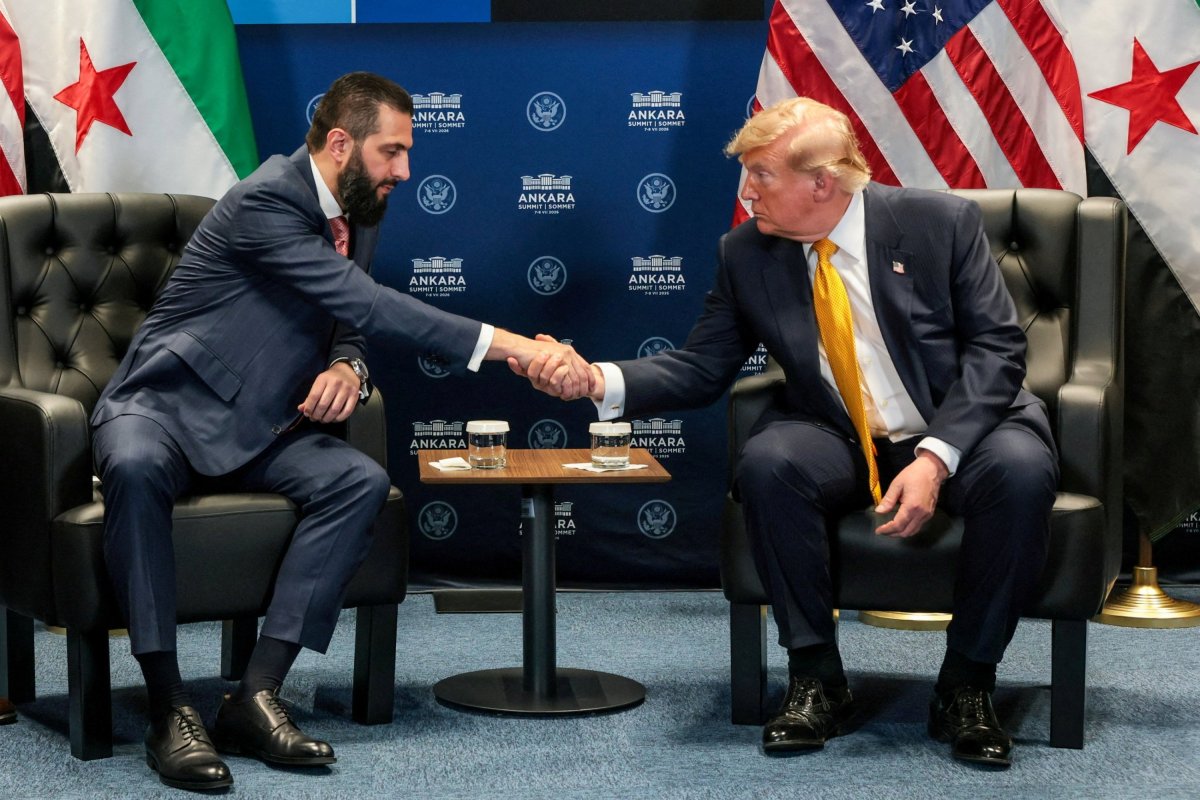
The subsequent agreement, reached on January 29, 2026, provided for a ceasefire and a phased integration of SDF military, security, and civilian institutions into state structures. The deal was brokered with the active involvement of U.S. Special Envoy Tom Barrack, reflecting Washington's desire to manage the transition rather than resist it. The terms were clear: the SDF would dissolve as an independent force, non-Syrian PKK figures would be removed from the country, and SDF fighters would be incorporated into Syrian army brigades.
The Strategic Calculus: What Each Side Wanted
For Damascus, the integration agreement represents the single most significant step toward restoring central authority since Assad's fall. Control over the northeast's oil resources—long a point of contention—now reverts to the central government. The deal also neutralizes a potential source of long-term instability: a heavily armed, U.S.-backed militia operating autonomously within Syrian borders. Al-Sharaa's decree recognizing Kurdish national rights and the Kurdish language as a national language was a calculated concession, designed to make integration palatable to Kurdish constituents while preserving the unitary character of the Syrian state.
For Washington, the calculus was pragmatic. The Trump administration, through envoy Barrack, has framed the dissolution as a victory for its "Middle East Plan"—a vision of regional stability achieved through diplomatic integration rather than perpetual military commitment. Barrack's statement on X, declaring "One army, one government, one state," underscores the administration's desire to wind down the open-ended U.S. military presence in northeastern Syria while preserving influence through political channels. The appointment of Mazloum Abdi and Ilham Ahmed to substantive roles within the Syrian government provides Washington with continued access to the Kurdish political leadership, even as the military structure dissolves.
For Ankara, the outcome is a vindication of a policy pursued relentlessly for over a decade. Türkiye has consistently argued that the YPG's presence along its southern border constituted a national security threat, given its organic links to the PKK. The integration agreement's requirement to remove non-Syrian PKK figures from Syrian territory directly addresses Türkiye's core demand. President Recep Tayyip Erdogan's government has long maintained that Syria's territorial integrity and the elimination of parallel armed structures were essential preconditions for lasting stability. The dissolution of the SDF as an independent military force removes the most significant obstacle to normalized Turkish-Syrian relations.
Kurdish Rights and the Constitutional Gamble
The dissolution of the SDF raises profound questions about the future of Kurdish rights in Syria. Mazloum Abdi framed the decision in terms of a changing national landscape, stating, "The circumstances have changed today, and the country has entered a new phase characterized by peace and participation." He has indicated that the integration of the northeastern administration into state institutions is complete and that efforts to secure Kurdish rights will continue through Syria's constitutional framework.
This represents a significant gamble for the Kurdish leadership. By surrendering their military autonomy, they have traded tangible, if contested, control over territory and resources for a promise of political inclusion and constitutional recognition. The decree recognizing Kurdish as a national language is a meaningful symbolic victory, but the practical implementation of Kurdish rights—in education, governance, and cultural expression—will depend on the goodwill of Damascus and the durability of the current political settlement.
The removal of non-Syrian PKK figures, a key provision of the agreement, is likely to be a sensitive and contentious process. It addresses Türkiye's security concerns but may create friction within Kurdish ranks, where ideological and operational ties to the PKK run deep. The success of the integration will hinge on whether Damascus can offer Kurdish communities genuine participation in state institutions and whether the Kurdish leadership can deliver its constituency into the new framework without losing legitimacy.
Regional Implications and Great-Power Competition
The dissolution of the SDF reverberates far beyond Syria's borders. For Iran and Russia, both of whom lost a key client with Assad's ouster, the consolidation of Syrian state authority under al-Sharaa presents a new challenge. Tehran has historically used Syria as a land bridge to Hezbollah in Lebanon; a unified Syrian state under a leadership not aligned with Iran complicates that logistics network. Moscow, which maintains a naval base at Tartus and an air base at Hmeimim, must now negotiate its continued presence with a government that owes it no loyalty.
The United States, by contrast, appears to be repositioning itself as a facilitator of Syrian unity rather than a patron of separatist forces. This shift aligns with a broader U.S. strategic recalibration in the Middle East, where the focus has moved from counterterrorism to great-power competition with China and Russia. By endorsing the integration process, Washington signals that it values regional stability and diplomatic outcomes over the maintenance of proxy forces—a message that will not be lost on other U.S. partners in the region.
For the Gulf states, particularly Saudi Arabia and the UAE, the development is broadly positive. A unified Syria reduces the risk of spillover instability and opens economic opportunities for reconstruction and investment. The normalization of Turkish-Syrian relations, now unencumbered by the SDF issue, could further integrate Syria into regional economic and security frameworks, potentially counterbalancing Iranian influence.
The Road Ahead: Challenges and Opportunities
The integration of SDF fighters into the Syrian army is a process that will unfold over months, not days. The practical challenges are immense: integrating command structures, reconciling disparate military cultures, and ensuring that former SDF fighters are treated equitably within the broader Syrian security apparatus. The fate of the oil-rich northeast, now under central government control, will be a test of Damascus's capacity to manage resources transparently and distribute revenues equitably.
The broader question is whether the dissolution of the SDF marks the beginning of a genuine Syrian national reconciliation or merely the substitution of one form of control for another. The recognition of Kurdish rights in decree form is a positive signal, but the implementation will be scrutinized by Kurdish communities, regional actors, and international observers alike. The United States, having endorsed the process, retains a stake in its success; a failure that leads to renewed conflict would undermine Washington's credibility as a broker of regional stability.
For Türkiye, the immediate security threat has been addressed, but the underlying PKK issue remains. The removal of non-Syrian PKK figures from Syria is a concrete step, but the PKK's broader network across the region continues to pose challenges. Ankara will likely watch the integration process closely, ready to respond if the new Syrian army's composition or behavior raises new concerns.
The dissolution of the SDF is, in many ways, the end of an era defined by the fragmentation of the Syrian state. It closes a chapter that began with the 2011 uprising, passed through the horrors of civil war and the Daesh caliphate, and now moves toward an uncertain but potentially more stable future. The agreement represents a triumph of diplomacy over military stalemate, but its durability will depend on the willingness of all parties to honor their commitments. As Tom Barrack noted, the goal is "one army, one government, one state"—a vision that, if realized, would transform Syria from a theater of proxy conflict into a functioning member of the regional order. The world will be watching to see whether that vision becomes reality.
By Malik Hassan, Staff Writer
This article was produced with AI-assisted research and editorial support. Reporting is based on sources cited in the article.
What's Your Reaction?
 Like
0
Like
0
 Dislike
0
Dislike
0
 Love
0
Love
0
 Funny
0
Funny
0
 Wow
0
Wow
0
 Sad
0
Sad
0
 Angry
0
Angry
0
Middle East Correspondent at Global1.News. Based in Beirut, covering politics, conflict, energy, and society across the Middle East. Brings context and depth to a region often reduced to headlines.










Comments (0)