
Former Sinaloa Official Arrested with 111K Fentanyl Pills
Former Sinaloa sports official Ricardo Verduzco Bernal was arrested Aug. 12 in a Salt Lake County hotel room with 111,000 fentanyl pills. He faces federal charges and a court appearance Aug. 26 as the case deepens scrutiny of Sinaloa's embattled government.
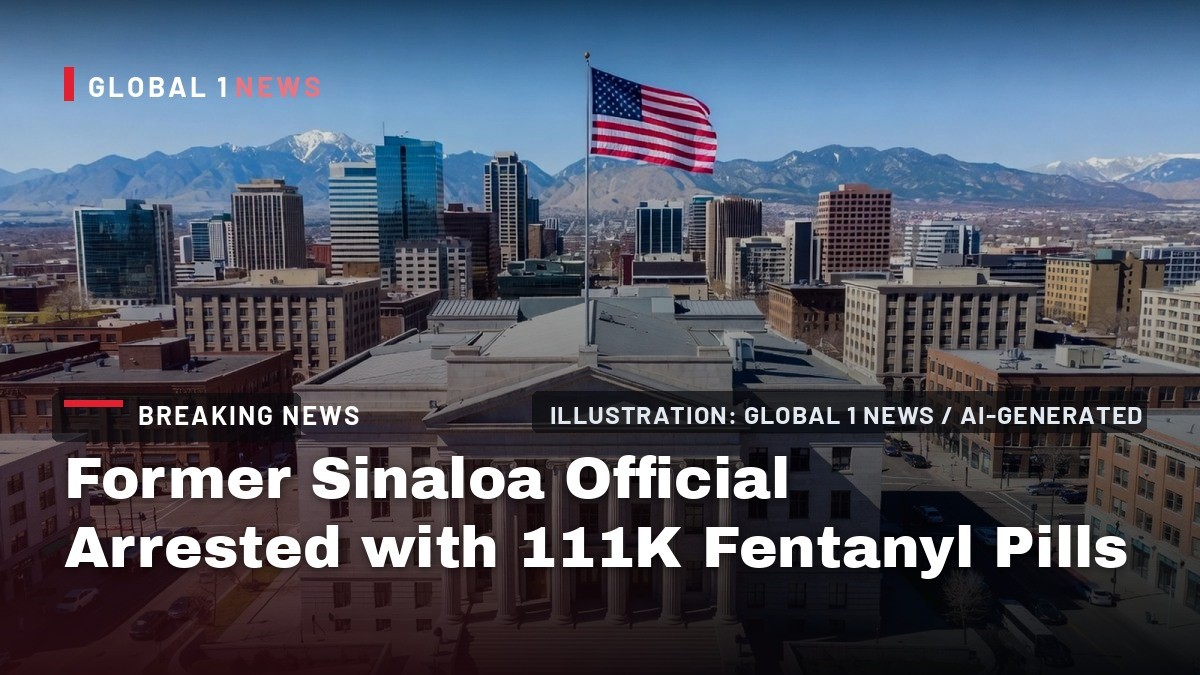
Former Sinaloa Sports Official Arrested in Utah Hotel with 111,000 Fentanyl Pills
The arrest of a former Sinaloa state government official in a Salt Lake County hotel room has put a spotlight on the fentanyl crisis that continues to strain U.S.-Mexico relations. Ricardo Verduzco Bernal, 54, a former director of Guasave's Municipal Institute of Sport and a former head of the high-performance program at Sinaloa's state sports institute, was taken into custody on August 12, 2026, after federal agents executed a search warrant and seized approximately 11,160.65 grams of field-tested positive fentanyl — an amount federal prosecutors estimate to be roughly 111,000 individual pills. The case, detailed in a statement from the U.S. Attorney's Office for the District of Utah released on August 20, 2026, marks another chapter in the ongoing bilateral struggle against synthetic opioid trafficking. For Mexican communities on both sides of the border, the arrest of a man who once held a public trust position in Sinaloa's sports institutions raises uncomfortable questions about how deeply drug trafficking networks have penetrated state structures. Verduzco Bernal — in the United States on a visitor visa, according to U.S. Immigration and Customs Enforcement — now faces a federal complaint charging him with possession of fentanyl with intent to distribute. He appeared in court on August 19, 2026, where he maintained his innocence, and remains in preventive detention while awaiting a scheduled court appearance on August 26 before a U.S. Magistrate Court Judge at the Orrin G. Hatch United States Courthouse in downtown Salt Lake City.Arrest and Investigation
The investigation that led to Verduzco Bernal's arrest began in August 2026, when the FBI Wasatch Metro Drug Task Force initiated a criminal investigation into the former official and co-conspirators, both known and unknown, associated with a drug trafficking organization believed to be distributing large quantities of fentanyl and other narcotics in the District of Utah. According to the U.S. Attorney's Office statement, agents conducted a controlled purchase of fentanyl from Verduzco Bernal before obtaining and executing a search warrant on a hotel room in Salt Lake County. On August 12, 2026, agents executed that warrant. Verduzco Bernal was alone inside the room. The seizure — 11,160.65 grams of fentanyl that field-tested positive — represents a significant interception by any measure. The U.S. Attorney's Office noted that agents estimated the evidence to be approximately 111,000 fentanyl pills, a quantity that could represent tens of thousands of potentially lethal doses on the street. A federal grand jury later returned an indictment. In a separate, unrelated case, the U.S. Attorney's Office also announced charges against Jesus Alexis Cecena Cota, 22, of Mexico, who was residing illegally in West Jordan, Utah. Cecena Cota was charged in a separate complaint on August 13, 2026, following an unrelated investigation. Together, the two cases led to the seizure of approximately 204,000 fentanyl pills in a single week, according to federal prosecutors.A Career in Sinaloa's Sports Institutions
For those who followed Verduzco Bernal's career in Sinaloa, the arrest came as a shock. He served as director of the Municipal Institute of Sport in Guasave (IMUDEG), a city approximately 150 kilometers northwest of the state capital Culiacán, between 2022 and 2024. He was designated interim director in 2022 during the administration of Guasave Mayor Martín Ahumada Quintero, and held the post until November 2024, when he left to join the Sinaloa Institute of Physical Culture and Sport (ISDE), a state government institute. At ISDE, Verduzco Bernal served as head of the high-performance program and also coordinated the Central-North zone of the institute. He left that position on July 31, 2026 — less than two weeks before his arrest in Utah. Before his sports administration career, he had worked as a manager with the Guasave water authority, a utility position that placed him in the orbit of municipal governance. His trajectory — from municipal water manager to sports director to state-level program head — reflects a common path for public servants in Sinaloa. That a man with this profile would allegedly be tied to large-scale fentanyl trafficking has prompted soul-searching across the state.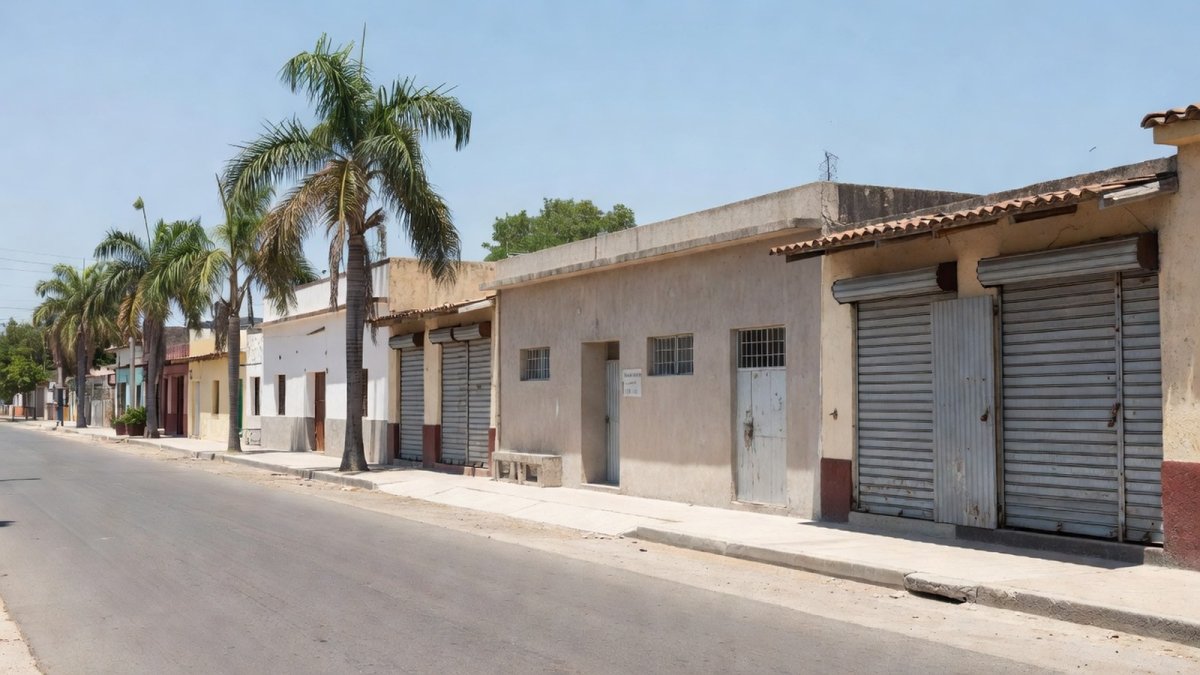
The Rocha Moya Shadow
No discussion of Sinaloa officialdom in 2026 can avoid the shadow of Governor Rubén Rocha Moya, who has governed the state since November 2021. In late April 2026, the U.S. Department of Justice unsealed an indictment in a New York federal court charging Rocha Moya — the first time Washington publicly charged a sitting Mexican politician with drug trafficking — alongside nine other current or former Morena officials with conspiracy to traffic drugs into the United States. The indictment alleges collusion with Los Chapitos — the sons of Joaquín "El Chapo" Guzmán Loera — involving bribes and political support for impunity, on charges including narcotics importation conspiracy, possession of machine guns and destructive devices, and another conspiracy count carrying a mandatory minimum of 40 years in prison. In late August 2026, Rocha Moya announced via X that he was resuming leadership of Sinaloa, insisting he had "committed no crime." Within 24 hours, he reversed course and asked the state congress for a temporary leave of absence of indefinite duration exceeding 30 days. President Claudia Sheinbaum rebuked him without naming him, stating that "no personal interest can ever be placed above the interest of the people and the nation." It is critical to note, however, that there is no information directly linking Governor Rocha Moya to the Verduzco Bernal fentanyl case. Mexican media outlet Sopitas explicitly noted this absence of connection. The two cases are separate, and Verduzco Bernal's arrest should not be read as evidence against the governor. Still, the coincidence of a former Sinaloa state official being caught with more than 100,000 fentanyl pills in Utah while the state's governor faces U.S. drug charges creates a troubling narrative for Sinaloa's image.Fentanyl's Toll on Both Sides of the Border
Fentanyl is a synthetic opioid up to 50 times more potent than heroin, and just 2 milligrams can be lethal. The Sinaloa Cartel has become a major producer of fentanyl pills, and fentanyl trafficking is the top U.S.-Mexico bilateral security issue. For Mexican families, the crisis has two faces: the violence and corruption that fentanyl money fuels within Mexico, and the devastating impact on Mexican communities in the United States, where fentanyl has driven overdose deaths among young adults to record levels. In colonias across Sinaloa, from Culiacán to Guasave, families know someone affected by the drug trade — a cousin who crossed north, a neighbor who disappeared, a young person lost to addiction. The arrest of a former public official in a Utah hotel room with 111,000 fentanyl pills is not an abstract legal matter; it is a reminder that the drug trade reaches into the highest levels of local governance, and that the consequences ripple through communities on both sides of the border. For Mexican communities in Utah, many of them concentrated in the Salt Lake City area, the case adds to concerns about how trafficking networks operate near their neighborhoods. It also underscores the importance of bilateral cooperation between U.S. law enforcement and Mexican authorities, even as political tensions simmer over the Rocha Moya indictment.What to Watch For
Verduzco Bernal's court appearance on August 26 will be closely watched, both in Utah and in Sinaloa. His maintained innocence at the August 19 appearance suggests a contested case ahead. The federal grand jury indictment means the case will proceed to trial unless a plea agreement is reached. For the broader bilateral relationship, the case adds another layer of complexity: the scale of the seizures — roughly 204,000 pills in a single week — underscores how aggressively federal prosecutors in Utah are pursuing fentanyl trafficking. Mexican authorities are navigating the political fallout of the Rocha Moya indictment while working to demonstrate their own commitment to the fight. For the people of Guasave and Culiacán, the case is a cautionary tale about the reach of the drug economy. A man who once oversaw youth sports programs — who was responsible for promoting physical culture and healthy competition among Sinaloa's young people — now sits in federal detention in Salt Lake City, accused of trafficking a substance that kills thousands each year. The irony is not lost on those who knew him in his public service days. As the legal process unfolds, one thing is clear: the fentanyl crisis does not respect borders, institutions, or political affiliations. It reaches into hotel rooms in Utah and sports institutes in Sinaloa alike, and its consequences are borne by families in both nations.This article was produced with AI-assisted research and editorial support. Sources: U.S. Attorney's Office District of Utah, Mexico News Daily, Milenio, Reforma, Univision, Vanguardia.
Tags: Ricardo Verduzco Bernal, fentanyl seizure Utah, Sinaloa official arrested, FBI Wasatch Metro Drug Task Force, fentanyl pills, Rubén Rocha Moya, Sinaloa cartel, drug trafficking, Salt Lake County, ISDE Guasave, IMUDEG, fentanyl crisis, US-Mexico relations, Claudia Sheinbaum, preventive detention
By Rosa Martinez, Staff WriterWhat's Your Reaction?
 Like
0
Like
0
 Dislike
0
Dislike
0
 Love
0
Love
0
 Funny
0
Funny
0
 Wow
0
Wow
0
 Sad
0
Sad
0
 Angry
0
Angry
0
Rosa Martinez
Latin America/Andes Correspondent at Global1.News. Based in Bogota, covering politics, environment, energy, and social movements across the Andean region. Passionate about environmental journalism and communities protecting their land.














Comments (0)