
BTS Grammy Boycott Signals Korea's Cultural Autonomy
BTS's refusal to participate in the 2027 Grammy process marks a notable assertion of autonomy by Korea's leading cultural export at a moment when the Korean Wave has become embedded in national strategy.
BTS's July 29, 2026 joint statement, issued in Korean across the seven members' Instagram accounts, declared that the group would not submit music for the 69th Grammy Awards scheduled for February 7, 2027. The announcement followed the Recording Academy's creation of a Best Asian Pop Music Performance category requiring at least one Asian language, a rule critics interpreted as an attempt to sideline Asia's most prominent act from major categories. The move intersects directly with Korea's global cultural standing, where the Korean Wave functions as a deliberate instrument of soft power and diplomatic outreach.
BTS Grammy Boycott Tests Korea's Soft Power in US Cultural Relations
Seoul, South Korea – August 7, 2026 — BTS's refusal to participate in the 2027 Grammy process marks a notable assertion of autonomy by Korea's leading cultural export at a moment when the Korean Wave has become embedded in national strategy.
A Landmark Boycott Announced in Korean
On July 29, 2026, RM, Jin, Suga, J-Hope, Jimin, V, and Jung Kook posted identical statements in Korean announcing their decision not to submit entries. The statement read: "We have decided not to submit an entry for Grammy consideration this year. We hope music can be heard and loved for what it is, rather than being divided by region or language. We thank ARMY and everyone who has always stood by us."
The timing followed the March 20, 2026 release of their fifth studio album ARIRANG, their first full-group project after completing mandatory military service. On July 19, 2026, BTS performed "Dynamite" in an 11-minute mega-mix at the FIFA World Cup final halftime show in East Rutherford, New Jersey, marking the first such performance in the tournament's history.
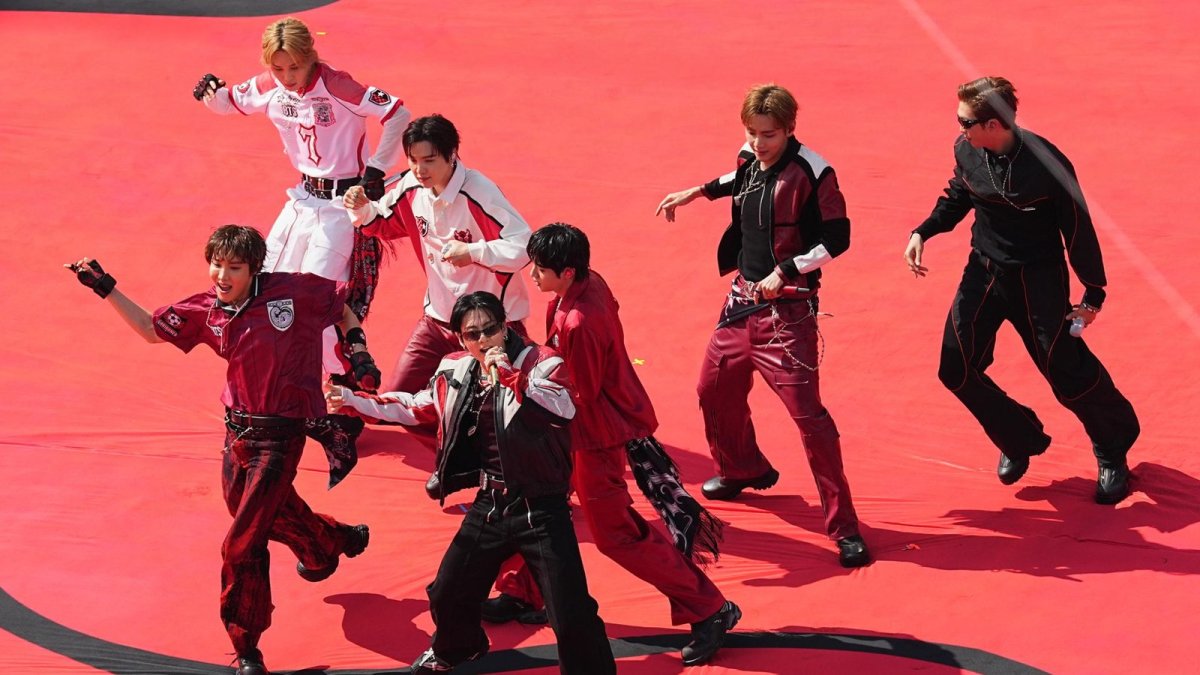
The Recording Academy's announcement of the new category just two months before the August 28 submission deadline placed immediate pressure on Korean acts to decide whether participation would reinforce or challenge emerging structural divisions. BTS's refusal to submit ARIRANG, their seventh Billboard 200 number-one album whose title track "Swim" featured Lili Reinhart in the music video, underscores a deliberate stance against regional compartmentalization at a moment when the group was preparing the Arirang World Tour scheduled from April 2026 through March 2027. All seven members hold voting status within the Academy, giving them insider knowledge of a nomination process that has never produced a BTS win. This combination of institutional access and commercial dominance allowed the group to reject the framework outright rather than navigate it.
By issuing the statement in Korean on July 29, 2026, less than two weeks after their record-setting FIFA World Cup halftime performance, BTS aligned the boycott with the broader trajectory of hallyu policy that Korean government agencies have cultivated since the late 1990s. The members' choice to forgo submission functions as an assertion of autonomy within that state-supported ecosystem rather than a rejection of it, arriving at a point when the group no longer requires Western institutional endorsement to sustain global visibility.
The Category Controversy: Recognition or Containment?
The Recording Academy introduced the Best Asian Pop Music Performance category for the 2027 ceremony, requiring songs to feature at least one Asian language. ARIRANG contains mostly English tracks, prompting critics to argue that the language rule was designed to exclude major Asian acts from Record of the Year, Song of the Year, and Album of the Year consideration. Recording Academy CEO Harvey Mason Jr. stated that the category was created to celebrate the depth and growth of pop artistry from Asia and that more categories allow greater recognition of artists' work.
Ted Chung, CEO of Hyundai Card and a prominent patron of Seoul's live music scene, questioned whether the structure isolates Asian musicians into a separate box. "By this logic, should Bad Bunny or Ricky Martin also be separated and only given Latin music awards?" he asked. "Most BTS songs use English, so how does that fit?"
Historic Videos Removed: The Academy's Silence
In early August 2026, the Recording Academy removed live performance videos of BTS's 2021 "Dynamite" and 2022 "Butter" appearances from its official website. The Academy has issued no comment on the change. Fans worldwide began re-uploading the clips, emphasizing that removal does not erase the group's prior Grammy-stage history. BTS remains the first K-pop act nominated for a Grammy and has accumulated five career nominations without a win.
Cultural Diplomacy and Korea's Soft Power
Korea's cultural exports have evolved into a strategic asset within foreign policy, with BTS serving as a high-visibility representative of hallyu. The group's World Cup halftime performance in New Jersey extended Korean cultural presence into a major international sporting event traditionally dominated by Western artists, reinforcing Korea's position as a cultural exporter capable of shaping global perceptions independent of traditional diplomatic channels.
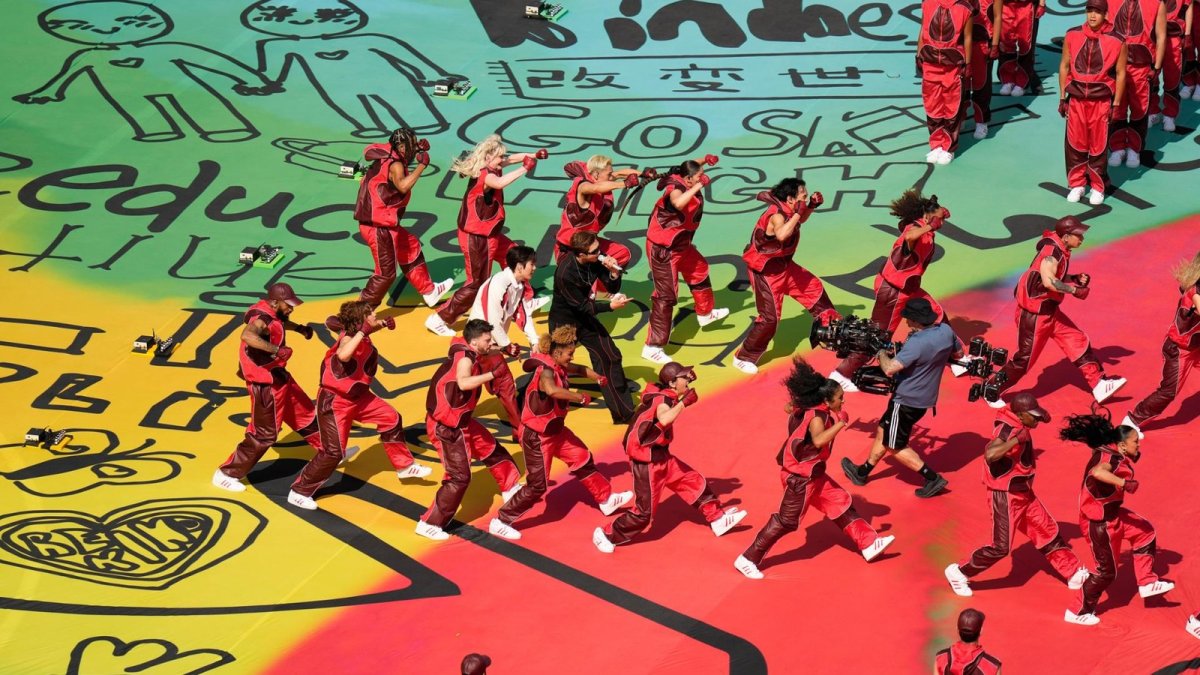
BTS's decision to forgo Grammy submission illustrates a maturing phase in Korea's soft-power projection, where validation from Western institutions is no longer required for global legitimacy. The episode highlights tensions in US-Korea cultural relations, as American award structures confront the commercial and artistic weight of Korean productions. Decades of state investment in cultural diplomacy — conducted through the Korean Culture and Information Service and the Ministry of Culture, Sports and Tourism — have treated hallyu not merely as entertainment export but as a mechanism for reshaping international perceptions of Korea beyond its geopolitical constraints. The group's prior addresses to the UN General Assembly and meetings with U.S. presidents illustrate how individual artists have been enlisted as unofficial ambassadors, a role that now extends to redefining the conditions under which Korean music seeks recognition. Their refusal to submit entries signals that this diplomatic function has matured to the point where selective disengagement from Western institutions can itself project national confidence.
Within U.S.-Korea cultural relations, the episode exposes asymmetries in how American award bodies accommodate non-Western commercial power. Korean productions generate substantial revenue and audience reach in the United States, yet geographically defined categories risk recasting artistic output as inherently foreign rather than competitive on shared terms. BTS's position as both product of sustained government-backed soft-power strategy and independent cultural actor highlights a reciprocal dynamic in which Korean artists increasingly set the parameters of their own global participation.
Expert Perspectives: A Shift in the Balance of Validation
University of Southern California professor Hye Jin Lee observed that BTS's stance reflects a career stage where external Western validation is no longer necessary. Pusan National University professor CedarBough T. Saeji noted that categories such as Record of the Year or Best Pop Duo/Group Performance need not exclude non-American music. HYBE confirmed the decision originated with the members themselves, stating that other label artists remain free to submit independently.
The decision's uniqueness stems from BTS's singular market position in 2026, which few other musicians have replicated. Producer Sleep Deez, who collaborated with BTS and worked on the Black Eyed Peas' Grammy-winning album The E.N.D., has drawn parallels to the 2024 African music category, arguing that the sustainable objective remains open competition across shared fields for artists from Korea, Japan, the Philippines, India, and elsewhere. The members' collective abstention reframes the conversation around validation and echoes critiques that geographically defined awards would appear untenable if applied to Latin artists.
Historical Precedents and Structural Questions
The 1989 introduction of the Hard Rock/Metal Performance category, which controversially awarded Jethro Tull over Metallica and AC/DC, demonstrated how genre-specific awards can generate perceptions of misclassification and marginalization rather than expanded opportunity. Similar concerns arise with the 2024 Best African Music Performance category, prompting questions about whether such structures ultimately segregate artists or integrate them. Rolling Stone's observation that Asia encompasses roughly fifty countries underscores the analytical flaw in treating continental origin as a coherent musical genre equivalent to stylistic designations like pop or rock. For Korean artists operating within hallyu frameworks developed through sustained national policy, these precedents suggest that regional categories may constrain rather than facilitate recognition in mainstream fields such as Record of the Year or Best Pop Duo/Group Performance.
Structural decisions by the Recording Academy therefore carry implications beyond individual nominations. When categories are defined by geography instead of musical characteristics, they risk reinforcing hierarchies that position non-American music as perpetually supplementary. Korean popular music, shaped by sustained government cultural export initiatives, has produced acts capable of competing directly in existing categories; the boycott illustrates how artists may leverage accumulated commercial leverage to contest frameworks that separate rather than integrate their work.
Looking Ahead
The February 7, 2027 ceremony will proceed without BTS submissions, leaving open whether other artists will follow the boycott. Korean cultural policy may increasingly prioritize independent platforms and regional partnerships over Western award recognition, and Korea's established commercial success in music allows greater selectivity in engagement with American institutions. This development suggests that hallyu will continue to function as both economic driver and diplomatic lever, reshaping expectations around cultural recognition on the global stage.
By Prof. David Park, Staff Writer
This article was produced with AI-assisted research and editorial support. Reporting is based on sources cited in the article.
What's Your Reaction?
 Like
0
Like
0
 Dislike
0
Dislike
0
 Love
0
Love
0
 Funny
0
Funny
0
 Wow
0
Wow
0
 Sad
0
Sad
0
 Angry
0
Angry
0

East Asia/Technology Correspondent at Global1.News. Seoul-based voice covering Korean politics, technology, business, and culture. Analyzes how technology and geopolitics intersect across East Asia.















Comments (0)