
Five EU Countries Will Send Rejected Asylum Seekers to a Rwanda Return Hub
Five European Union countries said on 16 November 2026 that they are working with Rwanda to open a return hub for rejected asylum seekers, with the first transfers targeted for the end of 2027 and no agreement yet signed.

Five European Union countries want to send rejected asylum seekers to Rwanda. The arrangement is not signed, the price is not public, and the first transfers are not expected until the end of 2027. Here is what is actually on the table.
Five EU Countries Will Send Rejected Asylum Seekers to a Rwanda Return Hub
Vienna, Austria — Austria, Denmark, Germany, Greece and the Netherlands said on Monday, 16 November 2026, that they are working with Rwanda to set up a "return hub" for migrants with no legal right to remain in the European Union. The five announced the pilot project at a joint news conference in Vienna, on the sidelines of the Vienna Migration Conference. No agreement has been signed. Officials say they hope to send the first people to Rwanda by the end of 2027.
What the Five Countries Announced in Vienna
The setting was the Vienna Migration Conference, hosted by the International Centre for Migration Policy Development. The five states met there as a "Core Group" to discuss return hubs, and they presented the plan as a pilot. The family photograph from the announcement shows, left to right, the Dutch Foreign Minister Tom Berendsen, German Interior Minister Alexander Dobrindt, Austrian Interior Minister Gerhard Karner, Denmark's Prime Minister Mette Frederiksen, Austrian Chancellor Christian Stocker, Rwandan Interior Minister Vincent Biruta, Greek Minister for Migration and Asylum Athanasios Plevris and Danish Minister of Immigration and Integration Morten Bodskov. Le Monde placed the announcement "in the gilded halls of the Austrian Republic" and said the five had broken with the principles of welcome and protection that defined the postwar European ideal. Outside, a demonstrator held a placard reading "Stop EU-Rwanda-deal."
Who Would Actually Be Sent
The filter is narrow on paper. Only people whose asylum applications have already been rejected, who have exhausted all avenues of appeal, and who cannot be sent home because their countries of origin will not co-operate would be transferred. Nationals of any country are eligible, according to people involved in the plan, though minors are excluded. National authorities from the five countries would carry out the transfers themselves. The centre would house around one hundred migrants at a time, and officials present that cap as a feature: the countries championing the hub say it would send an important signal they hope will discourage would-be migrants from paying smugglers. German Interior Minister Alexander Dobrindt said European countries are hampered because countries of origin often refuse to take back rejected asylum seekers.
What Rwanda Gets, and What It Says It Will Give
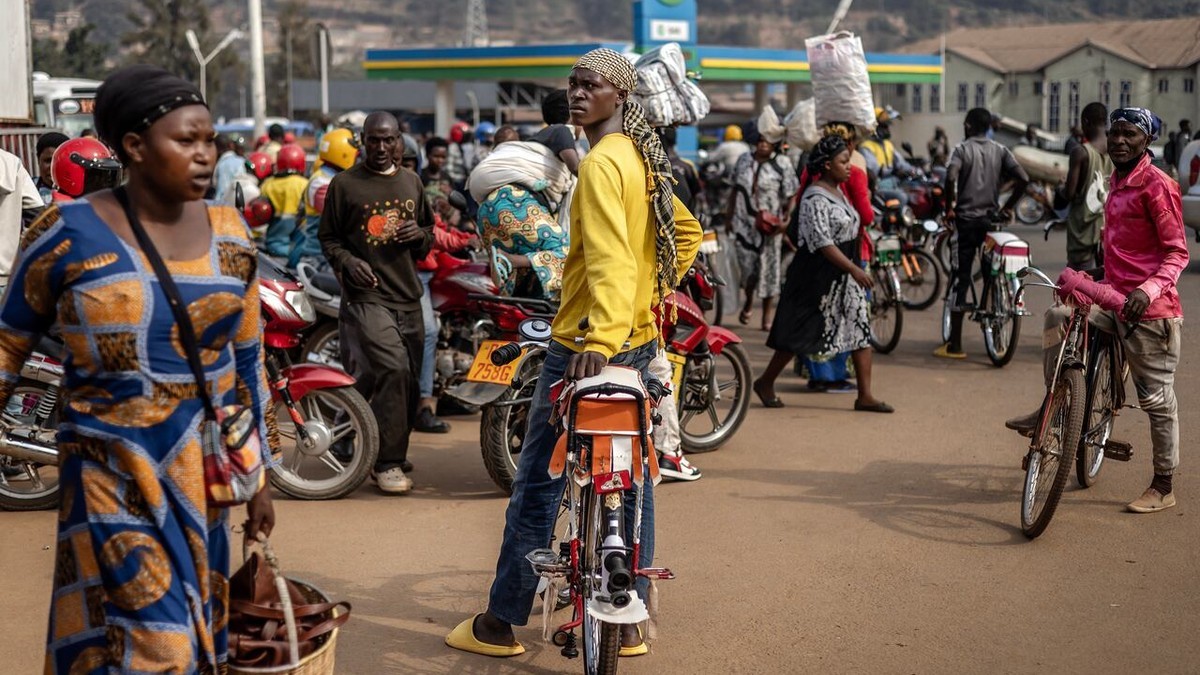
Rwanda's interior minister, Vincent Biruta, said his country would give a "second chance" to people with no right to stay in Europe, and that arrivals could choose to return to their countries of origin, integrate into Rwandan society or relocate to another destination where they have the legal right to reside. Biruta said the migrants would not be held in a camp or a dedicated area: "They will be integrated in our society." Once they arrive, Rwandan authorities take charge and issue residence permits, placing people in what the government calls a "welcome centre." The five EU countries insist the centre will be open, "without any deprivation of liberty or barbed wire," with vocational training and language courses, and that people would stay a few months before integrating. A site has been identified but not disclosed, and the Europeans stress only that it is not one of the centres Britain had planned to use. Reuters reported that Rwanda was not looking to be paid, but that partner countries would meet the cost of relocation and integration.
The Law They Were Waiting For
The legal door opened on 1 October 2026, when the Council of the EU gave final approval to new rules on returns for people with no legal right to stay. The regulation was to be published in the EU Official Journal and enter into force the following day, with provisions on return hubs applying immediately and other provisions applying one year later. The rules open the possibility for member states to establish return hubs in non-EU countries, but only through an agreement or arrangement with the country in question, and only with a country that respects international human rights standards and international law, including non-refoulement. Unaccompanied minors are excluded from such arrangements. The regulation also introduces a European Return Order, voluntary mutual recognition of return decisions, indefinite entry bans where justified and proportionate for people posing a security risk, and detention longer than 24 months for such people. It requires people with no right to stay to co-operate with authorities, with sanctions for refusing. The five countries say the legal basis is solid.
Why This Landed Now
The politics have been building for years. Danish Prime Minister Mette Frederiksen, a leading proponent of migration outsourcing for more than eight years, said some European leaders have worked toward this kind of initiative for "eight or nine years." She argued the plan would break the business model of human smugglers and remove incentives for illegal migration, and she repeated the phrase "take back control of our borders" three times. The pressure is measurable. Asylum claims in Europe have been falling: more than one million first-time applications in 2023, just under 670,000 last year, according to EU and Eurostat data. In September, a regional election victory by Germany's far-right, anti-immigration Alternative for Germany was widely seen as a symbol of shifting public sentiment. In October, Greece pushed the EU to allow suspension of asylum during mass migration surges.
Britain Tried It First, and It Cost £240 Million
Britain's Rwanda partnership was unveiled in 2022 by then-prime minister Boris Johnson and pitched as the answer to boats crossing the English Channel. Under that plan, people could be sent to Rwanda while British authorities processed their asylum claims, a wider net than the European proposal, which covers only rejected applicants. The UK Supreme Court ruled in November 2023 that the deal was unlawful because Rwanda was not a safe third country. Keir Starmer scrapped it in July 2024, one of his first acts as prime minister, saying it was "dead and buried before it started." Just four volunteers ultimately arrived in Rwanda. London had already paid Kigali 240 million pounds before the agreement was abandoned, with a further 50 million pounds falling due in April 2026. Rwanda then went to arbitration, launching proceedings against the UK through the Hague-based Permanent Court of Arbitration on 27 January 2026 and seeking 50 million pounds. That money belongs to the British scheme. The European plan has no published cost.
What the 47 Groups Said
Forty-seven aid, trade union and rights organisations from fifteen countries signed a joint statement urging the five governments to abandon the plan. Signatories include the International Rescue Committee, Human Rights Watch, the Dutch Council for Refugees, PRO ASYL and Sea-Watch. The statement warned the plan "signals that Member States accept the risk of serious human rights violations against one of the most marginalized groups in society, in return for a deterrence goal that evidence clearly suggests they will not reach." It attacked the language too, saying some member states are rebranding hubs as welcome centres, a euphemism that masks forced removal. Amnesty International's Aimée Stuflesser said past attempts to send people to countries to which they have no connection have proven unlawful, unworkable and expensive, citing Italy's Albania deal, Britain's Rwanda attempt and Australia's offshore detention. She noted the irony of the venue: in this city, in 1993, states affirmed the universality of human rights.

Rwanda's Record Is the Central Dispute
Human Rights Watch calls the plan "utterly deplorable" and asks what due diligence the five countries did. The group says Rwanda has already been party to three schemes by other governments to offload people they do not want, each marred by human rights concerns. In 2025 Rwanda agreed to take 250 third-country nationals from the United States for $7.5 million, and Human Rights Watch says disturbingly little is known about the whereabouts of the more than 20 people deported so far. A decade-old arrangement with Israel, the group says, ended with Rwandan officials confiscating Eritrean and Sudanese asylum seekers' documents or forcing them onward. Human Rights Watch says Kigali has largely silenced the opposition, that more than a dozen journalists, commentators and opposition activists remain imprisoned, and that it has documented torture in official prisons. It also points to Rwanda's support for the M23 armed group in eastern Congo, which it says may implicate Kigali in war crimes. No court has convicted the Rwandan state.
The Numbers Behind the Case
Start with the ones that are published. The hub would handle about one hundred people at a time. The first transfers are targeted for the end of 2027. The total number to be sent has not been disclosed by any of the five governments. The cost has not been disclosed either, and the five states have refused to say what Rwanda would receive in return. Then there is the enforcement gap the plan is meant to answer. Jim O'Callaghan, Ireland's Minister for Justice, Home Affairs and Migration, said around two in three people ordered to leave the EU do not actually leave. The Mixed Migration Centre, which operates under the Danish Refugee Council, puts the figure far lower: only one in five people ordered to leave Europe actually do so. Both figures are on the record, from different bodies, and neither is a count of how many people a hub in Rwanda would absorb, or over how many years.
What Happens Next
Negotiations with Rwanda continue, and nothing is signed. The five countries describe the project as a pilot and say they hope to send the first people by the end of 2027. Amnesty says a first group is expected to be transferred in 2027. The five governments have not said which country would send the first group. Court challenges are expected, and the legality of the arrangement is contested rather than settled. The European Commission is not a party; this is five member states acting under a regulation the Council adopted. British officials say they are watching reports of the EU scheme with interest. In Kigali, Biruta said Rwanda was not planning for thousands of people to stay, and suggested some might choose to return home without going through Rwanda at all. For now, the only certain number is the capacity: about one hundred at a time.
By Jessica Ali, Staff Writer
This article was produced with AI-assisted research and editorial support. Photographs: AFP via Al Jazeera (lead image); Luis Tato/AFP via Getty Images, via CBC News; Radek Mica/AFP via Al Jazeera. The social share card is a Global 1 News editorial image. Sources: Al Jazeera, Reuters, CBC News, Le Monde, SBS News/AFP, the Council of the European Union, Human Rights Watch, Amnesty International, and a joint statement by 47 organisations published by the International Rescue Committee.
What's Your Reaction?
 Like
0
 Dislike
0
 Love
0
 Funny
0
 Wow
0
 Sad
0
 Angry
0

Editor-in-Chief at Global1.News. Atlanta-based journalist who cuts through the BS and tells it like it is. Lead anchor, host, and the voice you hear when the spin stops and the truth starts.













Comments (0)