
Ukraine's 1,000-Drone Barrage Burns St Petersburg Oil Sites as Washington Waives Sanctions
Ukraine launched more than 1,000 drones across Russia overnight, setting the St Petersburg Oil Terminal and an oil depot ablaze and hitting a VK data centre, an Ozon warehouse and a bridge. One person was killed and five wounded, Russia said, the same weekend Trump waived sanctions Congress had passed 86-11.
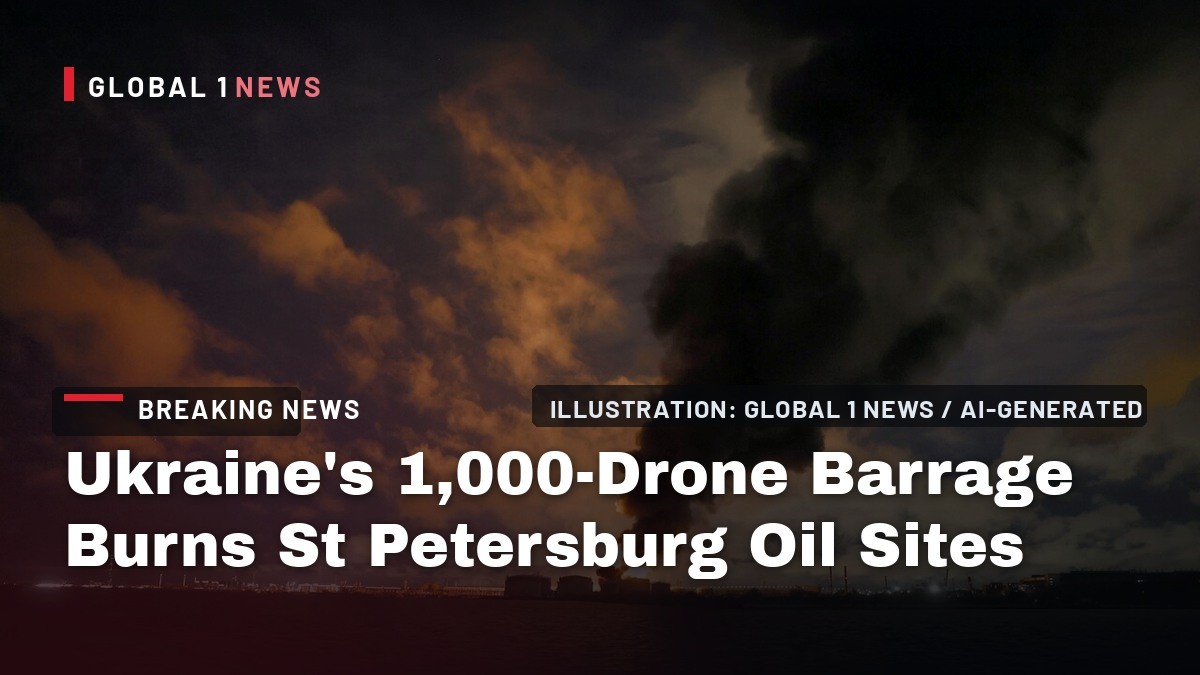
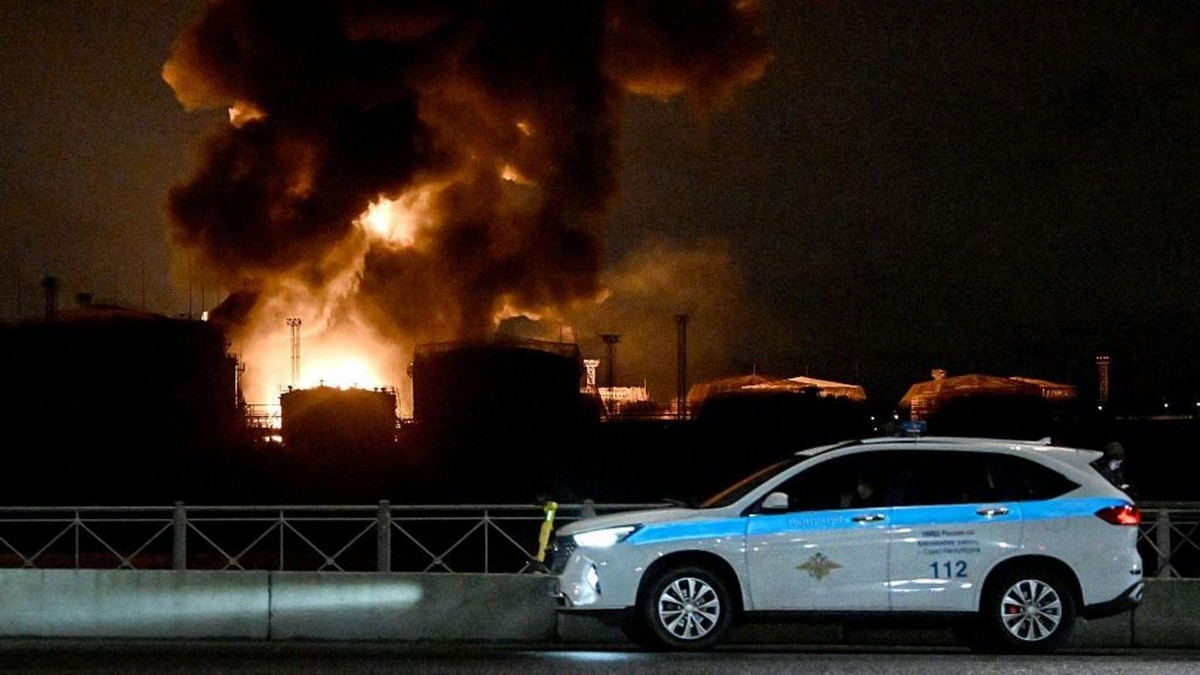
Fires lit the sky over St Petersburg before dawn on Sunday, 18 October 2026, as more than 1,000 Ukrainian drones were launched across Russia in one of the largest aerial bombardments of the war. An oil export terminal burned, a data centre was hit, and a bridge on a city expressway took a strike. That same weekend in Washington, President Donald Trump signed an order waiving sanctions on Russia that the Senate had passed 86-11, and then told reporters his decision was not final.
What Happened in St Petersburg
St Petersburg Governor Alexander Beglov said one person was killed and five more were wounded in the attack on Russia's second city. Fires broke out at the Petersburg Oil Terminal and at the city's Ruchi oil depot, Beglov said. He also reported fires at industrial warehouses in the Kolpinsky District and said 12 apartment buildings and two houses were damaged. Ukrainian monitoring channels Exilenova+ and Supernova+ reported the "massive" drone attack began at 2:50 a.m. local time. St Petersburg is home to 5.6 million people and lies roughly 850 kilometres north of the Ukrainian border. Large explosions lit up the night sky over the city, and eyewitness video appeared to show drones in the air and air defence systems at work. Russian independent outlet Astra reported that city residents either received no drone-threat warnings or received them with a significant delay. No names of the dead or wounded have been released.
Oil, Data and a Bridge
Astra's OSINT analysis placed fires at the Petersburg Oil Terminal, described as the Baltic region's primary petroleum transshipment hub. In the Krasnogvardeisky district, drone debris ignited a blaze at the Ruchi oil depot, which has an operational capacity of 3,900 cubic metres and stores and ships AI-92 and AI-95 gasoline and commercial diesel. Astra also reported that a drone struck the cable-stayed bridge spanning the Korabelny Fairway, about 4.5 kilometres from the oil terminal. The bridge forms a critical section of the southern viaduct of the Western High-Speed Diameter, a multi-lane toll expressway connecting the northern and southern sectors of the metropolis. The extent of the damage was being assessed and was not immediately clear. St Petersburg's city transport committee said the central section of that expressway was closed in both directions in connection with the drone attack, and BBC Russian said it could not verify that a bridge had been struck. The St Petersburg Oil Terminal is one of Russia's largest fuel storage and export facilities, receiving and shipping petroleum products by river, rail and road, with a reported annual throughput of 12.5 million tonnes.
Russia's Count, and Why It Cannot Be Checked
Russia's Defence Ministry said Sunday that its forces had destroyed 1,015 Ukrainian drones over 15 Russian regions, as well as the annexed Ukrainian peninsula of Crimea and the Black Sea. The Associated Press said the figure could not be independently verified. Leningrad Oblast Governor Alexander Drozdenko put the number of drones shot down over the region at 145. Earlier reporting of the same statement gave 126 and then 144, and the Kyiv Independent carried 127. Drone debris damaged four cars in a parking lot, and fires were reported at several locations. Kremlin spokesperson Dmitry Peskov told Russian state news agency Tass that Kyiv was "resisting" Moscow's invasion but could not "change the current course of events". Moscow Mayor Sergei Sobyanin said 512 drones flew toward the Moscow region over the past 24 hours, most shot down at long range and 127 neutralised on approach.
The Same Night, in Ukraine
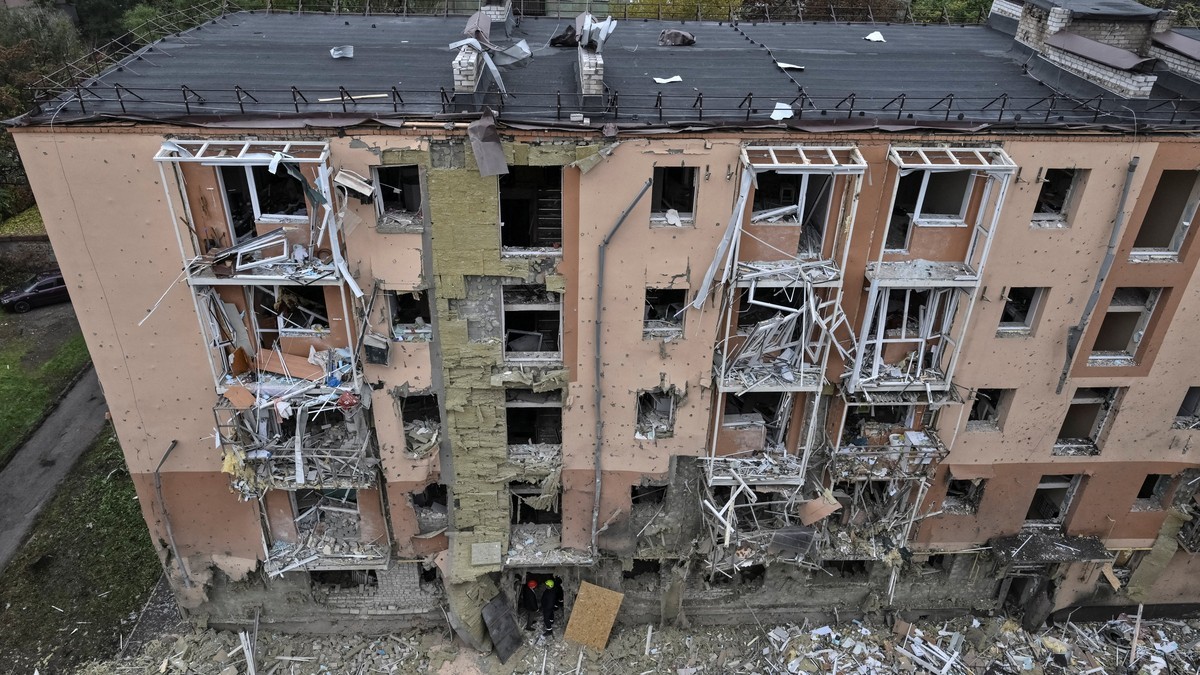
Russia launched 180 combat drones and one Iskander-M ballistic missile overnight, and Ukraine's Air Force said 152 were intercepted or neutralised, with impacts recorded at 20 locations and debris falling at four. In Zaporizhzhia, a 27-year-old woman was killed and two people were injured, a 6-year-old girl and a 58-year-old woman, in overnight drone strikes on residential districts, according to the regional military administration and the Ukrainian National Police. Mykhailo Semikin, head of the Zaporizhzhia Regional Military Administration, said two apartment buildings, 18 cars and an educational institution were damaged. In the city's Kosmichny district an FPV drone hit a civilian car, injuring a 60-year-old man, the National Police said. In Poltava, a Russian drone attack killed one woman and injured four other people, said Vitaliy Dyakivnych, head of the city's military administration. Nine residential buildings were damaged, some by falling drone debris. A Russian air strike on Kherson on Saturday killed one person and injured 19 others, governor Oleksandr Prokudin said.
The Ceasefire That Lasted Three Days
Trump announced on 11 October that Russia and Ukraine had agreed to an "energy ceasefire" in the four-and-a-half-year-old war, but offered no details, and Kyiv reported attacks by Moscow on energy sites after his statement. Ukraine confirmed on Thursday 15 October that it had resumed attacks on Russian oil after a three-day pause. In a post on X on Sunday, President Volodymyr Zelensky said that in the week since Trump's announcement Russia had attacked Ukraine's energy, oil and gas sectors 76 times. Zelensky said: "Over the past week, Russia launched nearly 2,700 attack drones, 1,700 guided aerial bombs, and 66 missiles at Ukraine, most of them ballistic missiles." He said energy facilities in four Ukrainian regions were attacked in the past night and tens of thousands of families were still without power, accusing Russia of trying to cause a blackout. Zelensky said Kyiv was "done" with unilaterally pausing its strikes.
Washington's Other Hand
Trump signed an executive order on Friday night, 16 October, waiving planned restrictions under the Lindsey O. Graham Sanctioning Russia and Iran Act, telling Congress the pause was in the "national interest". The sanctions were due to come into force on Sunday, 18 October. Secretary of State Marco Rubio described the order as a 60-day pause to "analyse" the economic impacts, pointing to high energy prices in the US and the ongoing Iran war: "We need that period of time to sort of study all this and figure out what the right combination is." Republican senator Thom Tillis called the order "beyond irresponsible" and said: "It's unconscionable that this administration is capitulating to a Russian dictator who illegally invaded Ukraine." Senate Democratic leader Chuck Schumer said: "by giving the Russian economy life support, Trump's deal with the devil keeps getting dirtier." Trump later told reporters his decision was not final. "It's a very good decision, and it's going to be a decision that's good for the country, and I think good for the world," he said.
Why a Data Centre Was on the Target List
VK confirmed a drone attacked its data centre and said its services remained operational. Users reported disruptions across the social network and affiliated platforms, according to Downdetector. The VK data centre is in the village of Novosergievka, Vsevolozhsky district, Leningrad Oblast, on the administrative border with St Petersburg. Previously published data put the complex at more than 20,000 servers and 640 server racks, and Fire Point said the facility sustained serious damage. An electrical substation beside the VK data centre was also damaged, and two transformer substations in Yanino were reportedly disconnected, leaving about 20,000 residents without power. Ozon confirmed a drone struck one of its logistics facilities in St Petersburg's Kolpino district on Sofiyskaya Street, causing a fire; employees were evacuated and no one was injured at the facility. Operations at St Petersburg's Pulkovo Airport were disrupted. TASS, citing the airport's press service, reported 27 flights cancelled, 46 delayed and 13 aircraft diverted, after the aviation authority barred arrivals and departures. The strike on VK follows Zelensky's promise that Ukraine would "respond in kind" to Russian attacks on Ukrainian data centres.
The Flank: A Drone Over Lithuania
An unidentified object, likely a drone, entered Lithuanian airspace and exploded on 18 October, sending residents to shelters and damaging a civilian vehicle, according to Lithuanian President Gitanas Nauseda. There were no casualties. During the "red" alert, NATO fighter jets were scrambled and Kaunas airport was temporarily closed, the Lithuanian government's crisis management centre said. A NATO official said: "We can confirm that two Italian Eurofighter jets were scrambled earlier today in response to a drone over Lithuanian airspace. The aircraft were operating under NATO command." The NATO aircraft were unable to visually identify the object due to cloudy weather and did not attempt to shoot it down. Lithuanian Defence Minister Robertas Kaunas said the drone flew in from Poland, but the Polish Defence Ministry said its radar did not confirm the object crossing the border. Ukraine's Foreign Ministry said later it regretted the incident, adding that it may have resulted from Russian electronic warfare diverting drones off course.
What Is Not Established
The St Petersburg operation rests on a manufacturer's claim. Fire Point, the Ukrainian company that builds the FP-1, says its drones hit the oil terminal, the Ruchi depot and the VK data centre; Russian officials describe the attackers as Ukrainian drones; Ukraine's armed forces have not officially confirmed it, and no independent monitor has verified the target list or the scale of the damage. The 1,015 shoot-down figure is the Russian Defence Ministry's alone, and Beglov's one dead and five wounded is the only casualty count released, with no names attached. In Lithuania, nobody has established whose drone it was: Vilnius said it came from Poland, Warsaw's radar did not confirm a border crossing, and Kyiv blamed possible Russian electronic warfare. On sanctions, Rubio called it a 60-day pause and Trump said his decision was not final, so nothing under the Graham Act is settled.
What Comes Next
Watch three things. First, whether the energy ceasefire stays dead: Zelensky said Kyiv is "done" with unilateral pauses, and he put Russia's strikes on Ukrainian energy, oil and gas sites at 76 in the week since Trump's announcement. Second, the sanctions clock: the Graham Act measures were due to bite on 18 October, Rubio has described a 60-day pause, and the House and Senate are on recess until after Election Day on 3 November. Third, the diplomacy Zelensky says is being prepared. He estimated a meeting could take place on 20-21 October, and said a trilateral meeting between Ukraine, the United States and Russia could happen at the G20 summit in Miami in December, or in a Middle Eastern or European country, with no confirmation yet from Russia or the United States. On the Baltic flank, Reuters reports that Ukrainian drones have repeatedly entered NATO airspace in recent months, and the question of whose aircraft is whose is now a live one for the alliance.
By Jessica Ali, Staff Writer
This article was produced with AI-assisted research and editorial support. Sources: Associated Press, Reuters, Al Jazeera, BBC Russian, TASS, Radio Free Europe/Radio Liberty, The Independent, Kyiv Independent, Kyiv Post, Ukrinform, Mezha, Astra, Downdetector, Fire Point, Russian Defence Ministry, Ukrainian National Police, NATO, Polish army. Photographs: AFP via ANSA; BBC Russian; Reuters.
What's Your Reaction?
 Like
0
Like
0
 Dislike
0
Dislike
0
 Love
0
Love
0
 Funny
0
Funny
0
 Wow
0
Wow
0
 Sad
0
Sad
0
 Angry
0
Angry
0

Editor-in-Chief at Global1.News. Atlanta-based journalist who cuts through the BS and tells it like it is. Lead anchor, host, and the voice you hear when the spin stops and the truth starts.














Comments (0)