
Robo-soldier startup backed by Eric Trump misses payroll, may collapse
Foundation Future Industries—backed by Eric Trump and flaunting a $3 billion valuation—has just missed its October 30 payroll, and the fallout is already spilling into the trenches of Silicon Valley and the battlefield hype it claims to dominate.
Foundation Future Industries—backed by Eric Trump and flaunting a $3 billion valuation—has just missed its October 30 payroll, and the fallout is already spilling into the trenches of Silicon Valley and the battlefield hype it claims to dominate. As a founder who runs real hosting infrastructure, I’ve seen more than a few “moon‑shot” startups burn cash on flash and forget the fundamentals: cash flow, product readiness, and honest storytelling. Foundation’s latest stumble is a textbook case of hype‑driven fundraising gone sideways, and it should raise a red flag for any independent tech founder watching the hype train roll past.
Cash‑flow crisis beats hype‑driven valuations
The missed payroll is the most concrete symptom of a deeper cash‑flow problem. Anonymous sources told CNBC that employees weren’t paid for the period ending October 30, a breach that instantly erodes morale and credibility. When a startup’s burn rate outpaces its fundraising pipeline, the first casualty is usually the team that built the product. In Foundation’s case, the problem is compounded by a reported $4.6 million personal loan taken by co‑founder and CEO Sankaet Pathak to buy a luxury home overlooking San Francisco Bay. That diversion of capital is a classic red flag: founders pulling money out of the company for personal use while still courting investors.
From a founder’s perspective, the lesson is stark—no amount of “future‑value” talk can substitute for runway. If you’re burning through cash to chase a $3 billion valuation without a clear path to revenue, you’re courting exactly the kind of collapse Foundation now faces.
The “Pentagon contract” myth and why it matters
Eric Trump’s involvement as chief strategy advisor, announced in March 2026, gave Foundation a veneer of political clout. Trump’s claim that the firm “just secured a $24 million contract with the Pentagon” during an April interview on Fox Business sparked immediate scrutiny. Senator Elizabeth Warren’s challenge on social media—questioning whether the Pentagon is a “cash machine for Trump’s kids”—highlighted the political risk of over‑promising on government deals.
Public records, however, show no direct Pentagon contract for Foundation. The San Francisco Standard notes that the company holds no listed contracts, and the only government money linked to its ecosystem is a $3.22 million set of contracts awarded to Boardwalk Robotics (acquired by Foundation in late 2024) and a $24.8 million Navy contract won by the Institute for Human & Machine Cognition, a research partner. The disconnect between public statements and verifiable contracts underscores a broader issue: investors and partners are being sold a narrative that doesn’t match the paperwork.
Product promises vs. production reality
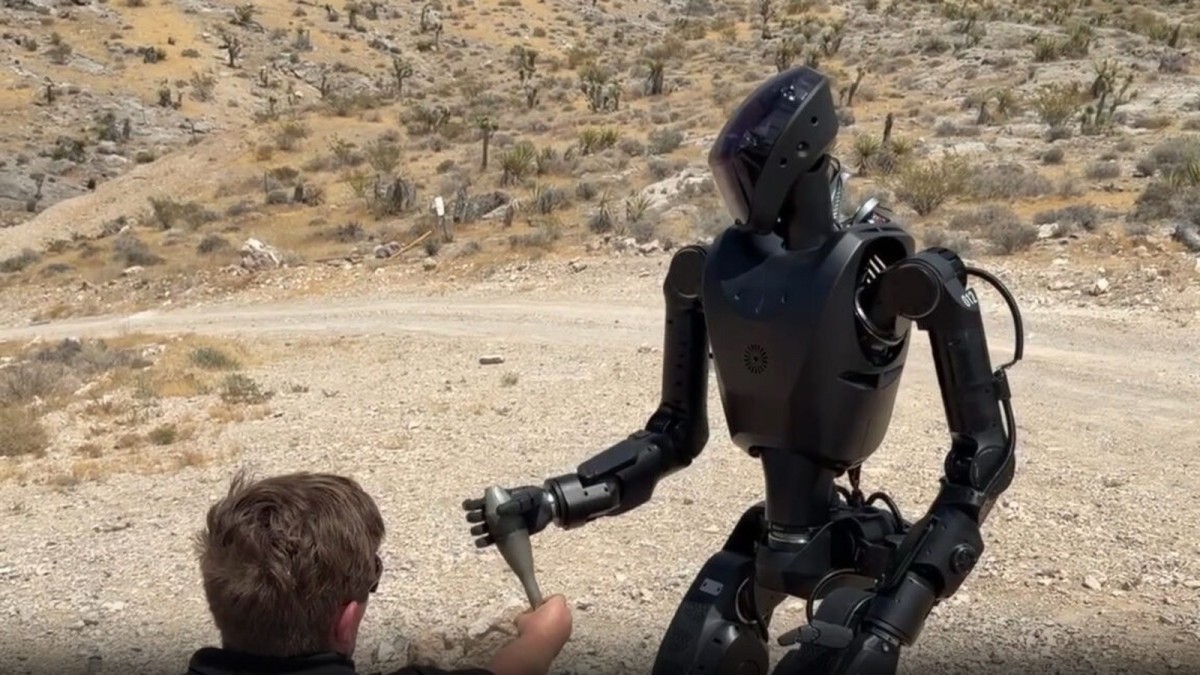
Foundation’s flagship, the Phantom MK‑1, is touted as a battlefield‑ready humanoid capable of wielding weapons. The company also teases a next‑gen Phantom MK‑2. Yet the only publicly available demonstration is a May 2026 video where a robot slowly lowers a mortar shell before dropping it—a theatrical stunt that says little about real combat performance. Independent journalist Craig Smith, who tagged along on a delivery attempt to Ukraine, reported that the robots never crossed the Polish border, and that Foundation’s claims of a pilot demonstration remain vague.
In the real world of production servers, we know that a demo video is not a deployment. The same holds for robotics: a polished demo does not equal a field‑tested system. The Ukrainian military’s actual use of unmanned ground vehicles (UGVs) and drone‑launched robots, as documented in 2026 operations, shows that the battlefield is still dominated by relatively simple, rugged platforms—not the sophisticated humanoids Foundation advertises.
The funding dance and the VC hype loop
Foundation is still courting investors to back a $3 billion valuation, a figure that hinges on delivering a combat‑ready humanoid. The company’s leadership has a history of making unsupported statements—GM’s denial of an alleged investment in 2024, for example. This pattern of over‑promising to attract capital is a common trap in the VC‑driven ecosystem: founders inflate valuations to secure larger rounds, then double‑down on hype to keep the money flowing.
For independent hosting providers and other bootstrapped founders, the takeaway is clear: chasing a lofty valuation without a solid product‑market fit is a recipe for cash‑flow distress. Sustainable growth comes from delivering real value to paying customers, not from dangling a “future” product that may never materialize.
Political entanglements as a double‑edged sword
Eric Trump’s equity stake and advisory role bring political capital but also political risk. Investment funds linked to the Trump family have secured over $3.2 billion in Pentagon loans and contracts as of July 2026, according to The Washington Post. While that money stream can be a boon, it also invites scrutiny and potential backlash, as seen in Senator Warren’s public questioning.
Founders must weigh the trade‑off: political connections can open doors, but they also tether your narrative to the volatile world of politics. When a political figure makes an unverified claim—like the alleged $24 million Pentagon contract—it can backfire spectacularly, pulling the entire venture into a credibility crisis.
What the battlefield actually needs
The article notes that Ukraine’s current robot strategy focuses on UGVs for supply runs, casualty evacuation, and even combat roles when equipped as “roving bombs.” These platforms are rugged, simple, and designed for mass production—attributes far from the high‑cost, high‑complexity humanoid vision Foundation pursues. The success of drone‑launched ground robots in Ukraine’s 2026 counteroffensive illustrates that the battlefield rewards practicality over novelty.
For any tech founder eyeing defense contracts, the lesson is to align product development with the actual needs of the end‑user. A robot that can lift a mortar shell in a staged video is far less valuable than a reliable, low‑maintenance UGV that can haul supplies under fire. The market will reward the latter, and investors will follow the money.
Actionable takeaways for independent founders
First, keep a tight leash on cash. Missed payroll is a red flag that should never be ignored; it signals deeper financial mismanagement. Second, ground your fundraising narrative in verifiable milestones—don’t promise a $3 billion valuation without a clear path to revenue. Third, ensure product demos translate into real‑world performance; a polished video is not a substitute for field testing. Fourth, be wary of political entanglements that can amplify both hype and scrutiny. Finally, focus on solving a concrete problem for a paying customer, whether that’s a more efficient hosting platform or a rugged UGV for the battlefield.
Foundation Future Industries may still pull off a rescue round, but the damage to trust is already done. In the world of infrastructure and robotics, credibility is earned on the back of reliable delivery—not on the promise of a futuristic humanoid that never left the lab. Independent founders who keep their eyes on cash flow, product readiness, and honest storytelling will survive the hype cycles that swallow ventures like Foundation.
— Allan Ali, Founder
This article was produced with AI-assisted research and editorial support. Reporting is based on the source material cited below. Sources: Ars Technica; arstechnica.com; Global1.News (17 November 2026).
By Allan Ali, Global1.News
What's Your Reaction?
 Like
0
 Dislike
0
 Love
0
 Funny
0
 Wow
0
 Sad
0
 Angry
0

Publisher of Global1.News. Automation architect, systems builder, and the guy making sure the truth gets published.














Comments (0)